
BuddhistCatholicContemplativeEvangelicalGeneral ChristianHinduJewishLatter-day SaintMuslimNew VisionsProgressive Christian
Beliefs
- Buddhist
- Catholic
- Contemplative
- Evangelical
- General Christian
- Hindu
- Jewish
- Latter-day Saint
- More Voices
- Muslim
- New Visions
- Pagan
- Progressive Christian
Topics
- Religion News
- Food and Religion
- Sports and Religion
- Religious Art
- Religious Music and Entertainment
- Religious Events
- History and Religion
- Style and Religion
- Politics and Religion
- Women in Religion
- Recreation Outdoors and Religion
- Business Finance and Religion
- Careers Workplace and Religion
- Education and Religion
- Family Parenting and Religion
- Health Fitness and Religion
- Home and Religion
- Relationships and Religion
- Technology and Religion
- Travel and Religion
Columnists
- Buddhist Columnists
- Business Finance and Religion Columnists
- Careers Workplace and Religion Columnists
- Catholic Columnists
- Contemplative Columnists
- Education and Religion Columnists
- Evangelists Columnists
- Family Parenting and Religion Columnists
- General Christian Columnists
- Health Fitness and Religion Columnists
- Hindu Columnists
- History and Religion Columnists
- Home and Religion Columnists
- Jewish Columnists
- More Voices Columnists
- Latter Day Columnists
- Muslim Columnists
- New Visions Columnists
- Nonreligious Columnists
- Pagan Columnists
- Politics and Religion Columnists
- Progressive Columnists
- Recreation Outdoors and Religion Columnists
- Relationships and Religion Columnists
- Religion News Columnists
- Religious Art Columnists
- Religious Events Columnists
- Religious Music and Entertainment Columnists
- Sports and Religion Columnists
- Style and Religion Columnists
- Technology and Religion Columnists
- Travel and Religion Columnists
- Women in Religion Columnists
Resource Library
- 2026 Calendar
- Library of World Religions
- The 100 Most Holy Places on Earth
- Patheos Answers
- Podcasts
- Videos
- Faith Leaders Database
- Anglican Episcopalian
- Bahai
- Baptist
- Buddhism
- Christianity
- Confucianism
- Eastern Orthodoxy
- Hinduism
- Holiness and Pentecostal
- ISKCON
- Islam
- Judaism
- Lutheran
- Methodist
- The Church of Jesus Christ of Latter-day Saints
- New Age
- Paganism
- Presbytarian and Reformed
- Protestantism
- Religion Behind the Scenes
- Roman Catholic
- Scientology
- Shia Islam
- Sikhism
- Sufism
- Sunni Islam
- Taoism
- Zen
- See all religions
Research Tools
 Ad-Free & Subscriber Log-In Subscription Support
Ad-Free & Subscriber Log-In Subscription Support
Follow Patheos 

- Trending:
- Forgiveness
- |
- Marriage
- |
- Consciousness
- |
- Death Penalty
- |
- Election
- |
- Halloween
 The Wild Hunt
- Home
- Pagan
- Wiccan Denied Clergy Status in Virginia
Wiccan Denied Clergy Status in Virginia
Last updated on: June 29, 2012 at 5:00 am by Jason Pitzl-Waters
Wiccan Denied Clergy Status in Virginia 2012-06-28T22:45:36-07:00 Jason Pitzl-Waters
Patheos Explore the world's faith through different perspectives on religion and spirituality! Patheos has the views of the prevalent religions and spiritualities of the world.
[The following is a guest post from Literata Hurley. Literata is a Wiccan priestess, poet, and theaologian. Her work has appeared in several anthologies and periodicals, including Mandragora, Queen of the Sacred Way, Anointed, Witches & Pagans, and CIRCLE Magazine. She blogs regularly for The Slacktiverse and her own site, Works of Literata. She is an ordained High Priestess of the Order of the White Moon, a women’s spirituality organization. In between leading Rose Coven, reading Tarot, and communing with nature, she is writing her Ph.D. dissertation in history and enjoys travel and spending time with her husband and cats.]
The Arlington County Court refused to grant me the right to perform marriages in Virginia, apparently on the grounds that my “congregation” does not own a building.
I presented my certificate of ordination and documentation of the 501c3 status of the Order of the White Moon, which ordained me. Since my Order is incorporated in California, the secretary asked me if I had a congregation in Virginia; I said yes. She asked me to list the address of the congregation, and I said that we don’t have a building. She asked, “So, what, you just meet in each other’s homes?” I said yes, we meet in each other’s homes, or out of doors (Wicca is, after all, an earth-based religion, but I thought that mentioning that would only be prejudicial to my situation).
Literata
She left and came back with the Clerk of Court, Paul Ferguson. Mr. Ferguson said that they were not going to approve me. I asked if it was because we don’t have a building. He said, “Yes, you don’t have a building, and there were a few other things.” I asked him if he would give me a written list of the reasons I was being denied. He refused; he offered to show me the relevant section (Sec 20-23) of the Virginia Code. I assured him that I had read the Code, and asked again if he would give me more specific reasons I was being denied. He said that approving these applications was at his “discretion” and that he didn’t “feel” I met the qualifications, but he wouldn’t tell me how. He told me that I could apply to another court in another county but that he thought they would probably give me the same answer.
Has property ownership now become the measure of what constitutes a “real” religion in Virginia, or at least in Arlington County? Or is this another example of anti-Pagan discrimination at work?
Patchwork enforcement and a history of discrimination
Virginia is one of the few states in the US that requires clergy members to register with a circuit court in order to be able to perform valid marriages. The requirements in Sec 20-23 of the Code state that the minister must present proof of ordination and “of his being in regular communion” with the organization that ordained him.
These requirements are apparently interpreted in widely varying ways across various circuits in Virginia, as different courts’ websites list different types of documentation – or none – that may be required. For courts that openly state they require more than just proof of ordination, the way they ask for information gives tremendous privilege to traditionally-organized, i.e., Christian, groups. And if granting these applications really is up to the “discretion” of the Clerk of Court, there is wide scope for potential discrimination against minority religions with or without the fig leaf of requiring a “location” and other organizational trappings potentially beyond the reach of minority religious organizations.
This problem goes back more than a decade; in 1999, the ACLU helped another Wiccan priestess get her application in this situation approved.
I think it’s not unreasonable that I am concerned about what kind of documentation will satisfy the court. I serve multiple groups, one of which meets in a designated location, but since it is an open circle, the people who attend are mostly not members of my ordaining organization. If I provide documentation of this group meeting in a specific location, will the court then ask how many people attend, and how often we meet? What will they require to conclude that I am “really” a High Priestess in a “real” religion?
Why this matters
This is about more than performing weddings. This decision has a chilling effect on me trying to function as clergy in other ways; if the Court will not recognize me as legitimate clergy in this situation, will my right to confidentiality be protected? How can I assure people who come to me for counseling that their communications with me are protected by clergy privilege?
Literata drawing down.
And since this is one of the two major forms of government approval used by a wide range of institutions and organizations to determine whether someone is a “real” clergy member, it can impact my ability to reach out to those who have particular needs: people in hospitals, the military, and prisons all need clergy services, but those institutions are much more likely to deny me the ability to minister to the people involved if I can’t say that I’m approved by the State of Virginia to perform marriages.
And although I might have my application granted if I tried another court, that does nothing to resolve the doubt cast on my status by the court with jurisdiction over where I live and do most of my ministry. If another court approved me, it would only serve to highlight the irregular and potentially biased variations in granting recognition across jurisdictions.
What you can do
I currently plan to gather additional supporting documentation and reapply, and if I am denied again, to ask whether I can appeal to a judge of the court. I am also currently seeking advice from the ACLU, Americans United for the Separation of Church and State, and the Lady Liberty League. Here’s what you can do to help:
First, get the word out. The more Pagans pull together, the better our chances of being recognized as “legitimate” in these kinds of situations.
If you are a Pagan clergyperson in Virginia and you have applied to perform marriages, please write to me at [email protected]. If you were approved, I’d like to know when you were approved, in what court, with what paperwork, and what questions they asked, both written and verbal. People who have been declined, please tell me that too. The more information I have for comparison the better.
I would also like to be able to present letters of support from other Pagan clergy and potentially from Pagan organizations that ordain people, especially ones that ordain people all over the country. If you’re interested, please contact me. And if you have other ideas about how to help, please speak up!
People who aren’t in Virginia, please provide spiritual and magical support. Pray and send energy that I am able to gather the evidence I need and make a convincing argument, that the court will grant my new application swiftly, and that I may stay positive and be patient throughout this whole process.
I sincerely hope that together we can ensure this is the last time a Pagan in Virginia has her credentials questioned and her status as clergy denied.
[This post was republished, with permission, from Literata’s blog. Please follow it for further updates and commentary from Literata on this matter. The Wild Hunt will be keeping in close contact with Literata on this issue, and will post updates as warranted.]
Next Post

June 30, 2012 Unleash the Hounds! (Link Roundup)
Browse Our Archives
Select a Category indigenous Neopaganism Paganism Religion The Wild Hunt Uncategorized
Select a Month October 2012 September 2012 August 2012 July 2012 June 2012 May 2012 April 2012 March 2012 February 2012 January 2012 December 2011 November 2011 October 2011 September 2011 August 2011 July 2011 June 2011
TAKE THE
Religious Wisdom Quiz
Whose daughter did Jesus raise from the dead in Capernaum?
Select your answer to see how you score.
Jairus' daughter Nicodemus' daughter Mary's daughter Joseph's daughter
Related posts from The Wild Hunt

Canadian Government: Non-Christian Prisoners Must Turn to Christian...

Being a Religious Minority (in Public Schools)
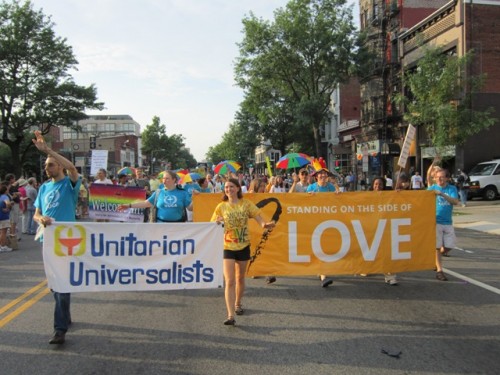
What Does the Growth of Unitarian Universalism Mean?

TRENDING AT PATHEOS Pagan

I was recently chatting with someone on Instagram. She asked me what...

While there are many people who share their results, the end of...

On July 23, I saw Christopher Nolan's The Odyssey which is Homer’s...

As I write this two big events have just finished up. One...

Restoring the Watershed of Divine Love
Perhaps cooperation is not something we manufacture through legislation, ideology, or moral...

Many UUs don’t pray because of bad experiences in a previous religion,...
view all Pagan blogs
Ad-Free & Subscriber Log-In Subscription Support
- About Us
- 2026 Calendar
- Videos
- Podcasts
- Library of World Religions
- Faith In Media Tracker
- Advertise With Us
- Write for Us
- Privacy Policy
- Terms of Service
- Do Not Sell My Data
- Contact Us
- Radiant Digital
- Manage Newsletter Subscriptions
- Unsubscribe From Notifications
- Sitemap
Copyright 2008-2026, Patheos. All rights reserved.
Subscription Support Ad-Free & Subscriber Log-In
Follow Patheos