
BuddhistCatholicContemplativeEvangelicalGeneral ChristianHinduJewishLatter-day SaintMuslimNew VisionsProgressive Christian
Beliefs
- Buddhist
- Catholic
- Contemplative
- Evangelical
- General Christian
- Hindu
- Jewish
- Latter-day Saint
- More Voices
- Muslim
- New Visions
- Pagan
- Progressive Christian
Topics
- Religion News
- Food and Religion
- Sports and Religion
- Religious Art
- Religious Music and Entertainment
- Religious Events
- History and Religion
- Style and Religion
- Politics and Religion
- Women in Religion
- Recreation Outdoors and Religion
- Business Finance and Religion
- Careers Workplace and Religion
- Education and Religion
- Family Parenting and Religion
- Health Fitness and Religion
- Home and Religion
- Relationships and Religion
- Technology and Religion
- Travel and Religion
Columnists
- Buddhist Columnists
- Business Finance and Religion Columnists
- Careers Workplace and Religion Columnists
- Catholic Columnists
- Contemplative Columnists
- Education and Religion Columnists
- Evangelists Columnists
- Family Parenting and Religion Columnists
- General Christian Columnists
- Health Fitness and Religion Columnists
- Hindu Columnists
- History and Religion Columnists
- Home and Religion Columnists
- Jewish Columnists
- More Voices Columnists
- Latter Day Columnists
- Muslim Columnists
- New Visions Columnists
- Nonreligious Columnists
- Pagan Columnists
- Politics and Religion Columnists
- Progressive Columnists
- Recreation Outdoors and Religion Columnists
- Relationships and Religion Columnists
- Religion News Columnists
- Religious Art Columnists
- Religious Events Columnists
- Religious Music and Entertainment Columnists
- Sports and Religion Columnists
- Style and Religion Columnists
- Technology and Religion Columnists
- Travel and Religion Columnists
- Women in Religion Columnists
Resource Library
- 2026 Calendar
- Library of World Religions
- The 100 Most Holy Places on Earth
- Patheos Answers
- Podcasts
- Videos
- Faith Leaders Database
- Anglican Episcopalian
- Bahai
- Baptist
- Buddhism
- Christianity
- Confucianism
- Eastern Orthodoxy
- Hinduism
- Holiness and Pentecostal
- ISKCON
- Islam
- Judaism
- Lutheran
- Methodist
- The Church of Jesus Christ of Latter-day Saints
- New Age
- Paganism
- Presbytarian and Reformed
- Protestantism
- Religion Behind the Scenes
- Roman Catholic
- Scientology
- Shia Islam
- Sikhism
- Sufism
- Sunni Islam
- Taoism
- Zen
- See all religions
Research Tools
 Ad-Free & Subscriber Log-In Subscription Support
Ad-Free & Subscriber Log-In Subscription Support
Follow Patheos 

- Trending:
- Forgiveness
- |
- Marriage
- |
- Consciousness
- |
- Death Penalty
- |
- Election
- |
- Halloween
 The Wild Hunt
- Home
- Pagan
- Should We Worry About the Religious Right?
Should We Worry About the Religious Right?
Last updated on: January 23, 2012 at 10:19 am by Jason Pitzl-Waters
Should We Worry About the Religious Right? 2012-01-23T10:19:15-08:00 Jason Pitzl-Waters
Patheos Explore the world's faith through different perspectives on religion and spirituality! Patheos has the views of the prevalent religions and spiritualities of the world.
So, it has come down to this. The Republican Party, the unchallenged standard-bearer for conservative Christianity in America since Ronald Reagan was president, seems to be deciding between a sometimes-moderate, formerly pro-choice, Mormon, and an ethics-challenged serial philanderer with unfavorability numbers that would make any politician blanch, in their presidential primaries. The candidates who seemed to bank their support on evangelicals and conservative Christians: Michele Bachmann, Rick Perry, and Rick Santorum, have seen their campaigns run out of steam, dismantle in a stream of never-ending gaffes, or slowly fade into the background. It’s enough to make one wonder if the power of conservative Christianity in the United States is waning. Two recent articles at The New Republic debate this very question. The first, from Michael Kazin, argues that we are experiencing the twilight of the Christian Right.
Mitt Romney and Newt Gingrich
“…contrary to the whims of lazy pundits, the waning of enthusiasm for battling over “social issues” is not due to higher concerns about jobs, the deficit, and the economic future […] Put simply, the Christian Right is getting old. According to the largest and most recent study we have of American religion and politics, by Robert D. Putnam and David E. Campbell, almost twice as many people 18 to 29 confess to no faith at all as adhere to evangelical Protestantism. Young people who have attended college, a growing percentage of the population, are more secular still. Catholicism has held its own only because the Church keeps gathering in newcomers from Latin America, Africa, and Asia, few of whom are likely to show up at a Santorum rally. To their surprise, Putnam and Campbell discovered that conservative preachers infrequently discuss polarizing issues from the pulpit. Sermons about hunger and poverty far outnumber those about homosexuality or abortion. On any given Sunday, just one group of Christians routinely grapples with divisive political issues: black Protestants, the most reliably Democratic constituency of them all.”
Kazin concludes that if conservative Christians “hope to transform our pluralistic, profane culture into a new Jerusalem”, they will have to “find new holy battles to wage.” So are the culture wars essentially over? Are Christian conservatives no longer kingmakers in the Republican Party? Not so fast, says Ed Kilgore, who notes that while the Christian Right has botched attempts to control this election cycle, news of their demise is greatly exaggerated.
“It is true that they have been less conspicuous in this campaign, and less united in candidate preferences. But if they haven’t been able to pull their muscle behind a single candidate, that’s not a sign that they are on the wane—it’s a sign that, as far as the Republican Party is concerned, they have already won. Look at the potential nominees: Unlike 2008, no candidate in the field is pro-choice by any definition. Only Ron Paul seems reluctant to enact a national ban on same-sex marriage. Newt Gingrich, Rick Perry, Rick Santorum. and Herman Cain have been vocal in fanning the flames of Islamophobia; again, only Paul has bothered to dissent to any significant degree.”
Kilgore points out that the fight over abortion, a key issue for Christian conservatives, is escalating at the state level, not diminishing, and that a “younger generation of culture warriors, some more radical than their elders, are just beginning to come into view.” Indeed, if there’s been one new phenomenon this year within Christian Right circles, its been the emergence of controversial neo-Pentecostal spiritual warriors into the mainstream. Journalist and author Jeff Sharlet has long argued against assertions that the Christian Right will fade away after a bad election or two, or because the current crop of leaders are growing old. That they have been a part of our spiritual makeup since the beginning.
“We don’t like to consider the possibility that they are not newcomers to power but returnees, that the revivals that have been sweeping America with generational regularity since its inception are not flare-ups but the natural temperature of the nation. We can’t conceive of the possibility that the dupes, the saps, the fools—the believers—have been with us from the very beginning, that their story about what America once was and should be seems to some great portion of the population more compelling, more just, and more beautiful than the perfunctory processes of secular democracy. Thus we are at a loss to account for this recurring American mood.”
So should we worry about the Religious Right? In so far as they battle against the rights and freedoms of religious minorities, yes, we should. Bad candidates and legislative setbacks don’t erase generations of grassroots organizing from the pulpits, and it would be folly to believe otherwise. Until demographics finally hit that magical tipping point, and conservative Christianity becomes simply one voice among many, vigilance is the watchword. As for Newt Gingrich’s ethical problems, we should never forget that evangelicals love a good forgiven sinner.
Previous Post

January 22, 2012
Unleash the Hounds! (Link Roundup)
Next Post
January 24, 2012 Modern Paganism's Role in Interfaith
Browse Our Archives
Select a Category indigenous Neopaganism Paganism Religion The Wild Hunt Uncategorized
Select a Month October 2012 September 2012 August 2012 July 2012 June 2012 May 2012 April 2012 March 2012 February 2012 January 2012 December 2011 November 2011 October 2011 September 2011 August 2011 July 2011 June 2011
TAKE THE
Religious Wisdom Quiz
Who healed a blind man by making mud and placing it on his eyes?
Select your answer to see how you score.
Elijah Peter Jesus Moses
Related posts from The Wild Hunt

Canadian Government: Non-Christian Prisoners Must Turn to Christian...

Being a Religious Minority (in Public Schools)
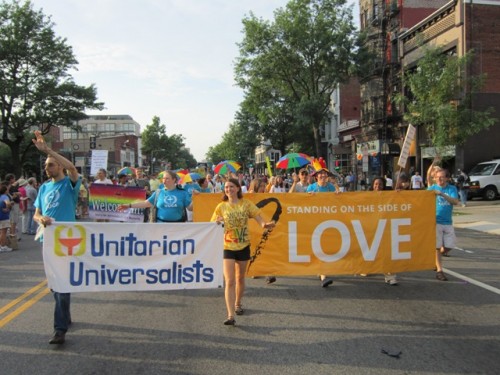
What Does the Growth of Unitarian Universalism Mean?

TRENDING AT PATHEOS Pagan

I was recently chatting with someone on Instagram. She asked me what...

While there are many people who share their results, the end of...

On July 23, I saw Christopher Nolan's The Odyssey which is Homer’s...

As I write this two big events have just finished up. One...

Restoring the Watershed of Divine Love
Perhaps cooperation is not something we manufacture through legislation, ideology, or moral...

Many UUs don’t pray because of bad experiences in a previous religion,...
view all Pagan blogs
Ad-Free & Subscriber Log-In Subscription Support
- About Us
- 2026 Calendar
- Videos
- Podcasts
- Library of World Religions
- Faith In Media Tracker
- Advertise With Us
- Write for Us
- Privacy Policy
- Terms of Service
- Do Not Sell My Data
- Contact Us
- Radiant Digital
- Manage Newsletter Subscriptions
- Unsubscribe From Notifications
- Sitemap
Copyright 2008-2026, Patheos. All rights reserved.
Subscription Support Ad-Free & Subscriber Log-In
Follow Patheos