
BuddhistCatholicContemplativeEvangelicalGeneral ChristianHinduJewishLatter-day SaintMuslimNew VisionsProgressive Christian
Beliefs
- Buddhist
- Catholic
- Contemplative
- Evangelical
- General Christian
- Hindu
- Jewish
- Latter-day Saint
- More Voices
- Muslim
- New Visions
- Pagan
- Progressive Christian
Topics
- Religion News
- Food and Religion
- Sports and Religion
- Religious Art
- Religious Music and Entertainment
- Religious Events
- History and Religion
- Style and Religion
- Politics and Religion
- Women in Religion
- Recreation Outdoors and Religion
- Business Finance and Religion
- Careers Workplace and Religion
- Education and Religion
- Family Parenting and Religion
- Health Fitness and Religion
- Home and Religion
- Relationships and Religion
- Technology and Religion
- Travel and Religion
Columnists
- Buddhist Columnists
- Business Finance and Religion Columnists
- Careers Workplace and Religion Columnists
- Catholic Columnists
- Contemplative Columnists
- Education and Religion Columnists
- Evangelists Columnists
- Family Parenting and Religion Columnists
- General Christian Columnists
- Health Fitness and Religion Columnists
- Hindu Columnists
- History and Religion Columnists
- Home and Religion Columnists
- Jewish Columnists
- More Voices Columnists
- Latter Day Columnists
- Muslim Columnists
- New Visions Columnists
- Nonreligious Columnists
- Pagan Columnists
- Politics and Religion Columnists
- Progressive Columnists
- Recreation Outdoors and Religion Columnists
- Relationships and Religion Columnists
- Religion News Columnists
- Religious Art Columnists
- Religious Events Columnists
- Religious Music and Entertainment Columnists
- Sports and Religion Columnists
- Style and Religion Columnists
- Technology and Religion Columnists
- Travel and Religion Columnists
- Women in Religion Columnists
Resource Library
- 2026 Calendar
- Library of World Religions
- The 100 Most Holy Places on Earth
- Patheos Answers
- Podcasts
- Videos
- Faith Leaders Database
- Anglican Episcopalian
- Bahai
- Baptist
- Buddhism
- Christianity
- Confucianism
- Eastern Orthodoxy
- Hinduism
- Holiness and Pentecostal
- ISKCON
- Islam
- Judaism
- Lutheran
- Methodist
- The Church of Jesus Christ of Latter-day Saints
- New Age
- Paganism
- Presbytarian and Reformed
- Protestantism
- Religion Behind the Scenes
- Roman Catholic
- Scientology
- Shia Islam
- Sikhism
- Sufism
- Sunni Islam
- Taoism
- Zen
- See all religions
Research Tools
 Ad-Free & Subscriber Log-In Subscription Support
Ad-Free & Subscriber Log-In Subscription Support
Follow Patheos 

- Trending:
- Forgiveness
- |
- Marriage
- |
- Consciousness
- |
- Death Penalty
- |
- Election
- |
- Halloween
 Wild Garden
- Home
- Pagan
- Autumnal Introspection
Autumnal Introspection
Last updated on: September 23, 2014 at 9:07 pm by David Dashifen Kees
Autumnal Introspection 2014-09-23T21:07:26-04:00 David Dashifen Kees
Patheos Explore the world's faith through different perspectives on religion and spirituality! Patheos has the views of the prevalent religions and spiritualities of the world.
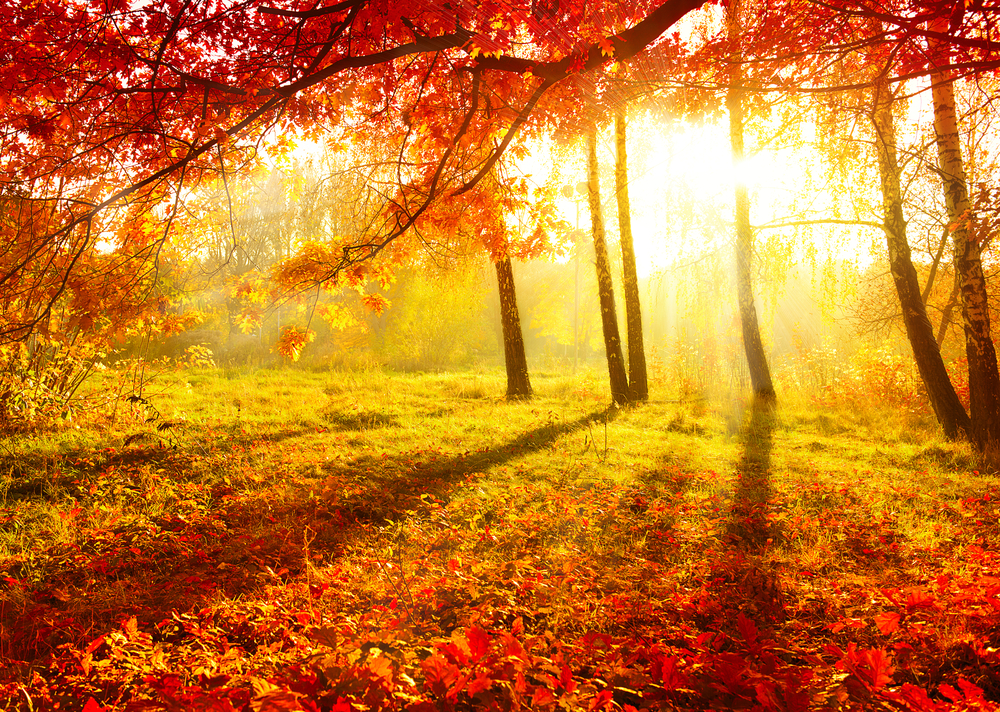
To those celebrating, Happy Helig!
Photo courtesy of shutterstock.
I grew up in a household that practiced portions of two religions: Judaism and Christianity. My mother was Christian but converted to Judaism; my father is Jewish by birth. But, just because my immediate family nominally had a single religious identity, my extended family remained multi-faith. I remember fondly lighting the menorah and the tree at my maternal grandmother’s house during years where Christmas and Hanukkah overlapped, for example. My choice to live as a Pagan and a polytheist as an adult further complexifies my family’s religious landscape as does, for that matter, my wife’s (and in-laws’) Catholicism.
My multi-faith family has an undeniable impact on my religious life today. Chiefly, I think it prepared me well for the intricacies of interfaith involvement; nearly every extended family get together requires at least some organization within and around religious custom and holidays, especially during my childhood when my family kept a kosher household. But, in less obvious ways my spirituality is layered with pieces of a Pagan, Jewish, and–to a lesser extent–Christian identity that I feel most notably at the Autumnal Equinox.
While the Jewish calendar is lunar and, therefore, doesn’t align itself with the solar timing of the Autumnal Equinox, the High Holidays of Judaism, Rosh Hashanah and Yom Kippur, often find themselves placed near enough to this time of year that they often felt like the beginning of Fall when I was younger. These holidays were important to us as a family and they were the days we were most likely to attend synagogue. I suppose it’s not too surprising, then, that I would carry some of what these holidays meant (and continue to mean) to me as a Jew over into what this time of the year means to me as a Pagan.
Rosh Hashanah is the Jewish new year celebration. While I realize that the climate of the Middle East is vastly different than that of the US East Coast, I will always associate Autumn with new beginnings and not the end of summer–of freedom–as some may on this side of the globe. The beginning of that new year is celebrated by eating apples dipped in honey; apples to represent the year and honey to make it sweet. Yom Kippur, by contrast, is a more somber experience and considered by many to be the most sacred of days on the Jewish calendar. It is a day of atonement and reconciliation, both with other people and with God. It is a day of fasting and one during which many other activities are prohibited so that one’s attention is focused on the sacred and not the profane.
The Autumnal Equinox, Mabon if you prefer, has always felt like a blank slate — a holiday in search of a meaning. I know others celebrate it as a Pagan Thanksgiving with family and friends and a feast of the summer’s bounty, but as a solitary, I’ve never really had the opportunity to do so. And, as a person who revels in the dark half of the year, I have trouble celebrating the end of the Summer when I’m so very, very ready for the start of Winter.
Perhaps it’s no surprise that my Jewish heritage imprints itself on to this day. Today, I celebrate this day as a mix of blessings: a day to look forward toward things to come, but also a day on which to reflect on the things that have passed. Like the ten days between Rosh Hashanah and Yom Kippur, I use the time between Mabon and Samhain to try and chart my course for the next year, to try and recognize my moments of success and failure, and to seek to maximize the former while addressing the latter.
And thus, to those who are celebrating the bounties of the Summer, I hope that your cup overflows with joy and health and that your wealth sustains you through the coming months. And, to my fellow Jews (and Jewitches) I add l’shanah tovah — may you have a good year.
Previous Post

September 19, 2014
Bringing Them All Back Home
Next Post
October 12, 2014 People Like Me
Browse Our Archives
Select a Category Aline O'Brien posts Byron Ballard posts Carol Kirk posts David Dashifen Kees posts Drea Parker posts Holli Emore posts Jess Matz posts Molly Khan posts Uncategorized Xander Folmer posts
Select a Month November 2015 September 2015 July 2015 June 2015 May 2015 April 2015 March 2015 February 2015 January 2015 December 2014 November 2014 October 2014 September 2014 August 2014 July 2014 June 2014 May 2014 April 2014 March 2014 February 2014 January 2014 December 2013 November 2013 October 2013 September 2013 August 2013 July 2013 June 2013
Follow Us!
TAKE THE
Religious Wisdom Quiz
How long was the wedding celebrations length in Biblical times?
Select your answer to see how you score.
7 days 5 days 10 days 3 days
Related posts from Wild Garden

Deborah Ann Light: A Life Well Lived
TRENDING AT PATHEOS Pagan

I was recently chatting with someone on Instagram. She asked me what...

While there are many people who share their results, the end of...

On July 23, I saw Christopher Nolan's The Odyssey which is Homer’s...

As I write this two big events have just finished up. One...

Restoring the Watershed of Divine Love
Perhaps cooperation is not something we manufacture through legislation, ideology, or moral...

Many UUs don’t pray because of bad experiences in a previous religion,...
view all Pagan blogs
Ad-Free & Subscriber Log-In Subscription Support
- About Us
- 2026 Calendar
- Videos
- Podcasts
- Library of World Religions
- Faith In Media Tracker
- Advertise With Us
- Write for Us
- Privacy Policy
- Terms of Service
- Do Not Sell My Data
- Contact Us
- Radiant Digital
- Manage Newsletter Subscriptions
- Unsubscribe From Notifications
- Sitemap
Copyright 2008-2026, Patheos. All rights reserved.
Subscription Support Ad-Free & Subscriber Log-In
Follow Patheos