
BuddhistCatholicContemplativeEvangelicalGeneral ChristianHinduJewishLatter-day SaintMuslimNew VisionsProgressive Christian
Beliefs
- Buddhist
- Catholic
- Contemplative
- Evangelical
- General Christian
- Hindu
- Jewish
- Latter-day Saint
- More Voices
- Muslim
- New Visions
- Pagan
- Progressive Christian
Topics
- Religion News
- Food and Religion
- Sports and Religion
- Religious Art
- Religious Music and Entertainment
- Religious Events
- History and Religion
- Style and Religion
- Politics and Religion
- Women in Religion
- Recreation Outdoors and Religion
- Business Finance and Religion
- Careers Workplace and Religion
- Education and Religion
- Family Parenting and Religion
- Health Fitness and Religion
- Home and Religion
- Relationships and Religion
- Technology and Religion
- Travel and Religion
Columnists
- Buddhist Columnists
- Business Finance and Religion Columnists
- Careers Workplace and Religion Columnists
- Catholic Columnists
- Contemplative Columnists
- Education and Religion Columnists
- Evangelists Columnists
- Family Parenting and Religion Columnists
- General Christian Columnists
- Health Fitness and Religion Columnists
- Hindu Columnists
- History and Religion Columnists
- Home and Religion Columnists
- Jewish Columnists
- More Voices Columnists
- Latter Day Columnists
- Muslim Columnists
- New Visions Columnists
- Nonreligious Columnists
- Pagan Columnists
- Politics and Religion Columnists
- Progressive Columnists
- Recreation Outdoors and Religion Columnists
- Relationships and Religion Columnists
- Religion News Columnists
- Religious Art Columnists
- Religious Events Columnists
- Religious Music and Entertainment Columnists
- Sports and Religion Columnists
- Style and Religion Columnists
- Technology and Religion Columnists
- Travel and Religion Columnists
- Women in Religion Columnists
Resource Library
- 2026 Calendar
- Library of World Religions
- The 100 Most Holy Places on Earth
- Patheos Answers
- Podcasts
- Videos
- Faith Leaders Database
- Anglican Episcopalian
- Bahai
- Baptist
- Buddhism
- Christianity
- Confucianism
- Eastern Orthodoxy
- Hinduism
- Holiness and Pentecostal
- ISKCON
- Islam
- Judaism
- Lutheran
- Methodist
- The Church of Jesus Christ of Latter-day Saints
- New Age
- Paganism
- Presbytarian and Reformed
- Protestantism
- Religion Behind the Scenes
- Roman Catholic
- Scientology
- Shia Islam
- Sikhism
- Sufism
- Sunni Islam
- Taoism
- Zen
- See all religions
Research Tools
 Ad-Free & Subscriber Log-In Subscription Support
Ad-Free & Subscriber Log-In Subscription Support
Follow Patheos 

- Trending:
- Forgiveness
- |
- Marriage
- |
- Consciousness
- |
- Death Penalty
- |
- Election
- |
- Halloween
 Wild Garden
- Home
- Pagan
- Greece v. Galloway: An Interfaith Opportunity
Greece v. Galloway: An Interfaith Opportunity
Last updated on: May 14, 2014 at 12:31 pm by David Dashifen Kees
Greece v. Galloway: An Interfaith Opportunity 2014-05-14T12:31:40-04:00 David Dashifen Kees
Patheos Explore the world's faith through different perspectives on religion and spirituality! Patheos has the views of the prevalent religions and spiritualities of the world.
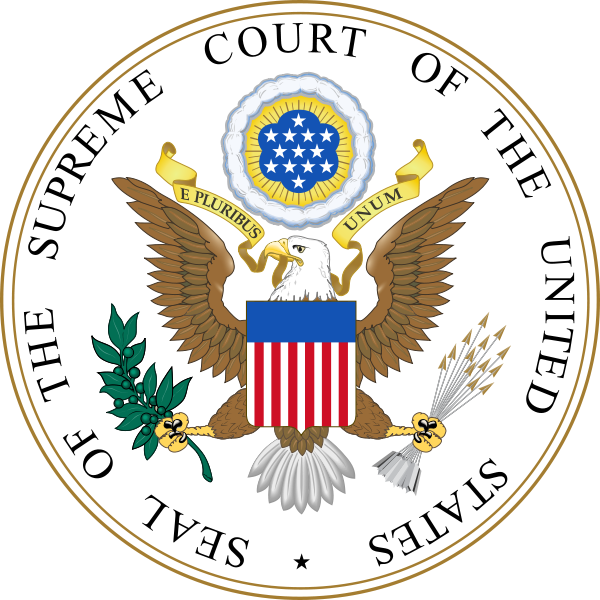 In the town of Greece, NY, sectarian prayer has been opening monthly municipal meetings since 1999. Members of that town sued it because those prayers were overwhelmingly Christian. On May 5th, the Supreme Court of the United States (SCOTUS) decided that case determining that sectarian prayer held prior to such meetings was not prohibited by the Constitution of the United States.
Before I continue, let me be clear: I am not a lawyer, constitutional or otherwise. But I do like lemonade, and I think that SCOTUS just handed us a bunch of lemons.
This Ruling Sucks
There’s really no other way to slice it. I think it’s even pretty poorly decided if you share the majority faith considering the decision indicates that invocations in the name of Jesus are merely traditional elements meant to “solemnize the occasion.” This minimizes these invocations putting them on the same level of, for example, the Pledge of Allegiance; the cries of “Oye! Oye!” or the action of standing that precede a judge’s entrance into a courtroom; or, as James Carroll put it in the Boston Globe: “What — invoking the holy name of Jesus makes up for, say, town officials’ habit of showing up in gym clothes?”
Regardless, the ruling is likely here to stay. Hecate Demeter, who is a lawyer, offered her initial thoughts on the ruling this past weekend at Witches & Pagans. In her article, I think she brought up a number of good points, one of which is the simple fact that this decision is unlikely to be challenged legislatively. Who wants to be described as the person who sponsored “the bill against prayer?”
Thus, it seems that the only way for those of us who want to see this ruling reversed, you know — because it sucks, is going to be to play along for the moment.
The Next Step
In the article linked above, Hecate offered this conclusion: “the only logical thing I can see to do in response is for Pagans and other members of minority and disfavored religions to begin showing up, volunteering to offer the public prayers, and making a record of the times that they are turned down.”
While I agree with her, this sucks, too. I don’t want prayer before municipal meetings. In offering her dissent to the Court’s ruling, Justice Elena Kagan discussed a variety of situations in which a person’s lack of participation in the religious invocation might bias government representatives against that person. In other words, my hopes to construct a backyard shed shouldn’t rest upon my willingness to pray. In a perfect world, representatives wouldn’t use their religion or mine (or the lack of anyone’s religion) in determining the fitness of my plans for shed-construction.
But, this is far from a perfect world.
Following the SCOTUS decision, the American Humanist Association moved to quickly provide the means for interested humanists to offer their own invocations prior to town meetings. After all, the SCOTUS decision specifically indicated that a town must maintain a policy of nondiscrimination with respect to sectarian opening prayers. The goal of this online application, according to their statement, is to provide “sample secular invocations and an interactive map to find a humanist who can deliver an invocation in one’s local area.” In short: they want to do the first and second items that Hecate described and I quoted above.
I want to do the same, and more, for Pagans.
A Policy of Nondiscrimination
The syllabus in the SCOTUS decision indicates, as mentioned above, that a policy of nondiscrimination needs to be maintained by the town. Since we’re not likely to see a legislative discussion of this ruling, that leaves the judiciary. Which means we need data and, at the moment, we don’t have it. By creating a system that would allow Pagans to offer their services to their municipalities and to record, as Hecate suggests, their experiences after doing so, we might be able to show that a pattern of discrimination does exist, If so, armed with that data, we could return to the courts.
Americans United for the Separation of Church and State is doing just that. They’re calling it Operation Inclusion. The AU maintains that “towns cannot discriminate on the basis of religion; town leaders cannot lead others in prayers or integrate worship into the legislative process; and invocations cannot proselytize or denigrate other belief systems.” If we can amass data that shows these criteria are not met, we have a way forward with respect to challenging the SCOTUS ruling.
I’ve contacted the AU to see if efforts within religious communities can be linked to Operation Inclusion, but I have not yet received a response. My next step is to contact the local Massachusetts chapter of AU; I will keep you all in the loop with respect to my efforts here.
An Interfaith Opportunity
So, that was a lot of lemons. But, there is one thing from which we can all benefit as a result of this ruling. If nothing else, it creates the opportunity for increased interfaith involvement prior to town meetings. Population statistics indicate that the majority of municipal sectarian invocations will remain Christian. This is especially true since the syllabus to the SCOTUS ruling also indicates that a town need not not search beyond its borders for “non-Christian prayer givers in an effort to achieve religious balancing.”
But, for those towns which have non-Christian members, it’s not only fair to say that the town should involvethem, but that they must. I suppose an argument could be made that without an appropriate religious authority within the town borders it may be hard to do so. But, the ruling indicated the town doesn’t have to find such authorities; it didn’t say that the a religious congregation couldn’t invite their authority to town!
From this point of view, the decision is sort of a win-win. We have the chance to share our practices with others and to engage our neighbors in learning more not only about Paganism but also about other minority faiths and about the various forms of both atheism and non-theism. And, if we find a pattern of discrimination, we also have plans in place about how to deal with it.
A Holistic Response
There’s one last thing to consider: some municipalities already have policies enforcing non-sectarian prayer (though at least one of these is now in question) or policies against prayer entirely.
These municipalities should be lauded for their stance. In addition to resources for sectarian prayer to be used in areas of the country that allow for them, I propose that we also undertake a second, complementary endeavor to celebrate, promote, and thank our towns by offering resources (e.g. form letters) that we could print, personalize, and send to our local representation. This may go some distance toward helping to shore up the wall of separation between church and state that seems to have crumbled a bit in recent times.
Previous Post

May 7, 2014
How to Do Interfaith: Basics For Pagan Beginners, Part 2
Next Post

May 14, 2014 Interfaith Update
Browse Our Archives
Select a Category Aline O'Brien posts Byron Ballard posts Carol Kirk posts David Dashifen Kees posts Drea Parker posts Holli Emore posts Jess Matz posts Molly Khan posts Uncategorized Xander Folmer posts
Select a Month November 2015 September 2015 July 2015 June 2015 May 2015 April 2015 March 2015 February 2015 January 2015 December 2014 November 2014 October 2014 September 2014 August 2014 July 2014 June 2014 May 2014 April 2014 March 2014 February 2014 January 2014 December 2013 November 2013 October 2013 September 2013 August 2013 July 2013 June 2013
Follow Us!
TAKE THE
Religious Wisdom Quiz
Who said, "You are the Christ, the Son of the living God"?
Select your answer to see how you score.
John Paul Peter James
Related posts from Wild Garden


Deborah Ann Light: A Life Well Lived
TRENDING AT PATHEOS Pagan

I was recently chatting with someone on Instagram. She asked me what...

While there are many people who share their results, the end of...

On July 23, I saw Christopher Nolan's The Odyssey which is Homer’s...

As I write this two big events have just finished up. One...

Restoring the Watershed of Divine Love
Perhaps cooperation is not something we manufacture through legislation, ideology, or moral...

Many UUs don’t pray because of bad experiences in a previous religion,...
view all Pagan blogs
Ad-Free & Subscriber Log-In Subscription Support
- About Us
- 2026 Calendar
- Videos
- Podcasts
- Library of World Religions
- Faith In Media Tracker
- Advertise With Us
- Write for Us
- Privacy Policy
- Terms of Service
- Do Not Sell My Data
- Contact Us
- Radiant Digital
- Manage Newsletter Subscriptions
- Unsubscribe From Notifications
- Sitemap
Copyright 2008-2026, Patheos. All rights reserved.
Subscription Support Ad-Free & Subscriber Log-In
Follow Patheos