
BuddhistCatholicContemplativeEvangelicalGeneral ChristianHinduJewishLatter-day SaintMuslimNew VisionsProgressive Christian
Beliefs
- Buddhist
- Catholic
- Contemplative
- Evangelical
- General Christian
- Hindu
- Jewish
- Latter-day Saint
- More Voices
- Muslim
- New Visions
- Pagan
- Progressive Christian
Topics
- Religion News
- Food and Religion
- Sports and Religion
- Religious Art
- Religious Music and Entertainment
- Religious Events
- History and Religion
- Style and Religion
- Politics and Religion
- Women in Religion
- Recreation Outdoors and Religion
- Business Finance and Religion
- Careers Workplace and Religion
- Education and Religion
- Family Parenting and Religion
- Health Fitness and Religion
- Home and Religion
- Relationships and Religion
- Technology and Religion
- Travel and Religion
Columnists
- Buddhist Columnists
- Business Finance and Religion Columnists
- Careers Workplace and Religion Columnists
- Catholic Columnists
- Contemplative Columnists
- Education and Religion Columnists
- Evangelists Columnists
- Family Parenting and Religion Columnists
- General Christian Columnists
- Health Fitness and Religion Columnists
- Hindu Columnists
- History and Religion Columnists
- Home and Religion Columnists
- Jewish Columnists
- More Voices Columnists
- Latter Day Columnists
- Muslim Columnists
- New Visions Columnists
- Nonreligious Columnists
- Pagan Columnists
- Politics and Religion Columnists
- Progressive Columnists
- Recreation Outdoors and Religion Columnists
- Relationships and Religion Columnists
- Religion News Columnists
- Religious Art Columnists
- Religious Events Columnists
- Religious Music and Entertainment Columnists
- Sports and Religion Columnists
- Style and Religion Columnists
- Technology and Religion Columnists
- Travel and Religion Columnists
- Women in Religion Columnists
Resource Library
- 2026 Calendar
- Library of World Religions
- The 100 Most Holy Places on Earth
- Patheos Answers
- Podcasts
- Videos
- Faith Leaders Database
- Anglican Episcopalian
- Bahai
- Baptist
- Buddhism
- Christianity
- Confucianism
- Eastern Orthodoxy
- Hinduism
- Holiness and Pentecostal
- ISKCON
- Islam
- Judaism
- Lutheran
- Methodist
- The Church of Jesus Christ of Latter-day Saints
- New Age
- Paganism
- Presbytarian and Reformed
- Protestantism
- Religion Behind the Scenes
- Roman Catholic
- Scientology
- Shia Islam
- Sikhism
- Sufism
- Sunni Islam
- Taoism
- Zen
- See all religions
Research Tools
 Ad-Free & Subscriber Log-In Subscription Support
Ad-Free & Subscriber Log-In Subscription Support
Follow Patheos 

- Trending:
- Forgiveness
- |
- Marriage
- |
- Consciousness
- |
- Death Penalty
- |
- Election
- |
- Halloween
 Wild Garden
- Home
- Pagan
- Interfaith and the U.S. Armed Forces
Interfaith and the U.S. Armed Forces
Last updated on: November 8, 2013 at 5:59 pm by Holli Emore
Interfaith and the U.S. Armed Forces 2013-11-08T17:59:13-04:00 Holli Emore
Patheos Explore the world's faith through different perspectives on religion and spirituality! Patheos has the views of the prevalent religions and spiritualities of the world.
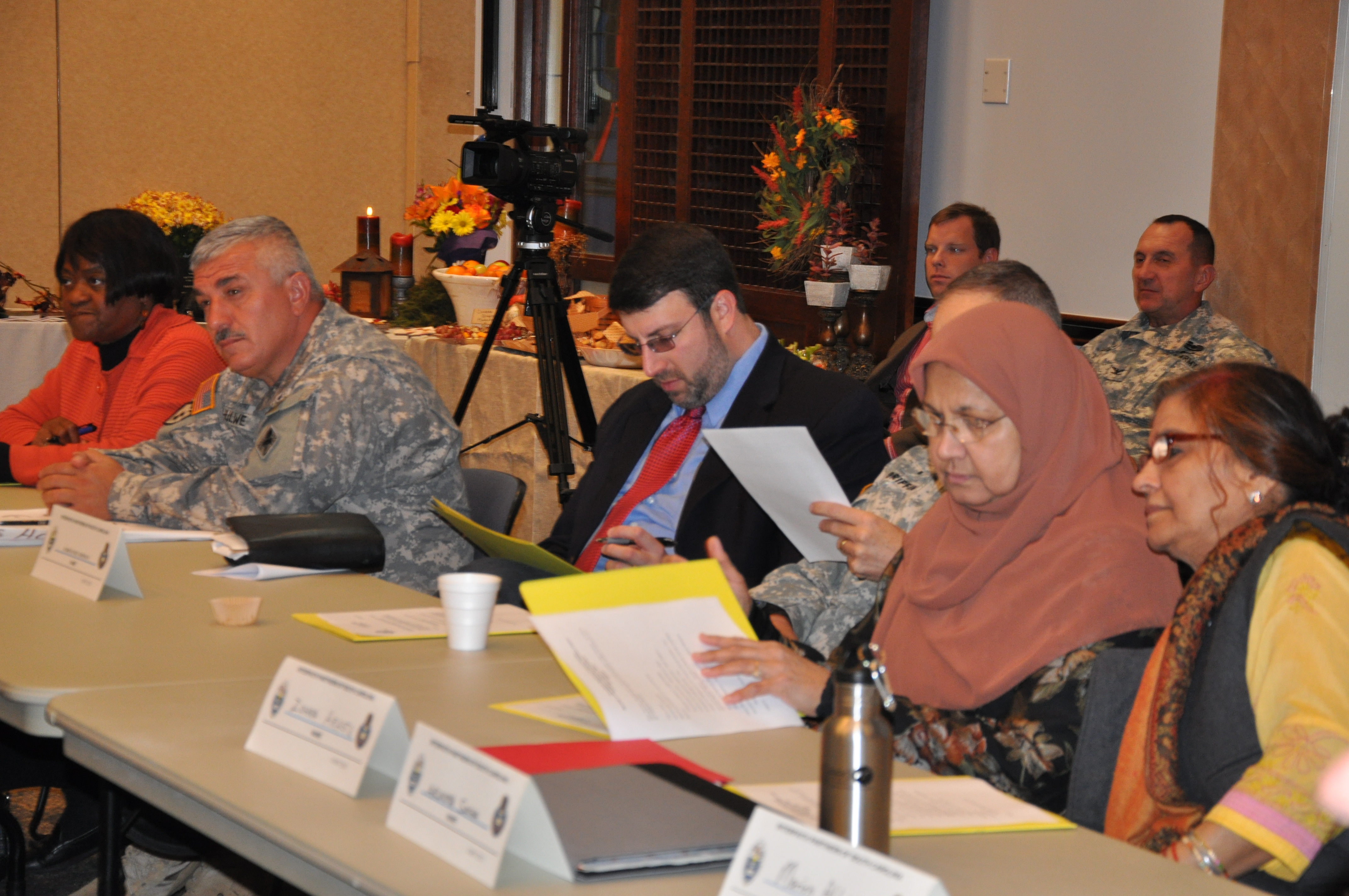
L to R at the table: Rev. Jackie Utley, Chaplain Abdullah Hulwe, Rabbi Daniel Sherman, Zohra Arastu, and Arunima Sinha.
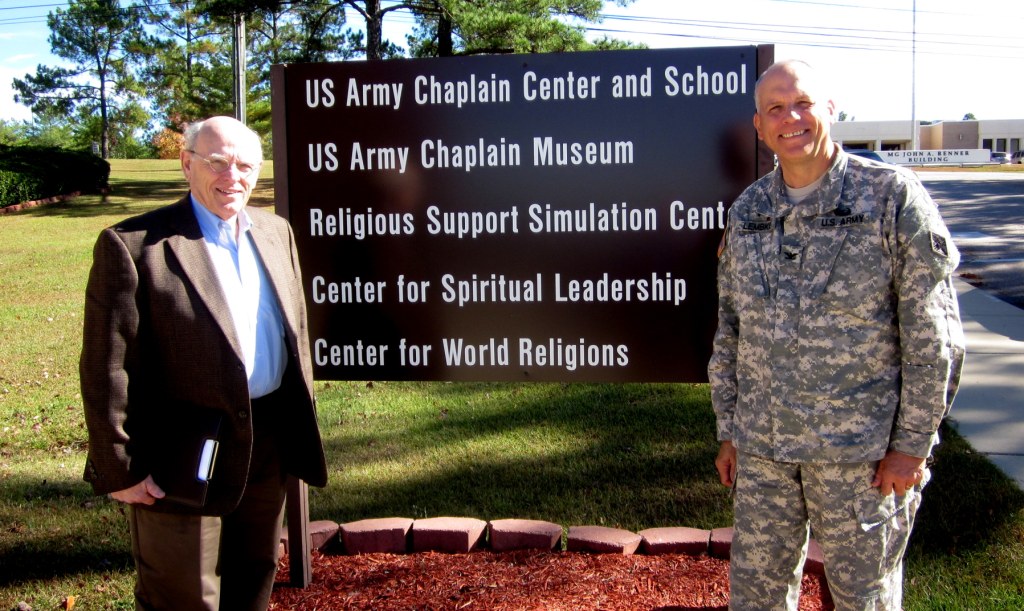
Dr. Carl Evans of IPSC and Chaplain Mike Lembke, Dir. of the Center for World Religions
The military as an example of daily interfaith relations? Never having been a soldier, it had not occurred to me, but that’s one of the things I heard at a remarkable meeting this week at the U.S. Armed Forces Chaplains School and Center, here in Columbia, S.C., at Fort Jackson. The Chaplains School was hosting the annual meeting of Interfaith Partners of S.C., and “host” would be an understatement for the outstanding experience they provided.
From the time I parked my car across the street I was greeted by chaplain-soldiers about every 100 yards who made sure I found my way to the meeting hall. Inside they had put up a lovely display of religious materials and mementos of various military interfaith gatherings around the world, plus, beautifully-presented refreshments. While the Navy chaplains had a conflict and could not join us that day, the room was full of Army and Air Force chaplains, many of them instructors at the school, who bustled around making us feel welcome as we arrived. The welcome included name tags and nice table tents, two official photographers, and a local television news camera in the corner.
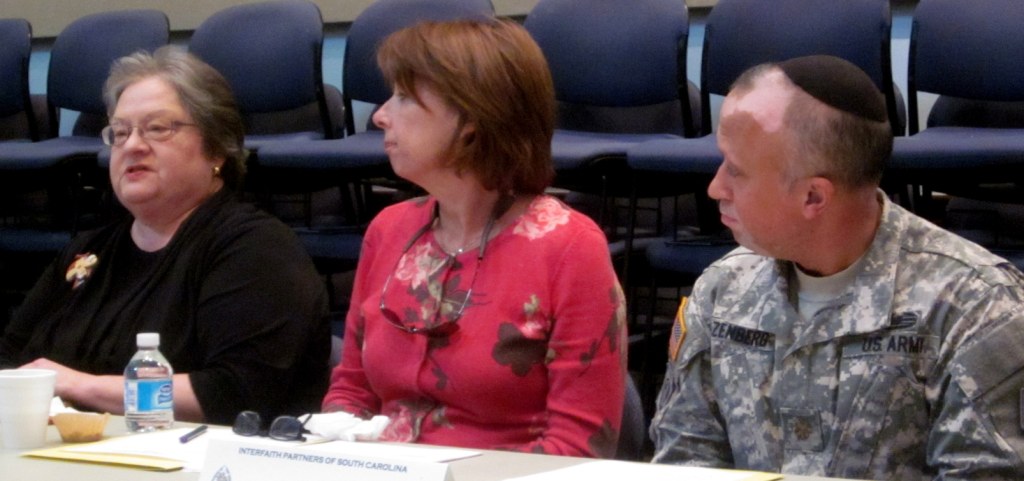
L to R Rev. Brenda Kneece, Missie Walker, Chpln. Felzenberger
Each of us left with a lovely color certificate of appreciation signed by Chaplain (Col.) David Colwell, Commandant. :
“For your service and outstanding support of the Interfaith Partners of South Carolina (IPSC) shown by your willingness to meet with the United States Army Chaplain Center and School at Fort Jackson, S.C. Your enthusiasm and devotion to the mission and intent of the IPSC added significantly to the overall success of the meeting. Your efforts are greatly appreciated. Your commitment is a credit to you, the general public in which you humbly serve, and the United States of America.”
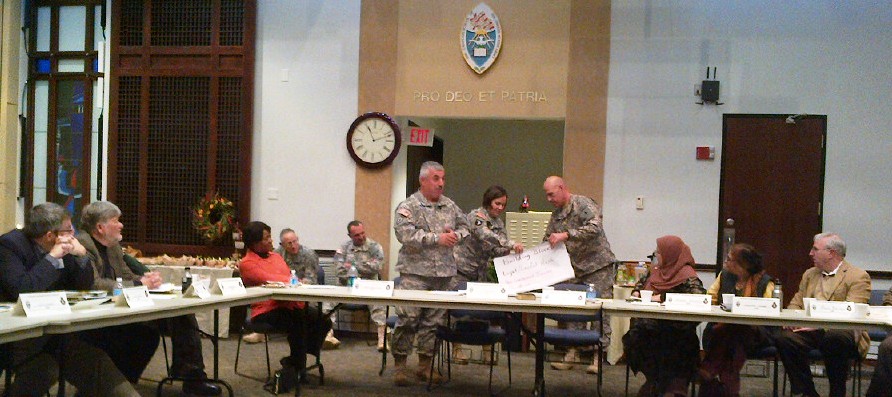
Chpln. Hulwe shares Chaplain operational methodology with IPSC
Our own IPSC chair, Dr. Carl Evans, was joined in presiding by school commandant and chaplain Col. David Colwell, as well as the Director of the school’s Center for World Religions, Col. Mike Lembke (also a chaplain), who envisioned and organized the entire meeting. IPSC got our business out of the way and then Chaplain Lembke initiated a delightful program of short presentations by several people on military chaplaincy and how our two groups can support each other’s mutual goals of interfaith service.
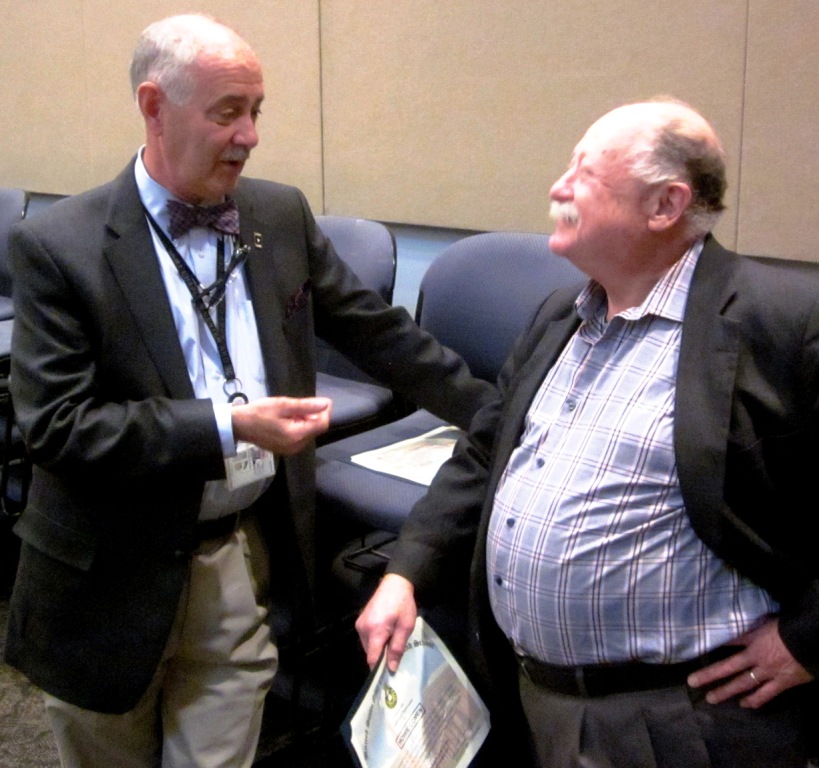
Chpln. Sam Boone and Howie Comen
By chance, this fall I’m taking a chaplaincy course at Cherry Hill Seminary, so I found it fascinating to hear much of our classroom material being voiced by practicing chaplains. I was able to get a few notes – here are some bullets that stood out in my mind:
∙ No one ever said to me, “Don’t pray for me.”
∙ We are shepherds, not cowboys.
∙ Can you think of many headlines in the news that aren’t affected by or which don’t have some connection to religion?
∙ Military chaplains must take an interfaith approach because we are serving everyone, no matter what is our own personal religious identity. We do interfaith every day, in war zones, on battlefields, in barracks, and with families.
I’m aware of these religious affiliations among the chaplains who were present: Muslim, Lutheran, Episcopalian, Jewish, Southern Baptist, and others I did not catch. IPSC folks represented these religions: Muslim, Hindu, Christians of various stripes, Pagan, Sikh, Jewish and Unitarian Universalist. Many of us exchanged contact information, and some of us have plans to meet for lunch soon, or other such blossomings of friendship.

Holli Emore presents for IPSC Nominating Committee
Cherry Hill Seminary received several favorable and public mentions, which bodes well for potential future engagement with the Chaplain School. Since CHS is beginning to work on an application to the Department of Defense to have our Master of Divinity recognized as equivalent to that of other accredited schools, it is very helpful for me to learn more about the culture of military chaplaincy and its educational requirements. Also gratifying was to hear several chaplains share their encounters with Pagans in uniform. It was a great day to be out of the broom closet, because Paganism was most certainly not invisible in this crowd, and received equal respect with all the other religions.

Thank you, Nancy Lembke!
I was a bit surprised to see that the religious display was conspicuously Abrahamic, with only Jewish, Muslim and Christian materials present. While the subject was not discussed on this particular day, I have found my contacts to be fairly honest about the overall climate of conservatism still active in the Chaplains Corps. Some of this is a function of differences in our religions, e.g., the newness of the idea that Pagan ministers need a formal education. Some of it is no doubt an oversight of the military. But based on what I continue to see in my encounters at Fort Jackson, that culture is rapidly adapting to the overwhelmingly diverse world in which military chaplains must serve. I was honored to be able to participate in what felt like an historic occasion.
Click here to see all photos on Facebook
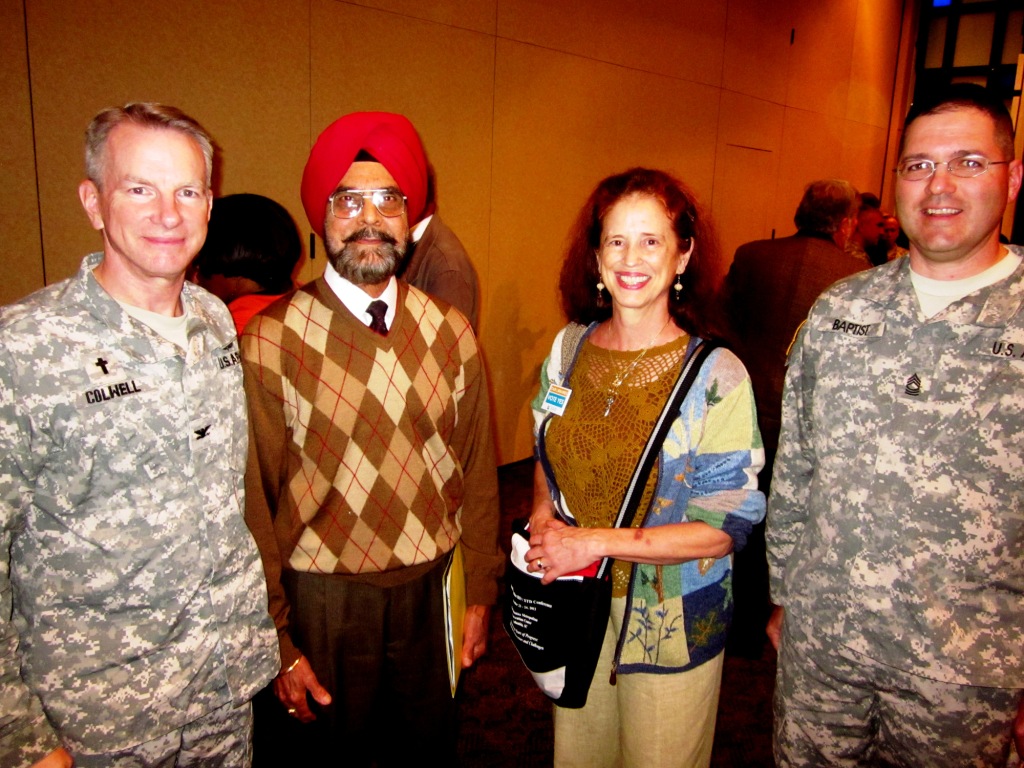
Chpln. (Col.) Colwell, Ajit Randhawa, Elizabeth McLendon and Chpln. Baptist
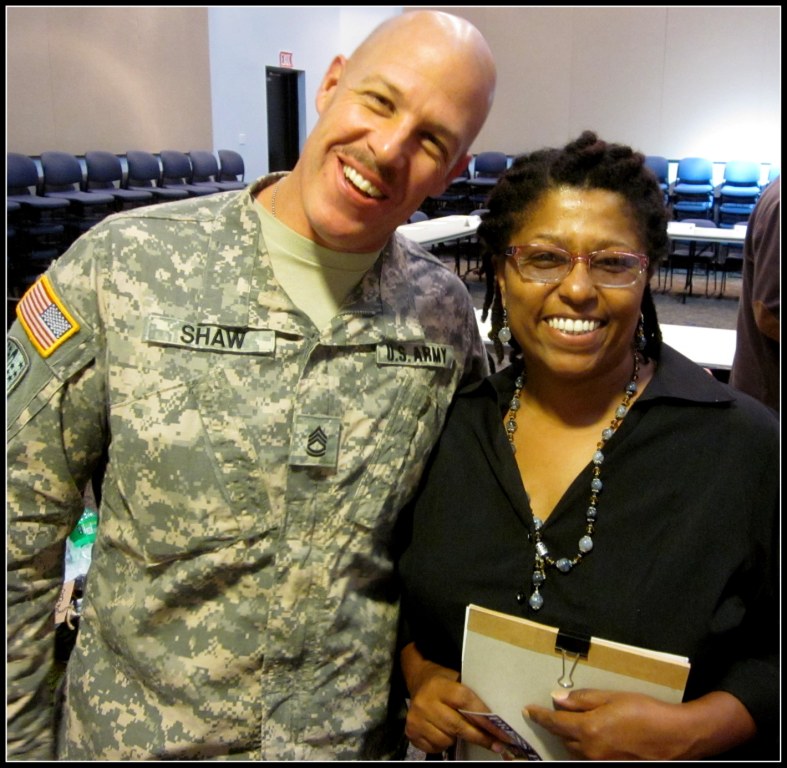
Chpln. Shaw and Julia Simpkins
Previous Post

November 7, 2013
Is ALL Proselytizing UNethical and immoral?
Next Post
November 15, 2013 What is a Sacred Place?
Browse Our Archives
Select a Category Aline O'Brien posts Byron Ballard posts Carol Kirk posts David Dashifen Kees posts Drea Parker posts Holli Emore posts Jess Matz posts Molly Khan posts Uncategorized Xander Folmer posts
Select a Month November 2015 September 2015 July 2015 June 2015 May 2015 April 2015 March 2015 February 2015 January 2015 December 2014 November 2014 October 2014 September 2014 August 2014 July 2014 June 2014 May 2014 April 2014 March 2014 February 2014 January 2014 December 2013 November 2013 October 2013 September 2013 August 2013 July 2013 June 2013
Follow Us!
TAKE THE
Religious Wisdom Quiz
How many plagues did God inflict upon Egypt?
Select your answer to see how you score.
7 10 21 14
Related posts from Wild Garden


Compassion and Law Enforcement

TRENDING AT PATHEOS Pagan

I was recently chatting with someone on Instagram. She asked me what...

While there are many people who share their results, the end of...

On July 23, I saw Christopher Nolan's The Odyssey which is Homer’s...

As I write this two big events have just finished up. One...

Restoring the Watershed of Divine Love
Perhaps cooperation is not something we manufacture through legislation, ideology, or moral...

Many UUs don’t pray because of bad experiences in a previous religion,...
view all Pagan blogs
Ad-Free & Subscriber Log-In Subscription Support
- About Us
- 2026 Calendar
- Videos
- Podcasts
- Library of World Religions
- Faith In Media Tracker
- Advertise With Us
- Write for Us
- Privacy Policy
- Terms of Service
- Do Not Sell My Data
- Contact Us
- Radiant Digital
- Manage Newsletter Subscriptions
- Unsubscribe From Notifications
- Sitemap
Copyright 2008-2026, Patheos. All rights reserved.
Subscription Support Ad-Free & Subscriber Log-In
Follow Patheos