
BuddhistCatholicContemplativeEvangelicalGeneral ChristianHinduJewishLatter-day SaintMuslimNew VisionsProgressive Christian
Beliefs
- Buddhist
- Catholic
- Contemplative
- Evangelical
- General Christian
- Hindu
- Jewish
- Latter-day Saint
- More Voices
- Muslim
- New Visions
- Pagan
- Progressive Christian
Topics
- Religion News
- Food and Religion
- Sports and Religion
- Religious Art
- Religious Music and Entertainment
- Religious Events
- History and Religion
- Style and Religion
- Politics and Religion
- Women in Religion
- Recreation Outdoors and Religion
- Business Finance and Religion
- Careers Workplace and Religion
- Education and Religion
- Family Parenting and Religion
- Health Fitness and Religion
- Home and Religion
- Relationships and Religion
- Technology and Religion
- Travel and Religion
Columnists
- Buddhist Columnists
- Business Finance and Religion Columnists
- Careers Workplace and Religion Columnists
- Catholic Columnists
- Contemplative Columnists
- Education and Religion Columnists
- Evangelists Columnists
- Family Parenting and Religion Columnists
- General Christian Columnists
- Health Fitness and Religion Columnists
- Hindu Columnists
- History and Religion Columnists
- Home and Religion Columnists
- Jewish Columnists
- More Voices Columnists
- Latter Day Columnists
- Muslim Columnists
- New Visions Columnists
- Nonreligious Columnists
- Pagan Columnists
- Politics and Religion Columnists
- Progressive Columnists
- Recreation Outdoors and Religion Columnists
- Relationships and Religion Columnists
- Religion News Columnists
- Religious Art Columnists
- Religious Events Columnists
- Religious Music and Entertainment Columnists
- Sports and Religion Columnists
- Style and Religion Columnists
- Technology and Religion Columnists
- Travel and Religion Columnists
- Women in Religion Columnists
Resource Library
- 2026 Calendar
- Library of World Religions
- The 100 Most Holy Places on Earth
- Patheos Answers
- Podcasts
- Videos
- Faith Leaders Database
- Anglican Episcopalian
- Bahai
- Baptist
- Buddhism
- Christianity
- Confucianism
- Eastern Orthodoxy
- Hinduism
- Holiness and Pentecostal
- ISKCON
- Islam
- Judaism
- Lutheran
- Methodist
- The Church of Jesus Christ of Latter-day Saints
- New Age
- Paganism
- Presbytarian and Reformed
- Protestantism
- Religion Behind the Scenes
- Roman Catholic
- Scientology
- Shia Islam
- Sikhism
- Sufism
- Sunni Islam
- Taoism
- Zen
- See all religions
Research Tools
 Ad-Free & Subscriber Log-In Subscription Support
Ad-Free & Subscriber Log-In Subscription Support
Follow Patheos 

- Trending:
- Forgiveness
- |
- Marriage
- |
- Consciousness
- |
- Death Penalty
- |
- Election
- |
- Halloween
 Wild Garden
- Home
- Pagan
- Them and Us Part II – The Metaphysics of Unity and Separation
Them and Us Part II – The Metaphysics of Unity and Separation
Last updated on: July 25, 2013 at 1:47 pm by Holli Emore
Them and Us Part II – The Metaphysics of Unity and Separation 2013-07-25T13:47:31-04:00 Holli Emore
Patheos Explore the world's faith through different perspectives on religion and spirituality! Patheos has the views of the prevalent religions and spiritualities of the world.
Michael Talbot’s 1991 classic, The Holographic Universe, lays out a breathtaking overview of late 20th century quantum physics which reveals the unmistakable metaphysical nature of the cosmos. He quotes physicist Bohm about the “implicate order”–
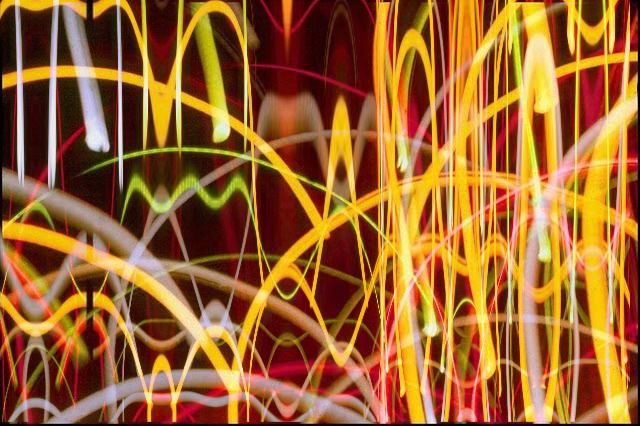 “In the enfolded [or implicate] order, space and time are no longer the dominant factors determining the relationships of dependence or independence of different elements. Rather, an entirely different sort of basic connection of elements is possible, from which our ordinary notions of space and time, along with those of separately existent particles, are abstracted as forms derived from the deeper order.” (Talbot, xv)
Each time physicists identify one subatomic particle, it seems they are soon on the trail of one still smaller and more elusive. When I was in school, it was simple: protons and neutrons in the middle, electrons spinning around them. When I asked my 9th-grade science teacher what those were made of, she elicited a cheap laugh from the class by telling me that I was “not cut out to be a nuclear physicist.” Yes, I had the last laugh on Miz Ruby since news of scientific discoveries soon whizzed past that old model. But leaving the old behind is like jumping into the ocean, giving oneself over to unknowable currents, creatures and forces.
Lynne McTaggart (The Field) describes the astonishing shift in scientific thinking that was already happening before I reached 9th grade, and the accompanying consternation of leading 20th century physicists, as they recognized the shadow of metaphysics behind their science:
“The world of the separate should have been laid waste once and for all by the discovery of quantum physics in the early part of the twentieth century. As the pioneers of quantum physics peered into the very heart of matter they were astounded by what they saw . . . these subatomic particles had no meaning in isolation, but only in relationship with everything else . . . You could only understand the universe as a dynamic web of interconnection . . . The pioneers of quantum physics – Erwin Schrodinger, Werner Heisenberg, Niels Bohr and Wolfgant Pauli – had some inkling of the metaphysical territory they had trespassed into.” (McTaggart, 2002, xv-xvi)
That ever-shifting ocean can be frightening if you like all parts of your life defined for you. The implicate order (that’s all of us and everything else, too) is nothing if not dynamic; neat freaks will soon get pulled under by a rip tide and find themselves far downshore and out of air. By the way, my personal opinion is that all types of fundamentalism come from attempts to keep everything safe in their allotted cubbyholes, a very unnatural approach to tidal waters.
Coming to terms with a quantum world has forced me to change my approach to everything – everything. My health, my spirituality, my relationships, and many things that I formerly viewed as outside of me. Understanding my true interconnectedness with the implicate order means I can no longer use scapegoats to explain things in my life that I don’t like. As McTaggart says, things have “no meaning in isolation, but only in relationship with everything else.” I am in relationship with everything: those I love, those I don’t like, those I can’t stand, and even those I don’t know. We are all in this together.
Why then, am I troubled by much of what I see in Pagandom? More to come in Part III of Them and Us.
(Photo: By Plismo (Own work) [CC-BY-SA-3.0 (http://creativecommons.org/licenses/by-sa/3.0)], via Wikimedia Commons)
Previous Post

July 22, 2013
Them and Us - Coming of Age Late in Life
Next Post

July 25, 2013 The Solace of Holy Stone
Browse Our Archives
Select a Category Aline O'Brien posts Byron Ballard posts Carol Kirk posts David Dashifen Kees posts Drea Parker posts Holli Emore posts Jess Matz posts Molly Khan posts Uncategorized Xander Folmer posts
Select a Month November 2015 September 2015 July 2015 June 2015 May 2015 April 2015 March 2015 February 2015 January 2015 December 2014 November 2014 October 2014 September 2014 August 2014 July 2014 June 2014 May 2014 April 2014 March 2014 February 2014 January 2014 December 2013 November 2013 October 2013 September 2013 August 2013 July 2013 June 2013
Follow Us!
TAKE THE
Religious Wisdom Quiz
Who was called by God to leave his home and go to a land God would show him?
Select your answer to see how you score.
Abram Noah Jacob Moses
Related posts from Wild Garden



Compassion and Law Enforcement

TRENDING AT PATHEOS Pagan

I was recently chatting with someone on Instagram. She asked me what...

While there are many people who share their results, the end of...

On July 23, I saw Christopher Nolan's The Odyssey which is Homer’s...

As I write this two big events have just finished up. One...

Restoring the Watershed of Divine Love
Perhaps cooperation is not something we manufacture through legislation, ideology, or moral...

Many UUs don’t pray because of bad experiences in a previous religion,...
view all Pagan blogs
Ad-Free & Subscriber Log-In Subscription Support
- About Us
- 2026 Calendar
- Videos
- Podcasts
- Library of World Religions
- Faith In Media Tracker
- Advertise With Us
- Write for Us
- Privacy Policy
- Terms of Service
- Do Not Sell My Data
- Contact Us
- Radiant Digital
- Manage Newsletter Subscriptions
- Unsubscribe From Notifications
- Sitemap
Copyright 2008-2026, Patheos. All rights reserved.
Subscription Support Ad-Free & Subscriber Log-In
Follow Patheos