
BuddhistCatholicContemplativeEvangelicalGeneral ChristianHinduJewishLatter-day SaintMuslimNew VisionsProgressive Christian
Beliefs
- Buddhist
- Catholic
- Contemplative
- Evangelical
- General Christian
- Hindu
- Jewish
- Latter-day Saint
- More Voices
- Muslim
- New Visions
- Pagan
- Progressive Christian
Topics
- Religion News
- Food and Religion
- Sports and Religion
- Religious Art
- Religious Music and Entertainment
- Religious Events
- History and Religion
- Style and Religion
- Politics and Religion
- Women in Religion
- Recreation Outdoors and Religion
- Business Finance and Religion
- Careers Workplace and Religion
- Education and Religion
- Family Parenting and Religion
- Health Fitness and Religion
- Home and Religion
- Relationships and Religion
- Technology and Religion
- Travel and Religion
Columnists
- Buddhist Columnists
- Business Finance and Religion Columnists
- Careers Workplace and Religion Columnists
- Catholic Columnists
- Contemplative Columnists
- Education and Religion Columnists
- Evangelists Columnists
- Family Parenting and Religion Columnists
- General Christian Columnists
- Health Fitness and Religion Columnists
- Hindu Columnists
- History and Religion Columnists
- Home and Religion Columnists
- Jewish Columnists
- More Voices Columnists
- Latter Day Columnists
- Muslim Columnists
- New Visions Columnists
- Nonreligious Columnists
- Pagan Columnists
- Politics and Religion Columnists
- Progressive Columnists
- Recreation Outdoors and Religion Columnists
- Relationships and Religion Columnists
- Religion News Columnists
- Religious Art Columnists
- Religious Events Columnists
- Religious Music and Entertainment Columnists
- Sports and Religion Columnists
- Style and Religion Columnists
- Technology and Religion Columnists
- Travel and Religion Columnists
- Women in Religion Columnists
Resource Library
- 2026 Calendar
- Library of World Religions
- The 100 Most Holy Places on Earth
- Patheos Answers
- Podcasts
- Videos
- Faith Leaders Database
- Anglican Episcopalian
- Bahai
- Baptist
- Buddhism
- Christianity
- Confucianism
- Eastern Orthodoxy
- Hinduism
- Holiness and Pentecostal
- ISKCON
- Islam
- Judaism
- Lutheran
- Methodist
- The Church of Jesus Christ of Latter-day Saints
- New Age
- Paganism
- Presbytarian and Reformed
- Protestantism
- Religion Behind the Scenes
- Roman Catholic
- Scientology
- Shia Islam
- Sikhism
- Sufism
- Sunni Islam
- Taoism
- Zen
- See all religions
Research Tools
 Ad-Free & Subscriber Log-In Subscription Support
Ad-Free & Subscriber Log-In Subscription Support
Follow Patheos 

- Trending:
- Forgiveness
- |
- Marriage
- |
- Consciousness
- |
- Death Penalty
- |
- Election
- |
- Halloween
 Wild Garden
- Home
- Pagan
- Seeking the Mystery: An Excellent Interfaith Resource
Seeking the Mystery: An Excellent Interfaith Resource
Last updated on: July 9, 2013 at 9:48 am by David Dashifen Kees
Seeking the Mystery: An Excellent Interfaith Resource 2013-07-09T09:48:24-04:00 David Dashifen Kees
Patheos Explore the world's faith through different perspectives on religion and spirituality! Patheos has the views of the prevalent religions and spiritualities of the world.
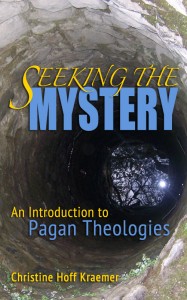 As I mentioned before, I had the opportunity to work with other religious leaders at a workshop in Connecticut in June. At that workshop, I had the chance and the honor to represent Paganism, as best as any individual can, not only in casual conversations but also in giving a presentation to attendees relating to what our religious community is all about.
I’d given this sort of talk before. We might be more numerous than we were in the past, and our varied interests in interfaith work tend to make us perhaps a little more common in such circles than in the public at large, but the average person still lacks an understanding of Paganism. In fact, I’d probably say that even some of the average Pagans you meet lack an understanding of the breadth within our community, especially if they haven’t had the opportunity to meet with or work with Pagans outside of their tradition or local group. But, I digress.
In the past, when giving these sorts of presentations, I usually let the audience direct things. I’d give a very brief introduction to myself and cover some of the groundwork for Paganism (polytheism, immanence, virtue ethics, etc.) but then fairly quickly open the floor for questions. What this usually means is that I’d get a bunch of questions about magic and spells; usually, the Satan Question would come up, too. But, I would often leave the presentation feeling as if we’d talked a lot but not really about what matters with respect to our community.
Armed with Seeking the Mystery: An Introduction to Pagan Theologies by our own managing editor Christine Hoff Kraemer, that was no longer a problem.
When it was released in Kindle format, I purchased it immediately. I knew that I had an upcoming presentation on Paganism to give, and I knew it was going to be to other religious leaders in their communities. I had to bring my A-game and I felt like I needed to hone my own understanding of things in a more rigorous way. I dove into the book reading it from cover to cover (or whatever you read from and to with a Kindle) and found it to be both extremely informative and extremely easy to understand.
From an interfaith point of view, it’s an invaluable resource. Christine covers quite a bit in the five chapters that make up the book but one of the most important sections, for my presentation and I think for members of interfaith communities, comes right at the beginning in the introduction. There, she identifies nine commonalities between our various Pagan traditions. She’s careful to indicate that a group of people having these traits may not be Pagan and, in fact, Pagans might not have all nine of them, but that as these behaviors emerge from within a community, it becomes more and more likely that it may be Pagan.
This is no small thing. How many times have you had to begin a conversation about Paganism by discussing what we are not? Peter Dybing–activist, representative of the Covenant of the Goddess, former president of the Officers of Avalon–has written on this as has HecateDemeter as a question of framing. We often find ourselves, or at least I have found myself, talking about what we are not.
In the introduction to her book, Christine provides an excellent framework to begin discussing what we are.
Of course, she’s not the first person to do so, but hers is the first book I encountered that is not simply written as a Paganism 101 book targeted at Pagans. Plus, she is able to take things beyond the how-to instructions relating to specific spiritual technologies and takes us into the theological grounding and background for those practices. As a result, Christine’s book is not only extremely educational with respect to teaching ourselves about our own diversity, but it’s an excellent resource to suggest to non-Pagans if they want to know more… Especially if those non-Pagans are not interested in actually becoming a part of our community, and only want to know what it is that we’re all about.
Usually, if I even have PowerPoint slides to use during one of my intro-to-Paganism lectures, I delete them when I’m done. I never felt they were worth saving, because they were so basic as to be easily re-created the next time I needed them. After my presentation at Hartford Seminar’s workshop, I kept the slides I had created. Not only that, the audience requested copies of them and many of the other religious leaders there congratulated me on a job well done.
Fact of the matter is: I couldn’t have done it as well without this book.
Previous Post

July 3, 2013
Journeys: A Monthly Interfaith Breakfast
Next Post
July 11, 2013 Pre-Ramadan Dinner With Friends
Browse Our Archives
Select a Category Aline O'Brien posts Byron Ballard posts Carol Kirk posts David Dashifen Kees posts Drea Parker posts Holli Emore posts Jess Matz posts Molly Khan posts Uncategorized Xander Folmer posts
Select a Month November 2015 September 2015 July 2015 June 2015 May 2015 April 2015 March 2015 February 2015 January 2015 December 2014 November 2014 October 2014 September 2014 August 2014 July 2014 June 2014 May 2014 April 2014 March 2014 February 2014 January 2014 December 2013 November 2013 October 2013 September 2013 August 2013 July 2013 June 2013
Follow Us!
TAKE THE
Religious Wisdom Quiz
What was the purpose of the Ark of the Covenant?
Select your answer to see how you score.
To hold the Ten Commandments To be carried in battle To serve as a throne for Moses To store sacrifices
Related posts from Wild Garden




Deborah Ann Light: A Life Well Lived
TRENDING AT PATHEOS Pagan

I was recently chatting with someone on Instagram. She asked me what...

While there are many people who share their results, the end of...

On July 23, I saw Christopher Nolan's The Odyssey which is Homer’s...

As I write this two big events have just finished up. One...

Restoring the Watershed of Divine Love
Perhaps cooperation is not something we manufacture through legislation, ideology, or moral...

Many UUs don’t pray because of bad experiences in a previous religion,...
view all Pagan blogs
Ad-Free & Subscriber Log-In Subscription Support
- About Us
- 2026 Calendar
- Videos
- Podcasts
- Library of World Religions
- Faith In Media Tracker
- Advertise With Us
- Write for Us
- Privacy Policy
- Terms of Service
- Do Not Sell My Data
- Contact Us
- Radiant Digital
- Manage Newsletter Subscriptions
- Unsubscribe From Notifications
- Sitemap
Copyright 2008-2026, Patheos. All rights reserved.
Subscription Support Ad-Free & Subscriber Log-In
Follow Patheos