
BuddhistCatholicContemplativeEvangelicalGeneral ChristianHinduJewishLatter-day SaintMuslimNew VisionsProgressive Christian
Beliefs
- Buddhist
- Catholic
- Contemplative
- Evangelical
- General Christian
- Hindu
- Jewish
- Latter-day Saint
- More Voices
- Muslim
- New Visions
- Pagan
- Progressive Christian
Topics
- Religion News
- Food and Religion
- Sports and Religion
- Religious Art
- Religious Music and Entertainment
- Religious Events
- History and Religion
- Style and Religion
- Politics and Religion
- Women in Religion
- Recreation Outdoors and Religion
- Business Finance and Religion
- Careers Workplace and Religion
- Education and Religion
- Family Parenting and Religion
- Health Fitness and Religion
- Home and Religion
- Relationships and Religion
- Technology and Religion
- Travel and Religion
Columnists
- Buddhist Columnists
- Business Finance and Religion Columnists
- Careers Workplace and Religion Columnists
- Catholic Columnists
- Contemplative Columnists
- Education and Religion Columnists
- Evangelists Columnists
- Family Parenting and Religion Columnists
- General Christian Columnists
- Health Fitness and Religion Columnists
- Hindu Columnists
- History and Religion Columnists
- Home and Religion Columnists
- Jewish Columnists
- More Voices Columnists
- Latter Day Columnists
- Muslim Columnists
- New Visions Columnists
- Nonreligious Columnists
- Pagan Columnists
- Politics and Religion Columnists
- Progressive Columnists
- Recreation Outdoors and Religion Columnists
- Relationships and Religion Columnists
- Religion News Columnists
- Religious Art Columnists
- Religious Events Columnists
- Religious Music and Entertainment Columnists
- Sports and Religion Columnists
- Style and Religion Columnists
- Technology and Religion Columnists
- Travel and Religion Columnists
- Women in Religion Columnists
Resource Library
- 2026 Calendar
- Library of World Religions
- The 100 Most Holy Places on Earth
- Patheos Answers
- Podcasts
- Videos
- Faith Leaders Database
- Anglican Episcopalian
- Bahai
- Baptist
- Buddhism
- Christianity
- Confucianism
- Eastern Orthodoxy
- Hinduism
- Holiness and Pentecostal
- ISKCON
- Islam
- Judaism
- Lutheran
- Methodist
- The Church of Jesus Christ of Latter-day Saints
- New Age
- Paganism
- Presbytarian and Reformed
- Protestantism
- Religion Behind the Scenes
- Roman Catholic
- Scientology
- Shia Islam
- Sikhism
- Sufism
- Sunni Islam
- Taoism
- Zen
- See all religions
Research Tools
 Ad-Free & Subscriber Log-In Subscription Support
Ad-Free & Subscriber Log-In Subscription Support
Follow Patheos 

- Trending:
- Forgiveness
- |
- Marriage
- |
- Consciousness
- |
- Death Penalty
- |
- Election
- |
- Halloween
 Wild Fox Zen
- Home
- Buddhist
- History and Religion
- The “Soto Zen” of the PMSO: A New Religion Whose Time Has Passed
The “Soto Zen” of the PMSO: A New Religion Whose Time Has Passed
Last updated on: May 17, 2023 at 1:22 pm by Dosho Port
The “Soto Zen” of the PMSO: A New Religion Whose Time Has Passed 2023-05-17T13:22:59-06:00 Dosho Port
Patheos Explore the world's faith through different perspectives on religion and spirituality! Patheos has the views of the prevalent religions and spiritualities of the world.
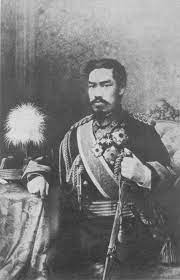
If you are a regular reader, you know that I use the phrase “Post Meiji Soto Orthodoxy” or even its acronym, “PMSO,” quite often. So it seems that it might be good to unpack the meaning of this phrase in one place, so that the regular reader might better understand what I mean by it and how it points to something important.
By the way, the first time I used the phrase was in 2015, although it seems like it was a lot earlier! See Ducking the Quacking Koan: Soto Zen, Koan, and Kensho for PMSO’s inaugural run!
Above is the Meiji Emperor (1867-1912) who occupied the Japanese throne during the accompanying Meiji period, an era of radical political, economic, social, and religious changes. The Post Meiji Soto Orthodoxy resulted from the Meiji reformulation of Soto Zen. This occurred in the wake of the collapse of the Tokugawa shogunate and the response to the threats of colonization and modernism.
Some of changes had roots going back a century or so and some were by government decree, especially in that the government backed out of doing things like regulating monks. They also passed a regulation that allowed monks to marry – and most of them did so post haste. The Meiji government (largely hostile to Buddhism, while centering a new-found Shinto) also directed Soto and Rinzai, for example, to either have clear differences or to merge.
The threats, and it is important to acknowledge this fully, were serious. During the haibutsu kishaku (“abolish Buddhism, destroy Shakyamuni”) campaigns at the beginning of the Meiji period, about 40% of the 100,000 Buddhist temples in Japan were destroyed or “repurposed.” Many were burned to the ground. In addition, Buddhists were violently persecuted and many nuns and monks were defrocked. I haven’t found statistics for how many people died.
Why such hostility? Buddhism, including Soto and Rinzai Zen, had closely colluded with authoritarian Tokugawa shogunate that had ruled Japan for the preceding 250 years and people were pissed. During the early 1870s, it wasn’t clear that any form of Buddhism would survive.
Click here to support my Zen teaching practice of which translations and writings like this are one facet.
Survival by centering householders
When the Meiji Soto reformers first began collaborating with each other to determine what they could identify as the central practice they offered householders (in order both to shore up their congregations and hopefully convert some of those at the gates who were carrying torches), you might be surprised that “shikantaza” did not come up. And it didn’t come up as a practice for householders until much later, possibly with Sawaki Roshi (1880-1965).
In the first such efforts to convey what Soto Zen was about, the venerable monks simply highlighted the goal and avoided specifying any method. Significantly, they identified that goal as awakening (“directly pointing to the mind, seeing into one’s nature and becoming Buddha” they said) and did not hesitate to use the words “kensho” and “satori.” These had not yet become taboo in the new Soto School.
At that time, some in Soto Zen were enamored with Western Protestant Christianity and set about to reform Soto Zen in its image, in part by centering householders rather than monastics (as had been the case throughout Soto history in China and Japan). It was also at this time that the Soto school’s emphasis on kensho and/or satori were dropped because the consensus was that it required an intensity of training that householders (and arsonists) were not up for. It was only much later that the avoidance of the word “kensho” was blamed on Dogen having an personal issue with the word (which he did).
The next round of efforts to identify a practice for Soto householders acknowledged the success of the Pure Land School, a school of householders, and so made up a nembutsu (mindfulness of buddha) practice, “Namu Shakyamuni Butsu.” However, it didn’t catch on. So then they tried a nembutsu with some history, “Namu Amida Butsu,” but that already was taken by the Pure Land School, so it was also rejected after a short run. So some argued that they should return back to “Namu Shakyamuni Butsu,” but again, it didn’t catch on.
The fact that some of the leading figures in Soto Zen were flailing about trying to identify a central practice for householders is really telling!
The reformers then shifted the goal of all of Soto Zen (not just householders) from realizing the same mind as Buddha to supporting the Emperor, leading an ethical life, and especially receiving the precepts (jukai) in a prescribed manner. This became a kind of a magical sacrament through which a householder could simply receive the precepts and realize the same mind as Buddha.
The Meiji reformers eventually succeeded in creating a Soto denomination where previously the primary source for religious identification had been temple affiliation – no small thing. They chose to elevate the position of Eihei Dogen from relative obscurity, essentially putting him in the role of Jesus Christ, and to interpret His teaching (despite lots of textual and historical evidence to the contrary) as anti-koan and pro-shikantaza, as well as anti-acquired awakening and pro-original awakening. This was strongly influenced by the Protestant “salvation by grace” approach. They also gutted the purpose and centrality of the teacher-student relationship and the very purpose for wholehearted training (i.e., the Great Vows).
And what holy text did the Soto reformers come up with that could parallel the “Lord’s Prayer” in it’s simplicity and breadth that would also support their new found religious convictions?
Well, they had to make one up – “Shushogi” (“The Observance of Practice Verification”), which was cut and pasted from Dogen’s writings. The authors used Dogen’s words, but in some cases created new sentences from phrases pulled from various Dogen fascicles, really putting meaning into old Dogen’s mouth – not a practice which would be considered ethical today. In the process, of course, they left out any mention of zazen, awakening, and the teacher-student relationship and instead emphasized four points: 1. Repenting and Eliminating Bad Karma (zange metsuzai); 2. Receiving Precepts and Joining the Ranks (jukai nyūi); 3. Making the Vow to Benefit Beings (hotsugan rishō); 4. Practicing Buddhism and Repaying Blessings (gyōji hōon).
The early drafts maintained the two-paths approach that has long characterized the buddhadharma in Asia – monastic and householder. The final version, though, espoused a new approach for all Soto believers, monastic and householders, that dropped two of the three trainings (samadhi and wisdom). It laid out a new Soto path for both monastics and householders, thus gutting the very heart of the monastic aspiration.
So it isn’t a surprise that Soto monasticism is on its deathbed today. See The End of Zen in Japan? for more.
A new religion
Thus, out of the ashes of the “abolish Buddhism, destroy Shakyamuni” campaigns (and colonization), a new religion was born with the same name as the old religion, Soto Zen. The above four principles were enshrined in the Soto Zen Constitution, Article V, intent on appeasing and attracting Japanese householders who were viewed as not interested in intensive training, as mentioned. As for #4 above, Repaying Blessings, this was interpreted primarily as about repaying blessings to the Emperor and the Japanese State for the opportunity to practice Buddhism.
This new focus, including a high degree of cozying up to the Emperor (something that was explicitly rejected by Dogen), was intentionally designed to further the literal survival of what had been Soto Zen. But the old Soto Zen had to die in order for the New Soto School to be born. By the way, the present Soto Constitution preserves these four principles. It is notable that the key provision of repaying one’s debt to the Emperor and the Japanese state, foundational principles of the New Soto religion, is ignored in the West, even by true believers.
Beginning in the 1920’s, open verbal conflict broke out between the supporters of the PMSO and those opposed to the changes (especially including the leading monastic teachers like Harada Daiun Roshi), with numerous journal articles flung back and forth. You can read about that here: Soto Dispute about True Faith.
I’ve been writing about the issues that arise for those of us who aren’t living in post-Meiji Japan and yet practice Zen for more than a decade, mostly via the Wild Fox Zen blog. And in so doing, I coined the phrase “Post Meiji Soto Orthodoxy (PMSO).” Fortunately, there are some lineages within Soto Zen that have maintained at least some elements of the pre-Meiji One School Zen approach that focuses on awakening as the sole purpose of Soto Zen and the primary means as sanzen bendo – practicing zazen under the guidance of an authorized master.
And in the West, it could be said that there are many Soto Zen’s. I’m just addressing those elements of the new Soto school that I call the Post Meiji Soto Orthodoxy.
I would grant that an anti-awakening stance may have been skillful in the late 19th and early 20th centuries in Japan (it’s really not my place to judge), but it seems to me to be completely unskillful for practitioners today in our global dharma community. Most importantly, the helpless ones in the future depend on our real practice-verification today so that they might learn about and actualize the great possibilities for awakening, bliss, and great compassion in what will likely be really hard fricking times. By gutting what might give true meaning to their lives, we do them a profound disservice.
Rather than a path of vivid practice verification, the PMSO only offers to meet people’s belonging needs, a trivialized and truncated dharma belief system, lots of ceremony, and a little zazen. Ironically, today in the West, most Soto practitioners, as well as most Soto teachers, seem to unknowingly embrace what they think is the “Soto Tradition” and “Dogen’s Way,” when, in fact, what they are embracing is a recently reformulated religion, born in part from the trauma of the “abolish Buddhism, destroy Shakyamuni” campaigns as well as Western colonialism, and repackaged in a wrapping much like what many of them fled – Protestant Christianity.
Two great teachers in our lineage, Harada Daiun Roshi and Yasutani Hakuun Roshi, were strong and outspoken opponents of the PMSO. Harada Roshi regarded those who held the PSMO views as “worms inside the lion.” Both of these great teachers are a continuing source of inspiration for me. To wrap this up, I share a short passage from Yasutani Roshi:
“The Soto School … does not hesitate to contend these days that kensho is not necessary and that all you have to do is to get involved in your daily activities with the ‘Buddha mind.’ This is totally off the mark, since you remain unable to find out what ‘the Buddha mind’ really is without the authentic experience of satori.”
For those who would like a deeper dive into this topic, see this scholarly (but readable) article by John S. LoBreglio, “Orthodox, Heterodox, Heretical: Defining Doctrinal Boundaries in Meiji-period Sōtō Zen.” This article is one of the sources for the above.

Dōshō Port began practicing Zen in 1977 and now co-teaches with his wife, Tetsugan Zummach Sensei, with the Vine of Obstacles Zen, an online training group. Dōshō received dharma transmission from Dainin Katagiri Rōshi and inka shōmei from James Myōun Ford Rōshi in the Harada-Yasutani lineage. He is also the author of Keep Me In Your Heart a While: The Haunting Zen of Dainin Katagiri. Dōshō’s translation and commentary on The Record of Empty Hall: One Hundred Classic Koans, was published in 2021 (Shambhala). His third book, Going Through the Mystery’s One Hundred Questions, is now available. Click here to support the teaching practice of Dōshō Rōshi.
History and Religion

Browse Our Archives
Select a Category Uncategorized
Select a Month August 2023 July 2023 June 2023 May 2023 April 2023 March 2023 February 2023 January 2023 December 2022 November 2022 October 2022 September 2022 August 2022 July 2022 June 2022 May 2022 April 2022 March 2022 February 2022 January 2022 December 2021 November 2021 August 2021 June 2021 April 2021 February 2021 January 2021 November 2020 September 2020 August 2020 July 2020 June 2020 May 2020 April 2020 January 2020 December 2019 November 2019 August 2019 June 2019 May 2019 April 2019 February 2019 January 2019 December 2018 November 2018 October 2018 September 2018 August 2018 July 2018 June 2018 May 2018 April 2018 March 2018 February 2018 January 2018 December 2017 November 2017 October 2017 September 2017 August 2017 July 2017 June 2017 December 2016 October 2016 June 2016 April 2016 February 2016 January 2016 December 2015 November 2015 October 2015 August 2015 June 2015 May 2015 April 2015 March 2015 February 2015 January 2015 December 2014 November 2014 October 2014 September 2014 August 2014 July 2014 June 2014 May 2014 April 2014 March 2014 February 2014 January 2014 December 2013 November 2013 October 2013 September 2013 August 2013 July 2013 June 2013 May 2013 April 2013 March 2013 February 2013 January 2013 December 2012 November 2012 October 2012 September 2012 August 2012 July 2012 June 2012 May 2012 April 2012 March 2012 February 2012 January 2012 December 2011 November 2011 October 2011 September 2011 August 2011 July 2011 June 2011 May 2011 April 2011 March 2011 February 2011 January 2011 December 2010 November 2010 October 2010 September 2010 August 2010 July 2010 June 2010 May 2010 April 2010 March 2010 February 2010 January 2010 December 2009 November 2009 October 2009 September 2009 August 2009 July 2009 June 2009 May 2009 April 2009 March 2009 February 2009 January 2009 December 2008 November 2008 October 2008 September 2008 August 2008 July 2008 June 2008 May 2008
Follow Us!
TAKE THE
Religious Wisdom Quiz
Who said, "Faith without works is dead"?
Select your answer to see how you score.
John Paul James Peter
Related posts from Wild Fox Zen

The Vigorous Nature of Zen Work
The Pivotal Linji Master Xutang and his Profuse...
Cultivating Verification in One School Zen: A New...

Soto and Rinai Zen: One School or Two?
TRENDING AT PATHEOS Buddhist

On Taking Refuge in the Dharma
(Here I continue the feature of sharing talks and essays by teachers...

(Continuing my intention to share talks and essays by other members of Empty...
The Subtle Art of Bowing: A Dharma Discourse
(This presentation was first offered by my dear friend Dharma Holder Tom...

Internal Family Systems Can Heal you Mentally &...
How IFS Helped Me Stop Fighting Myself Internal Family Systems (IFS) is...

The Bible No One Spoke About: A Family’s...
A mysterious family Bible, unspoken faith, and a journey from curiosity to...

How Uncertainty Can Transform Your Life in 2025
Embracing Uncertainty: A New Year’s Resolution for the Brave As 2025 approaches,...
view all Buddhist blogs
Ad-Free & Subscriber Log-In Subscription Support
- About Us
- 2026 Calendar
- Videos
- Podcasts
- Library of World Religions
- Faith In Media Tracker
- Advertise With Us
- Write for Us
- Privacy Policy
- Terms of Service
- Do Not Sell My Data
- Contact Us
- Radiant Digital
- Manage Newsletter Subscriptions
- Unsubscribe From Notifications
- Sitemap
Copyright 2008-2026, Patheos. All rights reserved.
Subscription Support Ad-Free & Subscriber Log-In
Follow Patheos