
BuddhistCatholicContemplativeEvangelicalGeneral ChristianHinduJewishLatter-day SaintMuslimNew VisionsProgressive Christian
Beliefs
- Buddhist
- Catholic
- Contemplative
- Evangelical
- General Christian
- Hindu
- Jewish
- Latter-day Saint
- More Voices
- Muslim
- New Visions
- Pagan
- Progressive Christian
Topics
- Religion News
- Food and Religion
- Sports and Religion
- Religious Art
- Religious Music and Entertainment
- Religious Events
- History and Religion
- Style and Religion
- Politics and Religion
- Women in Religion
- Recreation Outdoors and Religion
- Business Finance and Religion
- Careers Workplace and Religion
- Education and Religion
- Family Parenting and Religion
- Health Fitness and Religion
- Home and Religion
- Relationships and Religion
- Technology and Religion
- Travel and Religion
Columnists
- Buddhist Columnists
- Business Finance and Religion Columnists
- Careers Workplace and Religion Columnists
- Catholic Columnists
- Contemplative Columnists
- Education and Religion Columnists
- Evangelists Columnists
- Family Parenting and Religion Columnists
- General Christian Columnists
- Health Fitness and Religion Columnists
- Hindu Columnists
- History and Religion Columnists
- Home and Religion Columnists
- Jewish Columnists
- More Voices Columnists
- Latter Day Columnists
- Muslim Columnists
- New Visions Columnists
- Nonreligious Columnists
- Pagan Columnists
- Politics and Religion Columnists
- Progressive Columnists
- Recreation Outdoors and Religion Columnists
- Relationships and Religion Columnists
- Religion News Columnists
- Religious Art Columnists
- Religious Events Columnists
- Religious Music and Entertainment Columnists
- Sports and Religion Columnists
- Style and Religion Columnists
- Technology and Religion Columnists
- Travel and Religion Columnists
- Women in Religion Columnists
Resource Library
- 2026 Calendar
- Library of World Religions
- The 100 Most Holy Places on Earth
- Patheos Answers
- Podcasts
- Videos
- Faith Leaders Database
- Anglican Episcopalian
- Bahai
- Baptist
- Buddhism
- Christianity
- Confucianism
- Eastern Orthodoxy
- Hinduism
- Holiness and Pentecostal
- ISKCON
- Islam
- Judaism
- Lutheran
- Methodist
- The Church of Jesus Christ of Latter-day Saints
- New Age
- Paganism
- Presbytarian and Reformed
- Protestantism
- Religion Behind the Scenes
- Roman Catholic
- Scientology
- Shia Islam
- Sikhism
- Sufism
- Sunni Islam
- Taoism
- Zen
- See all religions
Research Tools
 Ad-Free & Subscriber Log-In Subscription Support
Ad-Free & Subscriber Log-In Subscription Support
Follow Patheos 

- Trending:
- Forgiveness
- |
- Marriage
- |
- Consciousness
- |
- Death Penalty
- |
- Election
- |
- Halloween
 Wild Fox Zen
- Home
- Buddhist
- History and Religion
- Bargaining for Salvation
Bargaining for Salvation
Last updated on: December 6, 2022 at 1:40 pm by Dosho Port
Bargaining for Salvation 2022-12-06T13:40:32-06:00 Dosho Port
Patheos Explore the world's faith through different perspectives on religion and spirituality! Patheos has the views of the prevalent religions and spiritualities of the world.

“What is the minimum amount of asceticism required?”
That’s the question a young practitioner put to me at the Boundless Way Zen Temple during the homeleaving workshop way back in 2013. I was there to share the in-the-room methods for practicing with the kesa, oryoki, as well as other priest-oriented practices that I received from Katagiri Roshi. The questioner wasn’t a homeleaver, at least not yet, but apparently the teachers thought that he might be on that track so had invited him to attend the several day workshop.
I had mentioned this incident to my friend, Rick McDaniel, sometime back in 2014. Recently, he was interviewing me again for his forthcoming book, Further Zen Conversations, and he brought this raised this incident. There is something about it, you see, that makes us old-time Zennies just nod and smile. Even chuckle knowingly to ourselves sometimes.
It reminds me, you see, of the encounter between Rujing and Dogen at Tiantong monastery in great Song China. Rujing said, “Zazen is dropping bodymind!”
And Dogen said, “Yeah, but how about if I do it later? I’ve got this other commitment right now and I’m really not feeling all that great. By the way, you don’t mean that I need to drop bodymind like 100%, right? I’m thinking I could do like 50%, but only if it can wait until I finish scrolling on TikTok. That’s just how I roll.”
Okay, not really.
Click here to support my Zen teaching practice at Patreon of which translations and writings like this are one facet. You will also find an advertisement free version of this post there.
The question, though, struck me at the time as sweet and straightforward – “What is the minimum amount of asceticism required?” Most people in the homeleaving workshop were probably wondering about this in their own way. Most of us keep that negotiating for our private dialogue, however. And you, dear reader, may be considering as well.
The question also seems to touch a theme running in the background for some of our Vine of Obstacles students these days. I think that it might be something that comes up a lot for people in the first twenty years or so of Zen practice in our very non ascetic culture.
Reminds me of another young practitioner who slept on plywood, cushioned only by a single thin cotton sheet. He denied any ascetic impulses – in the true spirit of asceticism – and claimed that he was comfy cozy. Yet at morning zazen, day after day, he almost always nodded off, providing a little clue that there might be some gap between aspiration and actual practice.
Back in the early days of Zen in the West there was a lot of abstinence from worldly pleasures in the pursuit of spiritual goals, including by yours truly. In retrospect, it seems that my own ascetic period was necessary, although not productive in the way I had hoped, at least while I was in it. But there was a purifying that took place that in the long run seems to me to have been quite important.
And as I stroll along memory lane in this post, I’m also remember a visit to Tassajara in about 1983. I was invited to join a meeting of senior practitioners (average age ~ 32). After all, I had been training with Katagiri Roshi for about seven years! Someone raised a question about what to do with one very serious young ascetic who was always in the zendo early, sat through breaks, didn’t hang out talking with others, had no behind-the-scenes lovers, and really approached any task he was assigned with zeal. I was struggling to see the problem when one of the monks, the future abbot Myogen Steve Stucky, turned to me and said, “You see, we’re always suspicious of those who take their practice more seriously than we do.”
But let’s get back to the question. “What is the minimum amount of asceticism required?”
Required for what?
I suspect that the young practitioner was asking not so much about the minimum amount of asceticism required for homeleaving, but for unsurpassed, complete, perfect awakening. How much do I have to give for the absolute?
Well, there you have it.
Denial of worldly pleasures, of course, isn’t really the point. The point for some is to wake up and live accordingly. When we throw ourselves into our practice with hair on fire we might look like ascetics but such a look is just a necessary by-product, not the final destination.
As for bargaining for salvation, let’s leave that last word for old Bob Dylan:
“In a little hilltop village, they gambled for my clothes
I bargained for salvation and she gave me a lethal dose
I offered up my innocence I got repaid with scorn
Come in, she said I’ll give ya shelter from the storm”
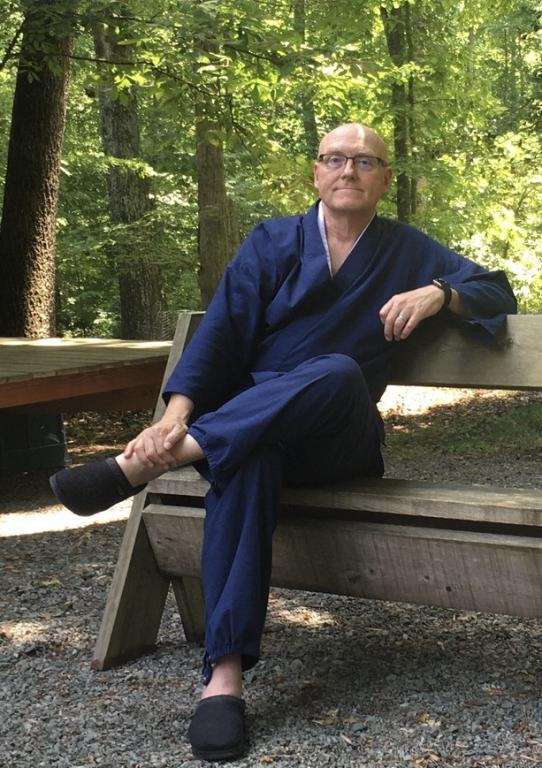
Dōshō Port began practicing Zen in 1977 and now co-teaches with his wife, Tetsugan Zummach Sensei, with the Vine of Obstacles Zen, an online training group. Dōshō received dharma transmission from Dainin Katagiri Rōshi and inka shōmei from James Myōun Ford Rōshi in the Harada-Yasutani lineage. He is also the author of Keep Me In Your Heart a While: The Haunting Zen of Dainin Katagiri. Dōshō’s translation and commentary on The Record of Empty Hall: One Hundred Classic Koans, was published in 2021 (Shambhala). His third book, Going Through the Mystery’s One Hundred Questions, is now available. Click here to support the teaching practice of Dōshō Rōshi.
History and Religion
Previous Post

November 8, 2022
A Stone Bridge? The Teacher-Student Relationship in Zen
Next Post

November 29, 2022 "Going Through the Mystery's One Hundred Questions" Book Launch
Browse Our Archives
Select a Category Uncategorized
Select a Month August 2023 July 2023 June 2023 May 2023 April 2023 March 2023 February 2023 January 2023 December 2022 November 2022 October 2022 September 2022 August 2022 July 2022 June 2022 May 2022 April 2022 March 2022 February 2022 January 2022 December 2021 November 2021 August 2021 June 2021 April 2021 February 2021 January 2021 November 2020 September 2020 August 2020 July 2020 June 2020 May 2020 April 2020 January 2020 December 2019 November 2019 August 2019 June 2019 May 2019 April 2019 February 2019 January 2019 December 2018 November 2018 October 2018 September 2018 August 2018 July 2018 June 2018 May 2018 April 2018 March 2018 February 2018 January 2018 December 2017 November 2017 October 2017 September 2017 August 2017 July 2017 June 2017 December 2016 October 2016 June 2016 April 2016 February 2016 January 2016 December 2015 November 2015 October 2015 August 2015 June 2015 May 2015 April 2015 March 2015 February 2015 January 2015 December 2014 November 2014 October 2014 September 2014 August 2014 July 2014 June 2014 May 2014 April 2014 March 2014 February 2014 January 2014 December 2013 November 2013 October 2013 September 2013 August 2013 July 2013 June 2013 May 2013 April 2013 March 2013 February 2013 January 2013 December 2012 November 2012 October 2012 September 2012 August 2012 July 2012 June 2012 May 2012 April 2012 March 2012 February 2012 January 2012 December 2011 November 2011 October 2011 September 2011 August 2011 July 2011 June 2011 May 2011 April 2011 March 2011 February 2011 January 2011 December 2010 November 2010 October 2010 September 2010 August 2010 July 2010 June 2010 May 2010 April 2010 March 2010 February 2010 January 2010 December 2009 November 2009 October 2009 September 2009 August 2009 July 2009 June 2009 May 2009 April 2009 March 2009 February 2009 January 2009 December 2008 November 2008 October 2008 September 2008 August 2008 July 2008 June 2008 May 2008
Follow Us!
TAKE THE
Religious Wisdom Quiz
Which chapter in Proverbs describes detailed work habits of the ant?
Select your answer to see how you score.
Proverbs 24 Proverbs 2 Proverbs 6 Proverbs 31
Related posts from Wild Fox Zen
Messing With Yasutani Roshi Again and Again: Don't...

What is the Heart of Zen? Reflections on...
A Black Lacquer Person Runs Through the Night:...
Plucking a Blade of Grass: The Wondrous Dharma...
TRENDING AT PATHEOS Buddhist

On Taking Refuge in the Dharma
(Here I continue the feature of sharing talks and essays by teachers...

(Continuing my intention to share talks and essays by other members of Empty...
The Subtle Art of Bowing: A Dharma Discourse
(This presentation was first offered by my dear friend Dharma Holder Tom...

Internal Family Systems Can Heal you Mentally &...
How IFS Helped Me Stop Fighting Myself Internal Family Systems (IFS) is...

The Bible No One Spoke About: A Family’s...
A mysterious family Bible, unspoken faith, and a journey from curiosity to...

How Uncertainty Can Transform Your Life in 2025
Embracing Uncertainty: A New Year’s Resolution for the Brave As 2025 approaches,...
view all Buddhist blogs
Ad-Free & Subscriber Log-In Subscription Support
- About Us
- 2026 Calendar
- Videos
- Podcasts
- Library of World Religions
- Faith In Media Tracker
- Advertise With Us
- Write for Us
- Privacy Policy
- Terms of Service
- Do Not Sell My Data
- Contact Us
- Radiant Digital
- Manage Newsletter Subscriptions
- Unsubscribe From Notifications
- Sitemap
Copyright 2008-2026, Patheos. All rights reserved.
Subscription Support Ad-Free & Subscriber Log-In
Follow Patheos