
BuddhistCatholicContemplativeEvangelicalGeneral ChristianHinduJewishLatter-day SaintMuslimNew VisionsProgressive Christian
Beliefs
- Buddhist
- Catholic
- Contemplative
- Evangelical
- General Christian
- Hindu
- Jewish
- Latter-day Saint
- More Voices
- Muslim
- New Visions
- Pagan
- Progressive Christian
Topics
- Religion News
- Food and Religion
- Sports and Religion
- Religious Art
- Religious Music and Entertainment
- Religious Events
- History and Religion
- Style and Religion
- Politics and Religion
- Women in Religion
- Recreation Outdoors and Religion
- Business Finance and Religion
- Careers Workplace and Religion
- Education and Religion
- Family Parenting and Religion
- Health Fitness and Religion
- Home and Religion
- Relationships and Religion
- Technology and Religion
- Travel and Religion
Columnists
- Buddhist Columnists
- Business Finance and Religion Columnists
- Careers Workplace and Religion Columnists
- Catholic Columnists
- Contemplative Columnists
- Education and Religion Columnists
- Evangelists Columnists
- Family Parenting and Religion Columnists
- General Christian Columnists
- Health Fitness and Religion Columnists
- Hindu Columnists
- History and Religion Columnists
- Home and Religion Columnists
- Jewish Columnists
- More Voices Columnists
- Latter Day Columnists
- Muslim Columnists
- New Visions Columnists
- Nonreligious Columnists
- Pagan Columnists
- Politics and Religion Columnists
- Progressive Columnists
- Recreation Outdoors and Religion Columnists
- Relationships and Religion Columnists
- Religion News Columnists
- Religious Art Columnists
- Religious Events Columnists
- Religious Music and Entertainment Columnists
- Sports and Religion Columnists
- Style and Religion Columnists
- Technology and Religion Columnists
- Travel and Religion Columnists
- Women in Religion Columnists
Resource Library
- 2026 Calendar
- Library of World Religions
- The 100 Most Holy Places on Earth
- Patheos Answers
- Podcasts
- Videos
- Faith Leaders Database
- Anglican Episcopalian
- Bahai
- Baptist
- Buddhism
- Christianity
- Confucianism
- Eastern Orthodoxy
- Hinduism
- Holiness and Pentecostal
- ISKCON
- Islam
- Judaism
- Lutheran
- Methodist
- The Church of Jesus Christ of Latter-day Saints
- New Age
- Paganism
- Presbytarian and Reformed
- Protestantism
- Religion Behind the Scenes
- Roman Catholic
- Scientology
- Shia Islam
- Sikhism
- Sufism
- Sunni Islam
- Taoism
- Zen
- See all religions
Research Tools
 Ad-Free & Subscriber Log-In Subscription Support
Follow Patheos 

- Trending:
- Advent
- |
- Forgiveness
- |
- Thanksgiving
- |
- Election
- |
- Seasonal Holidays
- |
- Marriage
 Wild Fox Zen
- Home
- Buddhist
- Soto and Rinai Zen: One School or Two?
Soto and Rinai Zen: One School or Two?
Last updated on: December 6, 2022 at 1:46 pm by Dosho Port
Soto and Rinai Zen: One School or Two? 2022-12-06T13:46:26-06:00 Dosho Port
Patheos Explore the world's faith through different perspectives on religion and spirituality! Patheos has the views of the prevalent religions and spiritualities of the world.
Going Through the Mystery’s One Hundred Questions
My next book is cooking along and at this point it looks like it will be available in the late Fall. The book includes an introduction in which I geek out freely on the nature of Chan (Japanese, Zen) in the thirteenth century the period of transmission from China to Japan. I’ve long been interested in thirteenth century Zen because we too are a period of transmission from one culture to another. Or, we’re in the last gasps of a dying tradition – most days, it’s hard to tell.
If you are interested in the history of this period of transmission, I recommend From Chinese Chan to Japanese Zen: A Remarkable Century of Transmission and Transformation, by Steven Heine.
However, the forthcoming Going Through the Mystery is not a history, but a translation of a text from this period. It was written by Caodong (Japanese, Soto) master, Wansong (1166–1246), prompted by the one hundred questions asked by a student, Yuantong (no dates). Another Soto monk, Linquan (no dates), wrote verses for each of the Q&As. I translated the text and added commentaries, much like what I did for The Record of Empty Hall. In the later work, I translated one hundred koans that were selected by a Linji (Japanese, Rinzai) master, Xutang, and his piercing capping phrases. (1)
But I was telling you about the introduction for Going Through the Mystery’s One Hundred Questions, so I’ll now get back to that. In reworking the text, it became clear that the introduction needed to focus mostly on the figures in the text – Wansong, Yuantong, and Linquan – and only secondarily on the historical context. So I cut out a bunch of material that had lingered in the early drafts.
I think some of you might find some of what I’d written helpful, or at least interesting, especially regarding the differences between the Soto and Rinzai lineages at the point of transmission from China to Japan – and most importantly the implications that has for us today.
What I’ve found is that those differences were minimal, especially in what matters most – the actual practice and awakening of the people involved. For example, the journeys of Xutang, the Rinzai master, and Wansong, the Soto master, were very much alike. (2) Both of them had been assigned to work with key phrases from koan. Both did a lot of zazen and dug deeply into marrow of this life. Both had an initial awakening and then a deeper awakening. Both had steeped themselves fully in the practice and teaching of the Zen tradition. Both found a clear-eyed teacher who catalyzed their awakening.
In this post, I’ll go into some detail on Wansong’s awakening, highlighting how similar Soto and Rinzai teachers taught in thirteenth century China, and explain why it’s a bit more complicated than that. And in so doing, explore whether Soto and Rinzai share the same essence.
Click here to support my Zen teaching practice (of which translations and writings like this are one facet) via Patreon.
Wansong’s surprising first awakening
“The Dharma Mirror of the Ancestors, Scroll 70,” has this about Wansong’s first awakening:
“At first, Wansong practiced with Venerable Shengmo, examining Changsha’s words, ‘Turn oneself around in the mountains, rivers, and the great earth.’ After six months, Shengmo said, ‘I only wish you a late realization.’ Wansong suddenly had insight.”
This was an important initial opening and Wansong would go on to have a definitive awakening later with Xueyan Huiman (d. 1206), also a Soto master. It is notable that the Soto master Shengmo assigned the young Wansong a key phrase from a kōan, Changsha’s words, “Turn oneself around in the mountains, rivers, and the great earth,” a practice that is more associated nowadays with the Linji lineage.
The contemporary narrative about Soto Zen in this period is that the main practice was silent illumination (默照, mozhao). However, there is no support for this in Going Through the Mystery’s One Hundred Questions. The closest the text comes to silent illumination is in Question 9: How Is Thusness Meditation Practiced? However, what’s referenced in Question 9 is based on the Lankavatara Sutra, a favorite of Bodhidharma, and so it is a query that might well be common to all Zen lineages.
Silent illumination, that which was supposedly distinctive about the Soto lineage, is also absent from Wansong’s most well-known work today, “The Record of Going Easy” (available in English as The Book of Serenity), published in 1224 when Wansong was about sixty years old. In neither work do the characters for silent illumination appear even a single time. Nor, incidentally, does Dogen use the term a single time in his voluminous thirteenth century works.
Not so simple
However, the great master Hongzhi (1091-1157) did speak of silent illumination. Schlutter notes,
“The most famous text associated with silent illumination is Hongzhi’s long poem, the ‘Mozhao ming’ [translated by Taigen Leighton as ‘The Guidepost of Silent Illumination’]. This poem contains the only instance in all of [Soto] literature in which the term ‘silent illumination’ is prominently used.” (3)
Although Hongzhi used the phrase, it was his dharma brother, Zhenxie Qingliao (1089-1151), who was the direct target of the Rinzai master Dahui Zonggao’s (1089–1163) strong rebukes. For Dahui, silent illumination was a method for wallowing in tranquility and denying awakening. Zhenxie provided a clear example of such silent illumination wallowing in passages like this:
“Without taking a step you should constantly sit in your room and just forget about the teachings. Be like dry wood, or a stone, or a wall, or a piece of tile, or a pebble. Cut off knowing and understanding and be naturally vacuous and completely bright. You should not make the least bit of conscious effort.” (4)
This style of teaching only became prominent in the late eleventh and twelfth centuries, though, through Furong Daokai and some of his successors, but it seems to have disappeared by the thirteenth century.
Schlutter explains,
“Around the same time [in late eleventh century], the [Soto] tradition, one of the traditional five houses of Chan, began to undergo a momentous revival…. Having almost died out, its lineage was resurrected at the end of the eleventh century, and within decades it became one of the most powerful groups of elite monastic Buddhism in Song China. The study of this revival yields important insights into the creative process by which the [Soto] tradition was reinvented through the remaking of its lineage, the crafting of suitable hagiographies for its ancestors, and, eventually, the creation of a distinctive style of teaching and practice that came to be known as silent illumination.” (5)
However, Dahui repeatedly attacked this type of quietistic mediation. Here is one example:
“At the present time, there is a type of shaven-headed heterodox monk who, even though [their] own eye is not yet clarified, single-mindedly teaches people to stop-to-rest in the very way the gedan-beast plays dead. If you practice this sort of stopping-to-rest, by the time a thousand buddhas have appeared in this world, you still won’t have been able to stop or take a rest! You will just have made your mind more susceptible to delusive worrying.” (6)
Such attacks by Dahui, which Schlutter finds not completely fair, by the way, seem to have carried considerable weight in the Chinese Zen community across lineages. Indeed, it may be the effectiveness of Dahui’s arguments against silent illumination in the twelfth century that resulted in it’s lack of visibility in the Soto literature of the thirteenth century.
By the late twelfth and thirteenth centuries, the awakening stories of Chinese masters in both Soto and Rinzai lineages prominently include working with keywords/phrases from koan and are indistinguishable. No mention is made of silent illumination.
More differences within than between
It is clear from the historical record that there were no significant differences between the Soto and Rinzai lineages during the pivotal thirteenth century, the era of transmission from China to Japan. However, there had been differences in the twelfth century between some sublineages of Soto and the mainline of the Rinzai transmission, focussed mostly on silent illumination and the importance of an abrupt awakening experience.
Those differences appear to be mostly the result of late some twelfth and early thirteenth century Soto teachers emphasizing and renaming long-established meditation methods for absorption (aka, samadhi) as silent illumination, although those methods had long been practiced widely in the Zen tradition. Dahui criticized this emphasis as heterodox, although these Soto teachers were mostly putting old wine in new bottles. His own keyword method, on the other hand, was much more of an innovation. (7)
However, by the thirteenth century, due to the power the the keyword method and the blistering critique of the silent illumination narrative by Rinzai masters like Dahui, the Zen lineages in China had returned to their previous positions of lacking almost any distinction in teaching style or practice. Incidentally, I have argued previously that the work of Rujing and Dogen can be seen as an integration and restatement of the One School Zen. See, for example, see Just Sit or Wake Up: A Tale of Two Old Zen Teachers.
In Japan, Heine notes that successors of the Soto master Hongzhi, highlighted above for his “The Guidepost of Silent Illumination,” “… became a minor but influential wing of Rinzai Five Mountains temples located in the capital, [and] did not interact much with the main factions of the Soto sect.” (8)
This quirky detail supports my thesis that by the transmission from China to Japan in thirteenth century there were more differences within the two lineage groups – Soto and Rinzai – than between them and that most differences were due simply to the personalities of the teachers, not to their lineage affiliations. At the very least, differences in the lineage winds were complex, multidimension, subtle, and by the thirteenth century, they were not about meditation technique.
For more on why the Soto and Rinzai lineages were so similar at the point of transmission, stay tuned for my next post, “Soto Zen’s Dirty Little Secret.”
(1) In this essay, I’ll use the Japanese “Soto” and “Rinzai” for whole lineages, including the Chinese Caodong and Linji – to aid the reader. However, that isn’t to say that I assume that Caodong = Soto or that Linji = Rinzai. One led to the other, but I’m afraid we have another “same or different” issue here that is beyond the scope of this post.
(2) See The Record of Empty Hall, 4-6.
(3) Morten Schlutter, How Zen Became Zen: The Dispute over Enlightenment and the Formation of Chan Buddhism in Song-Dynasty China, 145.
(4) Ibid., 154.
(5) Ibid, 10.
(6) Jeffrey L. Broughton with Elise Yoko Watanabe, trans., The Letters of Chan Master Dahui Pujue, 3.2.
(7) See Schlutter, 172-174.
(8) Steven Heine, From Chinese Chan to Japanese Zen: A Remarkable Century of Transmission and Transformation, 129.
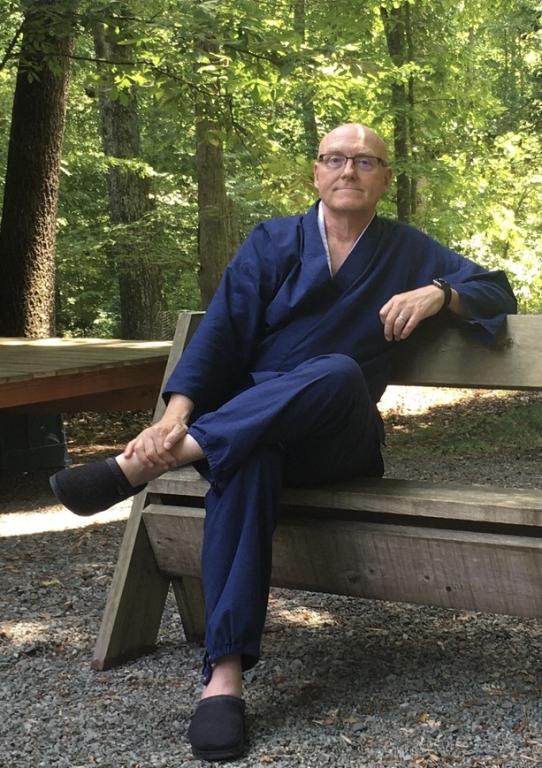
Dōshō Port began practicing Zen in 1977 and now co-teaches with his wife, Tetsugan Zummach Sensei, with the Vine of Obstacles Zen, an online training group. Dōshō received dharma transmission from Dainin Katagiri Rōshi and inka shōmei from James Myōun Ford Rōshi in the Harada-Yasutani lineage. He is also the author of Keep Me In Your Heart a While: The Haunting Zen of Dainin Katagiri. Dōshō’s translation and commentary on The Record of Empty Hall: One Hundred Classic Koans, was published in 2021 (Shambhala). His third book, Going Through the Mystery’s One Hundred Questions, is now available. Click here to support the teaching practice of Dōshō Rōshi.
Previous Post

September 13, 2022
Is There Someone Who Gets It?
Next Post
October 4, 2022 Soto Zen's Dirty Little Secret
Browse Our Archives
Select a Category Uncategorized
Select a Month August 2023 July 2023 June 2023 May 2023 April 2023 March 2023 February 2023 January 2023 December 2022 November 2022 October 2022 September 2022 August 2022 July 2022 June 2022 May 2022 April 2022 March 2022 February 2022 January 2022 December 2021 November 2021 August 2021 June 2021 April 2021 February 2021 January 2021 November 2020 September 2020 August 2020 July 2020 June 2020 May 2020 April 2020 January 2020 December 2019 November 2019 August 2019 June 2019 May 2019 April 2019 February 2019 January 2019 December 2018 November 2018 October 2018 September 2018 August 2018 July 2018 June 2018 May 2018 April 2018 March 2018 February 2018 January 2018 December 2017 November 2017 October 2017 September 2017 August 2017 July 2017 June 2017 December 2016 October 2016 June 2016 April 2016 February 2016 January 2016 December 2015 November 2015 October 2015 August 2015 June 2015 May 2015 April 2015 March 2015 February 2015 January 2015 December 2014 November 2014 October 2014 September 2014 August 2014 July 2014 June 2014 May 2014 April 2014 March 2014 February 2014 January 2014 December 2013 November 2013 October 2013 September 2013 August 2013 July 2013 June 2013 May 2013 April 2013 March 2013 February 2013 January 2013 December 2012 November 2012 October 2012 September 2012 August 2012 July 2012 June 2012 May 2012 April 2012 March 2012 February 2012 January 2012 December 2011 November 2011 October 2011 September 2011 August 2011 July 2011 June 2011 May 2011 April 2011 March 2011 February 2011 January 2011 December 2010 November 2010 October 2010 September 2010 August 2010 July 2010 June 2010 May 2010 April 2010 March 2010 February 2010 January 2010 December 2009 November 2009 October 2009 September 2009 August 2009 July 2009 June 2009 May 2009 April 2009 March 2009 February 2009 January 2009 December 2008 November 2008 October 2008 September 2008 August 2008 July 2008 June 2008 May 2008
Follow Us!
TAKE THE
Religious Wisdom Quiz
What does "Eli" mean in Hebrew?
Select your answer to see how you score.
Strength in God My God Holy one The Lord saves
Related posts from Wild Fox Zen

The Vigorous Nature of Zen Work
The Pivotal Linji Master Xutang and his Profuse...
Cultivating Verification in One School Zen: A New...
The "Soto Zen" of the PMSO: A New...
TRENDING AT PATHEOS Buddhist
On Taking Refuge in the Dharma
(Here I continue the feature of sharing talks and essays by teachers...
(Continuing my intention to share talks and essays by other members of Empty...
The Subtle Art of Bowing: A Dharma Discourse
(This presentation was first offered by my dear friend Dharma Holder Tom...

Internal Family Systems Can Heal you Mentally &...
How IFS Helped Me Stop Fighting Myself Internal Family Systems (IFS) is...

The Bible No One Spoke About: A Family’s...
A mysterious family Bible, unspoken faith, and a journey from curiosity to...

How Uncertainty Can Transform Your Life in 2025
Embracing Uncertainty: A New Year’s Resolution for the Brave As 2025 approaches,...
view all Buddhist blogs
Ad-Free & Subscriber Log-In Subscription Support
- About Us
- 2026 Calendar
- Videos
- Podcasts
- Library of World Religions
- Faith In Media Tracker
- Advertise With Us
- Write for Us
- Privacy Policy
- Terms of Service
- Do Not Sell My Data
- Contact Us
- Radiant Digital
- Manage Newsletter Subscriptions
- Unsubscribe From Notifications
- Sitemap
Copyright 2008-2026, Patheos. All rights reserved.
Subscription Support Ad-Free & Subscriber Log-In
Follow Patheos