
BuddhistCatholicContemplativeEvangelicalGeneral ChristianHinduJewishLatter-day SaintMuslimNew VisionsProgressive Christian
Beliefs
- Buddhist
- Catholic
- Contemplative
- Evangelical
- General Christian
- Hindu
- Jewish
- Latter-day Saint
- More Voices
- Muslim
- New Visions
- Pagan
- Progressive Christian
Topics
- Religion News
- Food and Religion
- Sports and Religion
- Religious Art
- Religious Music and Entertainment
- Religious Events
- History and Religion
- Style and Religion
- Politics and Religion
- Women in Religion
- Recreation Outdoors and Religion
- Business Finance and Religion
- Careers Workplace and Religion
- Education and Religion
- Family Parenting and Religion
- Health Fitness and Religion
- Home and Religion
- Relationships and Religion
- Technology and Religion
- Travel and Religion
Columnists
- Buddhist Columnists
- Business Finance and Religion Columnists
- Careers Workplace and Religion Columnists
- Catholic Columnists
- Contemplative Columnists
- Education and Religion Columnists
- Evangelists Columnists
- Family Parenting and Religion Columnists
- General Christian Columnists
- Health Fitness and Religion Columnists
- Hindu Columnists
- History and Religion Columnists
- Home and Religion Columnists
- Jewish Columnists
- More Voices Columnists
- Latter Day Columnists
- Muslim Columnists
- New Visions Columnists
- Nonreligious Columnists
- Pagan Columnists
- Politics and Religion Columnists
- Progressive Columnists
- Recreation Outdoors and Religion Columnists
- Relationships and Religion Columnists
- Religion News Columnists
- Religious Art Columnists
- Religious Events Columnists
- Religious Music and Entertainment Columnists
- Sports and Religion Columnists
- Style and Religion Columnists
- Technology and Religion Columnists
- Travel and Religion Columnists
- Women in Religion Columnists
Resource Library
- 2026 Calendar
- Library of World Religions
- The 100 Most Holy Places on Earth
- Patheos Answers
- Podcasts
- Videos
- Faith Leaders Database
- Anglican Episcopalian
- Bahai
- Baptist
- Buddhism
- Christianity
- Confucianism
- Eastern Orthodoxy
- Hinduism
- Holiness and Pentecostal
- ISKCON
- Islam
- Judaism
- Lutheran
- Methodist
- The Church of Jesus Christ of Latter-day Saints
- New Age
- Paganism
- Presbytarian and Reformed
- Protestantism
- Religion Behind the Scenes
- Roman Catholic
- Scientology
- Shia Islam
- Sikhism
- Sufism
- Sunni Islam
- Taoism
- Zen
- See all religions
Research Tools
 Ad-Free & Subscriber Log-In Subscription Support
Ad-Free & Subscriber Log-In Subscription Support
Follow Patheos 

- Trending:
- Forgiveness
- |
- Marriage
- |
- Consciousness
- |
- Death Penalty
- |
- Election
- |
- Halloween
 Wild Fox Zen
- Home
- Buddhist
- You Might Need More Than One Dog: The Problems with Kōan Work Today
You Might Need More Than One Dog: The Problems with Kōan Work Today
Last updated on: December 6, 2022 at 1:50 pm by Dosho Port
You Might Need More Than One Dog: The Problems with Kōan Work Today 2022-12-06T13:50:01-06:00 Dosho Port
Patheos Explore the world's faith through different perspectives on religion and spirituality! Patheos has the views of the prevalent religions and spiritualities of the world.
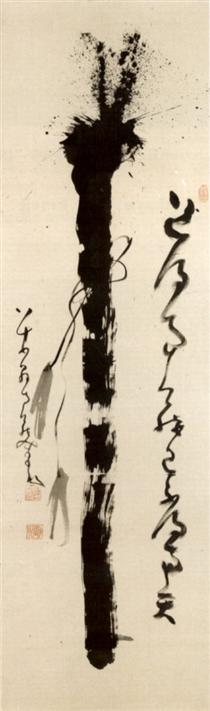
Nantenbō Rōshi’s Staff
This post might surprise the long-time Wild Fox Zen reader. When I rant and fume about the current state of practicing awakening in the Zen world, you see, I’m usually primarily chiding those who claim affiliation with Sōtō Zen and the so-called “just-sitting” method. At the same time, I often hold up kōan work as the more effective practice for kenshō and post-kenshō training.
In the interest of being a more balanced reviler, in this post I’ll address issues in kōan teaching, and (mostly) blame the teachers for it. Yup, like Dōgen Zenji said,
“This current situation is entirely the fault of the teachers, not of the students. Why? Because they guide their students along the branches of the tree, dispensing with its roots. Before they fully understand the Way themselves, they devote themselves solely to their own egotistic minds, luring others into the world of delusion. How regrettable is it that these teachers are unaware of their own delusion. How can their students be expected to know the difference between right and wrong?” (1)
As I was saying, I’ll identify a few problems in kōan training, highlight what I regard as the biggest bugger, offer an example from my teaching practice, and speculate about the causes of these issues, especially that biggest bugger. Along the way, I’ll wonder if it is appropriate for householders to take up kōan introspection.
Click here to support my Zen teaching practice via Patreon.
First, though, this:
In my view, the kōan method, including the refinements credited to Dàhuì and later to Hakuin and his successors, represents the most powerful innovation in the field of waking up and practicing deeply since the time of Buddha Shakyamuni. Nothing I say below should be interpreted as arising from any place other than concern that those of us who are tasked with caring for this method and transmitting it to the next generation do so in such a way that its profundity and potency will be handed on.
What is kenshō?
The word “kenshō” is used a lot in what follows and elsewhere in Zen teaching, so I will start with a brief discussion of what it isn’t and what it is. “Kenshō” is not an insight into the transparency of the delusional self, nor the observation of pervasive impermanence, nor an insight into no-self or emptiness. If the sense of subject and object remain, it isn’t kenshō.
These insights are all nice moments, of course, and may faintly verify the Way, but they utterly lack the power of a clear kenshō.
In addition, kenshō is definitively not the belief that all zazen is the goal-less gateless gate – such is not realized without kenshō. Even if you so believe it to be true and have been selling such fake gold on the internet for decades, repeating yourself over and over and over, well, that doesn’t make it so.
With kenshō there is a shocking sense of freshness that arises simultaneously with a sense of how it’s always been this way. It is the collapse of I/thou, a radical, abrupt, and nondual embodiment. It is accompanied by a joy and energy that hasn’t been felt before.
So, although people frequently have spiritual experiences and important insights, humans don’t seem to kenshō all that often. And the difference between “insights” and “kenshō” isn’t a matter of degree, because kenshō is qualitatively different from the insights I’ve listed above.
If the personal experiences and spiritual insights or adamant beliefs that people frequently have were the same as kenshō, why would Buddha have left home, done years of austeries, and finally sat down under the Bodhi tree? Why would Eihei Dōgen Zenji and Nanpo Jōmyō Zenji have risked it all to go to China? Why would many generations of Zen practitioners trained as if their hair were on fire?
How long will it take for a sincere student to kenshō?
It’s often said in Zen kōan lore that most students will have a clear enough kenshō after about three years. However, in my view, three years is really hopeful. In any case, it’s better to practice mu timelessly. The initial kenshō, afterall, is just the beginning of the process and more definitive awakenings are also a crucial part of ongoing training.
Following the initial kenshō and the lineage-specific checking questions, the student will then begin the long process of integrating and deepening their initial kenshō. As Henry Shukman Rōshi put it, “The subsequent kōans should be remarkably and wonderfully clear, and a great surprise for a student to find that the kōans meet them in what they have awakened to.”
It is the teacher’s responsibility, then, to help the student find and work the edges of kenshōing.
The problems with kōan work today
Most of my criticism over the years here at Wild Fox Zen has been about the just-sitting belief system. However, this being the human world, and me being a verified crabby old man, I’ve got some criticism for the way the kōan is often employed in the contemporary Zen world, too.
For example, some kōan lineages have gotten so California-dreamy, Jungian, artsy, and out-of-touch with the simple Hakuinian model of kenshō and subsequent training, that I’m concerned that their new approaches minimize the possibility for students to clearly realize and actualize the great matter at hand. It seems that our tendency to level downward has enhanced the accessibility of kōan practice and, at the same time, resulted in more people having less profound transformations.
Part of that enhanced accessibility has come at the cost of making kōan practice into an easy-going way. You might think that Westerners were naturally more awake than the ancients, so that we kenshō much more easily. If that’s what you think, I encourage you to illuminate and drop your prejudice and think again!
Dōgen Zenji said, “Those who seek the Way should not look for easy training.” (2)
One student who had practiced with another kōan teacher recently told me, for example, that for them, passing mu (their breakthrough kōan) was not a significant experience. Well, simply put, it oughta be. Indeed, in the teachings it says, “A familiar place is hard to forget.”
In addition, I’ve heard it said that the kōan curriculum is just another way to study basic Buddhism. Oh, dear! Study of the buddhadharma has it’s place, for sure, but kōan work is about breakthrough and post-breakthrough training – fully bringing to life what has been realized and studied – not an intellectual endeavor. Please! If study alone was the way through suffering, all the over-educated Zennies in the land would be totally purified and spend the day whistling the tune to “Sitting on the dock of the bay….” And that does not seem to be the case.
I’ve also heard it said that kōan work is an exercise in miming. Oh, dear Buddha! For this view, I can only hold up the two fingers (either hand will do) – and I would not be signally “Peace out,” but “that’s still two.” And if someone brings their miming act to dokusan, they might hear, “Stop the Zen antics!”
Finally, in another kōan lineage, I’m told that they’ve abandoned assigning the mu kōan, because it’s just too hard. They move students right into one of the kōan collections without the student having kenshōed, apparently oblivious to the fact that they’re undermining the essential process of the Hakuinian model, showing wanton disregard for the received tradition with the accompanying arrogance that “we” know better.
And yet all of these are not the most widespread problem
What is?
Here it is: students are not held on their first kōan until they have a clear kenshō so that they can then move through the subsequent training deepening and applying said breakthrough. Some kōan teachers argue that a clear kenshō isn’t required, because the successive kōans will magically (a word I’ve actually heard used) do the work of either provoking awakening “down the road” or maybe a student’s practice will gradually deepen as they pass through the successive kōans.
But how are you going to know? By peering into your crystal ball? I haven’t seen either of these unfold reliably. In my view, without a clear kenshō, kōan work is likely to be about more Zen cosplay. Indeed, ideally, as Dōgen Zenji said (and I’d apply it to work with the first kōan), “Such a mu is a sun with stone-melting power.” (3)
Nevertheless, as Meido Moore Rōshi says,
“The first opening need not necessarily be very deep. But it clearly has to be kenshō. And whether the recognition is shallow or deep, the student has to have sufficient confidence in it to then continue practicing with it as a basis. The first kōan is called the barrier of the ancestors for a reason. And I don’t want someone just to be intimate with the barrier, I want them to pass through it. We don’t all do that with flying colors, true … but again… it’s there, or it’s not.”
Passing through the barrier is also NOT necessarily accompanied with a lot of “woo-woo” special effects. Kenshō, again, is a radical, abrupt, nondual embodiment. Although kenshō is often accompanied by special effects, they are not the functional heart of clear seeing. Culling out the verifying elements of the initial kenshō becomes the first task of the checking process. It really isn’t until after that process is complete that the kenshō will be confirmed. That process isn’t so much about an experience, actually, but about how the student can embody and bring it into the nitty-gritty details of daily life.
Now, I’ve pointed out previously, both here and elsewhere, that this checking process is one of the great virtues of the kōan system, so I repeat myself, but it is very important that when engaged with full integrity the checking process helps the student practice awakening (aka, Great Compassion) with a depth and clarity that is lacking in all just-sitting approaches (as far as I know).
Oh, but I’ve drifted back to reviling just-sitting approaches!
An example of how kōan work can go wrong
After teaching just-sitting Zen for about twenty years, I was authorized to offer kōan introspection in the Harada-Yasutani tradition. One of the students that soon called on me had trained with a Zen teacher, now deceased, from the White Plum Asanga. The prospective student reported that over their fifteen years of training they had completed their lineage’s kōan curriculum, save the Five Ranks and Sixteen Bodhisattva Precepts. They were interested in completing the curriculum and asked if I’d work with them.
I didn’t sense from their energy and physical presentation the clarity and joy that I associate with kenshō, so it seemed especially prudent to begin the process of working together by probing the depth of this student’s kenshō. And indeed, the student couldn’t respond with clarity to even the first checking question for mu.
In conversation, the student shared that they didn’t remember kenshōing – and again, if a person has kenshōed, let me tell you, they remember! The student reported that “something” had happened in dokusan with their teacher and that the teacher then quickly confirmed mu and moved on. The student wasn’t sure what had happened, but figured that the teacher knew best and so didn’t question.
In moving into the successive kōans, they reported that their experience of dokusan was to repeat the kōan they were assigned, then make some free-dance-like gestures, and they’d be moved on to the next case.
Why do teachers pass students on their first kōans without a clear kenshō?
Let’s be clear, it is generally not in the student’s best interest. Indeed, it might deprive the student of one of the most powerful, joyful, and meaningful experiences this human life has to offer – and deny them of a strong basis for the ongoing work of Great Compassion.
Why would a kōan teacher then pass the student before they’ve had a clear kenshō? One explanation is that the Zen teacher themself was passed through the kōan curriculum as in the above example, without a clear kenshō. Given that after just fifty years (or so) of Zen in West, some kōan lineages are into their sixth and seventh generations, and given that some teachers have many successors, it seems quite likely that this is at play at least some of the time. That is, this pace is generally just too fast for authentically engaging the deep work.
Another reason that Zen teachers pass students on their breakthrough kōans without a significant kenshō is that most students now are householders, and some Zen teachers exaggerate the possibilities for profound breakthroughs within monasticism and minimize the possibilities within the householder lifestyle. Unexpectedly, I’ve found this to be true especially for teachers with little monastic practice, due in part, I suppose, to the prevalence of monastic practitioners kenshōing in the Zen narrative and particularly in the kōan literature. So even though some teachers have had a clear kenshō themselves, they don’t think it’s possible for their householder students.
And, they have a point.
Given the way most Zen students practice within the Zen center model, it is unlikely that they will have a clear kenshō. If a student has not aroused the Bodhi Mind and Great Doubt, sits much less than an hour or two a day, participates in few retreats, meets with their teacher (if they even work with one) only occasionally, and doesn’t engage in other practices aside from half-hearted mindfulness in daily life (or in short, just not practicing as if their hair were on fire), it is unlikely that they will generate the stability and intensity required for kenshō.
It’s like expecting to get rich by buying a Mega Million ticket. It could happen … but you are hundreds of times more likely to get struck by lightning.
Why, then, assign kōan? Another practice, like working with the breath or the Ten Line Kannon might be more appropriate for most people doing householder practice like this. As Tetsugan Sensei often says, “What’s the hurry? Give students the necessary time to establish the basics or kōan work is a waste of time.”
Nevertheless, the general assertion that householders cannot breakthrough in a powerful and clear way is false. There are many examples both in the old days and in our contemporary Zen world. See my We Are All This Luminous Mind: The Possibility and Importance of Awakening for contemporary examples. For historical examples and a critique of the gender-bias in stories about awakening see The Hidden Lamp: Stories from Twenty-Five Centuries of Awakened Women and this excellent interview of one of the books editors, Zenshin Florence Caplow, by Shōren Heather at SparkZen.
Finally, to quote Meido Moore Rōshi again, “Monastic or householder, it really isn’t relevant here. Householders, too, can cook and breakthrough. Why make excuses for them?”
Our Vine of Obstacles Zen is intentionally designed for householders to breakthrough, and for post-breakthrough training within the context of householder life. We offer practices specifically designed for the pre-kenshō period, and some that align with the traditional body practices available within the Soto tool kit. However, many of these practices really work best in monastic life and/or during in-person sesshin. So, we also emphasize practices which the online modalities are particularly good at facilitating.
The final reason
that kōan teachers pass students on the initial kōan without a clear kenshō, and perhaps the most pernicious, is in order to meet the teacher’s needs to be liked, to have successful students (and successors), and/or to build a large(r) organization.
To this point, an old Dharma friend often said, “If you teach Zen and need a friend, get a dog.”
This applies, in my view, to any needs a kōan teacher might try to meet through their students.
So, dear kōan teachers, you might need more than one dog.
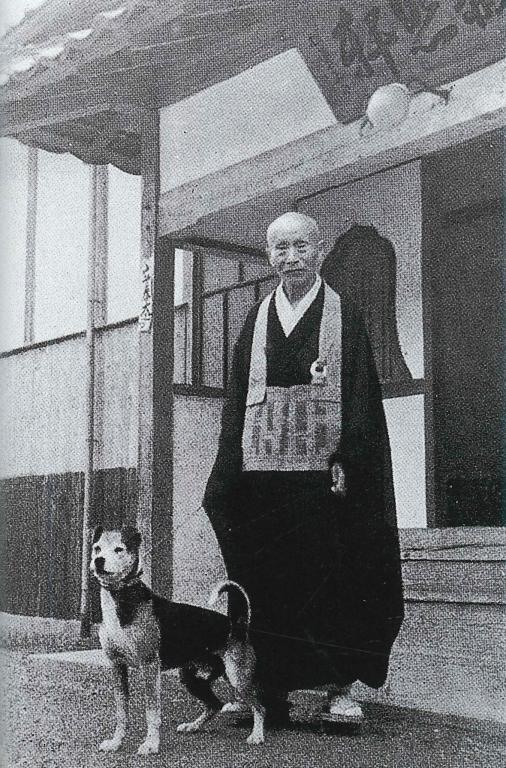
Harada Daiun Rōshi with his dog
(1) Eihei Dōgen, Guidelines for Studying the Way (Japanese, Gakudo yojinshu), #5.
(2) Eihei Dōgen, Guidelines for Studying the Way (Japanese, Gakudo yojinshu), #6.
(3) Eihei Dōgen, Shōbōgenzō “Busshō”, trans Abe and Waddell. Modified.
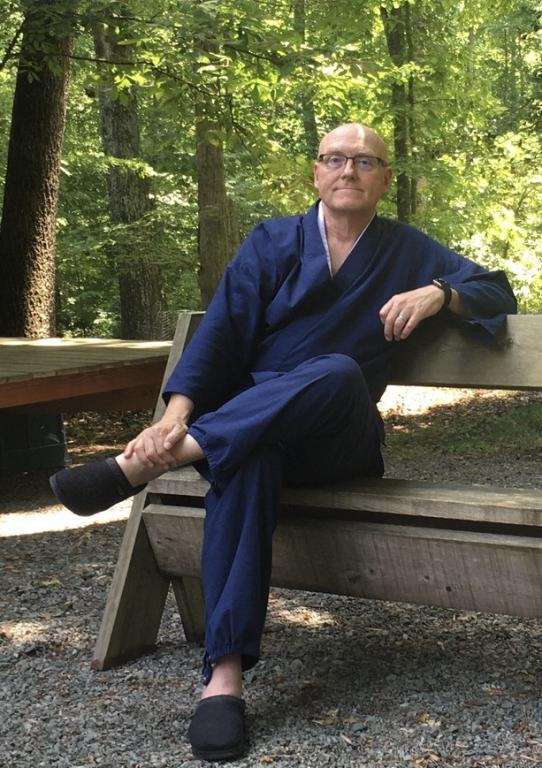
Dōshō Port began practicing Zen in 1977 and now co-teaches with his wife, Tetsugan Zummach Sensei, with the Vine of Obstacles Zen, an online training group. Dōshō received dharma transmission from Dainin Katagiri Rōshi and inka shōmei from James Myōun Ford Rōshi in the Harada-Yasutani lineage. He is also the author of Keep Me In Your Heart a While: The Haunting Zen of Dainin Katagiri. Dōshō’s translation and commentary on The Record of Empty Hall: One Hundred Classic Koans, was published in 2021 (Shambhala). His third book, Going Through the Mystery’s One Hundred Questions, is now available. Click here to support the teaching practice of Dōshō Rōshi.
Previous Post

July 27, 2022
Stinking Skin Bags, Blind Donkeys, Parrots and Studying the Buddhadharma
Next Post
August 16, 2022 Whole-Body Little Dog: New Translations of Two Old Dōgen Poems
Browse Our Archives
Select a Category Uncategorized
Select a Month August 2023 July 2023 June 2023 May 2023 April 2023 March 2023 February 2023 January 2023 December 2022 November 2022 October 2022 September 2022 August 2022 July 2022 June 2022 May 2022 April 2022 March 2022 February 2022 January 2022 December 2021 November 2021 August 2021 June 2021 April 2021 February 2021 January 2021 November 2020 September 2020 August 2020 July 2020 June 2020 May 2020 April 2020 January 2020 December 2019 November 2019 August 2019 June 2019 May 2019 April 2019 February 2019 January 2019 December 2018 November 2018 October 2018 September 2018 August 2018 July 2018 June 2018 May 2018 April 2018 March 2018 February 2018 January 2018 December 2017 November 2017 October 2017 September 2017 August 2017 July 2017 June 2017 December 2016 October 2016 June 2016 April 2016 February 2016 January 2016 December 2015 November 2015 October 2015 August 2015 June 2015 May 2015 April 2015 March 2015 February 2015 January 2015 December 2014 November 2014 October 2014 September 2014 August 2014 July 2014 June 2014 May 2014 April 2014 March 2014 February 2014 January 2014 December 2013 November 2013 October 2013 September 2013 August 2013 July 2013 June 2013 May 2013 April 2013 March 2013 February 2013 January 2013 December 2012 November 2012 October 2012 September 2012 August 2012 July 2012 June 2012 May 2012 April 2012 March 2012 February 2012 January 2012 December 2011 November 2011 October 2011 September 2011 August 2011 July 2011 June 2011 May 2011 April 2011 March 2011 February 2011 January 2011 December 2010 November 2010 October 2010 September 2010 August 2010 July 2010 June 2010 May 2010 April 2010 March 2010 February 2010 January 2010 December 2009 November 2009 October 2009 September 2009 August 2009 July 2009 June 2009 May 2009 April 2009 March 2009 February 2009 January 2009 December 2008 November 2008 October 2008 September 2008 August 2008 July 2008 June 2008 May 2008
Follow Us!
TAKE THE
Religious Wisdom Quiz
What is the first line of the Bible?
Select your answer to see how you score.
Let there be light Hear, O Israel. The Lord is my shepherd. In the beginning God created the heavens and the earth.
Related posts from Wild Fox Zen

Gnawing Through Qiánfēng’s Three Illnesses and Two Lights
Dōgen’s Instruction for Householder Zen Training

The Central Importance of Inquiring of a Teacher
Dogen: Find a Good Teacher, Ask For a...
TRENDING AT PATHEOS Buddhist

On Taking Refuge in the Dharma
(Here I continue the feature of sharing talks and essays by teachers...

(Continuing my intention to share talks and essays by other members of Empty...
The Subtle Art of Bowing: A Dharma Discourse
(This presentation was first offered by my dear friend Dharma Holder Tom...

Internal Family Systems Can Heal you Mentally &...
How IFS Helped Me Stop Fighting Myself Internal Family Systems (IFS) is...

The Bible No One Spoke About: A Family’s...
A mysterious family Bible, unspoken faith, and a journey from curiosity to...

How Uncertainty Can Transform Your Life in 2025
Embracing Uncertainty: A New Year’s Resolution for the Brave As 2025 approaches,...
view all Buddhist blogs
Ad-Free & Subscriber Log-In Subscription Support
- About Us
- 2026 Calendar
- Videos
- Podcasts
- Library of World Religions
- Faith In Media Tracker
- Advertise With Us
- Write for Us
- Privacy Policy
- Terms of Service
- Do Not Sell My Data
- Contact Us
- Radiant Digital
- Manage Newsletter Subscriptions
- Unsubscribe From Notifications
- Sitemap
Copyright 2008-2026, Patheos. All rights reserved.
Subscription Support Ad-Free & Subscriber Log-In
Follow Patheos