
BuddhistCatholicContemplativeEvangelicalGeneral ChristianHinduJewishLatter-day SaintMuslimNew VisionsProgressive Christian
Beliefs
- Buddhist
- Catholic
- Contemplative
- Evangelical
- General Christian
- Hindu
- Jewish
- Latter-day Saint
- More Voices
- Muslim
- New Visions
- Pagan
- Progressive Christian
Topics
- Religion News
- Food and Religion
- Sports and Religion
- Religious Art
- Religious Music and Entertainment
- Religious Events
- History and Religion
- Style and Religion
- Politics and Religion
- Women in Religion
- Recreation Outdoors and Religion
- Business Finance and Religion
- Careers Workplace and Religion
- Education and Religion
- Family Parenting and Religion
- Health Fitness and Religion
- Home and Religion
- Relationships and Religion
- Technology and Religion
- Travel and Religion
Columnists
- Buddhist Columnists
- Business Finance and Religion Columnists
- Careers Workplace and Religion Columnists
- Catholic Columnists
- Contemplative Columnists
- Education and Religion Columnists
- Evangelists Columnists
- Family Parenting and Religion Columnists
- General Christian Columnists
- Health Fitness and Religion Columnists
- Hindu Columnists
- History and Religion Columnists
- Home and Religion Columnists
- Jewish Columnists
- More Voices Columnists
- Latter Day Columnists
- Muslim Columnists
- New Visions Columnists
- Nonreligious Columnists
- Pagan Columnists
- Politics and Religion Columnists
- Progressive Columnists
- Recreation Outdoors and Religion Columnists
- Relationships and Religion Columnists
- Religion News Columnists
- Religious Art Columnists
- Religious Events Columnists
- Religious Music and Entertainment Columnists
- Sports and Religion Columnists
- Style and Religion Columnists
- Technology and Religion Columnists
- Travel and Religion Columnists
- Women in Religion Columnists
Resource Library
- 2026 Calendar
- Library of World Religions
- The 100 Most Holy Places on Earth
- Patheos Answers
- Podcasts
- Videos
- Faith Leaders Database
- Anglican Episcopalian
- Bahai
- Baptist
- Buddhism
- Christianity
- Confucianism
- Eastern Orthodoxy
- Hinduism
- Holiness and Pentecostal
- ISKCON
- Islam
- Judaism
- Lutheran
- Methodist
- The Church of Jesus Christ of Latter-day Saints
- New Age
- Paganism
- Presbytarian and Reformed
- Protestantism
- Religion Behind the Scenes
- Roman Catholic
- Scientology
- Shia Islam
- Sikhism
- Sufism
- Sunni Islam
- Taoism
- Zen
- See all religions
Research Tools
 Ad-Free & Subscriber Log-In Subscription Support
Ad-Free & Subscriber Log-In Subscription Support
Follow Patheos 

- Trending:
- Forgiveness
- |
- Marriage
- |
- Consciousness
- |
- Death Penalty
- |
- Election
- |
- Halloween
 Wild Fox Zen
- Home
- Buddhist
- The Vital Importance of Studying Buddhadharma: Why and How
The Vital Importance of Studying Buddhadharma: Why and How
Last updated on: December 6, 2022 at 1:53 pm by Dosho Port
The Vital Importance of Studying Buddhadharma: Why and How 2022-12-06T13:53:06-06:00 Dosho Port
Patheos Explore the world's faith through different perspectives on religion and spirituality! Patheos has the views of the prevalent religions and spiritualities of the world.
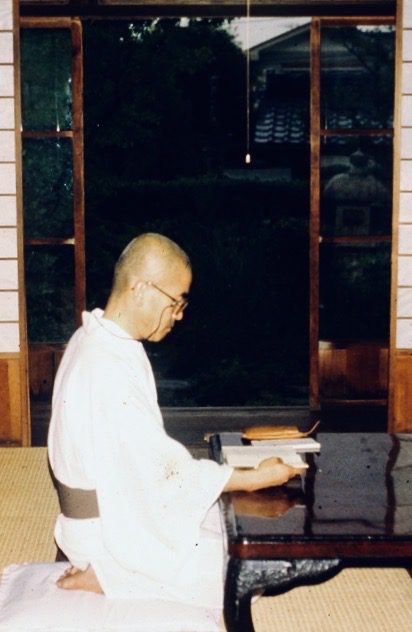
Katagiri Rōshi studying
Introduction
In this post, I will explore two questions: “Why study the buddhadharma” and “How to study the buddhdharma as a practice of the buddhadharma.” This is a fuller expression of these issues that Tetsugan Sensei and I posted for our students on the Vine of Obstacles a month or so back.
In my next post on this subject, “Four Little Fishies in the Big Zen Ocean and How They Do Study,” I’ll share my observations about some approaches to study that miss it as a buddhadharma practice. But lest you think that this is just one crabby old person’s perspective, I’ll then offer another post wherein I’ll present some other crabby old people, including two of the great lights of Zen in Japan, Dōgen Zenji (1200-1253) and Hakuin Zenji (1686-1769), and what they had to say about dharma study. I’m tentatively calling that post, “Stinking Skin Bags, Blind Donkeys, Parrots and Studying the Buddhadharma.”
However, Tetsugan Sensei and I will be heading out soon for our first in-person sesshin that we have offered since the pandemic began, and so I won’t be finishing these pieces until early July or so.
Click here to support my Zen teaching practice at Patreon of which translations and writings like this are one facet. You will also find an advertisement free version of this post there.
So let’s get to it.
Pictured above is my first teacher, Dainin Katagiri Rōshi (1928-1990), studying the buddhadharma as a practice of the buddhadharma – something that he did a lot when he wasn’t in the zendo doing zazen as the buddhadharma, or when he wasn’t in the dokusan room meeting students as the buddhadharma.
A Zen master who studied a lot – what’s up with that? After all, everybody knows that the teaching of Zen from the first ancestor in China, Bodhidharma, is
A separate transmission outside the teaching
Not established on words or texts
Pointing directly to the human heart
– see nature, realize buddha (1)
If Zen is not established on words or texts, what was Katagiri Rōshi doing? Why study the buddhadharma? And what does it mean to study the buddhadharma as a practice of the buddhadharma?
Why study the buddhadharma?
In Guidelines for Studying the Way, Dōgen cites zazen and study as equally important for “Directly Hitting the Mark” (Japanese, jikige jōtō). In living practice, zazen and study are intimately, synergistically related, and so not really two ways at all.
Nevertheless, Dōgen says, “There are two ways to penetrate body-mind: study with a master to hear the teaching, and devotedly sit zazen. Listening to the teaching opens up the mind, while sitting zazen is concerned with practicing enlightenment. Therefore, if you neglect either of these when entering the buddha way, you cannot hit the mark.” (2)
You will be told by some that Dōgen was a “just-sit” guy, but here, in instructions to his close students, he’s a “just-sit and just-study” guy. In other places in his writing, he appears differently. Afterall, Dōgen was a Zen teacher, not a dogmatist.
A dharma talk, and especially an exposition on a kōan, is “teishō” (提唱) in Japanese. Teishō is often translated as “presentation of a shout,” but it could also be rendered “carrying the tune.” A dharma talk that carries the tune from the ancients is not just a rambling tour of the wandering-in-circles mind, nor is it offered in order to stop babies from crying. A teishō is an expression of the essential harmony, sung through the mouth shared by all buddhas and ancestors.
Dōgen says that teishō opens up the mind. Old Katagiri Rōshi would say that listening to teishō allows us to disport ourselves freely. He liked that word “disport” (“to enjoy oneself unrestrainedly; frolic”) and didn’t mind that he alone used it frequently. Indeed, without that opening up of the mind, frolicking, as it were, when we sit zazen, even if we do it devotedly, how can it be anything but a repetition of our tired formations?
In addition, Dōgen’s perspective frames study and zazen as relational activities. Initially, when we listen to the dharma we are in relationship with our teachers’ teaching and when we do zazen, aiming to penetrate bodymind, we are informed by their teaching. As we proceed on the path, the ten-direction world begins to hum the same tune. So we learn the tune from teishō and then put it to work with the instrument of this very ten-direction bodymind.
And, it should be noted as well, that a Zen teacher’s teishō is not limited to when they are formally speaking buddhadharma but also in sitting, walking, standing, and laying down.
Notably, in the above passage, Dōgen specifically refers to listening to a master’s dharma talks and does not say anything about studying the buddhadharma through reading texts. One possible explanation for this is his audience – the Guidelines were intended for monastic practitioners in the early years of their training. One clue to that is the phrase “when entering the buddha way.”
Clearly, however, Dōgen, Ejō, Gikai, and Jōkin, as well as Hakuin and Torei and many of the great Zen masters through the centuries, were extraordinarily well-versed in the sutras, commentaries, lamp records, and kōan collections – beyond what anyone could master from teishō alone.
When studying with a Zen teacher, in my view, one’s study should be focussed on what the teacher is teaching and study outside of formal teishō should be integrated with teishō both through relationship with the teacher and through the content of this so-called “outside teishō” study. Zazen and teishō must work in accord for the clear purpose of awakening and post-awakening training and for no other purpose. This is the best way to cultivate the powerful synergy available in zazen and study.
How to miss the mark of study
However, even if you are training under the greatest of Zen teachers, you must know that it is possible to study Zen without hearing the tune, without doing the practice, without opening up the mind.
Gien Inoue Rōshi (1894-1981) says, “There are some people who study various sutras and commentaries and think they have gained something through the understanding that comes from their own interpretations. Even if such people want to learn something more, their understanding develops only in the direction that they like, because the things they like are, from the beginning, at the center. If you listen with this sort of attitude, then it is impossible to really put the nature of this together. To really resolve this, it is necessary to completely throw off all conditions at once, no matter how favorable for you they may be. Don’t deal with them. You may be worried what will happen to you as a human being when you stop dealing with them, but nothing will happen.” (3)
I giggled when I first read “but nothing will happen!”
In other words, Gien Rōshi is telling us that listening to teisho and/or studying the sutras and commentaries can merely be a rehearsal of the band, “My Formations,” as you rock ‘n’ roll around in your conditioned likes and dislikes. True buddhadharma study, on the other hand, is disruptive to the identity center and not a source for reinforcement. My Formations, after all, just play the same damn tunes over and over and over – the same damn tunes they’ve been playing since their first hits many years ago.
Yet until you’ve entered the buddha way, as I’ve been saying, study might just be another opportunity to rehearse the divided mind, and that is not what this buddhadharma practice is about. On the other hand, without studying the buddhadharma you might remain lost in your formations, mind unfree, unaware of the primordial perspective of the buddhadharma, and so blocked from entering the buddha way. So what can you do?
Dharma study: how to do it?
Directly assimilate and actualize it! That, afterall, is the title for the section from Dōgen’s Guidelines for Practicing the Way that I quote above. In Japanese, as I mentioned above, it is jikige jōtō. Here is Katagiri Rōshi’s explanation of jikige jōtō:
“Jikige is ‘direct, no gap between.’ Jō of jōtō is ‘to receive, absorb, or to assimilate.’ Tō is ‘it,’ exactly the fundamental itself. Together, ‘jōtō’ means ‘to assimilate, receive, and actualize it.’ We are it so we have to digest it and then we can actualize what we are. It does not come from outside. Jikige jōtō is to directly receive and actualize it.”
In other words, studying the buddhadharma as a practice of the buddhadharma is to practice awakening right here and now. Like the poem attributed to Bodhidharma, “Pointing directly to the human heart – see nature, realize buddha.”
We don’t study the buddhadharma in order to point directly at some other time. Thus, in the Shōbōgenzō “Buddha Sutras,” Dōgen says, “To penetrate means to make the sutras the land-body-mind.”(4)
And, of course, we have a “form” (aka, “method,” or a “dharma”) for this that’s been handed on within our lineage, and I assume in other lineages too.
Studying the buddhadharma as a practice of the buddhadharma, then, is not rehearsing your usual way of indulging divided mind. Study is an opportunity to actualize active absorption, harmonizing body, breath, and mind in the midst of activity. At just such a time, studying a text is to enter the buddhadharma directly, becoming the text, allowing the text to advance and confirm the self. As one student put it, “I let the text read me.”
Or like Dōgen said above, “To penetrate means to make the sutras the land-body-mind.”
Katagiri Rōshi’s example
Katagiri Rōshi emphasized the form of buddhadharma study as the result of a painful experience he had as a young monk while serving as Hashimoto Ekō Rōshi’s attendant. The young Katagiri had shared with Hashimoto Rōshi (pictured below) that he had been studying the Shobogenzo while on a train coming back to the monastery. Unlike in the photo, Hashimoto Rōshi was very severe with him, saying something like, “How stupid you are. When riding on a train, just ride on a train. When studying, just study.”
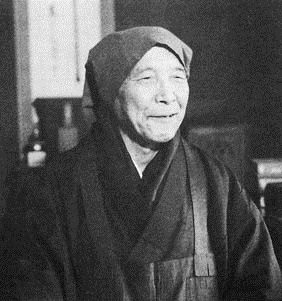
From this rebuke, Katagiri Rōshi was inspired to study how Hashimoto Rōshi studied, and I was inspired to study how Katagiri Rōshi studied. A good rebuke just keeps on giving.
The photo at the beginning of this piece with Katagiri Rōshi studying is from Zuiōji monastery in ’83. In Rōshi’s home office, he had a book stand and so could prop up his texts and sit up a bit more. He would sit seiza like this for a long time, often just wearing a kimono or samu-e, calmly reading the sutras or Shōbōgenzō. Occasionally, he’d close his eyes and rub his shaved head with both hands, then resume reading. He would often have a notebook handy, so that he could jot things down that he’d later include in his teishō. But he studied as a practice, way more than he would have needed to teach us ragged ex-hippies.
Beginning this practice
It is best to undertake studying the buddhadharma in a formal posture – sit upright at a desk or table in a zazen-like posture. Sitting in a chair is fine, of course. Place your dharma book (or device) in front of you and attend to the text without multitasking (checking email, social media, the weather, etc.).
When you read (when the text reads you), just read. Slowly. Receiving the words with the whole body-mind, reading with the belly’s eyes, peeking out from the navel with harmonized body-breath-mind.
Remember that study practice isn’t about getting somewhere, but just like kinhin (walking meditation), the destination is the journey.
In order to really do this study of the buddhadharma as the buddhadharma
It is important to have an experience of kenshō, seeing nature, of course, otherwise, you might just be studying delusion-dharma. And, indeed, there are at least a few Zen masters who kensho-ed during study – Katagiri Rōshi, Shitou, and Hakuin to name a few. So don’t wait for some other time! Directly be hit by the markless mark of buddhadharma – jikige jōtō! – in the course of study right now. (5)
(1) Translation by Dōshō Port.
(2) Dōgen, “Guidelines for Studying the Way,” trans. Kaz Tanahashi. Modified.
(3) A Blueprint of Enlightenment: A Contemporary Commentary on Dōgen Zenji’s Gakudō Yōjinshū “Guidelines for Studying the Way,” by Gien Inoue Rōshi, translated by Daigaku Rummé and Keiko Ohmae, 154. Thanks, Ed Goshin, for pointing this out this passage.
(4) Dōgen, Treasury of the True Dharma Eye: Zen Master Dogen’s Shōbōgenzō, “Buddha Sutras,” trans. Kaz Tanahashi and Peter Levitt.
(5) My thanks to Tetsugan Sensei for her input on this post and for all her loving collaboration through all the years.

Dōshō Port began practicing Zen in 1977 and now co-teaches with his wife, Tetsugan Zummach Sensei, with the Vine of Obstacles Zen, an online training group. Dōshō received dharma transmission from Dainin Katagiri Rōshi and inka shōmei from James Myōun Ford Rōshi in the Harada-Yasutani lineage. He is also the author of Keep Me In Your Heart a While: The Haunting Zen of Dainin Katagiri. Dōshō’s translation and commentary on The Record of Empty Hall: One Hundred Classic Koans, was published in 2021 (Shambhala). His third book, Going Through the Mystery’s One Hundred Questions, is now available. Click here to support the teaching practice of Dōshō Rōshi.
Previous Post

June 2, 2022
Dark Night, Broken Bridge: What To Do When What's Worked Doesn't
Next Post
July 13, 2022 Four Little Fishies in the Big Zen Sea and How They Do Study
Browse Our Archives
Select a Category Uncategorized
Select a Month August 2023 July 2023 June 2023 May 2023 April 2023 March 2023 February 2023 January 2023 December 2022 November 2022 October 2022 September 2022 August 2022 July 2022 June 2022 May 2022 April 2022 March 2022 February 2022 January 2022 December 2021 November 2021 August 2021 June 2021 April 2021 February 2021 January 2021 November 2020 September 2020 August 2020 July 2020 June 2020 May 2020 April 2020 January 2020 December 2019 November 2019 August 2019 June 2019 May 2019 April 2019 February 2019 January 2019 December 2018 November 2018 October 2018 September 2018 August 2018 July 2018 June 2018 May 2018 April 2018 March 2018 February 2018 January 2018 December 2017 November 2017 October 2017 September 2017 August 2017 July 2017 June 2017 December 2016 October 2016 June 2016 April 2016 February 2016 January 2016 December 2015 November 2015 October 2015 August 2015 June 2015 May 2015 April 2015 March 2015 February 2015 January 2015 December 2014 November 2014 October 2014 September 2014 August 2014 July 2014 June 2014 May 2014 April 2014 March 2014 February 2014 January 2014 December 2013 November 2013 October 2013 September 2013 August 2013 July 2013 June 2013 May 2013 April 2013 March 2013 February 2013 January 2013 December 2012 November 2012 October 2012 September 2012 August 2012 July 2012 June 2012 May 2012 April 2012 March 2012 February 2012 January 2012 December 2011 November 2011 October 2011 September 2011 August 2011 July 2011 June 2011 May 2011 April 2011 March 2011 February 2011 January 2011 December 2010 November 2010 October 2010 September 2010 August 2010 July 2010 June 2010 May 2010 April 2010 March 2010 February 2010 January 2010 December 2009 November 2009 October 2009 September 2009 August 2009 July 2009 June 2009 May 2009 April 2009 March 2009 February 2009 January 2009 December 2008 November 2008 October 2008 September 2008 August 2008 July 2008 June 2008 May 2008
Follow Us!
TAKE THE
Religious Wisdom Quiz
What Christian denomination emphasizes "believer’s baptism"?
Select your answer to see how you score.
Lutherans Catholics Presbyterians Baptists
Related posts from Wild Fox Zen

New Vine Ghost Site for Dosho's Creative Endeavors...

The Vigorous Nature of Zen Work
Plucking a Blade of Grass: The Wondrous Dharma...
Dōgen’s Instruction for Householder Zen Training
TRENDING AT PATHEOS Buddhist

On Taking Refuge in the Dharma
(Here I continue the feature of sharing talks and essays by teachers...

(Continuing my intention to share talks and essays by other members of Empty...
The Subtle Art of Bowing: A Dharma Discourse
(This presentation was first offered by my dear friend Dharma Holder Tom...

Internal Family Systems Can Heal you Mentally &...
How IFS Helped Me Stop Fighting Myself Internal Family Systems (IFS) is...

The Bible No One Spoke About: A Family’s...
A mysterious family Bible, unspoken faith, and a journey from curiosity to...

How Uncertainty Can Transform Your Life in 2025
Embracing Uncertainty: A New Year’s Resolution for the Brave As 2025 approaches,...
view all Buddhist blogs
Ad-Free & Subscriber Log-In Subscription Support
- About Us
- 2026 Calendar
- Videos
- Podcasts
- Library of World Religions
- Faith In Media Tracker
- Advertise With Us
- Write for Us
- Privacy Policy
- Terms of Service
- Do Not Sell My Data
- Contact Us
- Radiant Digital
- Manage Newsletter Subscriptions
- Unsubscribe From Notifications
- Sitemap
Copyright 2008-2026, Patheos. All rights reserved.
Subscription Support Ad-Free & Subscriber Log-In
Follow Patheos