
BuddhistCatholicContemplativeEvangelicalGeneral ChristianHinduJewishLatter-day SaintMuslimNew VisionsProgressive Christian
Beliefs
- Buddhist
- Catholic
- Contemplative
- Evangelical
- General Christian
- Hindu
- Jewish
- Latter-day Saint
- More Voices
- Muslim
- New Visions
- Pagan
- Progressive Christian
Topics
- Religion News
- Food and Religion
- Sports and Religion
- Religious Art
- Religious Music and Entertainment
- Religious Events
- History and Religion
- Style and Religion
- Politics and Religion
- Women in Religion
- Recreation Outdoors and Religion
- Business Finance and Religion
- Careers Workplace and Religion
- Education and Religion
- Family Parenting and Religion
- Health Fitness and Religion
- Home and Religion
- Relationships and Religion
- Technology and Religion
- Travel and Religion
Columnists
- Buddhist Columnists
- Business Finance and Religion Columnists
- Careers Workplace and Religion Columnists
- Catholic Columnists
- Contemplative Columnists
- Education and Religion Columnists
- Evangelists Columnists
- Family Parenting and Religion Columnists
- General Christian Columnists
- Health Fitness and Religion Columnists
- Hindu Columnists
- History and Religion Columnists
- Home and Religion Columnists
- Jewish Columnists
- More Voices Columnists
- Latter Day Columnists
- Muslim Columnists
- New Visions Columnists
- Nonreligious Columnists
- Pagan Columnists
- Politics and Religion Columnists
- Progressive Columnists
- Recreation Outdoors and Religion Columnists
- Relationships and Religion Columnists
- Religion News Columnists
- Religious Art Columnists
- Religious Events Columnists
- Religious Music and Entertainment Columnists
- Sports and Religion Columnists
- Style and Religion Columnists
- Technology and Religion Columnists
- Travel and Religion Columnists
- Women in Religion Columnists
Resource Library
- 2026 Calendar
- Library of World Religions
- The 100 Most Holy Places on Earth
- Patheos Answers
- Podcasts
- Videos
- Faith Leaders Database
- Anglican Episcopalian
- Bahai
- Baptist
- Buddhism
- Christianity
- Confucianism
- Eastern Orthodoxy
- Hinduism
- Holiness and Pentecostal
- ISKCON
- Islam
- Judaism
- Lutheran
- Methodist
- The Church of Jesus Christ of Latter-day Saints
- New Age
- Paganism
- Presbytarian and Reformed
- Protestantism
- Religion Behind the Scenes
- Roman Catholic
- Scientology
- Shia Islam
- Sikhism
- Sufism
- Sunni Islam
- Taoism
- Zen
- See all religions
Research Tools
 Ad-Free & Subscriber Log-In Subscription Support
Ad-Free & Subscriber Log-In Subscription Support
Follow Patheos 

- Trending:
- Forgiveness
- |
- Marriage
- |
- Consciousness
- |
- Death Penalty
- |
- Election
- |
- Halloween
 Wild Fox Zen
- Home
- Buddhist
- Praise for the Old Buddha Rújìng and His Dying Poem
Praise for the Old Buddha Rújìng and His Dying Poem
Last updated on: April 7, 2022 at 12:39 pm by Dosho Port
Praise for the Old Buddha Rújìng and His Dying Poem 2022-04-07T12:39:52-06:00 Dosho Port
Patheos Explore the world's faith through different perspectives on religion and spirituality! Patheos has the views of the prevalent religions and spiritualities of the world.
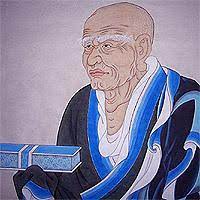
Tiāntóng Rújìng
Click here to support the teaching practice of Dōshō Rōshi at Patreon.
One helluva teacher
This is the last post in this sub-series on Tiāntóng Rújìng (1163-1228), the last Chinese teacher in the Cáodòng/Sōtō lineage of Eihei Dōgen (1200-1253), and nearly the end of this series on the great teachers surrounding Dōgen (at least for a while). Next up, “Seven Stumbles, Eight Blunders: The Life of Tetsu Gikai,” which should be cooked through and ready to serve up next week.
My task in this post-mortem post on Rújìng, though, is to offer a few summary observations, borrow a bit from Steven Heine, and then present Rújìng’s dying poem with a few explanatory comments.
One of the most striking points
about Rújìng’s teaching is how the tone is so different than his most well-known successor, Dōgen (more about Rújìng’s other successors here).
Rújìng, you see, is as vigorous and direct as Dōgen is cultivated and subtle. For example, when he became abbot of Qingliang Temple, one of the most largest and prestigious monasteries in China, the following is recorded:
“Pointing to the Buddha Hall, he opened the hall and saw the Buddha: ‘A poisonous thorn in the eye – ouch! – pull it out and throw it away. Do prostrations, burn incense, overturn everything and put it down bluntly.’”
And then later,
“Sitting in the Abbot’s quarters: ‘Pluck out Bodhidharma’s eye, make it a mud ball to hit people with.” Raising his voice he said, “Look! The sea dries out all the way through the bottom. The waves strike high into the sky.’” (1)
Even in these two short passages, Rújìng’s intense vividness is palpable. And I hope you’ll be able to taste some of Rújìng’s dynamic spirit in his dying poem below. As you may have heard, it has been said that the Cáodòng/Sōtō is characterized by being precise and intimate (細密), while the Línjì/Rinzai line is characterized by being painful and quick (痛快).
Rújìng’s teaching, however, a Cáodòng/Sōtō teacher, seems more in line with the painful and quick than the precise and intimate. Indeed, differences between Zen teachers, especially in the classical period, seem to be more about their particular personalities, rather than what lineage they happen to represent. And as was noted in an earlier post, Rújìng’s students didn’t even know his lineage until he about to die.
Yet, despite Rújìng and Dōgen having different personalities and teaching tone, at heart there is a continuity of essential message from all the buddha ancestors through Rújìng and Dōgen to us – awaken with this great life here and now, live congruently with awakening, offer the warm hand of great compassion to all living beings, and share the dharma with the next generation.
The Buddhist scholar, Steven Heine,
summarizes how Dōgen sang the old man’s praises:
When he wrote the Treasury chapter “Sustained Exertion,” Dōgen praised Rújìng’s own unswerving commitment to zazen from the time of his entrance into the Buddhist community at the age of nineteen to his Tiantong abbacy forty-five years later.
Dōgen wrote, “Throughout China, only my late master demonstrated true determination. Monks far and wide were alike in praising Rújìng for practicing just to practice, yet he did not praise all monks far and wide because they were generally stubborn or selfish.”
Also, Rújìng did not compromise his values by associating with the imperial family, and he often turned down generous offerings from lay followers if they were unable to express the meaning of the dharma. Stalwart meditators flocked to his temple from all parts of the country, and he enthusiastically accommodated monks arriving from Korea and Japan. Rújìng also made room in the training area for irregular practitioners, such as Daoists and shamans, to line up behind the female clerics as part of a hierarchical system that recognized the priority of male monastics. (2)
In Dōgen’s eye, then, Rújìng was a master of zazen who taught by example, while also demonstrating a warm inclusivity to those at the periphery of the male-dominated, elite monastic system.
And, then, he died.
But before death, he wrote a dying poem (辞世, císhì, Japanese, jisei). There is a long, well-established tradition for Zen masters to write such a poem. Literally, the characters mean “words for the world,” or as a binomial, “dying.” And Rújìng wrote quite a doozy.
Words for the World – Rújìng’s Dying Poem
Sixty-six years
committing crimes that
fill the heavens
leaping! falling alive
into Yellow Springs
look! according with
life-death has nothing
to do with it
whole-body stupa
my native monastery (3)
Let’s take a quick look at Rújìng’s words for the world.
First, what about those crimes?
What crimes could a guy commit who rigorously upheld both the monastic and bodhisattva precepts, sitting zazen night and day for most of his life? Well, one point is that we’re all in this mess together and there’s nowhere to hide our culpability. Another is the famous injunction – “open your mouth, one mistake; shut your mouth, another mistake.”
“Yellow Springs” (黃泉, aka, dark realms) refers to the postmortem process and the underworld of the spirits of the dead – a Chinese Buddhist hell, “… typically depicted as a subterranean maze with various levels and chambers, to which souls are taken after death to atone for the crimes they committed when they were alive.”
What is a great sage like Rújìng doing descending into hell rather than ascending into heavenly bliss?
In The Record of Empty Hall, Case 38: Baoying’s “Immediately Entering Hell” has this: “A monk asked the solemn Venerable Baoying, ‘All the sages have passed through to what place?’
Ying said, ‘Not going up to god realms. Immediately entering hell.’”
So too goes old Rújìng.
As for “…according with life-death has nothing to do with it,” again, Rújìng’s vigorous spirit is on display. “It” must mean liberation. “Passively going along won’t do,” shouts the man leaping into hell.
“Whole-body stupa,” points inside and out to the ten-direction world as the memorial of his one life-death.
And, finally, as for “…my native monastery,” this could be translated in various ways. The characters, 本山, literally mean “source mountain.” For a monk, they can refer to the head temple of their order, or to the monk’s native monastery. It is this last meaning that seems to fit best with the context of Rújìng’s poem.
Now that he’s dead, the whole world is his practice home.
One helluva teacher.
(1) Chan Teacher Rujing’s Record, Taisho Tripitaka 2002a, 如淨和尚語錄卷上, trans. Yashu Zhang and Kokyo Henkel.
(2) Steven Heine, Dogen: Japan’s Original Zen Master, 82.
(3) In my above translation, following the free spirit of Rújìng, I don’t follow the line structure of the Rújìng’s poem.

Dōshō Port began practicing Zen in 1977 and now co-teaches with his wife, Tetsugan Zummach Sensei, with the Vine of Obstacles: Online Support for Zen Training, an internet-based Zen community. Dōshō received dharma transmission from Dainin Katagiri Rōshi and inka shōmei from James Myōun Ford Rōshi in the Harada-Yasutani lineage. Dōshō’s translation and commentary on The Record of Empty Hall: One Hundred Classic Koans, is now available (Shambhala). He is also the author of Keep Me In Your Heart a While: The Haunting Zen of Dainin Katagiri. Click here to support the teaching practice of Dōshō Rōshi at Patreon.
Previous Post

March 29, 2022
Another Big Ugly Myth: Zen Lacks A Compassion Practice
Next Post
April 18, 2022 Seven Stumbles, Eight Blunders: The Life of Tetsu Gikai
Browse Our Archives
Select a Category Uncategorized
Select a Month August 2023 July 2023 June 2023 May 2023 April 2023 March 2023 February 2023 January 2023 December 2022 November 2022 October 2022 September 2022 August 2022 July 2022 June 2022 May 2022 April 2022 March 2022 February 2022 January 2022 December 2021 November 2021 August 2021 June 2021 April 2021 February 2021 January 2021 November 2020 September 2020 August 2020 July 2020 June 2020 May 2020 April 2020 January 2020 December 2019 November 2019 August 2019 June 2019 May 2019 April 2019 February 2019 January 2019 December 2018 November 2018 October 2018 September 2018 August 2018 July 2018 June 2018 May 2018 April 2018 March 2018 February 2018 January 2018 December 2017 November 2017 October 2017 September 2017 August 2017 July 2017 June 2017 December 2016 October 2016 June 2016 April 2016 February 2016 January 2016 December 2015 November 2015 October 2015 August 2015 June 2015 May 2015 April 2015 March 2015 February 2015 January 2015 December 2014 November 2014 October 2014 September 2014 August 2014 July 2014 June 2014 May 2014 April 2014 March 2014 February 2014 January 2014 December 2013 November 2013 October 2013 September 2013 August 2013 July 2013 June 2013 May 2013 April 2013 March 2013 February 2013 January 2013 December 2012 November 2012 October 2012 September 2012 August 2012 July 2012 June 2012 May 2012 April 2012 March 2012 February 2012 January 2012 December 2011 November 2011 October 2011 September 2011 August 2011 July 2011 June 2011 May 2011 April 2011 March 2011 February 2011 January 2011 December 2010 November 2010 October 2010 September 2010 August 2010 July 2010 June 2010 May 2010 April 2010 March 2010 February 2010 January 2010 December 2009 November 2009 October 2009 September 2009 August 2009 July 2009 June 2009 May 2009 April 2009 March 2009 February 2009 January 2009 December 2008 November 2008 October 2008 September 2008 August 2008 July 2008 June 2008 May 2008
Follow Us!
TAKE THE
Religious Wisdom Quiz
Who said, "Faith without works is dead"?
Select your answer to see how you score.
John Paul James Peter
Related posts from Wild Fox Zen

The Vigorous Nature of Zen Work
Plucking a Blade of Grass: The Wondrous Dharma...
Dōgen’s Instruction for Householder Zen Training

Wandering Destitute into a Demon Pit
TRENDING AT PATHEOS Buddhist

On Taking Refuge in the Dharma
(Here I continue the feature of sharing talks and essays by teachers...

(Continuing my intention to share talks and essays by other members of Empty...
The Subtle Art of Bowing: A Dharma Discourse
(This presentation was first offered by my dear friend Dharma Holder Tom...

Internal Family Systems Can Heal you Mentally &...
How IFS Helped Me Stop Fighting Myself Internal Family Systems (IFS) is...

The Bible No One Spoke About: A Family’s...
A mysterious family Bible, unspoken faith, and a journey from curiosity to...

How Uncertainty Can Transform Your Life in 2025
Embracing Uncertainty: A New Year’s Resolution for the Brave As 2025 approaches,...
view all Buddhist blogs
Ad-Free & Subscriber Log-In Subscription Support
- About Us
- 2026 Calendar
- Videos
- Podcasts
- Library of World Religions
- Faith In Media Tracker
- Advertise With Us
- Write for Us
- Privacy Policy
- Terms of Service
- Do Not Sell My Data
- Contact Us
- Radiant Digital
- Manage Newsletter Subscriptions
- Unsubscribe From Notifications
- Sitemap
Copyright 2008-2026, Patheos. All rights reserved.
Subscription Support Ad-Free & Subscriber Log-In
Follow Patheos