
BuddhistCatholicContemplativeEvangelicalGeneral ChristianHinduJewishLatter-day SaintMuslimNew VisionsProgressive Christian
Beliefs
- Buddhist
- Catholic
- Contemplative
- Evangelical
- General Christian
- Hindu
- Jewish
- Latter-day Saint
- More Voices
- Muslim
- New Visions
- Pagan
- Progressive Christian
Topics
- Religion News
- Food and Religion
- Sports and Religion
- Religious Art
- Religious Music and Entertainment
- Religious Events
- History and Religion
- Style and Religion
- Politics and Religion
- Women in Religion
- Recreation Outdoors and Religion
- Business Finance and Religion
- Careers Workplace and Religion
- Education and Religion
- Family Parenting and Religion
- Health Fitness and Religion
- Home and Religion
- Relationships and Religion
- Technology and Religion
- Travel and Religion
Columnists
- Buddhist Columnists
- Business Finance and Religion Columnists
- Careers Workplace and Religion Columnists
- Catholic Columnists
- Contemplative Columnists
- Education and Religion Columnists
- Evangelists Columnists
- Family Parenting and Religion Columnists
- General Christian Columnists
- Health Fitness and Religion Columnists
- Hindu Columnists
- History and Religion Columnists
- Home and Religion Columnists
- Jewish Columnists
- More Voices Columnists
- Latter Day Columnists
- Muslim Columnists
- New Visions Columnists
- Nonreligious Columnists
- Pagan Columnists
- Politics and Religion Columnists
- Progressive Columnists
- Recreation Outdoors and Religion Columnists
- Relationships and Religion Columnists
- Religion News Columnists
- Religious Art Columnists
- Religious Events Columnists
- Religious Music and Entertainment Columnists
- Sports and Religion Columnists
- Style and Religion Columnists
- Technology and Religion Columnists
- Travel and Religion Columnists
- Women in Religion Columnists
Resource Library
- 2026 Calendar
- Library of World Religions
- The 100 Most Holy Places on Earth
- Patheos Answers
- Podcasts
- Videos
- Faith Leaders Database
- Anglican Episcopalian
- Bahai
- Baptist
- Buddhism
- Christianity
- Confucianism
- Eastern Orthodoxy
- Hinduism
- Holiness and Pentecostal
- ISKCON
- Islam
- Judaism
- Lutheran
- Methodist
- The Church of Jesus Christ of Latter-day Saints
- New Age
- Paganism
- Presbytarian and Reformed
- Protestantism
- Religion Behind the Scenes
- Roman Catholic
- Scientology
- Shia Islam
- Sikhism
- Sufism
- Sunni Islam
- Taoism
- Zen
- See all religions
Research Tools
 Ad-Free & Subscriber Log-In Subscription Support
Ad-Free & Subscriber Log-In Subscription Support
Follow Patheos 

- Trending:
- Forgiveness
- |
- Marriage
- |
- Consciousness
- |
- Death Penalty
- |
- Election
- |
- Halloween
 Wild Fox Zen
- Home
- Buddhist
- Xutang’s Blurb for Dogen’s Best Seller
Xutang’s Blurb for Dogen’s Best Seller
Last updated on: January 25, 2022 at 7:23 pm by Dosho Port
Xutang’s Blurb for Dogen’s Best Seller 2022-01-25T19:23:37-06:00 Dosho Port
Patheos Explore the world's faith through different perspectives on religion and spirituality! Patheos has the views of the prevalent religions and spiritualities of the world.
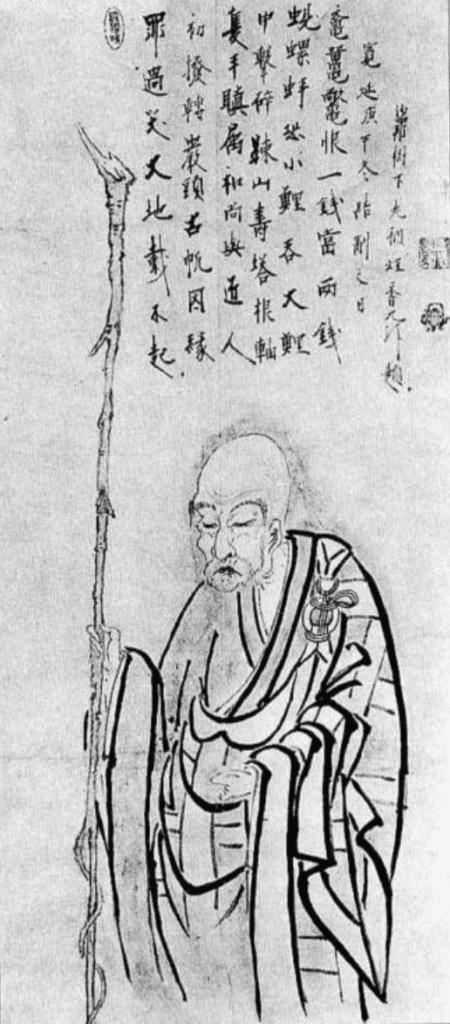
Hakuin’s Xutang Zhiyu (1185–1269)
Introduction
When I was translating The Record of Empty Hall and working on the commentary, a respectable scholar sent me a copy of Xutang’s preface for Dogen’s Eihei Goroku, that is, the abridged record of Dogen. The text was mostly the mix of Chinese characters and Japanese syllabaries and quite over my head. Fortunately, I persisted.
For many reasons, Xutang (1185-1269; English, Empty Hall) is an enormously important teacher in the 13th Century Linji lineage Chan, not the least of which is that he had several Japanese successors, one of whom, Nanpo Shomyo (1235-1309), is a key link in the ongoing succession of the Linji lineage (Japanese, Rinzai) in Japan and now into the global dharma world.
The brilliant Hakuin (1686-1769) was enormously fond of Xutang and it was due to his strong recommendations for students of Zen to become deeply familiar with Xutang’s teaching that I took up the project of translating and commenting on The Record of Empty Hall (Japanese, Kido Roku). I’d found a story of the meeting of Xutang and Rujing, Dogen’s teacher in Complete Poison Blossoms from a Thicket of Thorn: The Zen Records of Hakuin Ekaku (see below for that) and found it inspiring that these two seminal figures actually met. I wondered if in Xutang’s preface for Dogen’s Record there were any clues that the two of them might have met as well.
Spoiler Alert: ah, well, a little.
Then recently, I became acquainted with a wonderful Bukkokuji monk, Kogen Czarnik Osho, who is fluent in Japanese. Eventually, a little light went on and I began pestering him and pestering him until he relented and translated Xutang’s preface, which I refer to in the title of this post as “Xutang’s blurb” due to it’s brevity, as you’ll see below. And then I hammered him with objections to petty details and minor quibbles until he double, triple relented.
So here it is:
Xutang’s Preface for Dogen’s Eihei Goroku
Venerable Giin* brought Japanese Dogen Osho’s Eihei compilation. Looking at this composition, it is profound, and not corrupted by words. His sayings capture Tiantong Rujing Osho’s doctrine of no transmission.** Moreover, this old monk’s daily expressions are all sounds of jewels, standing out and exceptional. Taking this and looking at it, old Dogen’s function surpassed his teacher. Those who will take up these records will follow the change of Lu.***
Great Song, 1265, Spring, March
By decree, written by performing abbot of Jingguo Jingcisi, Xutang Zhiyu
A Few Explanations
* Kangan Giin (1217-1300) seems to have begun his Zen training with the Dharumashu and moved to Dogen’s Koshoji, near Kyoto, and then followed Dogen into the mountains and Eiheiji. He appears to have received transmission from Dogen’s primary successor, Koun Ejo, and then more than a decade after Dogen’s death, took the Eihei koroku to China so that it could be abridged and sanctioned by another successor of Rujing, Wuwai Yiyuan. Upon his return from China, Giin established himself on Kyushu and is regarded as the founder of the Higo Branch of Soto Zen. Click here for more. See Did Dogen Drop and When for more about Giin’s trip to China, including the definitive confirmation of Dogen’s awakening experience.
** According to the notes, the phrase “no transmission” is shorthand for “not depending on words or letters, special transmission outside scriptures” from the verse attributed to Bodhidharma, because the first and last characters are the same.
*** Also according to notes, the phrase “follow the change of Lu” is a reference to a saying, probably by Confucius, referring to old kingdoms during the Spring and Autumn Period in China: “If kingdom Qi would change, it would become like kingdom Lu. If kingdom Lu would change, it would become the Way.”
A General Comment on Xutang’s Preface
Xutang holds nothing back in his praise for Dogen. He equates the transmission from Rujing to Dogen with Bodhidharma’s transmission of no transmission, clearly going beyond lineage affiliation. It seems that for Xutang, like Dogen, the point wasn’t about lineage, but about the buddhadharma. Period. Full stop.
Xutang says that Dogen’s activities of body, speech, and mind are like the jingling of jewels. Now how would Xutang have heard those jewels jingling unless he and Dogen had met? But that’s pretty speculative, so I’ll leave that for you to access.
Xutang also says that the Japanese Dogen went beyond the Chinese Rujing. How’s that for going beyond ethnicity? And also that if a person takes up Dogen’s Record that they will change into the Way, like a dragon that changes at the skeletal level.
That’s one helluva blurb and one helluva promise for a book.
What Xutang doesn’t include is any note about how this guy Dogen was inventing some new Zen school that involved a hostility to zazen-samadhi-koan as well as awakening and instead emphasized a new practice, never heard of before from any of the greatest teachers in Great Song China – shikantaza.
Xutang recognizes Dogen as a peer, as a Zen master, as an awakening being.
The Record of Empty Hall Excerpt
Below you’ll find the excerpt from The Record of Empty Hall: One Hundred Classic Koans, p. 6-8, that connects the dots between Xutang and Rujing, Dogen’s teacher:
After his enlightenment and acknowledgment as a dharma heir of Yun’an, a twenty-seventh generation successor in China, Xutang went traveling to further refine his awakening. One stop along the way was at Tiantong Rujing’s place. Rujing (1162–1228), the teacher of Eihei Dogen (1200–1253), became the last ancestor in the Caodong lineage, which became the Japanese Soto lineage that continues to this day in Japan and in other countries. In the same way, Xutang, teacher of the Japanese monk Daio Kokushi, turned out to be the last Chinese ancestor in what became the Japanese Rinzai lineage. Little did either know what a generative intersection their relationship would turn out to be.
The connections between Xutang and Dogen went beyond their mutual participation in parallel processes of international transmission between China and Japan. Toward the end of Xutang’s life, he wrote a preface to the collected works of Dogen. Not only that, but a student of Dogen, Tetsu Gikai, may have been the person who introduced Daio to Xutang.
But back to Rujing. Twenty-three years Xutang’s senior, the old buddha did not go easy on the youngster. Hakuin told the story like this:
When Zen master Xutang met Head Priest of Ch’ing-tz’u temple, Rujing said, “Your parents’ bodies are rotting away in a thicket of razor-sharp thorns. Did you know that?”
“It is wonderful,” Xutang replied, “but it’s not something to act rashly about.”
Rujing gave Xutang a slap. Xutang extended his arms, saying, “Let’s take it slow and easy.”
Rujing’s challenge to the young Xutang was about his dharma ancestors’ bodies, those hard-to-pass-through koans, that according to Rujing were lying rotting, unvivified by Xutang’s ongoing practice. It was no small rebuke. Xutang’s response reverberated with the saying of Yun’an’s that had previously so annoyed him: “Take it easy, just remain mindless and unfettered by words.”
Even Rujing’s slap didn’t cause him to turn his head. Hakuin commented on this encounter, saying,
The means employed by these two old veterans are exceedingly subtle and mysterious. Scrutinize them carefully and you will find that Rujing’s question is as awesome as the great serpent that devours elephants whole and excretes their dry bones three years later. Xutang’s reply has the vehement purpose of the evil P’o-ching bird, which seeks to devour its mother as soon as it is born.
Setting aside snakes pooping out the remains of their thoroughly digested noble practice, and an unfilial student that eats its own teacher immediately after awakening, the question for us today is this: How can we get to the rotting bodies of our dharma ancestors so that we might thoroughly embody the truth of Zen before our parents were born?
And then give the corpses a decent burial.
 Dōshō Port began practicing Zen in 1977 and now co-teaches with his wife, Tetsugan Zummach Ōshō, with the Vine of Obstacles: Online Support for Zen Training, an internet-based Zen community. Dōshō received dharma transmission from Dainin Katagiri Rōshi and inka shōmei from James Myōun Ford Rōshi in the Harada-Yasutani lineage. Dōshō’s translation and commentary on The Record of Empty Hall: One Hundred Classic Koans, is now available (Shambhala). He is also the author of Keep Me In Your Heart a While: The Haunting Zen of Dainin Katagiri.
Previous Post

June 21, 2021
Zen Conversations: 42 Zen Teachers talk ... a short excerpt
Next Post
August 12, 2021 The Record of Empty Hall: Reviews, Talks, Interview
Browse Our Archives
Select a Category Uncategorized
Select a Month August 2023 July 2023 June 2023 May 2023 April 2023 March 2023 February 2023 January 2023 December 2022 November 2022 October 2022 September 2022 August 2022 July 2022 June 2022 May 2022 April 2022 March 2022 February 2022 January 2022 December 2021 November 2021 August 2021 June 2021 April 2021 February 2021 January 2021 November 2020 September 2020 August 2020 July 2020 June 2020 May 2020 April 2020 January 2020 December 2019 November 2019 August 2019 June 2019 May 2019 April 2019 February 2019 January 2019 December 2018 November 2018 October 2018 September 2018 August 2018 July 2018 June 2018 May 2018 April 2018 March 2018 February 2018 January 2018 December 2017 November 2017 October 2017 September 2017 August 2017 July 2017 June 2017 December 2016 October 2016 June 2016 April 2016 February 2016 January 2016 December 2015 November 2015 October 2015 August 2015 June 2015 May 2015 April 2015 March 2015 February 2015 January 2015 December 2014 November 2014 October 2014 September 2014 August 2014 July 2014 June 2014 May 2014 April 2014 March 2014 February 2014 January 2014 December 2013 November 2013 October 2013 September 2013 August 2013 July 2013 June 2013 May 2013 April 2013 March 2013 February 2013 January 2013 December 2012 November 2012 October 2012 September 2012 August 2012 July 2012 June 2012 May 2012 April 2012 March 2012 February 2012 January 2012 December 2011 November 2011 October 2011 September 2011 August 2011 July 2011 June 2011 May 2011 April 2011 March 2011 February 2011 January 2011 December 2010 November 2010 October 2010 September 2010 August 2010 July 2010 June 2010 May 2010 April 2010 March 2010 February 2010 January 2010 December 2009 November 2009 October 2009 September 2009 August 2009 July 2009 June 2009 May 2009 April 2009 March 2009 February 2009 January 2009 December 2008 November 2008 October 2008 September 2008 August 2008 July 2008 June 2008 May 2008
Follow Us!
TAKE THE
Religious Wisdom Quiz
How many men did Joshua initially send to Ai?
Select your answer to see how you score.
5,000 2,000 3,000 4,000
Related posts from Wild Fox Zen

The Vigorous Nature of Zen Work
Plucking a Blade of Grass: The Wondrous Dharma...
Dōgen’s Instruction for Householder Zen Training

Wandering Destitute into a Demon Pit
TRENDING AT PATHEOS Buddhist

On Taking Refuge in the Dharma
(Here I continue the feature of sharing talks and essays by teachers...

(Continuing my intention to share talks and essays by other members of Empty...
The Subtle Art of Bowing: A Dharma Discourse
(This presentation was first offered by my dear friend Dharma Holder Tom...

Internal Family Systems Can Heal you Mentally &...
How IFS Helped Me Stop Fighting Myself Internal Family Systems (IFS) is...

The Bible No One Spoke About: A Family’s...
A mysterious family Bible, unspoken faith, and a journey from curiosity to...

How Uncertainty Can Transform Your Life in 2025
Embracing Uncertainty: A New Year’s Resolution for the Brave As 2025 approaches,...
view all Buddhist blogs
Ad-Free & Subscriber Log-In Subscription Support
- About Us
- 2026 Calendar
- Videos
- Podcasts
- Library of World Religions
- Faith In Media Tracker
- Advertise With Us
- Write for Us
- Privacy Policy
- Terms of Service
- Do Not Sell My Data
- Contact Us
- Radiant Digital
- Manage Newsletter Subscriptions
- Unsubscribe From Notifications
- Sitemap
Copyright 2008-2026, Patheos. All rights reserved.
Subscription Support Ad-Free & Subscriber Log-In
Follow Patheos