
BuddhistCatholicContemplativeEvangelicalGeneral ChristianHinduJewishLatter-day SaintMuslimNew VisionsProgressive Christian
Beliefs
- Buddhist
- Catholic
- Contemplative
- Evangelical
- General Christian
- Hindu
- Jewish
- Latter-day Saint
- More Voices
- Muslim
- New Visions
- Pagan
- Progressive Christian
Topics
- Religion News
- Food and Religion
- Sports and Religion
- Religious Art
- Religious Music and Entertainment
- Religious Events
- History and Religion
- Style and Religion
- Politics and Religion
- Women in Religion
- Recreation Outdoors and Religion
- Business Finance and Religion
- Careers Workplace and Religion
- Education and Religion
- Family Parenting and Religion
- Health Fitness and Religion
- Home and Religion
- Relationships and Religion
- Technology and Religion
- Travel and Religion
Columnists
- Buddhist Columnists
- Business Finance and Religion Columnists
- Careers Workplace and Religion Columnists
- Catholic Columnists
- Contemplative Columnists
- Education and Religion Columnists
- Evangelists Columnists
- Family Parenting and Religion Columnists
- General Christian Columnists
- Health Fitness and Religion Columnists
- Hindu Columnists
- History and Religion Columnists
- Home and Religion Columnists
- Jewish Columnists
- More Voices Columnists
- Latter Day Columnists
- Muslim Columnists
- New Visions Columnists
- Nonreligious Columnists
- Pagan Columnists
- Politics and Religion Columnists
- Progressive Columnists
- Recreation Outdoors and Religion Columnists
- Relationships and Religion Columnists
- Religion News Columnists
- Religious Art Columnists
- Religious Events Columnists
- Religious Music and Entertainment Columnists
- Sports and Religion Columnists
- Style and Religion Columnists
- Technology and Religion Columnists
- Travel and Religion Columnists
- Women in Religion Columnists
Resource Library
- 2026 Calendar
- Library of World Religions
- The 100 Most Holy Places on Earth
- Patheos Answers
- Podcasts
- Videos
- Faith Leaders Database
- Anglican Episcopalian
- Bahai
- Baptist
- Buddhism
- Christianity
- Confucianism
- Eastern Orthodoxy
- Hinduism
- Holiness and Pentecostal
- ISKCON
- Islam
- Judaism
- Lutheran
- Methodist
- The Church of Jesus Christ of Latter-day Saints
- New Age
- Paganism
- Presbytarian and Reformed
- Protestantism
- Religion Behind the Scenes
- Roman Catholic
- Scientology
- Shia Islam
- Sikhism
- Sufism
- Sunni Islam
- Taoism
- Zen
- See all religions
Research Tools
 Ad-Free & Subscriber Log-In Subscription Support
Ad-Free & Subscriber Log-In Subscription Support
Follow Patheos 

- Trending:
- Forgiveness
- |
- Marriage
- |
- Consciousness
- |
- Death Penalty
- |
- Election
- |
- Halloween
 Wild Fox Zen
- Home
- Buddhist
- Silent Illumination: A Vital New Expression of An Ancient Tradition
Silent Illumination: A Vital New Expression of An Ancient Tradition
Last updated on: January 25, 2022 at 7:24 pm by Dosho Port
Silent Illumination: A Vital New Expression of An Ancient Tradition 2022-01-25T19:24:46-06:00 Dosho Port
Patheos Explore the world's faith through different perspectives on religion and spirituality! Patheos has the views of the prevalent religions and spiritualities of the world.
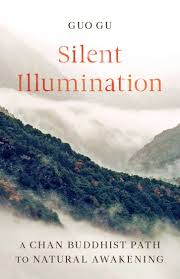
Silent Illumination: A Chan Buddhist Path to Natural Awakening, by Guo Gu Laoshi (available now for preorder and preview) is a wonderful expression of the buddhadharma from beginning to end. As you probably know, Guo Gu is an important contemporary Chan teacher, a successor of the great Sheng Yen. He also has one of the coolest websites around: click.
In Silent Illumination, Guo Gu offers a strikingly fresh perspective on the significance of the phrase, silent illumination, grounded in the Chinese Chan perspective, compellingly rehabilitating and reintroducing silent illumination and the teaching of Zen Master Hongzhi to the English-speaking dharma world. For Guo Gu, silent illumination is not a specific practice, but a synonym for buddha nature. And that’s a game changer.
So Silent illumination includes the whole path of practice and realization, from “Starting from Where We Are,” “Underlying Feeling Tones,” and “Supportive Attitudes to Cultivate,” through “The Vacant Field.” (1)
Up to this point in Western dharma literature, what we’ve heard most about silent illumination is from either the Japanese Soto or Rinzai perspectives. From the Soto perspective, silent illumination, at it’s best, is a samadhi practice that naturally unfolds into awakening. From the Japanese Rinzai perspective, following the Chinese Chan Master Dahui, silent illumination is about wallowing in fake emptiness, something to be avoided at at all costs. As Hakuin put it, “These days in temples throughout the country people are immersing themselves in the dead, stagnant waters of quiescent silent illumination Zen.”
For more on this see “Hakuin’s Blistering Criticisms of Sōtō Zen: Who and What.”
Guo Gu pulls silent illumination from the jaws of this controversy. He writes,
“Buddha-nature, our natural awakened nature, is really another word for silent illumination (mozhao). Yet, many misunderstand it as an exclusive meditation method of certain sects within the Chan tradition and say that it was advocated only by Chan master Hongzhi Zhengjue (1091–1157). But silent illumination cannot be claimed by any one tradition within Mahayana Buddhism, and it is not a fixed meditation method” (p. 3). (2)
Further,
“‘Silence’ is the metaphor for the wisdom of emptiness. So are quiescence, formlessness, spaciousness, stillness. These are all Hongzhi’s poetic terms for the Mahayana teaching of selflessness. ‘Illumination’ refers to the wondrous activity of this selfless wisdom that, in Buddhism, is none other than compassion” (p. 5).
But the book is about much more than this one point.
Guo Gu says,
“Chan Buddhism clarifies what awakening is and shows how to transform everyday experiences into the path. Distilled from centuries of development, Chan is the culmination and fulfillment of the Buddha’s original message. However, the essence of Chan is largely absent from existing publications on Buddhism in the West, and this is especially true of the teaching on silent illumination” (p. vii).
And so Guo Gu’s aims for the book are
“… To establish silent illumination squarely within the Mahayana Buddhist traditions. Second, to offer detailed instructions for establishing a foundation for realizing silent illumination. Third, to offer quality translations of Hongzhi’s poetic writings on silent illumination” (p. viii).
And in fulfilling the aims of Silent Illumination, Guo Gu also offers up some pointed and fair criticism of those in the Soto school who ascribe to silent illumination as a practice:
“Chan practitioners must have confidence in buddha-nature, our intrinsic freedom, but this confidence is not something we can rationalize. I’ve met Zen practitioners who, in meditation, bring forth this faith in ‘just sitting’ as an expression of awakening or buddha-nature. It is an expression of buddha-nature, but, when I inquire further about it, I found that what they’re doing is thinking about faith and conviction in buddha-nature while they sit. They are engaging in a monologue to remind themselves about their faith and conviction” (p. 34).
In part for this reason, Guo Gu says,
“I emphasize cultivating correct attitudes and being more aware of subtle feeling tones. In order to become aware of undercurrent feeling tones, we have to train ourselves to experience them. The more immersed in our inner states we are, the more experienced we become, and the more we’re able to navigate them and become skillful practitioners” (p. 21).
Indeed, the first third of the book focuses on practices for identifying feeling tones and cultivating supporting attitudes, including an important section on embodied experiencing.
Guo Gu says,
“One main method for silent illumination is what I call embodied experiencing. It’s an antidote to the fact that most people live in their heads. They are top-heavy, so whatever method they use, they tend to turn it into thinking. Embodied experiencing, particularly in sitting meditation practice, counters this as we experience the presence of the body moment to moment. Experiencing the body is not about thinking. Instead, it is being in the body, with the body, and experiencing it concretely. It is an embodied experience.”
In the second third of Silent Illumination, Guo Gu shares three passages by Hongzhi with his own insightful commentaries: “The Vacant Field,” “The Investigation,” and “Multitasking.” This last one rehabilitates multitasking for post-awakening practice.
Hongzhi says,
“Multitasking amid chaos, manifesting in places of encounter—none of these are realms outside of yourself. Heaven and earth share the same root; the myriad forms are of a single body. Adapting to changes and transforming freely without being manipulated by those who curry favor— this is to actualize great freedom. Traveling like the wind; illuminating like the moon; encountering things without obstructions.”
Guo Gu concludes his commentary on this passage with this:
“Only through practicing in life, mingling with all kinds of people, will we be able to deepen our Chan practice. Stopping is not an option. Even after awakening, we still need to work on subtle habit tendencies. Practice continues on and on” (p. 117).
In the last third of Silent Illumination, Guo Gu offers twenty-five of his own translations from The Extended Discourse Records of Chan Master Hongzhi, previously known to the English reader mostly through Rev. Taigen Dan Leighton and Yi Wu’s work in Cultivating the Empty Field.
After praising this work, Guo Gu says,
“[Leighton’s] reading also places Hongzhi’s teaching squarely within the Japanese Soto Zen perspective of shikantaza, or “just sitting” practice. I see Hongzhi’s teaching as belonging to a shared language of Chan. As I show in the introduction, many Chan masters—including those from other lineages—also articulated practice and awakening in similar language. While rendering Hongzhi’s teaching through the lens of Soto Zen practice is useful, it also unintentionally reinforces sectarian divides and limits the broader significance of Hongzhi’s message.”
I find Guo Gu’s spirited translations of Hongzhi limpid and lucid. “How to Proceed,” for example, he has this:
“When your realization is far-reaching and exhaustive, you multiply in response to the multitude of circumstances. As illumination issues forth through your sense doors, the sensory objects appear like cast shadows. You will then realize that all things flow out from yourself. The hundreds of thousands of situations are no longer the causes or conditions that oppose you. Thorough and penetrating right through your whole being— this is how to proceed!” (p. 129).
I hope that in the future Guo Gu will share more Hongzhi translations with his helpful commentaries.
In conclusion, this is a wonderful book. Both old dharma hands as well as newer students will find instruction and inspiration here, as well as a profoundly wholistic approach to the Way.
(1) From the blurb that I offered to Shambhala, most of which appears on the back cover.
(2) All quotes are from Silent Illumination: A Chan Buddhist Path to Natural Awakening. Page numbers appear in parenthesis.

Dōshō Port began practicing Zen in 1977 and now co-teaches with his wife, Tetsugan Zummach Ōshō, with the Vine of Obstacles: Online
Dōshō Port began practicing Zen in 1977 and now co-teaches with his wife, Tetsugan Zummach Ōshō, with the Vine of Obstacles: Online Support for Zen Training, an internet-based Zen community. Dōshō received dharma transmission from Dainin Katagiri Rōshi and inka shōmei from James Myōun Ford Rōshi in the Harada-Yasutani lineage. Dōshō’s translation and commentary on The Record of Empty Hall: One Hundred Classic Koans, is now available (Shambhala). He is also the author of Keep Me In Your Heart a While: The Haunting Zen of Dainin Katagiri.
Next Post

April 1, 2021 Cyber Zen: Practicing Awakening in These Very Times
Browse Our Archives
Select a Category Uncategorized
Select a Month August 2023 July 2023 June 2023 May 2023 April 2023 March 2023 February 2023 January 2023 December 2022 November 2022 October 2022 September 2022 August 2022 July 2022 June 2022 May 2022 April 2022 March 2022 February 2022 January 2022 December 2021 November 2021 August 2021 June 2021 April 2021 February 2021 January 2021 November 2020 September 2020 August 2020 July 2020 June 2020 May 2020 April 2020 January 2020 December 2019 November 2019 August 2019 June 2019 May 2019 April 2019 February 2019 January 2019 December 2018 November 2018 October 2018 September 2018 August 2018 July 2018 June 2018 May 2018 April 2018 March 2018 February 2018 January 2018 December 2017 November 2017 October 2017 September 2017 August 2017 July 2017 June 2017 December 2016 October 2016 June 2016 April 2016 February 2016 January 2016 December 2015 November 2015 October 2015 August 2015 June 2015 May 2015 April 2015 March 2015 February 2015 January 2015 December 2014 November 2014 October 2014 September 2014 August 2014 July 2014 June 2014 May 2014 April 2014 March 2014 February 2014 January 2014 December 2013 November 2013 October 2013 September 2013 August 2013 July 2013 June 2013 May 2013 April 2013 March 2013 February 2013 January 2013 December 2012 November 2012 October 2012 September 2012 August 2012 July 2012 June 2012 May 2012 April 2012 March 2012 February 2012 January 2012 December 2011 November 2011 October 2011 September 2011 August 2011 July 2011 June 2011 May 2011 April 2011 March 2011 February 2011 January 2011 December 2010 November 2010 October 2010 September 2010 August 2010 July 2010 June 2010 May 2010 April 2010 March 2010 February 2010 January 2010 December 2009 November 2009 October 2009 September 2009 August 2009 July 2009 June 2009 May 2009 April 2009 March 2009 February 2009 January 2009 December 2008 November 2008 October 2008 September 2008 August 2008 July 2008 June 2008 May 2008
Follow Us!
TAKE THE
Religious Wisdom Quiz
How many books in the Bible are classified as poetry?
Select your answer to see how you score.
5 7 6 4
Related posts from Wild Fox Zen

Throw Yourself Into the House of Buddha: The...

New Vine Ghost Site for Dosho's Creative Endeavors...

Gnawing Through Qiánfēng’s Three Illnesses and Two Lights

"Why, Oh Why, Is My Practice Not Progressing?"
TRENDING AT PATHEOS Buddhist

On Taking Refuge in the Dharma
(Here I continue the feature of sharing talks and essays by teachers...

(Continuing my intention to share talks and essays by other members of Empty...
The Subtle Art of Bowing: A Dharma Discourse
(This presentation was first offered by my dear friend Dharma Holder Tom...

Internal Family Systems Can Heal you Mentally &...
How IFS Helped Me Stop Fighting Myself Internal Family Systems (IFS) is...

The Bible No One Spoke About: A Family’s...
A mysterious family Bible, unspoken faith, and a journey from curiosity to...

How Uncertainty Can Transform Your Life in 2025
Embracing Uncertainty: A New Year’s Resolution for the Brave As 2025 approaches,...
view all Buddhist blogs
Ad-Free & Subscriber Log-In Subscription Support
- About Us
- 2026 Calendar
- Videos
- Podcasts
- Library of World Religions
- Faith In Media Tracker
- Advertise With Us
- Write for Us
- Privacy Policy
- Terms of Service
- Do Not Sell My Data
- Contact Us
- Radiant Digital
- Manage Newsletter Subscriptions
- Unsubscribe From Notifications
- Sitemap
Copyright 2008-2026, Patheos. All rights reserved.
Subscription Support Ad-Free & Subscriber Log-In
Follow Patheos