
BuddhistCatholicContemplativeEvangelicalGeneral ChristianHinduJewishLatter-day SaintMuslimNew VisionsProgressive Christian
Beliefs
- Buddhist
- Catholic
- Contemplative
- Evangelical
- General Christian
- Hindu
- Jewish
- Latter-day Saint
- More Voices
- Muslim
- New Visions
- Pagan
- Progressive Christian
Topics
- Religion News
- Food and Religion
- Sports and Religion
- Religious Art
- Religious Music and Entertainment
- Religious Events
- History and Religion
- Style and Religion
- Politics and Religion
- Women in Religion
- Recreation Outdoors and Religion
- Business Finance and Religion
- Careers Workplace and Religion
- Education and Religion
- Family Parenting and Religion
- Health Fitness and Religion
- Home and Religion
- Relationships and Religion
- Technology and Religion
- Travel and Religion
Columnists
- Buddhist Columnists
- Business Finance and Religion Columnists
- Careers Workplace and Religion Columnists
- Catholic Columnists
- Contemplative Columnists
- Education and Religion Columnists
- Evangelists Columnists
- Family Parenting and Religion Columnists
- General Christian Columnists
- Health Fitness and Religion Columnists
- Hindu Columnists
- History and Religion Columnists
- Home and Religion Columnists
- Jewish Columnists
- More Voices Columnists
- Latter Day Columnists
- Muslim Columnists
- New Visions Columnists
- Nonreligious Columnists
- Pagan Columnists
- Politics and Religion Columnists
- Progressive Columnists
- Recreation Outdoors and Religion Columnists
- Relationships and Religion Columnists
- Religion News Columnists
- Religious Art Columnists
- Religious Events Columnists
- Religious Music and Entertainment Columnists
- Sports and Religion Columnists
- Style and Religion Columnists
- Technology and Religion Columnists
- Travel and Religion Columnists
- Women in Religion Columnists
Resource Library
- 2026 Calendar
- Library of World Religions
- The 100 Most Holy Places on Earth
- Patheos Answers
- Podcasts
- Videos
- Faith Leaders Database
- Anglican Episcopalian
- Bahai
- Baptist
- Buddhism
- Christianity
- Confucianism
- Eastern Orthodoxy
- Hinduism
- Holiness and Pentecostal
- ISKCON
- Islam
- Judaism
- Lutheran
- Methodist
- The Church of Jesus Christ of Latter-day Saints
- New Age
- Paganism
- Presbytarian and Reformed
- Protestantism
- Religion Behind the Scenes
- Roman Catholic
- Scientology
- Shia Islam
- Sikhism
- Sufism
- Sunni Islam
- Taoism
- Zen
- See all religions
Research Tools
 Ad-Free & Subscriber Log-In Subscription Support
Ad-Free & Subscriber Log-In Subscription Support
Follow Patheos 

- Trending:
- Forgiveness
- |
- Marriage
- |
- Consciousness
- |
- Death Penalty
- |
- Election
- |
- Halloween
 Wild Fox Zen
- Home
- Buddhist
- Issues in Translation: On 19 Ways of Looking at Wang Wei
Issues in Translation: On 19 Ways of Looking at Wang Wei
Last updated on: December 6, 2019 at 3:52 pm by Dosho Port
Issues in Translation: On 19 Ways of Looking at Wang Wei 2019-12-06T15:52:31-06:00 Dosho Port
Patheos Explore the world's faith through different perspectives on religion and spirituality! Patheos has the views of the prevalent religions and spiritualities of the world.
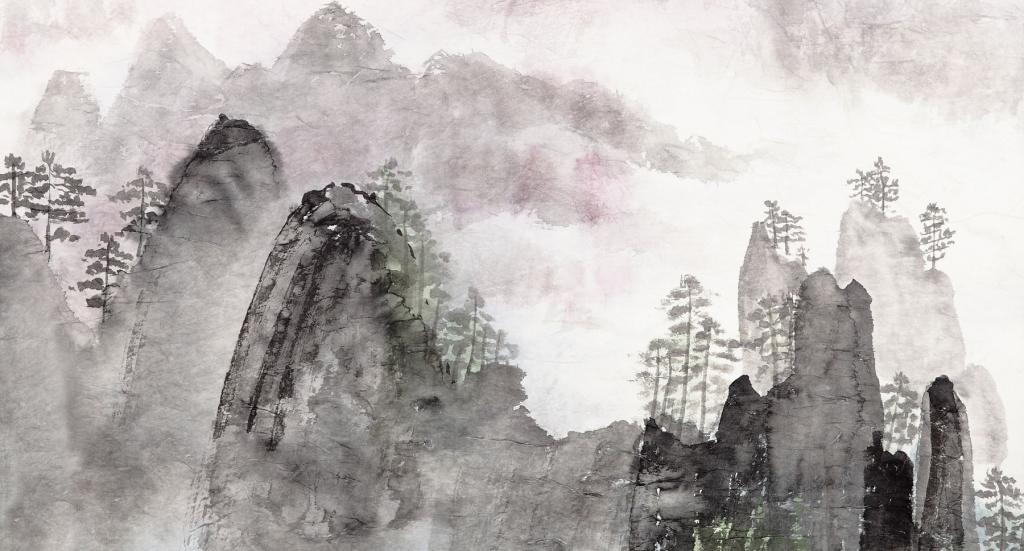
Why nineteen ways to translate one poem?
As Eliot Weinberger explains in his 19 Ways of Looking at Wang Wei (thanks, Joe Daichō, for =this wonderful book!), “Great poetry lives in a state of perpetual transformation, perpetual translation: the poem dies when it has no place to go.” (p. 3)
Just like a great kōan!
The newest edition of Weinberger’s book, by the way, has twenty-nine translations of Wang Wei’s (701-761 C.E.) four-line poem! As an aside, let me give you a tip: you will be hard pressed to find a better stocking-stuffer for your geekus maximus Zen family member or self. Trust me on this. You and/or your geeky loved-one will especially enjoy this book if you like repetition, careful attention to detail, and subtle variations on a theme, served with a bit of snark. If you are still reading this, you are probably at least this geeky. And maybe snarky. No offense intended.
Wang Wei, on the other hand, is widely recognized as one of the truly great poets of ancient China. Many have tried to express the heart of the simple poem under consideration, and many (including your’s truly) have spent late nights puzzling about some of the thorny issues that arise. Here is what the little bugger looks like in ideographs:
鹿 柴
空 山 不 見 人
但 聞 人 語 響
返 景 入 深 林
復 照 青 苔 上
Here is one popular translation
Deer Park
Hills empty, no one to be seen
We hear only voices echoed —
With light coming back into the deep wood
The top of the green moss is lit again.
— G. W. ROBINSON, 1973 (Robinson, Poems of Wang Wei)
And Weinberger’s snarky thoughts about Robinson’s labors:
“Robinson’s translation … is, unhappily, the most widely available edition of Wang in English. In this poem Robinson not only creates a narrator, he makes it a group, as though it were a family outing. With that one word, we, he effectively scuttles the mood of the poem. Reading the last word of the poem as top, he offers an image that makes little sense on the forest floor: one would have to be small indeed to think of moss vertically. For a jolt to the system, try reading this aloud.” (p. 31 – emphasis added)
I agree – the Robinson translation is clunky. But here’s a translation that Weinberger (and me too) likes better by the wonderful Gary Snyder:
“Empty mountains: no one to be seen.
Yet — hear — human sounds and echoes.
Returning sunlight enters the dark woods;
Again shining on the green moss, above.” (p. 45)
Note that in Snyder’s version there is no “we” and the woods are dark. However, there is a problem with the moss being above, and also how Snyder has “above” dangling out there on its own right at the end. Snyder explained, “The reason for ‘. . . moss, above’ . . . is that the sun is entering (in its sunset sloping, hence ‘again’ — a final shaft) the woods, and illuminating some moss up in the trees. (NOT ON ROCKS.)”
The trouble with 上
It gets down to how you imagine the scene and how you see 上 here. Pronounced “shàng,” 上 can be rendered “top,” “superior,” “highest,” “go up,” “send up,” or “upon.”
This last line of the poem with the上 character at the end is what I found most difficult to grok.
Translation traumas like this are not unusual. Weinberger points out that “…A single character may be noun, verb, and adjective. It may even have contradictory readings: character 2 of line 3 is either jing (brightness) or ying (shadow). Again, context is all. Of particular difficulty to the Western translator is the absence of tense in Chinese verbs: in the poem, what is happening has happened and will happen. Similarly, nouns have no number: rose is a rose is all roses.” (p. 9)
And further, “Contrary to the evidence of most translations, the first-person singular rarely appears in Chinese poetry [or kōan]. By eliminating the controlling individual mind of the poet, the experience becomes both universal and immediate to the reader.” (p. 10)
Are there similarities to kōan and translating kōan? You bet. Here is Weinberger quoting Octavio Paz to summarize a lot of classical Chinese poetry (and kōan) translation: “The characteristics of Chinese poetry: universality, impersonality, absence of time, absence of subject.” (p. 33)
The relationship of translation and translator
Absent a subject but not a translator, what we read in a translation is the union of the mind/experience of the translator and the original text. Sometimes the features of the translator are more salient and sometimes the original seems to be more so. Some translations are direct offspring of their parent, while some seem to be third or forth cousins. You might even wonder if they were adopted.
All translations are in some such relationship. Weinberger says optimistically, “The relationship between original and translation is parent-child. And there are, inescapably, some translations that are overly attached to their originals, and others that are constantly rebelling.” (p. 12)
In addition, Weinberger adds, “In its way a spiritual exercise, translation is dependent on the dissolution of the translator’s ego: an absolute humility toward the text. A bad translation is the insistent voice of the translator — that is, when one sees no poet and hears only the translator speaking.” (pp. 19-20)
“… Dissolution of the translator’s ego”? Although I’d frame it differently, I’ve found that a willingness to enter the kōan, turning around and upside-down is vital. Another aspect of the translation process invites a frame of mind much like the game Go (圍棋) – wide, specific, nonlinear, turning. Time and again, working with the characters for a kōan, my primary translating experience, the kōan opens up in a panoramic, expansive way – especially when I humbly shut up and let the kōan speak.
And then there’s simplicity. I’ll leave you with one more Weinbergerism: “In the translation of Chinese poetry [and kōan], as in everything, nothing is more difficult than simplicity.”
Finally, here is my effort at translating Wang Wei’s poem
Deer Park (1)
Empty mountain, not seeing people
Yet hearing the echoes of people’s voices
Light returns, entering deep in the forest
Shining again on green moss
(1) “Deer Park” here translates 鹿柴, although “Deer Park” is 鹿野苑. The Deer Park is where the Buddha preached his first sermon after awakening, “The Fire Sermon,” so Wang Wei chose this title to make a point about the scene he described. However, the character following “Deer” in the title is 柴 or “firewood.” It is also the name of a festival for the emperor involving a great fire. So although 鹿柴 would be “Deer Firewood,” I’ve gone along with most other translators – Wang Wei was most likely referring to “Deer Park.”

Dōshō Port began practicing Zen in 1977 and now co-teaches at the Nebraska Zen Center with his wife, Tetsugan Zummach Ōshō. Dōshō also teaches with the Vine of Obstacles: Online Support for Zen Training, an internet-based Zen community. Dōshō received dharma transmission from Dainin Katagiri Rōshi and inka shōmei from James Myōun Ford Rōshi in the Harada-Yasutani lineage. Dōshō’s translation and commentary on The Record of Empty Hall is due out in early 2021 (Shambhala). He is also the author of Keep Me In Your Heart a While: The Haunting Zen of Dainin Katagiri.
Next Post

January 2, 2020 The Lingering Radiance of Harada Daiun Sogaku
Browse Our Archives
Select a Category Uncategorized
Select a Month August 2023 July 2023 June 2023 May 2023 April 2023 March 2023 February 2023 January 2023 December 2022 November 2022 October 2022 September 2022 August 2022 July 2022 June 2022 May 2022 April 2022 March 2022 February 2022 January 2022 December 2021 November 2021 August 2021 June 2021 April 2021 February 2021 January 2021 November 2020 September 2020 August 2020 July 2020 June 2020 May 2020 April 2020 January 2020 December 2019 November 2019 August 2019 June 2019 May 2019 April 2019 February 2019 January 2019 December 2018 November 2018 October 2018 September 2018 August 2018 July 2018 June 2018 May 2018 April 2018 March 2018 February 2018 January 2018 December 2017 November 2017 October 2017 September 2017 August 2017 July 2017 June 2017 December 2016 October 2016 June 2016 April 2016 February 2016 January 2016 December 2015 November 2015 October 2015 August 2015 June 2015 May 2015 April 2015 March 2015 February 2015 January 2015 December 2014 November 2014 October 2014 September 2014 August 2014 July 2014 June 2014 May 2014 April 2014 March 2014 February 2014 January 2014 December 2013 November 2013 October 2013 September 2013 August 2013 July 2013 June 2013 May 2013 April 2013 March 2013 February 2013 January 2013 December 2012 November 2012 October 2012 September 2012 August 2012 July 2012 June 2012 May 2012 April 2012 March 2012 February 2012 January 2012 December 2011 November 2011 October 2011 September 2011 August 2011 July 2011 June 2011 May 2011 April 2011 March 2011 February 2011 January 2011 December 2010 November 2010 October 2010 September 2010 August 2010 July 2010 June 2010 May 2010 April 2010 March 2010 February 2010 January 2010 December 2009 November 2009 October 2009 September 2009 August 2009 July 2009 June 2009 May 2009 April 2009 March 2009 February 2009 January 2009 December 2008 November 2008 October 2008 September 2008 August 2008 July 2008 June 2008 May 2008
Follow Us!
TAKE THE
Religious Wisdom Quiz
True or False: Isaiah prophesied that a virgin would conceive and bear a son called Jesus.
Select your answer to see how you score.
TRUE FALSE
Related posts from Wild Fox Zen

Gnawing Through Qiánfēng’s Three Illnesses and Two Lights

"Why, Oh Why, Is My Practice Not Progressing?"
A Black Lacquer Person Runs Through the Night:...

Intimate Friendship: "When You Sing, I Respond; When...
TRENDING AT PATHEOS Buddhist

On Taking Refuge in the Dharma
(Here I continue the feature of sharing talks and essays by teachers...

(Continuing my intention to share talks and essays by other members of Empty...
The Subtle Art of Bowing: A Dharma Discourse
(This presentation was first offered by my dear friend Dharma Holder Tom...

Internal Family Systems Can Heal you Mentally &...
How IFS Helped Me Stop Fighting Myself Internal Family Systems (IFS) is...

The Bible No One Spoke About: A Family’s...
A mysterious family Bible, unspoken faith, and a journey from curiosity to...

How Uncertainty Can Transform Your Life in 2025
Embracing Uncertainty: A New Year’s Resolution for the Brave As 2025 approaches,...
view all Buddhist blogs
Ad-Free & Subscriber Log-In Subscription Support
- About Us
- 2026 Calendar
- Videos
- Podcasts
- Library of World Religions
- Faith In Media Tracker
- Advertise With Us
- Write for Us
- Privacy Policy
- Terms of Service
- Do Not Sell My Data
- Contact Us
- Radiant Digital
- Manage Newsletter Subscriptions
- Unsubscribe From Notifications
- Sitemap
Copyright 2008-2026, Patheos. All rights reserved.
Subscription Support Ad-Free & Subscriber Log-In
Follow Patheos