
BuddhistCatholicContemplativeEvangelicalGeneral ChristianHinduJewishLatter-day SaintMuslimNew VisionsProgressive Christian
Beliefs
- Buddhist
- Catholic
- Contemplative
- Evangelical
- General Christian
- Hindu
- Jewish
- Latter-day Saint
- More Voices
- Muslim
- New Visions
- Pagan
- Progressive Christian
Topics
- Religion News
- Food and Religion
- Sports and Religion
- Religious Art
- Religious Music and Entertainment
- Religious Events
- History and Religion
- Style and Religion
- Politics and Religion
- Women in Religion
- Recreation Outdoors and Religion
- Business Finance and Religion
- Careers Workplace and Religion
- Education and Religion
- Family Parenting and Religion
- Health Fitness and Religion
- Home and Religion
- Relationships and Religion
- Technology and Religion
- Travel and Religion
Columnists
- Buddhist Columnists
- Business Finance and Religion Columnists
- Careers Workplace and Religion Columnists
- Catholic Columnists
- Contemplative Columnists
- Education and Religion Columnists
- Evangelists Columnists
- Family Parenting and Religion Columnists
- General Christian Columnists
- Health Fitness and Religion Columnists
- Hindu Columnists
- History and Religion Columnists
- Home and Religion Columnists
- Jewish Columnists
- More Voices Columnists
- Latter Day Columnists
- Muslim Columnists
- New Visions Columnists
- Nonreligious Columnists
- Pagan Columnists
- Politics and Religion Columnists
- Progressive Columnists
- Recreation Outdoors and Religion Columnists
- Relationships and Religion Columnists
- Religion News Columnists
- Religious Art Columnists
- Religious Events Columnists
- Religious Music and Entertainment Columnists
- Sports and Religion Columnists
- Style and Religion Columnists
- Technology and Religion Columnists
- Travel and Religion Columnists
- Women in Religion Columnists
Resource Library
- 2026 Calendar
- Library of World Religions
- The 100 Most Holy Places on Earth
- Patheos Answers
- Podcasts
- Videos
- Faith Leaders Database
- Anglican Episcopalian
- Bahai
- Baptist
- Buddhism
- Christianity
- Confucianism
- Eastern Orthodoxy
- Hinduism
- Holiness and Pentecostal
- ISKCON
- Islam
- Judaism
- Lutheran
- Methodist
- The Church of Jesus Christ of Latter-day Saints
- New Age
- Paganism
- Presbytarian and Reformed
- Protestantism
- Religion Behind the Scenes
- Roman Catholic
- Scientology
- Shia Islam
- Sikhism
- Sufism
- Sunni Islam
- Taoism
- Zen
- See all religions
Research Tools
 Ad-Free & Subscriber Log-In Subscription Support
Ad-Free & Subscriber Log-In Subscription Support
Follow Patheos 

- Trending:
- Forgiveness
- |
- Marriage
- |
- Consciousness
- |
- Death Penalty
- |
- Election
- |
- Halloween
 Wild Fox Zen
- Home
- Buddhist
- Harmony of Difference and Sameness (Alternate Translation)
Harmony of Difference and Sameness (Alternate Translation)
Last updated on: January 12, 2021 at 9:18 am by Dosho Port
Harmony of Difference and Sameness (Alternate Translation) 2021-01-12T09:18:40-06:00 Dosho Port
Patheos Explore the world's faith through different perspectives on religion and spirituality! Patheos has the views of the prevalent religions and spiritualities of the world.
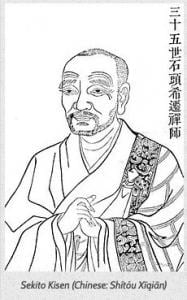
This year at both the Nebraska Zen Center and the Vine of Obstacles: Online Support for Zen Training we’ve studied one of the essential texts in the Sōtō Zen liturgy, “Harmony of Difference and Sameness” (Japanese: Sandōkai; Chinese: Cāntóngqì 參同契), supported by Branching Streams Flow in the Darkness: Zen Talks on the Sandokai by Shunryu Suzuki Roshi. In order to work my edge and offer something fresh to students, I translated the text as we were going along. You’ll find that below.
The original text has forty-four terse lines with five characters in each line. The Sōtō Zen Text Project version of the “Harmony of Difference and Sameness” – here – that’s is used by many Sōtō groups in the US, at least, is well done and flows well as a chant. However, because translating a text is a powerful method for understanding and appreciating what’s inside the meaning, I reworked it and shared the results with students – and now here for you.
In translation work, there is no such thing as “one right way,” because there are many ways that the ideograms can be expressed in English. The version below is offered in the spirit of “it could be this way too,” although this is living rendering and may well change in the future, including smoothing out some of the rough edges. I try to stay as close to the original as possible and allow the text room for expression, even if that results in something that’s a bit awkward. If you give it a read, you’ll see what I mean.
And although a good deal could be said about the details of this translation, I’ll make just one note. 理 (lǐ) comes up twice in the text. The Sōtō Zen Text Project version translates it two ways, as “sameness” and “principle” (as in “According with sameness is still not enlightenment” and “Principle responds like arrow points meet”). I follow David Hinton, translating 理 (lǐ) as “inner pattern.” Hinton writes,
“The philosophical meaning of inner-pattern, which originally referred to the veins and markings in a precious piece of jade, is something akin to what we call ‘natural law.’ It is the system of principles or patterns that governs the unfolding of tzu-jan [self-ablaze], or the manifestations of origin-ch’i [a single breath-force surging through its perpetual transformations] as it takes on the forms of the ten thousand things. Inner-pattern therefore weaves Absence and Presence into a single boundless tissue.” (1)
Here it is:
The Agreement of Difference and Sameness
By Shítóu Xīqiān (700-790) 石頭希遷
The Indian-dust great-sage mind
Is mutually, intimately entrusted east-west
The root of people is sharp-dull
In the Way – no north-south ancestor
The source of awareness shines moonlight bright
The undercurrent pours through branching streams
Grasping it is original confusion
Inner-pattern accordance is also not enlightenment
Every field is gate-to-gate
Mutually revolving and not mutually revolving
Involvement revolves and changes each other
Not so according to position and place
The root nature of form appears to differ
Sounds primarily distinguish happy from bitter
In darkness, elevated and common speech come together
In brightness, phrases are clear and muddy
Four elements return to self-nature
Like a child has their mother
Fire hot, wind moves
Water wet, earth hard
Eye-form, ear-sounds
Nose-fragrance, tongue-salty or vinegary
One-by-one, dharmas depend thus
Depending on roots, leaves scatter
The root doesn’t wait to return to the branch
Revered and humble use their speech
When light, within there is dark
Do not meet by means of dark
When dark, within there is light
Do not meet by means of light.
The opposition of light and dark
is like the front and back [foot] stepping.
All living beings have meritorious activity
Expressed according to function and place
Things exist [like] box and lid join
Inner pattern responds [like] arrow points meet
Receiving words, understand the school
Self-sustaining customs won’t do
Seeing everything [yet] not understanding the Way
How is moving [your] foot knowing the road?
Stepping forward is not far or near
Bewildered, hard separation from mountains and rivers
Solemnly say, “Person who participates in the mystery,
Do not fritter away the time”
(1) David Hinton, No-Gate Gateway: The Original Wu-Men Kuan, p. 134.

Dōshō Port began practicing Zen in 1977 and now co-teaches at the Nebraska Zen Center with his wife, Tetsugan Zummach Ōshō. Dōshō also teaches with the Vine of Obstacles: Online Support for Zen Training, an internet-based Zen community. Dōshō received dharma transmission from Dainin Katagiri Rōshi and inka shōmei from James Myōun Ford Rōshi in the Harada-Yasutani lineage. He is the author of Keep Me In Your Heart a While: The Haunting Zen of Dainin Katagiri.

Browse Our Archives
Select a Category Uncategorized
Select a Month August 2023 July 2023 June 2023 May 2023 April 2023 March 2023 February 2023 January 2023 December 2022 November 2022 October 2022 September 2022 August 2022 July 2022 June 2022 May 2022 April 2022 March 2022 February 2022 January 2022 December 2021 November 2021 August 2021 June 2021 April 2021 February 2021 January 2021 November 2020 September 2020 August 2020 July 2020 June 2020 May 2020 April 2020 January 2020 December 2019 November 2019 August 2019 June 2019 May 2019 April 2019 February 2019 January 2019 December 2018 November 2018 October 2018 September 2018 August 2018 July 2018 June 2018 May 2018 April 2018 March 2018 February 2018 January 2018 December 2017 November 2017 October 2017 September 2017 August 2017 July 2017 June 2017 December 2016 October 2016 June 2016 April 2016 February 2016 January 2016 December 2015 November 2015 October 2015 August 2015 June 2015 May 2015 April 2015 March 2015 February 2015 January 2015 December 2014 November 2014 October 2014 September 2014 August 2014 July 2014 June 2014 May 2014 April 2014 March 2014 February 2014 January 2014 December 2013 November 2013 October 2013 September 2013 August 2013 July 2013 June 2013 May 2013 April 2013 March 2013 February 2013 January 2013 December 2012 November 2012 October 2012 September 2012 August 2012 July 2012 June 2012 May 2012 April 2012 March 2012 February 2012 January 2012 December 2011 November 2011 October 2011 September 2011 August 2011 July 2011 June 2011 May 2011 April 2011 March 2011 February 2011 January 2011 December 2010 November 2010 October 2010 September 2010 August 2010 July 2010 June 2010 May 2010 April 2010 March 2010 February 2010 January 2010 December 2009 November 2009 October 2009 September 2009 August 2009 July 2009 June 2009 May 2009 April 2009 March 2009 February 2009 January 2009 December 2008 November 2008 October 2008 September 2008 August 2008 July 2008 June 2008 May 2008
Follow Us!
TAKE THE
Religious Wisdom Quiz
Which Gospel emphasizes Jesus as the Son of Man?
Select your answer to see how you score.
Luke Matthew Mark John
Related posts from Wild Fox Zen

Throw Yourself Into the House of Buddha: The...

New Vine Ghost Site for Dosho's Creative Endeavors...

Gnawing Through Qiánfēng’s Three Illnesses and Two Lights

"Why, Oh Why, Is My Practice Not Progressing?"
TRENDING AT PATHEOS Buddhist

On Taking Refuge in the Dharma
(Here I continue the feature of sharing talks and essays by teachers...

(Continuing my intention to share talks and essays by other members of Empty...
The Subtle Art of Bowing: A Dharma Discourse
(This presentation was first offered by my dear friend Dharma Holder Tom...

Internal Family Systems Can Heal you Mentally &...
How IFS Helped Me Stop Fighting Myself Internal Family Systems (IFS) is...

The Bible No One Spoke About: A Family’s...
A mysterious family Bible, unspoken faith, and a journey from curiosity to...

How Uncertainty Can Transform Your Life in 2025
Embracing Uncertainty: A New Year’s Resolution for the Brave As 2025 approaches,...
view all Buddhist blogs
Ad-Free & Subscriber Log-In Subscription Support
- About Us
- 2026 Calendar
- Videos
- Podcasts
- Library of World Religions
- Faith In Media Tracker
- Advertise With Us
- Write for Us
- Privacy Policy
- Terms of Service
- Do Not Sell My Data
- Contact Us
- Radiant Digital
- Manage Newsletter Subscriptions
- Unsubscribe From Notifications
- Sitemap
Copyright 2008-2026, Patheos. All rights reserved.
Subscription Support Ad-Free & Subscriber Log-In
Follow Patheos