
BuddhistCatholicContemplativeEvangelicalGeneral ChristianHinduJewishLatter-day SaintMuslimNew VisionsProgressive Christian
Beliefs
- Buddhist
- Catholic
- Contemplative
- Evangelical
- General Christian
- Hindu
- Jewish
- Latter-day Saint
- More Voices
- Muslim
- New Visions
- Pagan
- Progressive Christian
Topics
- Religion News
- Food and Religion
- Sports and Religion
- Religious Art
- Religious Music and Entertainment
- Religious Events
- History and Religion
- Style and Religion
- Politics and Religion
- Women in Religion
- Recreation Outdoors and Religion
- Business Finance and Religion
- Careers Workplace and Religion
- Education and Religion
- Family Parenting and Religion
- Health Fitness and Religion
- Home and Religion
- Relationships and Religion
- Technology and Religion
- Travel and Religion
Columnists
- Buddhist Columnists
- Business Finance and Religion Columnists
- Careers Workplace and Religion Columnists
- Catholic Columnists
- Contemplative Columnists
- Education and Religion Columnists
- Evangelists Columnists
- Family Parenting and Religion Columnists
- General Christian Columnists
- Health Fitness and Religion Columnists
- Hindu Columnists
- History and Religion Columnists
- Home and Religion Columnists
- Jewish Columnists
- More Voices Columnists
- Latter Day Columnists
- Muslim Columnists
- New Visions Columnists
- Nonreligious Columnists
- Pagan Columnists
- Politics and Religion Columnists
- Progressive Columnists
- Recreation Outdoors and Religion Columnists
- Relationships and Religion Columnists
- Religion News Columnists
- Religious Art Columnists
- Religious Events Columnists
- Religious Music and Entertainment Columnists
- Sports and Religion Columnists
- Style and Religion Columnists
- Technology and Religion Columnists
- Travel and Religion Columnists
- Women in Religion Columnists
Resource Library
- 2026 Calendar
- Library of World Religions
- The 100 Most Holy Places on Earth
- Patheos Answers
- Podcasts
- Videos
- Faith Leaders Database
- Anglican Episcopalian
- Bahai
- Baptist
- Buddhism
- Christianity
- Confucianism
- Eastern Orthodoxy
- Hinduism
- Holiness and Pentecostal
- ISKCON
- Islam
- Judaism
- Lutheran
- Methodist
- The Church of Jesus Christ of Latter-day Saints
- New Age
- Paganism
- Presbytarian and Reformed
- Protestantism
- Religion Behind the Scenes
- Roman Catholic
- Scientology
- Shia Islam
- Sikhism
- Sufism
- Sunni Islam
- Taoism
- Zen
- See all religions
Research Tools
 Ad-Free & Subscriber Log-In Subscription Support
Ad-Free & Subscriber Log-In Subscription Support
Follow Patheos 

- Trending:
- Forgiveness
- |
- Marriage
- |
- Consciousness
- |
- Death Penalty
- |
- Election
- |
- Halloween
 Wild Fox Zen
- Home
- Buddhist
- The Language of Dragons: Introduction to Zen Koans
The Language of Dragons: Introduction to Zen Koans
Last updated on: January 25, 2022 at 7:48 pm by Dosho Port
The Language of Dragons: Introduction to Zen Koans 2022-01-25T19:48:02-06:00 Dosho Port
Patheos Explore the world's faith through different perspectives on religion and spirituality! Patheos has the views of the prevalent religions and spiritualities of the world.
 This month we’re working the theme of being on the outside. Bob Dylan expressed it like this:
Always on the outside of whatever side there was,
When they asked him why it had to be that way,
“Well,” he answered, “just because.”
Turns out that many people who come to Zen practice resonate with old Bob’s sentiment. Given that I was raised from a young, feral pup in just-sitting Zen and then was adopted as an adult into kōan-introspection Zen, I feel Bob too. Even in the Zen community, where I’ve spent most of my adult life and might seem like an insider to many, the feeling lingers.
Some of that is due to the misunderstandings between groups, and particularly, in my view, from those in just-sitting Zen and how they regard kōan introspection. I’ll be coming back to this in a near-future post.
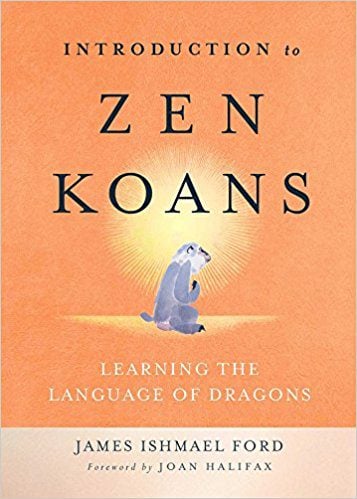
Enter James Myōun Ford Rōshi’s new book, Introduction to Koans: Learning the Language of Dragons. James, deeply grounded in kōan introspection, has long straddled the two ways of Zen. And his broadening Unitarian Universalist background has gentled his presentation of kōan as an aspect of a reformed Sōtō Zen.
Ford Rōshi’s new book is an excellent resource especially for students interested in exploring the kōan way AND for teachers and students of just-sitting Zen. My bet is that a careful read will dispel many myths about kōan work. Not that this book is the one and only way to see it – kōan work, like just-sitting Zen, has many flavors and focus points. And as always with us large-brained primates, to paraphrase Max Weber, there is more difference within the kōan group than between the kōan group and just-sitting Zen.
For Ford Rōshi, Zen is about awakening, and he focusses on awakening throughout this latest offering. The root word “awake,” for example, is found on 53 of 222 pages. And both Hakuin (representing the kōan-introspection tradition) and Dōgen (representing the just-sitting tradition) appear on 18 of 222 pages. Now that’s impressive balance!
“…The poetry of Zen,” he writes, “points to the heart’s awakening, that true entrusting into the mysterious reality that is this world. The disciplines, the practices all have this one point—the healing of a broken world, and with that the healing of our own broken hearts (p. 40).”
“Healing” is Ford Rōshi’s language for the abrupt, nondual verification referred to as kenshō:
“In kōan introspection, doubt and faith travel together. Each informs the other. It is our relentless presence to doubt and faith that takes us to the gate of nondual insight. Indeed, both the path to the gate and the gate itself are discovered within that relentlessness, that willingness to not turn away. This relentlessness is Great Determination.”
You’ll find that Ford Rōshi generously provides the context for kōan introspection, “Part One: The Heart of Zen,” grounds his argument in the historical Buddha, ancient China, and then brings us home to today, when “…the koan curriculum is revitalized and flourishes in Hakuin’s school (33).”
“Part Two: The Practices of Zen,” begins with the basics of how to do zazen with chapters on the body, breath, concentration states, and then touching on the unity of just-sitting and kōan introspection.
“What we’re being invited to is something else. It is taking the whole, being present to it all, without judgment. It is being fully present to this ordinary body that you were given by your parents. And here’s the secret teaching: your body has within it a full and complete capacity to know the Buddha’s wisdom and virtue. Not someone else’s body, but yours. And it isn’t found some other place. Rather, it is found here. Just here. Always, just here.”
Next Ford Rōshi introduces kōan introspection as well as doubt, the key-word method, the mu kōan, and the scope of kōan introspection as practiced today in what Ford Rōshi calls the “Harada-Yasutani Sōtō-reformed kōan curriculum.”
“Part Three: Living Zen” looks at the various styles in the history of Zen, Zen and Western Culture, and the teacher-student relationship. The book is sprinkled with Ford Rōshi’s inclusive and loving style of kōan commentary.
“Just open your heart to what is going on,” he writes. “The autumn dew is always with us, the full moon is never very far away. Notice the clear clean moments as they present, but our invitation for this summer is to be present, to wander out following the scented grasses. We’ll find it all in the scented grasses.”
Finally, Ford Rōshi points to the endless journey of the Zen way in all it’s forms by pointing to Hakuin’s “not yet” kōan. That, by the way, is the whole kōan – “Not yet!” So you’ve completed the kōan curriculum. Well, “Not yet!” buddy.
“I suggest it is also a reminder,” writes Ford Rōshi, “that we never cease training. However skillfully we have delved into the Great Matter, as the old Zen saying goes, ‘Shakyamuni is still practicing.'”
My heartfelt wish and expectation is that Introduction to Koans: Learning the Language of Dragons will contribute to mutual understanding and appreciation within the Zen community and will clarify the Zen path, encouraging new students to throw themselves into the great journey of the Zen way.

Previous Post

June 8, 2018
Compassion on the Edge
Next Post
June 18, 2018 Like Salad With Nasturtium Petals: The Delicious Way of Zen Master Yunmen
Browse Our Archives
Select a Category Uncategorized
Select a Month August 2023 July 2023 June 2023 May 2023 April 2023 March 2023 February 2023 January 2023 December 2022 November 2022 October 2022 September 2022 August 2022 July 2022 June 2022 May 2022 April 2022 March 2022 February 2022 January 2022 December 2021 November 2021 August 2021 June 2021 April 2021 February 2021 January 2021 November 2020 September 2020 August 2020 July 2020 June 2020 May 2020 April 2020 January 2020 December 2019 November 2019 August 2019 June 2019 May 2019 April 2019 February 2019 January 2019 December 2018 November 2018 October 2018 September 2018 August 2018 July 2018 June 2018 May 2018 April 2018 March 2018 February 2018 January 2018 December 2017 November 2017 October 2017 September 2017 August 2017 July 2017 June 2017 December 2016 October 2016 June 2016 April 2016 February 2016 January 2016 December 2015 November 2015 October 2015 August 2015 June 2015 May 2015 April 2015 March 2015 February 2015 January 2015 December 2014 November 2014 October 2014 September 2014 August 2014 July 2014 June 2014 May 2014 April 2014 March 2014 February 2014 January 2014 December 2013 November 2013 October 2013 September 2013 August 2013 July 2013 June 2013 May 2013 April 2013 March 2013 February 2013 January 2013 December 2012 November 2012 October 2012 September 2012 August 2012 July 2012 June 2012 May 2012 April 2012 March 2012 February 2012 January 2012 December 2011 November 2011 October 2011 September 2011 August 2011 July 2011 June 2011 May 2011 April 2011 March 2011 February 2011 January 2011 December 2010 November 2010 October 2010 September 2010 August 2010 July 2010 June 2010 May 2010 April 2010 March 2010 February 2010 January 2010 December 2009 November 2009 October 2009 September 2009 August 2009 July 2009 June 2009 May 2009 April 2009 March 2009 February 2009 January 2009 December 2008 November 2008 October 2008 September 2008 August 2008 July 2008 June 2008 May 2008
Follow Us!
TAKE THE
Religious Wisdom Quiz
Who said: "Now to him who is able to keep you from stumbling and to present you before his glorious presence without fault"?
Select your answer to see how you score.
Peter Jude Paul John
Related posts from Wild Fox Zen

Gnawing Through Qiánfēng’s Three Illnesses and Two Lights

"Why, Oh Why, Is My Practice Not Progressing?"
A Black Lacquer Person Runs Through the Night:...

Intimate Friendship: "When You Sing, I Respond; When...
TRENDING AT PATHEOS Buddhist

On Taking Refuge in the Dharma
(Here I continue the feature of sharing talks and essays by teachers...

(Continuing my intention to share talks and essays by other members of Empty...
The Subtle Art of Bowing: A Dharma Discourse
(This presentation was first offered by my dear friend Dharma Holder Tom...

Internal Family Systems Can Heal you Mentally &...
How IFS Helped Me Stop Fighting Myself Internal Family Systems (IFS) is...

The Bible No One Spoke About: A Family’s...
A mysterious family Bible, unspoken faith, and a journey from curiosity to...

How Uncertainty Can Transform Your Life in 2025
Embracing Uncertainty: A New Year’s Resolution for the Brave As 2025 approaches,...
view all Buddhist blogs
Ad-Free & Subscriber Log-In Subscription Support
- About Us
- 2026 Calendar
- Videos
- Podcasts
- Library of World Religions
- Faith In Media Tracker
- Advertise With Us
- Write for Us
- Privacy Policy
- Terms of Service
- Do Not Sell My Data
- Contact Us
- Radiant Digital
- Manage Newsletter Subscriptions
- Unsubscribe From Notifications
- Sitemap
Copyright 2008-2026, Patheos. All rights reserved.
Subscription Support Ad-Free & Subscriber Log-In
Follow Patheos