
BuddhistCatholicContemplativeEvangelicalGeneral ChristianHinduJewishLatter-day SaintMuslimNew VisionsProgressive Christian
Beliefs
- Buddhist
- Catholic
- Contemplative
- Evangelical
- General Christian
- Hindu
- Jewish
- Latter-day Saint
- More Voices
- Muslim
- New Visions
- Pagan
- Progressive Christian
Topics
- Religion News
- Food and Religion
- Sports and Religion
- Religious Art
- Religious Music and Entertainment
- Religious Events
- History and Religion
- Style and Religion
- Politics and Religion
- Women in Religion
- Recreation Outdoors and Religion
- Business Finance and Religion
- Careers Workplace and Religion
- Education and Religion
- Family Parenting and Religion
- Health Fitness and Religion
- Home and Religion
- Relationships and Religion
- Technology and Religion
- Travel and Religion
Columnists
- Buddhist Columnists
- Business Finance and Religion Columnists
- Careers Workplace and Religion Columnists
- Catholic Columnists
- Contemplative Columnists
- Education and Religion Columnists
- Evangelists Columnists
- Family Parenting and Religion Columnists
- General Christian Columnists
- Health Fitness and Religion Columnists
- Hindu Columnists
- History and Religion Columnists
- Home and Religion Columnists
- Jewish Columnists
- More Voices Columnists
- Latter Day Columnists
- Muslim Columnists
- New Visions Columnists
- Nonreligious Columnists
- Pagan Columnists
- Politics and Religion Columnists
- Progressive Columnists
- Recreation Outdoors and Religion Columnists
- Relationships and Religion Columnists
- Religion News Columnists
- Religious Art Columnists
- Religious Events Columnists
- Religious Music and Entertainment Columnists
- Sports and Religion Columnists
- Style and Religion Columnists
- Technology and Religion Columnists
- Travel and Religion Columnists
- Women in Religion Columnists
Resource Library
- 2026 Calendar
- Library of World Religions
- The 100 Most Holy Places on Earth
- Patheos Answers
- Podcasts
- Videos
- Faith Leaders Database
- Anglican Episcopalian
- Bahai
- Baptist
- Buddhism
- Christianity
- Confucianism
- Eastern Orthodoxy
- Hinduism
- Holiness and Pentecostal
- ISKCON
- Islam
- Judaism
- Lutheran
- Methodist
- The Church of Jesus Christ of Latter-day Saints
- New Age
- Paganism
- Presbytarian and Reformed
- Protestantism
- Religion Behind the Scenes
- Roman Catholic
- Scientology
- Shia Islam
- Sikhism
- Sufism
- Sunni Islam
- Taoism
- Zen
- See all religions
Research Tools
 Ad-Free & Subscriber Log-In Subscription Support
Ad-Free & Subscriber Log-In Subscription Support
Follow Patheos 

- Trending:
- Forgiveness
- |
- Marriage
- |
- Consciousness
- |
- Death Penalty
- |
- Election
- |
- Halloween
 Wild Fox Zen
- Home
- Buddhist
- Right To The Point: Reflections on the Implications of Hakuin’s Zen
Right To The Point: Reflections on the Implications of Hakuin’s Zen
Last updated on: May 17, 2023 at 1:17 pm by Dosho Port
Right To The Point: Reflections on the Implications of Hakuin’s Zen 2023-05-17T13:17:21-06:00 Dosho Port
Patheos Explore the world's faith through different perspectives on religion and spirituality! Patheos has the views of the prevalent religions and spiritualities of the world.
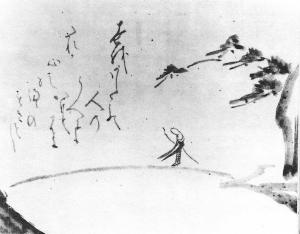
Why don’t you build
a jointed bridge
with your free mind
for the people
passing through the world?
– Hakuin
The teaching of Hakuin Ekaku (白隠 慧鶴, January 19, 1686 – January 18, 1768) is one such jointed bridge, and now a lot of it is available to English-reading practitioners through the extraordinary skills of translator Norman Waddell, most recently through the publication of Hakuin’s record, The Complete Poison Blossoms in a Thicket of Thorn (CPB).
A careful read is especially important, in my view, for people engaged in kōan introspection to counteract the present tendancy for the practice to unmoor from zazen, awakening, and compassion.
So today I have some reflections on what I’ve learned from seeing “people passing through the world” taking up Hakuin’s teaching with dedication and diligence.
Primarily, the clarity of Hakuin’s teaching on the vital importance and real possibility of kenshō has energized the practice for many students on the Vine. For those with a taste of kenshō, this study has clarified the role subsequent kōans play in the our waking-up-and-living-accordingly projects. This is largely due to the context – the jointed bridge – that Hakuin built with his free mind. Those joints include his ordinariness, ongoing introspection, and radical immanence. I’ll touch on each of these in what follows.
Hakuin’s ordinariness
Hakuin presented as a complex real person with confidence and humility, open to his readers regarding his own stinkiness, replete with scatological humor. A couple examples:
In CPB “63. Instructions from the High Seat During the Summer Retreat at Ryōtan-ji:”
“They asked me to say a few words today at the beginning of this sacred meeting. I searched my parched-up bowels high and low, not once but a hundred, a thousand times. I was still unable to come up with a single word worth smearing like warm shit over their young faces.”
This kind of humility at the beginning of Hakuin’s lecture series, sometimes delivered to hundreds of practitioners, is common, and seems to go beyond the customary and perfunctory self disparagement. When Hakuin gets down on himself, he does so with wild abandon.
Similarly, Hakuin opening confesses his self-clinging and reveals a heart quite free from the spiritual masquerade (quite in contrast to the “great man theory” in some contemporary Rinzai lines).
Here’s an example from when someone donated rocks for Hakuin’s garden at Shōinji. The rocks had to be transported across the ranging Fuji River (from CPB, “293. Thanking Gentoku Rōjin for a Gift of Remarkable Spirit Rocks”):
“All of a sudden we heard the lookout’s cry, ‘The raft is coming!’
A wave of joyful commotion passed quickly through the crowd,
Nimble-footed men began hurrying about calling to each other,
I yelled ‘Are the rocks secure?’ oblivious to raftsmen’s safety.”
Like if your partner had a car accident and you first asked about the car, Hakuin yelled “Are the rocks secure?” and then “Whoops!,” he seemed to have acknowledged, “how stinky I am!”
Ongoing introspection
In CPB “187. To Layman Ishi,” Hakuin wrote (but attributed this passage to an unnamed and unfound other), “If students of the Way want to confirm whether they have truly entered realization, they must examine their mind thoroughly both in the activities of everyday life and amid the tranquility of zazen. Is the mind in the realm of active life different from the way it is during meditation? Do they hesitate or have any trouble in penetrating the various meanings of the words of the Buddha-[ancestors]? How could someone who has thoroughly grasped the marrow of the Buddha-[ancestors] possibly fail to understand their words and sayings?”
Examine the mind. Confirm. Hesitate? Trouble? This leads to aspiration to go more deeply and thoroughly into the buddhadharma. Also significant in the above passage is Hakuin’s advice to practice amid the activities of daily life.
In CPB “115. Instructions to the Assembly in Response to a Request from the Priest at Daifuku-zan” Hakuin makes a clear and powerful connection to the “for people passing through the world” line of the above verse:
“But if you do not get buggered up in your present attainment, if you strive day and night to put the four universal vows into practice, striving to lead all sentient beings to salvation and create a Buddha-land on earth, acquiring the deportment of a Bodhisattva and storing up great Dharma assets, preaching the Dharma unflaggingly to benefit sentient beings for endless kalpas — repaying in this way the profound debt you owe the Buddha-[ancestors] — are you not then a most loyal and trusted minister of the Dharma King, a person who has fully realized the four great Dharma vows and put them into practice?”
Radical immanence
Like all the great reformers, Hakuin offers old wine from new bottles, returning the tradition from transcendence to radical immanence. One example of this is a verse Hakuin wrote when one of his students was going off to take care of his sick father (CPB, “362. On Sending Dōka Zennin Off to Visit His Father”).
“About to set out for home to visit his ailing father,
Dōka set paper down before me asking for a verse.
As he insists on a phrase that is ‘right to the point,’
I sit chewing my brush, secretly furrowing my brow.”
Dōka Zennin was later known as Tōrei Enji (1721–92), a very important successor of Hakuin, although the lineage technically comes to us through Gasan who trained with Hakuin during the last year of Hakuin’s life. After Hakuin’s death, Gasan, already a student with a couple decades of training, worked with Tōrei for nine years. Tōrei gave Gasan transmission, but did it in Hakuin’s name – not at all standard. Gasan then became a central figure in revitalizing Zen in the spirit of Hakuin. He taught in present day Tokyo and is said to have had 500 monks in his assembly.
But back to Hakuin. Waddell shares an annotation, “’I sit chewing . . . my brow.’ Is this the line that is ‘right to the point?’ People who have heard the sound of one hand find this extremely interesting.”
Hakuin’s expression of “right to the point” might slip past unless you’ve experience radical immanence through “the sound of one hand,” “mu,” “the east wall strikes the west wall,” or any breakthrough kōan. Just sitting might do it too, of course.
That’s one way to talk about Hakuin’s teaching and the power of it to revitalize Zen today, whether you’re of the kōan or just-sitting ilk – right to the point and hidden in the open.

Previous Post

May 3, 2018
Fierce or Friendly: Koan Introspection for Hakuin and Today
Next Post
June 8, 2018 Compassion on the Edge
Browse Our Archives
Select a Category Uncategorized
Select a Month August 2023 July 2023 June 2023 May 2023 April 2023 March 2023 February 2023 January 2023 December 2022 November 2022 October 2022 September 2022 August 2022 July 2022 June 2022 May 2022 April 2022 March 2022 February 2022 January 2022 December 2021 November 2021 August 2021 June 2021 April 2021 February 2021 January 2021 November 2020 September 2020 August 2020 July 2020 June 2020 May 2020 April 2020 January 2020 December 2019 November 2019 August 2019 June 2019 May 2019 April 2019 February 2019 January 2019 December 2018 November 2018 October 2018 September 2018 August 2018 July 2018 June 2018 May 2018 April 2018 March 2018 February 2018 January 2018 December 2017 November 2017 October 2017 September 2017 August 2017 July 2017 June 2017 December 2016 October 2016 June 2016 April 2016 February 2016 January 2016 December 2015 November 2015 October 2015 August 2015 June 2015 May 2015 April 2015 March 2015 February 2015 January 2015 December 2014 November 2014 October 2014 September 2014 August 2014 July 2014 June 2014 May 2014 April 2014 March 2014 February 2014 January 2014 December 2013 November 2013 October 2013 September 2013 August 2013 July 2013 June 2013 May 2013 April 2013 March 2013 February 2013 January 2013 December 2012 November 2012 October 2012 September 2012 August 2012 July 2012 June 2012 May 2012 April 2012 March 2012 February 2012 January 2012 December 2011 November 2011 October 2011 September 2011 August 2011 July 2011 June 2011 May 2011 April 2011 March 2011 February 2011 January 2011 December 2010 November 2010 October 2010 September 2010 August 2010 July 2010 June 2010 May 2010 April 2010 March 2010 February 2010 January 2010 December 2009 November 2009 October 2009 September 2009 August 2009 July 2009 June 2009 May 2009 April 2009 March 2009 February 2009 January 2009 December 2008 November 2008 October 2008 September 2008 August 2008 July 2008 June 2008 May 2008
Follow Us!
TAKE THE
Religious Wisdom Quiz
Which prophet saw a vision of a flying scroll?
Select your answer to see how you score.
Ezekiel Jeremiah Zechariah Daniel
Related posts from Wild Fox Zen

Gnawing Through Qiánfēng’s Three Illnesses and Two Lights

"Why, Oh Why, Is My Practice Not Progressing?"
A Black Lacquer Person Runs Through the Night:...

Intimate Friendship: "When You Sing, I Respond; When...
TRENDING AT PATHEOS Buddhist

On Taking Refuge in the Dharma
(Here I continue the feature of sharing talks and essays by teachers...

(Continuing my intention to share talks and essays by other members of Empty...
The Subtle Art of Bowing: A Dharma Discourse
(This presentation was first offered by my dear friend Dharma Holder Tom...

Internal Family Systems Can Heal you Mentally &...
How IFS Helped Me Stop Fighting Myself Internal Family Systems (IFS) is...

The Bible No One Spoke About: A Family’s...
A mysterious family Bible, unspoken faith, and a journey from curiosity to...

How Uncertainty Can Transform Your Life in 2025
Embracing Uncertainty: A New Year’s Resolution for the Brave As 2025 approaches,...
view all Buddhist blogs
Ad-Free & Subscriber Log-In Subscription Support
- About Us
- 2026 Calendar
- Videos
- Podcasts
- Library of World Religions
- Faith In Media Tracker
- Advertise With Us
- Write for Us
- Privacy Policy
- Terms of Service
- Do Not Sell My Data
- Contact Us
- Radiant Digital
- Manage Newsletter Subscriptions
- Unsubscribe From Notifications
- Sitemap
Copyright 2008-2026, Patheos. All rights reserved.
Subscription Support Ad-Free & Subscriber Log-In
Follow Patheos