
BuddhistCatholicContemplativeEvangelicalGeneral ChristianHinduJewishLatter-day SaintMuslimNew VisionsProgressive Christian
Beliefs
- Buddhist
- Catholic
- Contemplative
- Evangelical
- General Christian
- Hindu
- Jewish
- Latter-day Saint
- More Voices
- Muslim
- New Visions
- Pagan
- Progressive Christian
Topics
- Religion News
- Food and Religion
- Sports and Religion
- Religious Art
- Religious Music and Entertainment
- Religious Events
- History and Religion
- Style and Religion
- Politics and Religion
- Women in Religion
- Recreation Outdoors and Religion
- Business Finance and Religion
- Careers Workplace and Religion
- Education and Religion
- Family Parenting and Religion
- Health Fitness and Religion
- Home and Religion
- Relationships and Religion
- Technology and Religion
- Travel and Religion
Columnists
- Buddhist Columnists
- Business Finance and Religion Columnists
- Careers Workplace and Religion Columnists
- Catholic Columnists
- Contemplative Columnists
- Education and Religion Columnists
- Evangelists Columnists
- Family Parenting and Religion Columnists
- General Christian Columnists
- Health Fitness and Religion Columnists
- Hindu Columnists
- History and Religion Columnists
- Home and Religion Columnists
- Jewish Columnists
- More Voices Columnists
- Latter Day Columnists
- Muslim Columnists
- New Visions Columnists
- Nonreligious Columnists
- Pagan Columnists
- Politics and Religion Columnists
- Progressive Columnists
- Recreation Outdoors and Religion Columnists
- Relationships and Religion Columnists
- Religion News Columnists
- Religious Art Columnists
- Religious Events Columnists
- Religious Music and Entertainment Columnists
- Sports and Religion Columnists
- Style and Religion Columnists
- Technology and Religion Columnists
- Travel and Religion Columnists
- Women in Religion Columnists
Resource Library
- 2026 Calendar
- Library of World Religions
- The 100 Most Holy Places on Earth
- Patheos Answers
- Podcasts
- Videos
- Faith Leaders Database
- Anglican Episcopalian
- Bahai
- Baptist
- Buddhism
- Christianity
- Confucianism
- Eastern Orthodoxy
- Hinduism
- Holiness and Pentecostal
- ISKCON
- Islam
- Judaism
- Lutheran
- Methodist
- The Church of Jesus Christ of Latter-day Saints
- New Age
- Paganism
- Presbytarian and Reformed
- Protestantism
- Religion Behind the Scenes
- Roman Catholic
- Scientology
- Shia Islam
- Sikhism
- Sufism
- Sunni Islam
- Taoism
- Zen
- See all religions
Research Tools
 Ad-Free & Subscriber Log-In Subscription Support
Ad-Free & Subscriber Log-In Subscription Support
Follow Patheos 

- Trending:
- Forgiveness
- |
- Marriage
- |
- Consciousness
- |
- Death Penalty
- |
- Election
- |
- Halloween
 Wild Fox Zen
- Home
- Buddhist
- Fierce or Friendly: Koan Introspection for Hakuin and Today
Fierce or Friendly: Koan Introspection for Hakuin and Today
Last updated on: January 25, 2022 at 7:49 pm by Dosho Port
Fierce or Friendly: Koan Introspection for Hakuin and Today 2022-01-25T19:49:50-06:00 Dosho Port
Patheos Explore the world's faith through different perspectives on religion and spirituality! Patheos has the views of the prevalent religions and spiritualities of the world.
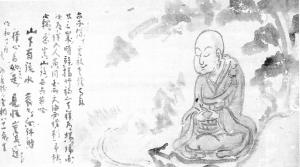
In my last post, I shared a bit of the criticism that Hakuin (1686 – 1768) heaped on the silent illuminationists of his day, generally some practitioners in the Sōtō school. That lead me to reflecting on what Hakuin might have said about today’s practitioners of kōan introspection.
First, it’s important to note that phrases like “kōan introspection” and “Sōtō Zen” are general categories and there is more difference within groups than between groups. That said, one of the ways that practitioners vary within the broad field of kōan introspection is how fierce or how friendly we approach the work.
Hakuin seems to come down strongly on the fierce side of these foci. Here is a common admonition from Hakuin for how to approach a kōan:
“…You must arouse a spirit of fierce, burning determination and bore continuously in throughout the twenty-four hours of the day. Bore in no matter what you are doing, bore deeper and deeper until you completely exhaust all your resources and run completely out of words (1).”
Indeed, in the Complete Poison Blossoms from a Thicket of Thorn (CPB), Hakuin uses the word “bore” sixty-two times, almost all in context of how to work with a kōan. “Fierce,” “burning determination,” “run completely out of words.” Hakuin also likens kōan to poison blossoms, thickets of thorn, barriers, and an enemy. He likens the process of kōan introspection to something to “… attack … from the sides, attack … from the front and from the rear, keep gnawing away…, gnawing, gnawing, until there is no place left to gnaw (2).”
How do Zen teachers today approach kōan introspection? One notable and creative example are teachers John Tarrant Roshi, Megan Rundel Sensei, and others of the Pacific Zen Institute. They seem to encourage (among other things) seeing the kōan like a friend or a good dog that might follow you around. You can hear more about this perspective here in a fascinating Q&A that Megan Rundel Sensei led at a non-kōan Sōtō group.
So the contrast between the language used for fierce (bore, attack, gnaw) or friendly (good dog, friend) kōan introspection is striking. What is the right way to approach a kōan?
In my view, there isn’t one right way. However, for most people working with a first kōan, a strong quality of fierceness will be necessary to break through (more about breakthrough, aka, “kenshō” his this talk – Awakening Irrepressible Joy) or the practitioner will waste valuable time spinning in their default setting. And yet, there also isn’t one right way fierceness presents – a twenty-five-year old’s fierce practice will probably look very different from a seventy-five-year old’s.
Even for Hakuin, there seems to have been much more nuance than his fierce words indicate. In his above self-portrait as a young monk (3), for example, the inscription presents how Hakuin thinks others see his fierceness:
Within the zazen hall
I am hated by thousands of Buddhas;
In the company of myriad demons
I crush those who practice false Zen
An annihilate those blind monks who can’t penetrate Mu.
This evil worn-out old shavepate
Adds one more layer of ugliness to ugliness.
These rough words are juxtaposed by the image of a smiling, radiant, gentle, even friendly image of himself as a young monk in samadhi. And within the words themselves, Hakuin’s self-description can be seen as friendly poking – for example, “evil worn-out shavepate” – at the very least, showing a sense of humor about himself and his fierceness.
The painting itself also has a friendly history. “As a monk,” writes Seo, “he had been accused of fathering a child with the daughter of an oil merchant. Although the charges were unfounded, Hakuin took responsibility for the child until the true father spoke up some time later. The child is said to have later become the monk Sōrei, who entered the temple Ryūshō-ji in Iida the year this painting was done. This painting is believed to have been a gift from Hakuin to Sōrei as he entered the temple.”
Ferocious, friendly or something else, what quality of energy do you bring to the practice? Caution: If you only bring your default energy, your habitual way of approaching your life, you may well be sleep walking.
(1) Complete Poison Blossoms from a Thicket of Thorn, trs. Norman Waddell, “8. Ascending the Teaching Seat on the Ninth Day.”
(2) Ibid., “187. To Layman Isshii.”
(3) The Sound of One Hand: Painting & Calligraphy by Zen Master Hakuin, Audrey Yoshiko Seo & Stephen Addiss, p. 42.
________________

Previous Post

April 14, 2018
Hakuin's Blistering Criticisms of Sōtō Zen: Who and What
Next Post
May 12, 2018 Right To The Point: Reflections on the Implications of Hakuin's Zen
Browse Our Archives
Select a Category Uncategorized
Select a Month August 2023 July 2023 June 2023 May 2023 April 2023 March 2023 February 2023 January 2023 December 2022 November 2022 October 2022 September 2022 August 2022 July 2022 June 2022 May 2022 April 2022 March 2022 February 2022 January 2022 December 2021 November 2021 August 2021 June 2021 April 2021 February 2021 January 2021 November 2020 September 2020 August 2020 July 2020 June 2020 May 2020 April 2020 January 2020 December 2019 November 2019 August 2019 June 2019 May 2019 April 2019 February 2019 January 2019 December 2018 November 2018 October 2018 September 2018 August 2018 July 2018 June 2018 May 2018 April 2018 March 2018 February 2018 January 2018 December 2017 November 2017 October 2017 September 2017 August 2017 July 2017 June 2017 December 2016 October 2016 June 2016 April 2016 February 2016 January 2016 December 2015 November 2015 October 2015 August 2015 June 2015 May 2015 April 2015 March 2015 February 2015 January 2015 December 2014 November 2014 October 2014 September 2014 August 2014 July 2014 June 2014 May 2014 April 2014 March 2014 February 2014 January 2014 December 2013 November 2013 October 2013 September 2013 August 2013 July 2013 June 2013 May 2013 April 2013 March 2013 February 2013 January 2013 December 2012 November 2012 October 2012 September 2012 August 2012 July 2012 June 2012 May 2012 April 2012 March 2012 February 2012 January 2012 December 2011 November 2011 October 2011 September 2011 August 2011 July 2011 June 2011 May 2011 April 2011 March 2011 February 2011 January 2011 December 2010 November 2010 October 2010 September 2010 August 2010 July 2010 June 2010 May 2010 April 2010 March 2010 February 2010 January 2010 December 2009 November 2009 October 2009 September 2009 August 2009 July 2009 June 2009 May 2009 April 2009 March 2009 February 2009 January 2009 December 2008 November 2008 October 2008 September 2008 August 2008 July 2008 June 2008 May 2008
Follow Us!
TAKE THE
Religious Wisdom Quiz
Who was called by God to leave his home and go to a land God would show him?
Select your answer to see how you score.
Moses Abram Jacob Noah
Related posts from Wild Fox Zen

Throw Yourself Into the House of Buddha: The...

New Vine Ghost Site for Dosho's Creative Endeavors...

Gnawing Through Qiánfēng’s Three Illnesses and Two Lights

"Why, Oh Why, Is My Practice Not Progressing?"
TRENDING AT PATHEOS Buddhist

On Taking Refuge in the Dharma
(Here I continue the feature of sharing talks and essays by teachers...

(Continuing my intention to share talks and essays by other members of Empty...
The Subtle Art of Bowing: A Dharma Discourse
(This presentation was first offered by my dear friend Dharma Holder Tom...

Internal Family Systems Can Heal you Mentally &...
How IFS Helped Me Stop Fighting Myself Internal Family Systems (IFS) is...

The Bible No One Spoke About: A Family’s...
A mysterious family Bible, unspoken faith, and a journey from curiosity to...

How Uncertainty Can Transform Your Life in 2025
Embracing Uncertainty: A New Year’s Resolution for the Brave As 2025 approaches,...
view all Buddhist blogs
Ad-Free & Subscriber Log-In Subscription Support
- About Us
- 2026 Calendar
- Videos
- Podcasts
- Library of World Religions
- Faith In Media Tracker
- Advertise With Us
- Write for Us
- Privacy Policy
- Terms of Service
- Do Not Sell My Data
- Contact Us
- Radiant Digital
- Manage Newsletter Subscriptions
- Unsubscribe From Notifications
- Sitemap
Copyright 2008-2026, Patheos. All rights reserved.
Subscription Support Ad-Free & Subscriber Log-In
Follow Patheos