
BuddhistCatholicContemplativeEvangelicalGeneral ChristianHinduJewishLatter-day SaintMuslimNew VisionsProgressive Christian
Beliefs
- Buddhist
- Catholic
- Contemplative
- Evangelical
- General Christian
- Hindu
- Jewish
- Latter-day Saint
- More Voices
- Muslim
- New Visions
- Pagan
- Progressive Christian
Topics
- Religion News
- Food and Religion
- Sports and Religion
- Religious Art
- Religious Music and Entertainment
- Religious Events
- History and Religion
- Style and Religion
- Politics and Religion
- Women in Religion
- Recreation Outdoors and Religion
- Business Finance and Religion
- Careers Workplace and Religion
- Education and Religion
- Family Parenting and Religion
- Health Fitness and Religion
- Home and Religion
- Relationships and Religion
- Technology and Religion
- Travel and Religion
Columnists
- Buddhist Columnists
- Business Finance and Religion Columnists
- Careers Workplace and Religion Columnists
- Catholic Columnists
- Contemplative Columnists
- Education and Religion Columnists
- Evangelists Columnists
- Family Parenting and Religion Columnists
- General Christian Columnists
- Health Fitness and Religion Columnists
- Hindu Columnists
- History and Religion Columnists
- Home and Religion Columnists
- Jewish Columnists
- More Voices Columnists
- Latter Day Columnists
- Muslim Columnists
- New Visions Columnists
- Nonreligious Columnists
- Pagan Columnists
- Politics and Religion Columnists
- Progressive Columnists
- Recreation Outdoors and Religion Columnists
- Relationships and Religion Columnists
- Religion News Columnists
- Religious Art Columnists
- Religious Events Columnists
- Religious Music and Entertainment Columnists
- Sports and Religion Columnists
- Style and Religion Columnists
- Technology and Religion Columnists
- Travel and Religion Columnists
- Women in Religion Columnists
Resource Library
- 2026 Calendar
- Library of World Religions
- The 100 Most Holy Places on Earth
- Patheos Answers
- Podcasts
- Videos
- Faith Leaders Database
- Anglican Episcopalian
- Bahai
- Baptist
- Buddhism
- Christianity
- Confucianism
- Eastern Orthodoxy
- Hinduism
- Holiness and Pentecostal
- ISKCON
- Islam
- Judaism
- Lutheran
- Methodist
- The Church of Jesus Christ of Latter-day Saints
- New Age
- Paganism
- Presbytarian and Reformed
- Protestantism
- Religion Behind the Scenes
- Roman Catholic
- Scientology
- Shia Islam
- Sikhism
- Sufism
- Sunni Islam
- Taoism
- Zen
- See all religions
Research Tools
 Ad-Free & Subscriber Log-In Subscription Support
Ad-Free & Subscriber Log-In Subscription Support
Follow Patheos 

- Trending:
- Forgiveness
- |
- Marriage
- |
- Consciousness
- |
- Death Penalty
- |
- Election
- |
- Halloween
 Wild Fox Zen
- Home
- Buddhist
- Hakuin Helps An Old Sōtō Priest Favorlessly Meet Birth and Death
Hakuin Helps An Old Sōtō Priest Favorlessly Meet Birth and Death
Last updated on: January 25, 2022 at 7:54 pm by Dosho Port
Hakuin Helps An Old Sōtō Priest Favorlessly Meet Birth and Death 2022-01-25T19:54:20-06:00 Dosho Port
Patheos Explore the world's faith through different perspectives on religion and spirituality! Patheos has the views of the prevalent religions and spiritualities of the world.
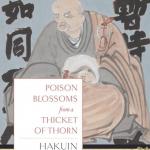 This post continues the series on the teaching of the great Rinzai teacher Hakuin Ekaku (白隠 慧鶴, January 19, 1686 – January 18, 1768), celebrating the publication of The Complete Plum Blossoms in a Thicket of Thorn (CBP), translated and annotated by Norman Waddell.
What follows is a reflection on one of the sections in “Book Eight: Religious Verses,” interesting to me because in it we meet an old Sōtō priest who takes up a kōan. The passage also includes a common theme in Hakuin’s teaching – don’t waste your time lulling in comfortable meditation. Instead, work your edges, follow the living vein of inquiry, and wake up.
387. Sending Off Reigaku Zogen, with Preface
“IN SPRING OF the first year of the Kampō era [1741], when I [Hakuin] was lecturing on the Blue Cliff Record at Keirin-ji in Kai province, Reigaku, the venerable master of Keiun-zan, came to see me.”
We meet Hakuin here at age fifty-seven, in his teaching prime, and lecturing on the Blue Cliff Record. The assembly for this teaching was at a temple in Kai province, some seventy-five miles north and on the far side of Mount Fuji from Hakuin’s home temple, Shōin-ji, in Hara. It is notable here how respectfully Hakuin addresses Reigaku – “the venerable master.” Waddell tells us that the priest Reigaku was probably a Sōtō priest, but nothing more is known about him or Keiun-zan, his temple.
“I asked him the question, ‘Where do you come from when you are born? Where do you go after you die?’ Reigaku made no reply.”
Reigaku is a “venerable master,” a temple abbot, but apparently had yet to clarify the great matter birth and death. It also seems that he is an old man, so with no time to waste, Hakuin gets right to the point – what is birth and death? Reigaku breaks into a sweat, shuffles his feet, and rubs his head unable to respond heart to heart. And having been in a similar position, although not so old at the time, my heart goes out to the old boy. “All that practice,” I hear him saying to himself, “sesshin after sesshin, and yet the dharma is not flowing from my heart.”
I imagine that Reigaku heading back to his home temple, Keiun-zan, with his head hanging, feet dragging. Perhaps there were other monks there, young and old, eager to hear about his encounter with the great teacher, Hakuin. He tells them the story, then redoubles his devotion to sitting. Now, however, he and his fellows, instead of silently illuminating themselves, spending all their “…time seated like lumps in long, lifeless ranks, nodding away like oarsmen (1),” they throw themselves into the inquiry of the kōan Hakuin had compassionately offered: “Where do you come from when you are born? Where do you go after you die?”
Despite Hakuin’s scorn for Reigaku’s silent illumination sitting, it may well have been due in large part to that strong and stable base, the deeply settled mind of the Sōtō school, that propelled Reigaku’s efforts to bare wonderful fruit. Eventually, the kōan broke open, and his heart was finally at peace. Buddha Shakyamuni described this as “…having done what needed to be done.”
Then, although Keiun-zan is at least seventy-five miles and on the opposite side of Mount Fuji from Hakuin’s Shōin-ji, and although he is an old man, Reigaku simply must see his teacher and present the truth that he had realized. Time and again in the old records, we find the ancients in our Zen way broke through the barriers of reluctance and comfort.
Passage #387 continues:
“Now in the second year of Kampō [1742], just before the Buddha’s Birthday, Reigaku boarded a boat in Kai province, rode down the swift Fuji River to Suruga province, and came to Shōin-ji to continue his study with me.”
Waddell notes, “Reigaku would have had a quick and exciting journey down the rapidly flowing Fuji River. It arises in the highlands of Kai province north of Mount Fuji, flows down west of the mountain, and empties into Suruga Bay.”
I see old Reigaku with bushy white eyebrows, bright eyes, and flowing black Sōtō robes racing down the rapids, hanging on to the sides of the boat, risking life and limb, just to meet Hakuin again. He makes the practice of running to dōkusan (aka, sanzen) seem really tame!
Happily, Reigaku succeeded at not drowning, and manages to again meet the great teacher. Seeing the old Sōtō monk returning for direct encounter must have made Hakuin smile through and through. Getting a whiff of Reigaku’s kenshō had to warm his heart, knowing that his life purpose, to help living beings realize the truth of the buddhadharma, was being fulfilled one kenshō at a time.
“I [Hakuin] asked him, ‘Where do you come from when you are born? Where do you go after you die?’ Reigaku raised a finger.”
Hakuin, by all accounts a demanding teacher, didn’t settle for anything but a full-body, clear and strong, Now! presentation. Holding up a finger like Juzhi did not reach it (2). As Nyogen Senzaki said, referring to how some of his students played with kōan presentation, “Until you can prove yourself in real freedom beyond birth and death, you are just a bad actor, after all” (3).
Yet, here with Reigaku, Hakuin doesn’t seem to see a bad actor. If he had he would have sent Reigaku scurrying (or toddling) with shouts and blows. Reigaku must have been sufficiently clear for Hakuin to energize Reigaku toward full transparent brightness:
“‘You aren’t there yet,’ I said. ‘Go on, say something else.’
‘Where do you come from when you are born? Where do you go after you die?’ he [Reigaku] replied.”
This is an intriguing peek into how Hakuin met students face-to-face for kōan introspection. Reigaku’s words, “Where do you come from when you are born? Where do you go after you die?”, have flavor in their plainess. Hakuin, by stepping into Reigaku’s soggy straw sandals, verified Reigaku’s awakening. So a good time was had by all. Light and happy music played softly in the background.
Hakuin continued,
“Cherishing the awakening that old priest had achieved, I composed a verse to give him. He tucked it in his sleeve and took it back to Kai province.”
“Cherishing the awakening” stands out here. Teacher and student meet buddha face to buddha face. Then with no further adieu, Reigaku tucked up his sleeves and returned to Keiun-zan, this time with a different story to tell. Waddell notes, “On his return trip to Kai province he probably would have made the long and strenuous hike over the high passes to the east of the mountain.”
Hakuin’s Verse for Reigaku
“Don’t you regret the misfortune of a wasted life and idle death?
Those many years of sitting and silently illuminating yourself?
Don’t say the practice of Zen does not yield miraculous results,
Eyes won’t open for some till they’re losing their hair and teeth.”
Curiously, this verse doesn’t seem to be about Reigaku or even for him. He had, after all, just realized kenshō and yet the verse is about the regret of not realizing and a warning not to disparage the power of the Zen way. So what is Hakuin doing with this verse? In Hakuin’s perspective, the Sōtō path in his day had become overgrown and lifeless with practitioners lulling away their time in silent illumination, a passive, do-nothing, waste of time. Incidentally, Hakuin was equally critical of some practitioners in his own Rinzai school, hobbled by the “…dry and lifeless methods of ‘Unborn Zen.’” In our day as well, lots of zazen without kōan introspection can lead to powerful concentration, however, many practitioners slide past the point of cultivating verification, expressed here as “Where do you come from when you are born? Where do you go after you die?”
So perhaps Reigaku was just the messenger to the Sōtō monks that trained with him or with whom he associated. And because Hakuin decided to include this incident and verse in the record of his teaching, his audience for his message includes those in his time and beyond who might be suffering “…the misfortune of a wasted life and idle death.”
The message of the verse is simple and direct, and reverberates with the “Evening Message,” recited at the end of the day in both Rinzai and Sōtō training centers to this day:
Spoken to the great assembly:
The great matter is birth-death
Impermanence is swift!
It’s fitting for everyone to sober up! Wake up!
Do not let [this opportunity] pass by” (4)
_________________
(1) Wild Ivy, p. 55. Said about a different group.
(2) See No Gate Barrier (Wúménguān) CASE 3: Juzhi Raises A Finger
(3) Eloquent Silence by Nyogen Senzaki p. 198. Thanks, Alan, for pointing this out.
(4) “The Evening Message.” Author’s translation.
_________________
Previous Post

February 12, 2018
Will You Be Aware of Your Own Awakening?
Next Post
March 5, 2018 Acquiring the Ability to Teach Dunces of the Poorer Sort
Browse Our Archives
Select a Category Uncategorized
Select a Month August 2023 July 2023 June 2023 May 2023 April 2023 March 2023 February 2023 January 2023 December 2022 November 2022 October 2022 September 2022 August 2022 July 2022 June 2022 May 2022 April 2022 March 2022 February 2022 January 2022 December 2021 November 2021 August 2021 June 2021 April 2021 February 2021 January 2021 November 2020 September 2020 August 2020 July 2020 June 2020 May 2020 April 2020 January 2020 December 2019 November 2019 August 2019 June 2019 May 2019 April 2019 February 2019 January 2019 December 2018 November 2018 October 2018 September 2018 August 2018 July 2018 June 2018 May 2018 April 2018 March 2018 February 2018 January 2018 December 2017 November 2017 October 2017 September 2017 August 2017 July 2017 June 2017 December 2016 October 2016 June 2016 April 2016 February 2016 January 2016 December 2015 November 2015 October 2015 August 2015 June 2015 May 2015 April 2015 March 2015 February 2015 January 2015 December 2014 November 2014 October 2014 September 2014 August 2014 July 2014 June 2014 May 2014 April 2014 March 2014 February 2014 January 2014 December 2013 November 2013 October 2013 September 2013 August 2013 July 2013 June 2013 May 2013 April 2013 March 2013 February 2013 January 2013 December 2012 November 2012 October 2012 September 2012 August 2012 July 2012 June 2012 May 2012 April 2012 March 2012 February 2012 January 2012 December 2011 November 2011 October 2011 September 2011 August 2011 July 2011 June 2011 May 2011 April 2011 March 2011 February 2011 January 2011 December 2010 November 2010 October 2010 September 2010 August 2010 July 2010 June 2010 May 2010 April 2010 March 2010 February 2010 January 2010 December 2009 November 2009 October 2009 September 2009 August 2009 July 2009 June 2009 May 2009 April 2009 March 2009 February 2009 January 2009 December 2008 November 2008 October 2008 September 2008 August 2008 July 2008 June 2008 May 2008
Follow Us!
TAKE THE
Religious Wisdom Quiz
I wrote of a new covenant where God's law would be written not on stone but where?
Select your answer to see how you score.
In the temple On scrolls In a book On their hearts
Related posts from Wild Fox Zen

Gnawing Through Qiánfēng’s Three Illnesses and Two Lights
Dōgen’s Instruction for Householder Zen Training

The Central Importance of Inquiring of a Teacher
Dogen: Find a Good Teacher, Ask For a...
TRENDING AT PATHEOS Buddhist

On Taking Refuge in the Dharma
(Here I continue the feature of sharing talks and essays by teachers...

(Continuing my intention to share talks and essays by other members of Empty...
The Subtle Art of Bowing: A Dharma Discourse
(This presentation was first offered by my dear friend Dharma Holder Tom...

Internal Family Systems Can Heal you Mentally &...
How IFS Helped Me Stop Fighting Myself Internal Family Systems (IFS) is...

The Bible No One Spoke About: A Family’s...
A mysterious family Bible, unspoken faith, and a journey from curiosity to...

How Uncertainty Can Transform Your Life in 2025
Embracing Uncertainty: A New Year’s Resolution for the Brave As 2025 approaches,...
view all Buddhist blogs
Ad-Free & Subscriber Log-In Subscription Support
- About Us
- 2026 Calendar
- Videos
- Podcasts
- Library of World Religions
- Faith In Media Tracker
- Advertise With Us
- Write for Us
- Privacy Policy
- Terms of Service
- Do Not Sell My Data
- Contact Us
- Radiant Digital
- Manage Newsletter Subscriptions
- Unsubscribe From Notifications
- Sitemap
Copyright 2008-2026, Patheos. All rights reserved.
Subscription Support Ad-Free & Subscriber Log-In
Follow Patheos