
BuddhistCatholicContemplativeEvangelicalGeneral ChristianHinduJewishLatter-day SaintMuslimNew VisionsProgressive Christian
Beliefs
- Buddhist
- Catholic
- Contemplative
- Evangelical
- General Christian
- Hindu
- Jewish
- Latter-day Saint
- More Voices
- Muslim
- New Visions
- Pagan
- Progressive Christian
Topics
- Religion News
- Food and Religion
- Sports and Religion
- Religious Art
- Religious Music and Entertainment
- Religious Events
- History and Religion
- Style and Religion
- Politics and Religion
- Women in Religion
- Recreation Outdoors and Religion
- Business Finance and Religion
- Careers Workplace and Religion
- Education and Religion
- Family Parenting and Religion
- Health Fitness and Religion
- Home and Religion
- Relationships and Religion
- Technology and Religion
- Travel and Religion
Columnists
- Buddhist Columnists
- Business Finance and Religion Columnists
- Careers Workplace and Religion Columnists
- Catholic Columnists
- Contemplative Columnists
- Education and Religion Columnists
- Evangelists Columnists
- Family Parenting and Religion Columnists
- General Christian Columnists
- Health Fitness and Religion Columnists
- Hindu Columnists
- History and Religion Columnists
- Home and Religion Columnists
- Jewish Columnists
- More Voices Columnists
- Latter Day Columnists
- Muslim Columnists
- New Visions Columnists
- Nonreligious Columnists
- Pagan Columnists
- Politics and Religion Columnists
- Progressive Columnists
- Recreation Outdoors and Religion Columnists
- Relationships and Religion Columnists
- Religion News Columnists
- Religious Art Columnists
- Religious Events Columnists
- Religious Music and Entertainment Columnists
- Sports and Religion Columnists
- Style and Religion Columnists
- Technology and Religion Columnists
- Travel and Religion Columnists
- Women in Religion Columnists
Resource Library
- 2026 Calendar
- Library of World Religions
- The 100 Most Holy Places on Earth
- Patheos Answers
- Podcasts
- Videos
- Faith Leaders Database
- Anglican Episcopalian
- Bahai
- Baptist
- Buddhism
- Christianity
- Confucianism
- Eastern Orthodoxy
- Hinduism
- Holiness and Pentecostal
- ISKCON
- Islam
- Judaism
- Lutheran
- Methodist
- The Church of Jesus Christ of Latter-day Saints
- New Age
- Paganism
- Presbytarian and Reformed
- Protestantism
- Religion Behind the Scenes
- Roman Catholic
- Scientology
- Shia Islam
- Sikhism
- Sufism
- Sunni Islam
- Taoism
- Zen
- See all religions
Research Tools
 Ad-Free & Subscriber Log-In Subscription Support
Ad-Free & Subscriber Log-In Subscription Support
Follow Patheos 

- Trending:
- Forgiveness
- |
- Marriage
- |
- Consciousness
- |
- Death Penalty
- |
- Election
- |
- Halloween
 Wild Fox Zen
- Home
- Buddhist
- How I Got Dōgen Wrong: Enlightenment, Just Sitting, and the Bodhisattva Heart
How I Got Dōgen Wrong: Enlightenment, Just Sitting, and the Bodhisattva Heart
Last updated on: January 25, 2022 at 8:01 pm by Dosho Port
How I Got Dōgen Wrong: Enlightenment, Just Sitting, and the Bodhisattva Heart 2022-01-25T20:01:29-06:00 Dosho Port
Patheos Explore the world's faith through different perspectives on religion and spirituality! Patheos has the views of the prevalent religions and spiritualities of the world.
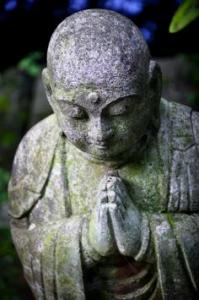
“This mind is Buddha” is one of the most evocative teachings of our Zen school. It is a “teaching,” not a philosophical assertion or a faith statement, but rather a description of enlightening experience. Dōgen cites “This mind is Buddha” teaching in several fascicles in the Shobogenzo, eight dharma discourses in the Eiheikoroku, and also in his Shinji Shobogenzo (1).
In this post, I will explore Dōgen’s working through of this kōan in relationship to enlightenment and just sitting. And along the way, I’ll offer some reflections on post-enlightenment practice, the vow to free all beings, and how that vow plays out in Dōgen’s and Hakuin’s expressions of Zen.
And just for fun, I’ll work with a recently published translation of Dōgen’s Eihei Koroku (2) by Thomas Cleary (3). You will find it free on Amazon, along with some other texts Cleary has self-published, like the Empty Valley, an important kōan text. I will comment too, mostly on Dōgen’s comments, and so have the Dōgen text italicized. I’ve also added some headings to help organize the text for you, the reader.
The main case
[Dōgen said,] The correct method accurately communicated from Buddha to Buddha, master to master, is just sitting.
My late teacher Rujing instructed a congregation, “Do you all know the story of Zen master Dàméi (4) calling on Great Master Mǎzǔ (5)? He asked Mǎzǔ, ‘What is Buddha?’ Mǎzǔ said, ‘Mind itself is Buddha.’
He thereupon bowed and left, and went up to the summit of Dàméi mountain, where he ate pine pollen and wore lotus leaves, spending the rest of his life sitting meditating day and night, nearly thirty years. He was not known to kings or ministers, and did not go to invitations of patrons or donors. This is an excellent example of the way of Buddhas.”
Dōgen begins with a clear and characteristic thesis, “the correct method … is just sitting.” And to show that it has been transmitted from “Buddha to Buddha, master to master” he quotes his own master, Rujing, who serves as Dōgen’s backdrop, adding just one thought to his telling of this well-known kōan: “This is an excellent example of the way of Buddhas.”
There are double-mirrors in this Buddha mind – Dōgen shares a kōan about a teacher-student transmission of the Buddha mind, by quoting his teacher minding the kōan and affirming it as a telling example.
In any case, Dàméi heard “Mind itself is Buddha,” had great realization (6), and then went to the mountains to do zazen night and day for thirty years. Dōgen and Rujing too, according to Dōgen, raise this as an example of how to proceed with practice after enlightenment. Dàméi eventually did lead both Juzhi, famous for holding up his finger, and Jianzhi, who transmitted Zen to Korea, to enlightenment. But it is his thirty-years zazen in the mountains that Dōgen and Rujing call out for praise.
More on this point below.
Dōgen’s comment
It may be deduced that sitting meditation is post-enlightenment practice. Enlightenment is just sitting meditation, that’s all. This mountain is the first to have a communal hall; this is the first it has been heard of in Japan. The first one has been seen, the first one has been entered, the first one has been sat in. This is lucky for people who study the path of Buddha.
I was originally drawn to reflect on this dharma discourse of Dōgen’s because of this reference to “post-enlightenment practice,” something that I associate more strongly with Hakuin Zen than Dōgen Zen. After rolling the whole discourse around, though, I find it extraordinarily rich and representative of several important themes for Dōgen and for us.
Even Dōgen’s first sentences cover a lot of ground, the last three of which might seem at first to be unrelated to the first two. Dōgen begins with the entanglement of enlightenment, “this mind is Buddha,” and zazen by asserting that zazen is a fitting practice after enlightenment. What about before enlightenment? Is zazen a practice for beginners and those who haven’t yet experienced enlightenment and then zazen continues to be the practice after enlightenment? Or is Dōgen saying here that zazen, or perhaps true zazen, is only a post-enlightenment practice, that one isn’t really doing zazen prior to enlightenment.
It seems to me that Dōgen means just what he says. “…Sitting meditation is post-enlightenment practice.” For Dōgen, zazen is the Buddha mandala, the Buddha land presented here and now through our enlightened psycho-physical zazen pose, where the refining of enlightenment and the presentation of enlightenment are like the front and back of the hand.
Curiously, from an assertion about the importance of post-enlightenment zazen, Dōgen moves on to boast about establishing the first “communal hall” or “monks’ hall” (Japanese, sōdō) in Japan and notes how fortunate people are now to have such a hall. What’s the connection? Dàméi, after all, was not practicing in a monks’ hall, but in the mountains, eating pine pollen and wearing lotus leaves. But that doesn’t seem to be the point that Dōgen wants to highlight.
It is important to appreciate that the monks’ hall is the place that monks would sleep, eat, wash, use the toilet, and sit zazen. One way to make sense of the flow of the argument here is to see the monks’ hall as an extension of the zazen pose, an extension of the Buddha mandala that is enlightenment. The sentences then unfold Dōgen’s point through multiple dimensions – the person and the environment, time and space. That extension also includes the clothes worn, particularly the kesa, although that is not included by Dōgen in this discourse. The specific, prescribed form and function of monks’ hall become part and parcel of Dōgen’s zazen as enlightenment, a full-bodied dharma presentation.
In my view, Dōgen, in the first movement of this discourse, uses a traditional kōan involving well-known Zen heros, Dàméi and Mǎzǔ, and the vague endorsement of his teacher, Rujing, to support his notion of the importance of zazen and then extends the argument to include the spatial construction of the Buddha realm. One might ask, “Is zazen enlightenment if not undertaken in a proper monks’ hall?”
Without hesitation, most of us would answer that question, “Yes.” How Dōgen would respond cannot be known, but I suspect he might say, “No.”
We know, for example, that Dōgen started giving formal dharma hall discourses only when he had a proper dharma hall, stopped giving them during his move to Eiheiji when such a dharma hall was unavailable, and then started again when the proper hall was completed.
Dōgen, despite how he is often presented today as teaching that our life as-it-is is the fundamental issue at hand (genjokoan), he may well have had quite a different perspective, something akin to a synthesis of Zen and esoteric Buddhism, requiring specific physical structures both in the body and buildings (7).
Subsequent kōan development
A monk subsequently said to “What principle did you realize when you met master Mǎzǔ, that you dwell on this mountain?”
Dàméi said, “Mǎzǔ told me, ‘Mind is Buddha.’”
The monk said, “Mǎzǔ’s Buddhism is different these days.”
Dàméi said, “How is it different?”
The monk said, “These days he says, ‘Not mind, not Buddha.’”
Dàméi said, “This old fellow confuses people no end. Let it be, for him, ‘not mind, not Buddha,’ for me, simply, ‘mind is Buddha.’”
The monk went back and recounted this to Mǎzǔ. Mǎzǔ said, “The plum is ripe.”
Dōgen’s subsequent kōan comment
So someone who has understood mind itself is Buddha gives up human society, goes deep into mountain valleys, and just sits meditating day and night. The brethren on this mountain should simply focus solely on sitting meditation. Don’t waste time; human life is impermanent. What are you waiting for? I pray, I pray.
Do you want to understand the principle of ‘mind itself is Buddha’? (silence)
‘Mind itself is Buddha’ is very hard to understand. ‘Mind’ is walls, tiles, and pebbles. ‘Buddha’ is a mud ball, an earth clod. Mǎzǔ speaking up was dragging mud and dripping water; Dàméi waking up was haunting the weeds and woods. Where is the identity of mind and Buddha? Huh!
Let’s first look at the second portion of this last section, the clincher – “‘Mind itself is Buddha’ is very hard to understand … Where is the identity of mind and Buddha? Huh!”
Here old Dōgen pushes his audience to awaken, not to hide behind the fame of Dàméi and Mǎzǔ, as they too are splattered with mud and soaking wet. Dōgen’s admonition is for us to discover our essential identity, Buddha as mud and earth, song of the bird, hum of the car. The so-called true self.
So in terms of urging personal enlightenment, Dōgen wraps up this discourse like any Zen master would. Such an admonition, of course, only makes sense if for Dōgen enlightenment is personal experience. In other words, that enlightenment isn’t the zazen of all people, all the time. True zazen, post-enlightenment zazen, is what Dōgen sees in Dàméi and what he prescribes for us in the post-enlightenment period of practice. Especially when that zazen occurs in a proper monks’ hall.
How I got Dōgen wrong
Let’s now look at the first paragraph of Dōgen’s comments on this last section. He begins by affirming that “…someone who has understood mind itself is Buddha gives up human society, goes deep into mountain valleys, and just sits meditating day and night.”
In contemporary Zen, we talk about going up the mountain, undertaking some years of formal Zen training, and then coming down the mountain, entering the world to benefit living beings. In this passage, at least, Dōgen leaves us up the mountain just sitting. What about the vow to carry all living beings across the flood of suffering?
Dōgen does, of course, express his great vehicle bodhisattva heart elsewhere. For example, he wrote two Shobogenzo fascicles on arousing the way-seeking mind. And in his poetry, there’s this:
Awake or asleep
in a grass hut,
what I pray for is
to bring others across
before myself.
And yet, the spirit of “coming down the mountain” isn’t explicit in this passage, or it could be argued, in Dōgen’s later teaching generally. It isn’t built into his system of practice. Sit and sit some more, seems to be the message. And in that post-enlightenment just sitting, the kōan is realized, it is discovered that all living beings are already free.
However, it would be kinda nice for as many people as possible to know this for themselves. If you stay cloistered in the mountain in your proper monks’ hall, is that the most skillful means to actualize the bodhisattva heart?
Let’s look at Hakuin for another example. Here Norman Waddell writes about Hakuin’s final, definitive enlightenment experience that occurred while reading the “Skillful Means” chapter of the Lotus Sutra:
*“*In that chapter, the Buddha reveals to his disciple Shariputra the true nature of the Mahayana Bodhisattva, whose own enlightenment is but the first step in his career of assisting others to attain theirs. This is identical to the teaching Shōju had tried to drive home to Hakuin years before. Like Shariputra, Hakuin had erroneously regarded his original realization as full and perfect enlightenment, and he would have been unable to proceed beyond that realization without the timely assistance of a genuine teacher.
“As Hakuin read, the sound of a cricket churring at the foundation stones of the temple reached his ears; at that instant, he crossed the threshold into great enlightenment. The accumulated doubts and uncertainties of forty years suddenly ceased to exist. The reason why the Lotus Sutra was regarded as supreme among all the Buddha’s preachings was revealed to him “with blinding clarity.” He found teardrops “cascading down his face like strings of beads—they poured out like beans from a ruptured sack (8).”
From that point on, Hakuin worked tirelessly, his post-enlightenment practice, to help people realize enlightenment. The heart of the bodhisattva life for Hakuin, as catalyzed through his work with Shōju and finally discovered definitively when hearing a cricket and reading about the reason Buddhas come into the world, was to help beings awaken. That involved sitting zazen, of course, but also breaking through the kōans and clarifying enlightenment after enlightenment. And it beared fruit. By the end of Hakuin’s life he had some eighty enlightened successors.
Quite a contrast to Dōgen’s leaving human society and “…just sit meditating day and night.”
And that’s how I’ve gotten Dōgen wrong. I’ve argued, you see, that Dōgen’s career can be seen as an effort to rehabilitate the Sōtō lineage after it took an unfortunate detour into the quietism of silent lllumination. For Dōgen, zazen is the vivid cultivation of verification, the kōan realized (9). Yet, when it comes to Dōgen’s presentation in this discourse regarding practice after enlightenment, there are clear traces of quietism in Dōgen’s Zen.
Hakuin, on the other hand, offers a passionate alternative. The vow to free all living beings is taken up and actualized concretely in doing whatever can be done to cultivate verification, practice enlightenment. Post enlightenment practice becomes tireless service to catalyze the enlightenment of others.
There is, of course, no one right way. I hope that this culling out of a couple of the possibilities might serve you before, after, and during enlightenment.
____________
(1) See Daido Loori’s, The True Dharma Eye: Zen Master Dōgen’s Three Hundred Kōans, 278.
(2) This dharma discourse is in Cleary’s Eihei Koroku as Volume 4, number 61. In the Leighton and Okumura translation, Dōgen’s Extensive Record, it is number 319.
(3) Cleary has the Japanese for names throughout, but I’ve changed them to the more standard Chinese. Except for the Japanese monk, Dōgen.
(4) Dàméi Fachang 大梅法常 (752-839). Dàméi means “great plum.” Cleary has “big apricot.”
(4) Mǎzǔ Daoyi 馬祖道一 (709–788). Mǎzǔ means “horse ancestor.”
(5) Although not included in this version, in Dōgen’s telling of the story in “Continuous Practice,” he has this: “Upon hearing these words, [Dàméi] had realization.”
(6) Mandala: “… The practitioner imagines the entire universe as purified and transformed into the transcendent maṇḍala— often identifying himself or herself with the form of the main deity at the center.” The Princeton Dictionary of Buddhism.
(7) See Icons and Iconoclasm in Japanese Buddhism: Kukai and Dogen on the Art of Enlightenment, by Pamela D. Winfield for more on this.
(8) Wild Ivy: The Spiritual Autobiography of Zen Master Hakuin
(9) See, for example, Dōgen’s reworking of Hongzhi’s “needle point of zazen” poem in the third section of “Zazenshin.”
____________

Next Post
December 30, 2017 It'll All Get Swept Away - And Happy New Year Anyway
Browse Our Archives
Select a Category Uncategorized
Select a Month August 2023 July 2023 June 2023 May 2023 April 2023 March 2023 February 2023 January 2023 December 2022 November 2022 October 2022 September 2022 August 2022 July 2022 June 2022 May 2022 April 2022 March 2022 February 2022 January 2022 December 2021 November 2021 August 2021 June 2021 April 2021 February 2021 January 2021 November 2020 September 2020 August 2020 July 2020 June 2020 May 2020 April 2020 January 2020 December 2019 November 2019 August 2019 June 2019 May 2019 April 2019 February 2019 January 2019 December 2018 November 2018 October 2018 September 2018 August 2018 July 2018 June 2018 May 2018 April 2018 March 2018 February 2018 January 2018 December 2017 November 2017 October 2017 September 2017 August 2017 July 2017 June 2017 December 2016 October 2016 June 2016 April 2016 February 2016 January 2016 December 2015 November 2015 October 2015 August 2015 June 2015 May 2015 April 2015 March 2015 February 2015 January 2015 December 2014 November 2014 October 2014 September 2014 August 2014 July 2014 June 2014 May 2014 April 2014 March 2014 February 2014 January 2014 December 2013 November 2013 October 2013 September 2013 August 2013 July 2013 June 2013 May 2013 April 2013 March 2013 February 2013 January 2013 December 2012 November 2012 October 2012 September 2012 August 2012 July 2012 June 2012 May 2012 April 2012 March 2012 February 2012 January 2012 December 2011 November 2011 October 2011 September 2011 August 2011 July 2011 June 2011 May 2011 April 2011 March 2011 February 2011 January 2011 December 2010 November 2010 October 2010 September 2010 August 2010 July 2010 June 2010 May 2010 April 2010 March 2010 February 2010 January 2010 December 2009 November 2009 October 2009 September 2009 August 2009 July 2009 June 2009 May 2009 April 2009 March 2009 February 2009 January 2009 December 2008 November 2008 October 2008 September 2008 August 2008 July 2008 June 2008 May 2008
Follow Us!
TAKE THE
Religious Wisdom Quiz
Who said: "Now to him who is able to keep you from stumbling and to present you before his glorious presence without fault"?
Select your answer to see how you score.
Peter Jude Paul John
Related posts from Wild Fox Zen

Intimate Knowing: How To Work With Thinking In...

Plucking a Blade of Grass: The Wondrous Dharma...
Dōgen’s Instruction for Householder Zen Training

Wandering Destitute into a Demon Pit
TRENDING AT PATHEOS Buddhist

On Taking Refuge in the Dharma
(Here I continue the feature of sharing talks and essays by teachers...

(Continuing my intention to share talks and essays by other members of Empty...
The Subtle Art of Bowing: A Dharma Discourse
(This presentation was first offered by my dear friend Dharma Holder Tom...

Internal Family Systems Can Heal you Mentally &...
How IFS Helped Me Stop Fighting Myself Internal Family Systems (IFS) is...

The Bible No One Spoke About: A Family’s...
A mysterious family Bible, unspoken faith, and a journey from curiosity to...

How Uncertainty Can Transform Your Life in 2025
Embracing Uncertainty: A New Year’s Resolution for the Brave As 2025 approaches,...
view all Buddhist blogs
Ad-Free & Subscriber Log-In Subscription Support
- About Us
- 2026 Calendar
- Videos
- Podcasts
- Library of World Religions
- Faith In Media Tracker
- Advertise With Us
- Write for Us
- Privacy Policy
- Terms of Service
- Do Not Sell My Data
- Contact Us
- Radiant Digital
- Manage Newsletter Subscriptions
- Unsubscribe From Notifications
- Sitemap
Copyright 2008-2026, Patheos. All rights reserved.
Subscription Support Ad-Free & Subscriber Log-In
Follow Patheos