
BuddhistCatholicContemplativeEvangelicalGeneral ChristianHinduJewishLatter-day SaintMuslimNew VisionsProgressive Christian
Beliefs
- Buddhist
- Catholic
- Contemplative
- Evangelical
- General Christian
- Hindu
- Jewish
- Latter-day Saint
- More Voices
- Muslim
- New Visions
- Pagan
- Progressive Christian
Topics
- Religion News
- Food and Religion
- Sports and Religion
- Religious Art
- Religious Music and Entertainment
- Religious Events
- History and Religion
- Style and Religion
- Politics and Religion
- Women in Religion
- Recreation Outdoors and Religion
- Business Finance and Religion
- Careers Workplace and Religion
- Education and Religion
- Family Parenting and Religion
- Health Fitness and Religion
- Home and Religion
- Relationships and Religion
- Technology and Religion
- Travel and Religion
Columnists
- Buddhist Columnists
- Business Finance and Religion Columnists
- Careers Workplace and Religion Columnists
- Catholic Columnists
- Contemplative Columnists
- Education and Religion Columnists
- Evangelists Columnists
- Family Parenting and Religion Columnists
- General Christian Columnists
- Health Fitness and Religion Columnists
- Hindu Columnists
- History and Religion Columnists
- Home and Religion Columnists
- Jewish Columnists
- More Voices Columnists
- Latter Day Columnists
- Muslim Columnists
- New Visions Columnists
- Nonreligious Columnists
- Pagan Columnists
- Politics and Religion Columnists
- Progressive Columnists
- Recreation Outdoors and Religion Columnists
- Relationships and Religion Columnists
- Religion News Columnists
- Religious Art Columnists
- Religious Events Columnists
- Religious Music and Entertainment Columnists
- Sports and Religion Columnists
- Style and Religion Columnists
- Technology and Religion Columnists
- Travel and Religion Columnists
- Women in Religion Columnists
Resource Library
- 2026 Calendar
- Library of World Religions
- The 100 Most Holy Places on Earth
- Patheos Answers
- Podcasts
- Videos
- Faith Leaders Database
- Anglican Episcopalian
- Bahai
- Baptist
- Buddhism
- Christianity
- Confucianism
- Eastern Orthodoxy
- Hinduism
- Holiness and Pentecostal
- ISKCON
- Islam
- Judaism
- Lutheran
- Methodist
- The Church of Jesus Christ of Latter-day Saints
- New Age
- Paganism
- Presbytarian and Reformed
- Protestantism
- Religion Behind the Scenes
- Roman Catholic
- Scientology
- Shia Islam
- Sikhism
- Sufism
- Sunni Islam
- Taoism
- Zen
- See all religions
Research Tools
 Ad-Free & Subscriber Log-In Subscription Support
Ad-Free & Subscriber Log-In Subscription Support
Follow Patheos 

- Trending:
- Forgiveness
- |
- Marriage
- |
- Consciousness
- |
- Death Penalty
- |
- Election
- |
- Halloween
 Wild Fox Zen
- Home
- Buddhist
- Dōshō the Dōgen Hater (Not): A Preemptive Blog For My Dear Critics
Dōshō the Dōgen Hater (Not): A Preemptive Blog For My Dear Critics
Last updated on: January 25, 2022 at 8:04 pm by Dosho Port
Dōshō the Dōgen Hater (Not): A Preemptive Blog For My Dear Critics 2022-01-25T20:04:05-06:00 Dosho Port
Patheos Explore the world's faith through different perspectives on religion and spirituality! Patheos has the views of the prevalent religions and spiritualities of the world.
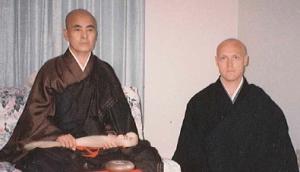
I’ve been working on a review of Brad Warner’s new book, It Came From Beyond Zen: More Practical Advice from Dōgen, Japan’s Greatest Zen Master, to be posted soon. Given that I have a different perspective than Warner and nonkōan Zen folks generally on what Dōgen practiced and taught, and given the curious sensitivity of the kōan issue, I thought I might do some preemptive blogging.
After I write about my views on Dōgen and kōan, you see, although there are numerous Zennists with similar views (including such luminaries as Rōshis Harada Daiun, Yasutani Hakuun, Robert Aitken, Daidō Loori Rōshi, etc.), I often get some nasty blow-back in social media. I think some readers think that I’m betraying the pure Sōtō way.
Indeed, I’m likely to get slammed for venturing into this (again), mostly by folks who don’t seem to wait to read what I have to say (let alone breath and smile) before they hate, including a few who have Sōtō Zen dharma transmission. Most of their arguments amount to either, “You’re dumb,” or the equally convincing, “I believe that Dōgen taught zazen as a kōan-free zone, therefore he did (click here), so please shut up, already. And … you’re dumb.”
It seems to me, though, that we are into the same thing, or at least closer than like 99.99% of the population, so I find it odd to be personally attacked just because my views might slightly differ from theirs, especially in this Trumpworld. And I’m a middle child, so although I’d rather speak up with what I see as the truth than shut up, I really would like us to all get along!
Simply put, I’m not a Dōgen hater. Nor am I ignorant, as one of them once said, at least in my opinion. Katagiri Rōshi worked hard on me to make me informed about Dōgen’s teaching (more on that below). Maybe I’m dumb, though. I am after all entering the fray again, but I’ll let you be the judge of that.
Dumb or not, it occurred to me that in order to reassure potentially hostile readers, I might share a bit about my own personal background with Dōgen, not to say that my credentials are bigger than yours. Just to let you know my background.
Briefly, I’ve not arrived casually at my present (evolving) view of Dōgen’s teaching but through the House of Hard Knocks. The first knock came when I discovered as a naive youngster that the story told about Dōgen by modern Sōtō Zen is an organizational history, told with organizational ends in mind. I had thought that Zen would be different in that way, but in most ways I thought Zen would be different, I’ve found it to be a lot the same as other human endeavors.
Regarding the kōan issue, the present narrative didn’t get firmly established until the 19th Century when the Meiji government insisted that Sōtō and Rinzai differentiate clearly. Or die. But I want to get more personal here.
It all began for me in 1977
on a cold and windy October night in Minneapolis when I met Katagiri Rōshi. Turned out that he was one of the twentieth century’s foremost experts on Dōgen Zen, in my opinion. Katagiri Rōshi had studied with all the big three teachers of mid-twentieth century nonkōan Sōtō Zen, important leaders of back-to-Dōgen movement. Katagiri Rōshi was particularly close to Hashimoto Eko Rōshi, serving as his anja (personal attendant) for three years at Eiheiji. When Katagiri Rōshi went to college at Komazawa University, he studied zazen with Sawaki Kōdō Rōshi, whose lineage has branched into the Uchiyama and Deshimaru lines. Later, along with Shunryu Suzuki Rōshi before he became the founder of the San Francisco Zen megaplex, Katagiri Rōshi attended numerous teaching retreats led by Kishizawa Ian Rōshi.
So the old boy got himself really well educated in Dōgen Zen. And he was smart. Probably the smartest, most well-educated person, buddhalogically speaking, I’ve had the pleasure to meet. In fact, I never won a dharma debate with Katagiri Rōshi, despite giving it my best wholehearted (i.e., dogged, stubborn, and dumb) try on numerous occasions.
Katagiri Rōshi’s life for the thirteen years I was close to him was almost all about zazen, study (at least 85% Dōgen), and teaching. He occasionally took time off for his family and TV, and was especially fond of “Gilligan’s Island” reruns. And the “Cosby Show.” Katagiri Rōshi (despite the seriousness of the above “Face-to-Face Meeting” photo from October 6, 1989) had an intensely silly side.
Nevertheless, he invited all of us (usually no more than fifteen-twenty students) into his deep practice. And intensively practice we did – zazen a couple hours every weekday morning, an hour-and-a-half in the evening, dharma talks at least a couple times a week, forty-some days of sesshin a year, a couple three-month nonresidential practice periods (with student talks at 4:30am), and a couple shorter residential practice periods at Hōkyōji.
Today as I look around the Zen world, what we did in the 70’s and 80’s with Katagiri Rōshi seems to be more intense than what’s offered now in most Zen places. And not all that balanced. Relationships with people outside our Zen bubble certainly suffered, as my first wife could attest. Career opportunities were often passed by in order to focus on Zen practice. We did not save for retirement. Our psychological and physical health were also not priorities. Yet, given the vissiditutes of this fleeting life, I consider myself a very lucky boy to have had that start to my practice.
But back to Dōgen
During my thirteen years with Katagiri Rōshi, I estimate that I attended ~2,000 dharma talks, at least 85% on Dōgen’s teaching. The first and second generation of translations were just coming out in the those days, especially the Tanahashi and Hee Jin Kim versions, and we worked through many fascicles line-by-line. Katagiri Rōshi often substituted alternate translations when he thought it was necessary.
The young Dōshō also seized the opportunities to meet with Katagiri Rōshi in dokusan and had longer practice meetings a few times month, mostly focussed on discussing and sometimes debating Dōgen dharma points (we talked very little about our personal lives).
Once, for example, I read an open letter to Dōgen during a practice period student talk (yes, at 4:30am), criticizing him for not being sufficiently non authoritarian and attached to ritual. I think there was something in there too about him not being a feminist. Later that day I had a practice meeting with Katagiri Rōshi. I expected him to be upset about my talk. Instead, I found him light and easy. “So, what did you think about my talk?” I asked.
“Well,” he responded, “you quoted Dōgen Zenji and say it was from ‘Genjokoan’ but it was mistake. ‘Bendowa.’ Otherwise, pretty good talk.”
Katagiri Rōshi liked to say that trying to fight with him was like fighting with tofu – “cut through – no change.” I experienced that regularly. Once in a while, of course, he would get pissed, but it’d usually pass quickly.
After Katagiri Rōshi died in 1990, I found that I had gotten the Dōgen bug from him and have continued nearly daily study since then, in recent years focussing on the Dogen’s Extensive Record. I’ve also completed the Harada-Yasutani kōan curriculum (that includes Dōgen’s Universal Recommendations for Zazen as kōan) with James Myōun Ford and company, and have been delighted to discover many parallels and a great deal of insight into the kōan way in Dōgen’s writings.
So much so, that together with a handful of students, we’ve worked through Actualizing the Fundamental Point, Needle Point of Zazen, and Buddha Nature fascicles as if they had been designed for kōan introspection (several dozen other Dōgen fascicles could be also worked with in this way). I don’t know if this is what Dōgen had in mind, of course, but they work very well as kōan texts.
So, yes, in my view, Dōgen’s Zen is kōan Zen
Is Dōgen’s kōan Zen the same as the Hakuin inspired Harada-Yasutani approach that developed hundreds of years after Dōgen’s death? Of course not. But the central insights and heart seem to be the same.
I’m sometimes asked if I think that shikantaza (without kōan) and Dōgen studies is a complete path. After stammering around the point for a few years, I now say that shikantaza and Dōgen studies were a complete path for Katagiri Rōshi (or so it seemed). Maybe they have been for Warner and my Zennist social media critics. But for me they weren’t.
The process of wandering in the dark with a kōan, over and over, and meeting with a teacher who is also wandering in the dark, has really helped me find spiritual security. You can hear more about this in the talk below. And in the upcoming review of Brad Warner’s It Came From Beyond Zen.
To close, I cite this Hongzhi verse (Record of Going Easy, Case 41, author’s translation) about a lone, sober person:
“[With] the clouds for bait, the moon for a hook, fishing at the quiet ferry crossing.
Aged, lonely heart, hasn’t yet caught a fish.
A single tune, ‘Sorrow of Parting,’ returns and returns.
Above the swiftly flowing Luójiāng River, a lone sober person.”
_______________

Previous Post

November 8, 2017
Who Am I? What Is Death? What Happens After Death?
Next Post

November 20, 2017 "It Came From Beyond Zen" and What Dōgen Did Not Teach
Browse Our Archives
Select a Category Uncategorized
Select a Month August 2023 July 2023 June 2023 May 2023 April 2023 March 2023 February 2023 January 2023 December 2022 November 2022 October 2022 September 2022 August 2022 July 2022 June 2022 May 2022 April 2022 March 2022 February 2022 January 2022 December 2021 November 2021 August 2021 June 2021 April 2021 February 2021 January 2021 November 2020 September 2020 August 2020 July 2020 June 2020 May 2020 April 2020 January 2020 December 2019 November 2019 August 2019 June 2019 May 2019 April 2019 February 2019 January 2019 December 2018 November 2018 October 2018 September 2018 August 2018 July 2018 June 2018 May 2018 April 2018 March 2018 February 2018 January 2018 December 2017 November 2017 October 2017 September 2017 August 2017 July 2017 June 2017 December 2016 October 2016 June 2016 April 2016 February 2016 January 2016 December 2015 November 2015 October 2015 August 2015 June 2015 May 2015 April 2015 March 2015 February 2015 January 2015 December 2014 November 2014 October 2014 September 2014 August 2014 July 2014 June 2014 May 2014 April 2014 March 2014 February 2014 January 2014 December 2013 November 2013 October 2013 September 2013 August 2013 July 2013 June 2013 May 2013 April 2013 March 2013 February 2013 January 2013 December 2012 November 2012 October 2012 September 2012 August 2012 July 2012 June 2012 May 2012 April 2012 March 2012 February 2012 January 2012 December 2011 November 2011 October 2011 September 2011 August 2011 July 2011 June 2011 May 2011 April 2011 March 2011 February 2011 January 2011 December 2010 November 2010 October 2010 September 2010 August 2010 July 2010 June 2010 May 2010 April 2010 March 2010 February 2010 January 2010 December 2009 November 2009 October 2009 September 2009 August 2009 July 2009 June 2009 May 2009 April 2009 March 2009 February 2009 January 2009 December 2008 November 2008 October 2008 September 2008 August 2008 July 2008 June 2008 May 2008
Follow Us!
TAKE THE
Religious Wisdom Quiz
Who wrote the Book of Acts?
Select your answer to see how you score.
Peter Luke Paul Mark
Related posts from Wild Fox Zen

New Vine Ghost Site for Dosho's Creative Endeavors...

Gnawing Through Qiánfēng’s Three Illnesses and Two Lights

The Vigorous Nature of Zen Work
Plucking a Blade of Grass: The Wondrous Dharma...
TRENDING AT PATHEOS Buddhist

On Taking Refuge in the Dharma
(Here I continue the feature of sharing talks and essays by teachers...

(Continuing my intention to share talks and essays by other members of Empty...
The Subtle Art of Bowing: A Dharma Discourse
(This presentation was first offered by my dear friend Dharma Holder Tom...

Internal Family Systems Can Heal you Mentally &...
How IFS Helped Me Stop Fighting Myself Internal Family Systems (IFS) is...

The Bible No One Spoke About: A Family’s...
A mysterious family Bible, unspoken faith, and a journey from curiosity to...

How Uncertainty Can Transform Your Life in 2025
Embracing Uncertainty: A New Year’s Resolution for the Brave As 2025 approaches,...
view all Buddhist blogs
Ad-Free & Subscriber Log-In Subscription Support
- About Us
- 2026 Calendar
- Videos
- Podcasts
- Library of World Religions
- Faith In Media Tracker
- Advertise With Us
- Write for Us
- Privacy Policy
- Terms of Service
- Do Not Sell My Data
- Contact Us
- Radiant Digital
- Manage Newsletter Subscriptions
- Unsubscribe From Notifications
- Sitemap
Copyright 2008-2026, Patheos. All rights reserved.
Subscription Support Ad-Free & Subscriber Log-In
Follow Patheos