
BuddhistCatholicContemplativeEvangelicalGeneral ChristianHinduJewishLatter-day SaintMuslimNew VisionsProgressive Christian
Beliefs
- Buddhist
- Catholic
- Contemplative
- Evangelical
- General Christian
- Hindu
- Jewish
- Latter-day Saint
- More Voices
- Muslim
- New Visions
- Pagan
- Progressive Christian
Topics
- Religion News
- Food and Religion
- Sports and Religion
- Religious Art
- Religious Music and Entertainment
- Religious Events
- History and Religion
- Style and Religion
- Politics and Religion
- Women in Religion
- Recreation Outdoors and Religion
- Business Finance and Religion
- Careers Workplace and Religion
- Education and Religion
- Family Parenting and Religion
- Health Fitness and Religion
- Home and Religion
- Relationships and Religion
- Technology and Religion
- Travel and Religion
Columnists
- Buddhist Columnists
- Business Finance and Religion Columnists
- Careers Workplace and Religion Columnists
- Catholic Columnists
- Contemplative Columnists
- Education and Religion Columnists
- Evangelists Columnists
- Family Parenting and Religion Columnists
- General Christian Columnists
- Health Fitness and Religion Columnists
- Hindu Columnists
- History and Religion Columnists
- Home and Religion Columnists
- Jewish Columnists
- More Voices Columnists
- Latter Day Columnists
- Muslim Columnists
- New Visions Columnists
- Nonreligious Columnists
- Pagan Columnists
- Politics and Religion Columnists
- Progressive Columnists
- Recreation Outdoors and Religion Columnists
- Relationships and Religion Columnists
- Religion News Columnists
- Religious Art Columnists
- Religious Events Columnists
- Religious Music and Entertainment Columnists
- Sports and Religion Columnists
- Style and Religion Columnists
- Technology and Religion Columnists
- Travel and Religion Columnists
- Women in Religion Columnists
Resource Library
- 2026 Calendar
- Library of World Religions
- The 100 Most Holy Places on Earth
- Patheos Answers
- Podcasts
- Videos
- Faith Leaders Database
- Anglican Episcopalian
- Bahai
- Baptist
- Buddhism
- Christianity
- Confucianism
- Eastern Orthodoxy
- Hinduism
- Holiness and Pentecostal
- ISKCON
- Islam
- Judaism
- Lutheran
- Methodist
- The Church of Jesus Christ of Latter-day Saints
- New Age
- Paganism
- Presbytarian and Reformed
- Protestantism
- Religion Behind the Scenes
- Roman Catholic
- Scientology
- Shia Islam
- Sikhism
- Sufism
- Sunni Islam
- Taoism
- Zen
- See all religions
Research Tools
 Ad-Free & Subscriber Log-In Subscription Support
Ad-Free & Subscriber Log-In Subscription Support
Follow Patheos 

- Trending:
- Forgiveness
- |
- Marriage
- |
- Consciousness
- |
- Death Penalty
- |
- Election
- |
- Halloween
 Wild Fox Zen
- Home
- Buddhist
- Want to be a Sōtō Zen Priest? Fuhgeddaboudit
Want to be a Sōtō Zen Priest? Fuhgeddaboudit
Last updated on: January 25, 2022 at 8:08 pm by Dosho Port
Want to be a Sōtō Zen Priest? Fuhgeddaboudit 2022-01-25T20:08:07-06:00 Dosho Port
Patheos Explore the world's faith through different perspectives on religion and spirituality! Patheos has the views of the prevalent religions and spiritualities of the world.
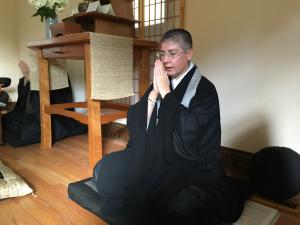
I was talking with an Zen teacher friend this past week and he mentioned that his next meeting was with a practitioner who wanted to become a Zen priest. “Any thoughts about what I might say to him?” he asked.
“Just discourage him,” I said.
We went on to talk about why someone might want to become a Zen priest these days. Lay teachers can do pretty much everything that priests can do to share the dharma, if that’s a person’s intention. So what’s the difference? What’s the point?
For about the last 150 years in our Japanese derived lineages, Zen priests have been able to have sex, drink alcohol, and eat meat, distinguishing themselves from most of the rest of the vinaya-following Buddhist world. I’ve written a bunch about this issue on this blog, including this post from 2009 that summarizes our tradition in transition.
The move during the Japanese Meiji period was influenced by the appearance in Japan of Western Protestant ministers who could do all of the above. “Modernizing” meant moving in the Protestant direction. That direction seems to have continued here in the West where the lifestyles of most Zen priests is hardly distinguishable from householders. Aitken Roshi, for instance, was a lay teacher who lived a life much more like a temple priest than most Zen priests these days.
The body practice of wearing robes has become much like the vestments worn by our Protestant friends rather than a practice of following the body of the teacher.
So what’s the point of being a Zen priest?
Simply put, to develop competency in the body practice/art form of Sōtō Zen. This follows Dōgen’s emphasis on body-in-the-body practice throughout the day-and-night with specific attention to the “how to manifest the dharma in this situation?” How to sit, walk, stand, bow, drink, eat, sleep, toilet, etc., in accord with the buddhadharma?
The idea that you might become a priest to have a credential to use for your benefit, dharmically or financially, or for the benefit of others, is whacked. It isn’t about you. It isn’t about them. It is about learning this important body art so that it be might passed on to the next generation.
It is hard to develop competency with this, to become an adept, without having some monastic experience, a couple 90-day angos, for example, is a nice start. That takes a deep dedication to the “how-to-do-it?” koan, foregoing professional advancement in other areas. Some people protest this and insist that although they choose not to do the training, they still have the right to be Sōtō Zen priests without such training, and it certainly appears that there are Sōtō Zen teachers that agree.
It is sad to see Sōtō Zen priest training reduced to an entitlement.
Kōun Franz writes (click here for more), “If you enter into a relationship with a teacher defining success as being understood (or seen), then you’re aiming in the wrong direction from the start. If I approach someone as a student, it is to get over myself and to see what the teacher sees—not in me (because that’s not where the teacher is looking) but in the Dharma. In this moment. In this action. I will study how my teacher sits, how she eats breakfast, how she greets people she doesn’t know, and I will imitate it all, not so that I can be her—I can’t—but so that I can step beyond my own story of who I am.”
In the same vein, to become a Sōtō Zen priest makes sense if you are studying with a Sōtō Zen priest and you want to see with the same eyes, hear with the same ears. Then you might enter into that practice fully, wearing the same clothes, walking the same walk, bowing the same bow.
This is the great strength of the Japanese Sōtō Zen training system. When I did some training in Japan, even though at that time I’d trained closely with a Japanese teacher, I found it to be so different from practice in the US, so much more of a body practice (also in a koan introspection place like Bukkokuji), for that and other reasons it was a really important for me and a great experience too – especially in retrospect. When I returned to the US it blew my mind how much talking happened in Zen here and how little “what we do with the body” was/is emphasized.
That occurred to me this week too as I watched someone who has been a Zen student for some years saunter into the zendo with his hands deep in his pockets. Uffta.
The importance of fuhgeddaboudit for a Zen priest
When Dòngshān was asked about why he only half agreed with his late teacher, he said, “To agree completely would be unfilial.”
And “Wúmén’s Cautions” begins with this: “Following rules, observing regulations – binds self without rope. Moving unhindered without fetter – a devil army outside the way.”
So what to do?
Just like zazen is a creative endeavor – how to play the instrument of this bodymind so that we are in tune with the buddhadharma – the body art of priest practice in Sōtō Zen is a creative endeavor. This point is made again and again in the classic literature. In the first case of the No Gate Barrier, “Zhàozhōu‘s Little Dog,” a monk asks a question and Zhàozhōu gives an answer that defies the orthodox teaching. His answer, “mu,” has so much juice that we’re drinking from it still.
In the second case, “Bǎizhàng’s Wild Fox,” a monk asks a question and the old Bǎizhàng answered with something close to the orthodox position. This teacher is reborn as wild fox for a long time. The message is clear – if we stick to the orthodox teaching, we spin around and around.
In this old koan literature, an accomplished Zen practitioner is referred to as an “adept,” sometimes with these characters: 作家, “author” in contemporary Chinese. So “adept” could also be translated (creatively) as “creative.”
I think this is a side of our practice not emphasized enough. We are born into a tradition, we master the tradition, and then we have to go beyond it in the particular circumstances of this life.
For a Sōtō Zen priest, in my view, it is important to become adept in the body practice of Sōtō Zen. But if you are thinking that if you just get your orthodox ceremonies down and undertaken, or stick to the formula for your school (Sōtō or Rinzai or what not), then you’ll be an adept, well, maybe – but are you truly filial?
_________
Previous Post

October 9, 2017
Luòpǔ With One Foot in the Grave
Next Post

October 25, 2017 Long-Distance Train: Remembering Beginning Zen Forty Years Ago
Browse Our Archives
Select a Category Uncategorized
Select a Month August 2023 July 2023 June 2023 May 2023 April 2023 March 2023 February 2023 January 2023 December 2022 November 2022 October 2022 September 2022 August 2022 July 2022 June 2022 May 2022 April 2022 March 2022 February 2022 January 2022 December 2021 November 2021 August 2021 June 2021 April 2021 February 2021 January 2021 November 2020 September 2020 August 2020 July 2020 June 2020 May 2020 April 2020 January 2020 December 2019 November 2019 August 2019 June 2019 May 2019 April 2019 February 2019 January 2019 December 2018 November 2018 October 2018 September 2018 August 2018 July 2018 June 2018 May 2018 April 2018 March 2018 February 2018 January 2018 December 2017 November 2017 October 2017 September 2017 August 2017 July 2017 June 2017 December 2016 October 2016 June 2016 April 2016 February 2016 January 2016 December 2015 November 2015 October 2015 August 2015 June 2015 May 2015 April 2015 March 2015 February 2015 January 2015 December 2014 November 2014 October 2014 September 2014 August 2014 July 2014 June 2014 May 2014 April 2014 March 2014 February 2014 January 2014 December 2013 November 2013 October 2013 September 2013 August 2013 July 2013 June 2013 May 2013 April 2013 March 2013 February 2013 January 2013 December 2012 November 2012 October 2012 September 2012 August 2012 July 2012 June 2012 May 2012 April 2012 March 2012 February 2012 January 2012 December 2011 November 2011 October 2011 September 2011 August 2011 July 2011 June 2011 May 2011 April 2011 March 2011 February 2011 January 2011 December 2010 November 2010 October 2010 September 2010 August 2010 July 2010 June 2010 May 2010 April 2010 March 2010 February 2010 January 2010 December 2009 November 2009 October 2009 September 2009 August 2009 July 2009 June 2009 May 2009 April 2009 March 2009 February 2009 January 2009 December 2008 November 2008 October 2008 September 2008 August 2008 July 2008 June 2008 May 2008
Follow Us!
TAKE THE
Religious Wisdom Quiz
How many books in the Bible are classified as poetry?
Select your answer to see how you score.
5 7 6 4
Related posts from Wild Fox Zen

Throw Yourself Into the House of Buddha: The...

New Vine Ghost Site for Dosho's Creative Endeavors...

Gnawing Through Qiánfēng’s Three Illnesses and Two Lights

"Why, Oh Why, Is My Practice Not Progressing?"
TRENDING AT PATHEOS Buddhist

On Taking Refuge in the Dharma
(Here I continue the feature of sharing talks and essays by teachers...

(Continuing my intention to share talks and essays by other members of Empty...
The Subtle Art of Bowing: A Dharma Discourse
(This presentation was first offered by my dear friend Dharma Holder Tom...

Internal Family Systems Can Heal you Mentally &...
How IFS Helped Me Stop Fighting Myself Internal Family Systems (IFS) is...

The Bible No One Spoke About: A Family’s...
A mysterious family Bible, unspoken faith, and a journey from curiosity to...

How Uncertainty Can Transform Your Life in 2025
Embracing Uncertainty: A New Year’s Resolution for the Brave As 2025 approaches,...
view all Buddhist blogs
Ad-Free & Subscriber Log-In Subscription Support
- About Us
- 2026 Calendar
- Videos
- Podcasts
- Library of World Religions
- Faith In Media Tracker
- Advertise With Us
- Write for Us
- Privacy Policy
- Terms of Service
- Do Not Sell My Data
- Contact Us
- Radiant Digital
- Manage Newsletter Subscriptions
- Unsubscribe From Notifications
- Sitemap
Copyright 2008-2026, Patheos. All rights reserved.
Subscription Support Ad-Free & Subscriber Log-In
Follow Patheos