
BuddhistCatholicContemplativeEvangelicalGeneral ChristianHinduJewishLatter-day SaintMuslimNew VisionsProgressive Christian
Beliefs
- Buddhist
- Catholic
- Contemplative
- Evangelical
- General Christian
- Hindu
- Jewish
- Latter-day Saint
- More Voices
- Muslim
- New Visions
- Pagan
- Progressive Christian
Topics
- Religion News
- Food and Religion
- Sports and Religion
- Religious Art
- Religious Music and Entertainment
- Religious Events
- History and Religion
- Style and Religion
- Politics and Religion
- Women in Religion
- Recreation Outdoors and Religion
- Business Finance and Religion
- Careers Workplace and Religion
- Education and Religion
- Family Parenting and Religion
- Health Fitness and Religion
- Home and Religion
- Relationships and Religion
- Technology and Religion
- Travel and Religion
Columnists
- Buddhist Columnists
- Business Finance and Religion Columnists
- Careers Workplace and Religion Columnists
- Catholic Columnists
- Contemplative Columnists
- Education and Religion Columnists
- Evangelists Columnists
- Family Parenting and Religion Columnists
- General Christian Columnists
- Health Fitness and Religion Columnists
- Hindu Columnists
- History and Religion Columnists
- Home and Religion Columnists
- Jewish Columnists
- More Voices Columnists
- Latter Day Columnists
- Muslim Columnists
- New Visions Columnists
- Nonreligious Columnists
- Pagan Columnists
- Politics and Religion Columnists
- Progressive Columnists
- Recreation Outdoors and Religion Columnists
- Relationships and Religion Columnists
- Religion News Columnists
- Religious Art Columnists
- Religious Events Columnists
- Religious Music and Entertainment Columnists
- Sports and Religion Columnists
- Style and Religion Columnists
- Technology and Religion Columnists
- Travel and Religion Columnists
- Women in Religion Columnists
Resource Library
- 2026 Calendar
- Library of World Religions
- The 100 Most Holy Places on Earth
- Patheos Answers
- Podcasts
- Videos
- Faith Leaders Database
- Anglican Episcopalian
- Bahai
- Baptist
- Buddhism
- Christianity
- Confucianism
- Eastern Orthodoxy
- Hinduism
- Holiness and Pentecostal
- ISKCON
- Islam
- Judaism
- Lutheran
- Methodist
- The Church of Jesus Christ of Latter-day Saints
- New Age
- Paganism
- Presbytarian and Reformed
- Protestantism
- Religion Behind the Scenes
- Roman Catholic
- Scientology
- Shia Islam
- Sikhism
- Sufism
- Sunni Islam
- Taoism
- Zen
- See all religions
Research Tools
 Ad-Free & Subscriber Log-In Subscription Support
Ad-Free & Subscriber Log-In Subscription Support
Follow Patheos 

- Trending:
- Forgiveness
- |
- Marriage
- |
- Consciousness
- |
- Death Penalty
- |
- Election
- |
- Halloween
 Wild Fox Zen
- Home
- Buddhist
- What is a Sūtra? Chirp, Buzz, Woof
What is a Sūtra? Chirp, Buzz, Woof
Last updated on: September 14, 2017 at 11:24 am by Dosho Port
What is a Sūtra? Chirp, Buzz, Woof 2017-09-14T11:24:23-06:00 Dosho Port
Patheos Explore the world's faith through different perspectives on religion and spirituality! Patheos has the views of the prevalent religions and spiritualities of the world.
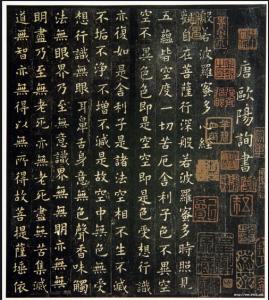
Zen doesn’t rely on words and Buddhism doesn’t have the equivalent of a Bible or Quran, although we have sūtras. Simply put, sūtras are Buddhist scriptures – and the plural there is important. Rather than just one book, we’ve got a large basket of teachings called “sūtra.”
How large?
That depends on what your definition of “sūtra” is. I’ll get to that in a moment.
Tanya Storch, if you’re interested, takes up many sūtra related issues in The History of Chinese Buddhist Bibliography: Censorship and Transformation of the Tripitaka. I’m working on a review, but finding it difficult to tie it up. So this post is a preface to that subsequent post.
Some scholars now think that Great Vehicle (aka, Mahayana) sūtras started to be verbally created and passed on sometime the century or two after the Buddha’s death, not four or five centuries later as was generally accepted last century. These Great Vehicle sūtras vary in length from one page to thousands of pages. Yes, ironically, people that spend a lot of time sitting down and shutting up in meditation, often have a lot to say. And although they’re often attributed to the Buddha, that seems unlikely. However, they’re not signed and so we don’t know who wrote them. Many went through multiple versions over decades or centuries with multiple authors and probably committees of authorship.
Despite (or because of) the difficulty in definition of what is and isn’t a sūtra, there have been various collections of texts, canons, especially in China (apparently the our Great Vehicle Indian predecessors weren’t interested in canons) that attempt to sort out what should be in and what shouldn’t. These canons ranged in size from hundreds to several thousand sūtra. Only a really small portion have been translated into English. For example, the Taishō Tripiṭaka, a Chinese Buddhist canon and its Japanese commentaries created in the 20th Century, has about 3,000 sūtra and commentaries. Only about .5% of these have been translated. I wonder how much difference it would make in our practice if the other .95% were translated. However we answer that question, it’s clear that we’re just at the beginning of this buddhadharma project in the nonChinese reading world.
It’s also important to note that our predecessors used sūtras not only for chanting and study, the primary uses in these parts today, but for their talisman qualities. The belief in sūtras for healing, protection, and miscellaneous magical effects was wide-spread, maybe even universal in the ancient world.
The word itself
In order to begin a reflection on sūtra, though, it is important to dig into the word itself. The Sanskrit word “sūtra” means “thread” or “cord” and it is related to the English word “suture.” So in Sanskrit, a sūtra was something that tied all of us together, stitched the wound of the separate self, and connected us with practitioners in the past, present, and future.
As the dharma moved northeast to China, they had a decision to make in terms of what word to use for this literature. They could transliterate the Sanskrit “sūtra” as they did with some other terms, but instead they chose the Chinese character 經, pronounced jīng, which happens to be the same character used for Confucian texts. It has a wide range of meanings, though, including “classics,” “sacred book,” “to pass through,” “warp (textile),” “longitude,” and “menstruation” (from the MDBG online dictionary).
David Hinton in Hunger Mountain: A Field Guide to Mind and Landscape has this about the etymology of sūtra/jīng /經:
“It was still very early in Chinese cultural history when these threads were first strung onto looms, and this idea of a warp became one of the culture’s foundational metaphors. The Shuo Wen graph for warp is composed of the image for silk on the left, together with those for water and earth (stylized version of the early oracle-bone form showing a lump of clay on a potter’s wheel). In the unnerving context of a Cosmos where everything is always in transformation and on its way somewhere else, even seemingly immutable facts like bedrock and mountain peaks, the threads of this earth-and-water warp were conceived as the enduring elements upon which the patterns of culture and consciousness are woven, and so the graph comes to mean such things as ‘the classics,’ ‘abiding concepts or principles,’ ‘customs.’”
If we were inclined, then, to find an English word or phrase for sūtra like the ancient Chinese, “earth-and-water warp” offers an interesting possibility. We could have “The Heart Earth-and-Water Warp,” the “Mountains and Rivers Earth-and-Water Warp,” and “The Sixth Ancestors Platform Earth-and-Water Warp.”
But to wrap up this warped post…
Back to the issue of what to include in the category “sūtra” or “earth-and-water warp.” Some see sūtra as the buddhadharma in the flesh. In Bukkyō (Buddha Teaching) Dogen said (Tanahashi translation),
“Endeavor of the way in the practicing community, and the practice of sitting zazen, is unquestionably a buddha sūtra from beginning to end and from end to beginning. In this way, you inscribe sūtras on bodhi leaves, and you inscribe sūtras on the surface of the void…. You receive sūtras and expound sūtras by means of mountains, rivers, and earth, or by means of the sun, the moon, and stars. Likewise, you hold sūtras and transmit sūtras with the self before the Empty Eon, or with body and mind before the original face. You actualize such sūtras by cracking open particles. You bring forth such sūtras by cracking open the world of phenomena.”
What is a sūtra?
“Bodhisattva Inexhaustible Intent
Asked a question in verse:
‘Oh World-honored One, of wondrous form,
I inquire again of that Buddha-child:
What are the causes of the name,
Regarding the Cries of the World?'”
Chirp, Buzz, Woof.
Previous Post

August 29, 2017
Introducing Buddhamental Dharmadisorder 101: Dharmasplaining
Next Post
September 11, 2017 What is the True Buddhadharma? Reflections on the Transmission to China
Browse Our Archives
Select a Category Uncategorized
Select a Month August 2023 July 2023 June 2023 May 2023 April 2023 March 2023 February 2023 January 2023 December 2022 November 2022 October 2022 September 2022 August 2022 July 2022 June 2022 May 2022 April 2022 March 2022 February 2022 January 2022 December 2021 November 2021 August 2021 June 2021 April 2021 February 2021 January 2021 November 2020 September 2020 August 2020 July 2020 June 2020 May 2020 April 2020 January 2020 December 2019 November 2019 August 2019 June 2019 May 2019 April 2019 February 2019 January 2019 December 2018 November 2018 October 2018 September 2018 August 2018 July 2018 June 2018 May 2018 April 2018 March 2018 February 2018 January 2018 December 2017 November 2017 October 2017 September 2017 August 2017 July 2017 June 2017 December 2016 October 2016 June 2016 April 2016 February 2016 January 2016 December 2015 November 2015 October 2015 August 2015 June 2015 May 2015 April 2015 March 2015 February 2015 January 2015 December 2014 November 2014 October 2014 September 2014 August 2014 July 2014 June 2014 May 2014 April 2014 March 2014 February 2014 January 2014 December 2013 November 2013 October 2013 September 2013 August 2013 July 2013 June 2013 May 2013 April 2013 March 2013 February 2013 January 2013 December 2012 November 2012 October 2012 September 2012 August 2012 July 2012 June 2012 May 2012 April 2012 March 2012 February 2012 January 2012 December 2011 November 2011 October 2011 September 2011 August 2011 July 2011 June 2011 May 2011 April 2011 March 2011 February 2011 January 2011 December 2010 November 2010 October 2010 September 2010 August 2010 July 2010 June 2010 May 2010 April 2010 March 2010 February 2010 January 2010 December 2009 November 2009 October 2009 September 2009 August 2009 July 2009 June 2009 May 2009 April 2009 March 2009 February 2009 January 2009 December 2008 November 2008 October 2008 September 2008 August 2008 July 2008 June 2008 May 2008
Follow Us!
TAKE THE
Religious Wisdom Quiz
What does the name "Samuel" mean?
Select your answer to see how you score.
Gifted by God Heard by God Saved by God Sent by God
Related posts from Wild Fox Zen

Throw Yourself Into the House of Buddha: The...

New Vine Ghost Site for Dosho's Creative Endeavors...

Gnawing Through Qiánfēng’s Three Illnesses and Two Lights

"Why, Oh Why, Is My Practice Not Progressing?"
TRENDING AT PATHEOS Buddhist

On Taking Refuge in the Dharma
(Here I continue the feature of sharing talks and essays by teachers...

(Continuing my intention to share talks and essays by other members of Empty...
The Subtle Art of Bowing: A Dharma Discourse
(This presentation was first offered by my dear friend Dharma Holder Tom...

Internal Family Systems Can Heal you Mentally &...
How IFS Helped Me Stop Fighting Myself Internal Family Systems (IFS) is...

The Bible No One Spoke About: A Family’s...
A mysterious family Bible, unspoken faith, and a journey from curiosity to...

How Uncertainty Can Transform Your Life in 2025
Embracing Uncertainty: A New Year’s Resolution for the Brave As 2025 approaches,...
view all Buddhist blogs
Ad-Free & Subscriber Log-In Subscription Support
- About Us
- 2026 Calendar
- Videos
- Podcasts
- Library of World Religions
- Faith In Media Tracker
- Advertise With Us
- Write for Us
- Privacy Policy
- Terms of Service
- Do Not Sell My Data
- Contact Us
- Radiant Digital
- Manage Newsletter Subscriptions
- Unsubscribe From Notifications
- Sitemap
Copyright 2008-2026, Patheos. All rights reserved.
Subscription Support Ad-Free & Subscriber Log-In
Follow Patheos