
BuddhistCatholicContemplativeEvangelicalGeneral ChristianHinduJewishLatter-day SaintMuslimNew VisionsProgressive Christian
Beliefs
- Buddhist
- Catholic
- Contemplative
- Evangelical
- General Christian
- Hindu
- Jewish
- Latter-day Saint
- More Voices
- Muslim
- New Visions
- Pagan
- Progressive Christian
Topics
- Religion News
- Food and Religion
- Sports and Religion
- Religious Art
- Religious Music and Entertainment
- Religious Events
- History and Religion
- Style and Religion
- Politics and Religion
- Women in Religion
- Recreation Outdoors and Religion
- Business Finance and Religion
- Careers Workplace and Religion
- Education and Religion
- Family Parenting and Religion
- Health Fitness and Religion
- Home and Religion
- Relationships and Religion
- Technology and Religion
- Travel and Religion
Columnists
- Buddhist Columnists
- Business Finance and Religion Columnists
- Careers Workplace and Religion Columnists
- Catholic Columnists
- Contemplative Columnists
- Education and Religion Columnists
- Evangelists Columnists
- Family Parenting and Religion Columnists
- General Christian Columnists
- Health Fitness and Religion Columnists
- Hindu Columnists
- History and Religion Columnists
- Home and Religion Columnists
- Jewish Columnists
- More Voices Columnists
- Latter Day Columnists
- Muslim Columnists
- New Visions Columnists
- Nonreligious Columnists
- Pagan Columnists
- Politics and Religion Columnists
- Progressive Columnists
- Recreation Outdoors and Religion Columnists
- Relationships and Religion Columnists
- Religion News Columnists
- Religious Art Columnists
- Religious Events Columnists
- Religious Music and Entertainment Columnists
- Sports and Religion Columnists
- Style and Religion Columnists
- Technology and Religion Columnists
- Travel and Religion Columnists
- Women in Religion Columnists
Resource Library
- 2026 Calendar
- Library of World Religions
- The 100 Most Holy Places on Earth
- Patheos Answers
- Podcasts
- Videos
- Faith Leaders Database
- Anglican Episcopalian
- Bahai
- Baptist
- Buddhism
- Christianity
- Confucianism
- Eastern Orthodoxy
- Hinduism
- Holiness and Pentecostal
- ISKCON
- Islam
- Judaism
- Lutheran
- Methodist
- The Church of Jesus Christ of Latter-day Saints
- New Age
- Paganism
- Presbytarian and Reformed
- Protestantism
- Religion Behind the Scenes
- Roman Catholic
- Scientology
- Shia Islam
- Sikhism
- Sufism
- Sunni Islam
- Taoism
- Zen
- See all religions
Research Tools
 Ad-Free & Subscriber Log-In Subscription Support
Ad-Free & Subscriber Log-In Subscription Support
Follow Patheos 

- Trending:
- Forgiveness
- |
- Marriage
- |
- Consciousness
- |
- Death Penalty
- |
- Election
- |
- Halloween
 Wild Fox Zen
- Home
- Buddhist
- The Record of Going Easy: Who is Arising-Extinguishing?
The Record of Going Easy: Who is Arising-Extinguishing?
Last updated on: January 25, 2022 at 8:13 pm by Dosho Port
The Record of Going Easy: Who is Arising-Extinguishing? 2022-01-25T20:13:28-06:00 Dosho Port
Patheos Explore the world's faith through different perspectives on religion and spirituality! Patheos has the views of the prevalent religions and spiritualities of the world.
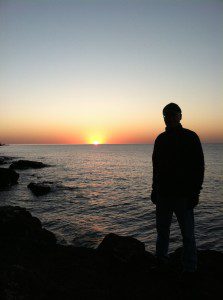 Arising-extinguishing is the activity of this life-death. The kōan that I’ll be presenting today asks this question: “Who is arising-extinguishing?”
First, a bit of background about the collection this kōan arises in – The Record of Going Easy, 從容錄, (Chinese: Cóngróng lù, Japanese: Shōyōroku), translated into English as The Book of Serenity and The Book of Equanimity. In my view, The Record of Going Easy expresses the characters fairly and better conveys what the text is about – going easy in the midst of arising-extinguishing.
The one-hundred kōans and companion verses for The Record of Going Easy were written by Hongzhi Zhengjue (1091–1157). Wansong Xingxiu (1166–1246), a descendent in Hongzhi’s Caodong/Sōtō lineage, added a preface, notes to each line of the kōans and a note to each line of Hongzhi’s verses. In addition, Wansong added an extended commentary to the kōans and verses (not translated here but available in Thomas Cleary’s Book of Serenity). It is a massive dharma-literary achievement.
For an excellent discussion of the background for the text, see Steven Heine’s Chan Rhetoric of Uncertainty in the Blue Cliff Record*: Sharpening a Sword at the Dragon Gate*, pp. 228-235.
The Record of Going Easy was first published in 1224, just a few years before the Gateless Barrier. Dai-un Harada Roshi (October 13, 1871 – December 12, 1961), the Sōtō monk who trained in Rinzai, completed the kōan curriculum, and then adapted it for use with practitioners at Hōshinji, a Sōtō training monastery in Obama, Japan, seems to have first used The Record of Going Easy as a text for modern kōan introspection.
About Hongzhi, Wansong, and One Theme of The Record of Going Easy
Hongzhi was a renowned figure in the hay-day the Caodong/Sōtō lineage, a prolific writer, and frequently quoted by Dōgen, who referred to him as the “old buddha” – a tagline Dōgen used sparingly. Hongzhi’s work is best known now in English through Taigen Leighton’s excellent translation, Cultivating the Empty Field.
Wansong means “Old Man” – a name he gave to himself when living at “Ten Thousand Pines,” one of his hermitages. Wansong’s turbulent times included Mongol invasions, famines, and tough times for regular people and the buddhadharma. Yet, his voice is light, humorous, and earthy. Through translating, I’ve developed a great fondness for him.
Before Wansong died, he wrote this verse:
Eighty-one years – just this one expression:
All people are precious.
Do not act mistakenly.
One of the central themes running through The Record of Going Easy, of which the present case is an example, are the dangers of samadhi, steady states of concentration, specifically about subtle clinging to quiet mind (for starters, see cases 7, 11, 23, 26, and 96). This could be a result of an earlier focus in the Caodong lineage, silent illumination, that came under attack by Dahui Zonggao (1089–1163) and others for leading people into quietude but not realization. Indeed, Hongzhi was one of the most well-known proponents of the silent illumination method.
It seems that the propensity toward silent illumination passed from the Chinese Caodong line to the Japanese Sōtō school. Hakuin Ekaku (1686 – 1768) was critical of Sōtō practitioners who have “…submerged themselves in the dead, stagnant water of quiescent, silent illumination Zen.”
But let’s go back to China. After Hongzhi, the criticism that came from Dahui and his successors, led the Caodong lineage into decline. The Record of Going Easy, some sixty-years after Hongzhi’s death, was an effort to rehabilitate the Caodong lineage, distance it from the one-sided emphasis on silence, and shift the narrative to emphasize realizing wisdom.
Dōgen, a contemporary of Wansong, took up the same task with “practice-enlightenment” and reframed silent illumination (a phrase not found in Dōgen’s written works) as shikantaza, “just sitting,” or more often shinjin datsuraku, “body-mind drop off.” Dōgen’s most explicit unpacking of this issue, where he rewrites and invigorates a poem by Hongzhi, is in his “Zazenshin” or “Healing Point of Sitting Zen.”
In the kōan below, when Hongzhi begins his verse with “Hacking and cutting off an old tangle of vines,” referring to the zazen process of cutting through the complexities of discursive consciousness aimed at silence, Wansong notes, “Branches and tendrils are reborn.” I see him here with a waggish grin – “Dude, you can suppress grass (delusion) by smothering it with a big rock, cutting off the mind road (hiding in silence), but sooner or later the grass will have its way.”
Luóshān arising-extinguishing
This kōan’s title comes from the monk raising the question rather than the norm – the teacher responding. The teacher here is Yántóu (828–887), one of the great lights in the Golden Age of Ch’an. Although his lineage ran through Shitou and Yaoshan, a branch of what eventually became a branch of the Caodong/Sōtō line, and continued through Luóshān**,** his dramatic presentations, like the shout in this kōan, are reminiscent of the Linchi/Rinzai line.
Like Wansong, Yántóu lived in turbulent days, through persecutions and failed states. Once his temple was raided by bandits and all the monks evacuated – but Yántóu simply took his seat. One of the bandits ran him through, and Yántóu’s death roar could be heard for ten miles.
Wansong’s introduction first offers the promise of awakened dharma practice – “One word of truth arrives and turns the ordinary into the sacred.” Wansong here uplifts the transformative possibility of wholehearted training, emphasizing realizing wisdom, but doesn’t avoid “Holding a stick, calling the dog,” a comment he makes about another teacher in “Case 41: Luòpǔ With One Foot in the Grave.”
Then he directs us to the fundamental point – “What is the one point?”
If you can respond clearly and strongly to this question, your dharma work is done. For the moment.
Luóshān, who eventually became a successor of Yántóu, was gifted with a burning question that he’d asked at least one other teacher, Shishuang (807-888), “How is it when arising-extinguishing is incessant?”
Shishuang, whose teaching resembled the later silent illuminationists, responded “Cease all activity, do nothing whatever, be like a thought that lasts ten thousand years, be so cold and lifeless the spirits of the dead will come sighing around you, be a bolt of fine white silk, be dead ashes inside a censer in a forgotten old graveyard.”
Perhaps Luóshān’s mind had settled to a deep point of clarity – just arising-extinguishing – but he felt stuck in that state, so he was looking for a turning word to thoroughly open his heart. Hongzhi, in his verse, acknowledged Luóshān’s zazen process, returning to the source through hacking, cutting, and smashing the mind road. And, yet, there’s still a spiritual masquerade, hiding in the mist.
Yántóu first got Luóshān’s attention with a shout like the thunder, the sound mythically attributed to dragons. The ancient Chinese believed that dragons changed not just their skin, but their bones – a metaphor for the transformation of dharma practice. Thus, Hongzhi praises Luóshān’s upcoming transformation with this: “Dragons ride the thunder and change their bones.”
So Yántóu first thunders and then offers Luóshān a key question: “Who is arising-extinguishing?”
It is the same “who?” that sees, hears, smells, tastes, touches, and thinks.
Who is it?
Wild Fox Zen Translation, Record of Going Easy, “Case 43: Luóshān Arising-Extinguishing”
Presented to the assembly, saying:
Even one touch will turn one granule of cinnabar into gold. One word of truth arrives and turns the ordinary into the sacred. If [you] know that gold and iron are not two, that ordinary and sacred have the same source, one point for sure – you’ll have no use for them! Yet say, what is the one point?
Raised:
Luóshān asked Yántóu, “How is it when arising-extinguishing is incessant?”
Rubbing the back with gold erases the clay person.
Tóu cried out and said,
Stars fall, clouds disperse.
“Who is arising-extinguishing?”
Due to grievance, not knowing.
Verse:
Hacking and cutting off an old tangle of vines,
Branches and tendrils are reborn.
Smashing the fox den,
Even more spit – stubborn saliva.
A leopard drapes their shoulders with fog, changing their culture.
Declining to shed its fur.
Dragons ride the thunder and change their bones.
Departing, transforming the body’s casing.
Tut!
One shout, ten-thousand pivot, three imperial eras – all deafened.
Arising-extinguishing – what matter is this?
To be hospitable is to not neglect one’s partner.
———
Previous Post
June 28, 2017
If You Get Silly Good at Zen, Will You Still Suffer?
Next Post

July 6, 2017 Did Dōgen Drop and What?
Browse Our Archives
Select a Category Uncategorized
Select a Month August 2023 July 2023 June 2023 May 2023 April 2023 March 2023 February 2023 January 2023 December 2022 November 2022 October 2022 September 2022 August 2022 July 2022 June 2022 May 2022 April 2022 March 2022 February 2022 January 2022 December 2021 November 2021 August 2021 June 2021 April 2021 February 2021 January 2021 November 2020 September 2020 August 2020 July 2020 June 2020 May 2020 April 2020 January 2020 December 2019 November 2019 August 2019 June 2019 May 2019 April 2019 February 2019 January 2019 December 2018 November 2018 October 2018 September 2018 August 2018 July 2018 June 2018 May 2018 April 2018 March 2018 February 2018 January 2018 December 2017 November 2017 October 2017 September 2017 August 2017 July 2017 June 2017 December 2016 October 2016 June 2016 April 2016 February 2016 January 2016 December 2015 November 2015 October 2015 August 2015 June 2015 May 2015 April 2015 March 2015 February 2015 January 2015 December 2014 November 2014 October 2014 September 2014 August 2014 July 2014 June 2014 May 2014 April 2014 March 2014 February 2014 January 2014 December 2013 November 2013 October 2013 September 2013 August 2013 July 2013 June 2013 May 2013 April 2013 March 2013 February 2013 January 2013 December 2012 November 2012 October 2012 September 2012 August 2012 July 2012 June 2012 May 2012 April 2012 March 2012 February 2012 January 2012 December 2011 November 2011 October 2011 September 2011 August 2011 July 2011 June 2011 May 2011 April 2011 March 2011 February 2011 January 2011 December 2010 November 2010 October 2010 September 2010 August 2010 July 2010 June 2010 May 2010 April 2010 March 2010 February 2010 January 2010 December 2009 November 2009 October 2009 September 2009 August 2009 July 2009 June 2009 May 2009 April 2009 March 2009 February 2009 January 2009 December 2008 November 2008 October 2008 September 2008 August 2008 July 2008 June 2008 May 2008
Follow Us!
TAKE THE
Religious Wisdom Quiz
What does the Hebrew title for Psalms, "Tehillim," mean?
Select your answer to see how you score.
Poems Praises Prayers Wisdom
Related posts from Wild Fox Zen

Throw Yourself Into the House of Buddha: The...

New Vine Ghost Site for Dosho's Creative Endeavors...

Gnawing Through Qiánfēng’s Three Illnesses and Two Lights

"Why, Oh Why, Is My Practice Not Progressing?"
TRENDING AT PATHEOS Buddhist

On Taking Refuge in the Dharma
(Here I continue the feature of sharing talks and essays by teachers...

(Continuing my intention to share talks and essays by other members of Empty...
The Subtle Art of Bowing: A Dharma Discourse
(This presentation was first offered by my dear friend Dharma Holder Tom...

Internal Family Systems Can Heal you Mentally &...
How IFS Helped Me Stop Fighting Myself Internal Family Systems (IFS) is...

The Bible No One Spoke About: A Family’s...
A mysterious family Bible, unspoken faith, and a journey from curiosity to...

How Uncertainty Can Transform Your Life in 2025
Embracing Uncertainty: A New Year’s Resolution for the Brave As 2025 approaches,...
view all Buddhist blogs
Ad-Free & Subscriber Log-In Subscription Support
- About Us
- 2026 Calendar
- Videos
- Podcasts
- Library of World Religions
- Faith In Media Tracker
- Advertise With Us
- Write for Us
- Privacy Policy
- Terms of Service
- Do Not Sell My Data
- Contact Us
- Radiant Digital
- Manage Newsletter Subscriptions
- Unsubscribe From Notifications
- Sitemap
Copyright 2008-2026, Patheos. All rights reserved.
Subscription Support Ad-Free & Subscriber Log-In
Follow Patheos