
BuddhistCatholicContemplativeEvangelicalGeneral ChristianHinduJewishLatter-day SaintMuslimNew VisionsProgressive Christian
Beliefs
- Buddhist
- Catholic
- Contemplative
- Evangelical
- General Christian
- Hindu
- Jewish
- Latter-day Saint
- More Voices
- Muslim
- New Visions
- Pagan
- Progressive Christian
Topics
- Religion News
- Food and Religion
- Sports and Religion
- Religious Art
- Religious Music and Entertainment
- Religious Events
- History and Religion
- Style and Religion
- Politics and Religion
- Women in Religion
- Recreation Outdoors and Religion
- Business Finance and Religion
- Careers Workplace and Religion
- Education and Religion
- Family Parenting and Religion
- Health Fitness and Religion
- Home and Religion
- Relationships and Religion
- Technology and Religion
- Travel and Religion
Columnists
- Buddhist Columnists
- Business Finance and Religion Columnists
- Careers Workplace and Religion Columnists
- Catholic Columnists
- Contemplative Columnists
- Education and Religion Columnists
- Evangelists Columnists
- Family Parenting and Religion Columnists
- General Christian Columnists
- Health Fitness and Religion Columnists
- Hindu Columnists
- History and Religion Columnists
- Home and Religion Columnists
- Jewish Columnists
- More Voices Columnists
- Latter Day Columnists
- Muslim Columnists
- New Visions Columnists
- Nonreligious Columnists
- Pagan Columnists
- Politics and Religion Columnists
- Progressive Columnists
- Recreation Outdoors and Religion Columnists
- Relationships and Religion Columnists
- Religion News Columnists
- Religious Art Columnists
- Religious Events Columnists
- Religious Music and Entertainment Columnists
- Sports and Religion Columnists
- Style and Religion Columnists
- Technology and Religion Columnists
- Travel and Religion Columnists
- Women in Religion Columnists
Resource Library
- 2026 Calendar
- Library of World Religions
- The 100 Most Holy Places on Earth
- Patheos Answers
- Podcasts
- Videos
- Faith Leaders Database
- Anglican Episcopalian
- Bahai
- Baptist
- Buddhism
- Christianity
- Confucianism
- Eastern Orthodoxy
- Hinduism
- Holiness and Pentecostal
- ISKCON
- Islam
- Judaism
- Lutheran
- Methodist
- The Church of Jesus Christ of Latter-day Saints
- New Age
- Paganism
- Presbytarian and Reformed
- Protestantism
- Religion Behind the Scenes
- Roman Catholic
- Scientology
- Shia Islam
- Sikhism
- Sufism
- Sunni Islam
- Taoism
- Zen
- See all religions
Research Tools
 Ad-Free & Subscriber Log-In Subscription Support
Follow Patheos 

- Trending:
- Advent
- |
- Forgiveness
- |
- Thanksgiving
- |
- Election
- |
- Seasonal Holidays
- |
- Marriage
 Wild Fox Zen
- Home
- Buddhist
- The Mu Koan and How Some Zennists Just Wanna Have Fun
The Mu Koan and How Some Zennists Just Wanna Have Fun
Last updated on: February 5, 2023 at 7:08 am by Dosho Port
The Mu Koan and How Some Zennists Just Wanna Have Fun 2023-02-05T07:08:20-06:00 Dosho Port
Patheos Explore the world's faith through different perspectives on religion and spirituality! Patheos has the views of the prevalent religions and spiritualities of the world.
 I’m going to roll back into the “mu koan” here.
One thing I’m not going to do is try to convince any nonkoan Soto practitioners that koan training is in line with Soto Zen or that contemporary Soto Zen and Dogen’s Zen are only indirectly related. I renounce these topics! They are among my favorite topics, to be sure, but let’s look at the data. It seems that I wrote about a thousand posts about these two themes in the earlier incarnation of this blog with the 100% predictable result that those who already agreed continue to agree and those who didn’t continued not to.
So in the new life of this Wild Fox Zen blog, let’s move on!
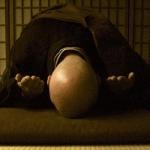
Working with the mu koan is a really wonderful practice, you see, and it’s possible to dig into it just like Tigger, digging his sweeping. I first took it up with the delightful Zen teacher, Harada Tangen Roshi, in 1991. I’d been practicing just-sitting Zen for about fourteen years at the time I wandered into Bukkokuji. First time I saw Tangen Roshi, I was standing around the dinner table with the other monks, silently, of course, eyes cast down, hands in shashu, looking like this (really looking a lot like this, although I peeked up):

Tangen Roshi energetically slid open the sliding door and walked to his place with such presence that my first impression was that he was thoroughly tickled just to be walking across the the dining hall. After a short time, a couple weeks, I think, he offered me the mu koan and I took it up. One thing about the mu koan that you should know, especially if you’ve been practicing just-sitting Zen for a while, is that it is provocative. (I can hear some mu students hollering “Amen.”)
It’s likely that it’ll stir shit (aka, gold) up and your practice will deepen rapidly (Zen consumer warning: we tend not to get the latter without the former). And those are just a couple reasons why you really need to be working with a teacher that you trust.
If you do throw yourself into mu, and as Wumen puts it, “Be skillful for a long, long time,” sooner or later it will break open. “Naturally, you’ll succeed, breaking inside and outside,” says Wumen. Some of those with the nonkoan Soto persuasion call this something special and that working on the mu koan is a gaining idea to get some special experience. Special, special, special.
Well, as I was saying, if you throw yourself into it as if your hair were on fire, you might even get a taste of reality and if you call reality something special, then bring it on – for all living beings!
But in my enthusiasm, I’ve forgotten to explain what the mu koan is. It is this:
A monk asked Zhàozhōu, ”Even a little dog has the Buddha Nature, no?”
Zhou said, ”No.”
That’s it. And what a fuss it has created across the ages and within the lives of practitioners. Probably more people have tasted reality through playing with this koan, and particularly just this one word mu, than any other way. Really. What does mu mean? Yes, it means “no,” “not,” “negation” and functions grammatically like “non” in English. A new student around here who was raised in China for a while, says “without” is the best translation. David Hinton (see below) likes “absence.”
How should you work with it? First, like I said, find a teacher. Then know the instructions will, I hope, be insufficient and you’ll have to get creative. Whatever you do, don’t just take my word for the power of mu.
How about some instruction from Zen master Rujing who was (clearing throat) Dogen’s teacher. You can find another working of this from James Myo-un Ford Roshi here.
Here’s the full short text of what he said and then I’ll comment.
“The one word mu – an iron broom. Sweeping, the delusion swirls around. Swirling the delusions around, sweeping. Turning, sweeping, turning. In the place you cannot sweep, do your utmost to sweep. Day and night, backbone straight, continuously without stopping. Bold and powerful, do not let up. Suddenly, sweeping breaks open the great empty sky. Ten thousand distinctions, a thousand differences are exhausted with thorough-going opening.”
This is my translation. If you want to see others, try Cleary in No Barrier, p. 3, and Heine, in Like Cats and Dogs, p. 64-65.
So let’s walk through this. The “iron broom” is now a martial art practice where the practitioner bends the knees so that the legs form the broom and the spine the broom handle. I don’t know if that was true in Rujing‘s day, but in any case, Rujing seems to be suggesting an embodied practice of dancing with mu. Be the broom. Be “without.”
Indeed, and again I don’t know if this was in Rujing’s mind or not, but the character for 無 developed from the character for a woman dancing and as the character morphed, cattails and fire where added (see the “Absence” chapter of David Hinton’s wonderful book, Hunger Mountain for more).
This dancing with cattails and fire will be provocative. Delusions will get stirred up and yet away we dance, like waltzing Matilda, go waltzing Matilda with me (see below for me adding a James Ford-ish touch with a music video at the end). And then there’s this diligence part. Keep it up. Let go of checking Facebook every time you get a twitch. Focus. It might be a while. But sooner or later, reality will be you.
So here’s to doing our practice – and living our lives in this one beautiful and terrifying world – taking care and uplifting each other.
Previous Post

June 9, 2017
The End of Zen Exceptionalism
Next Post

June 13, 2017 Flipping Over and Decoding Chinese Characters for Zen Translations
Browse Our Archives
Select a Category Uncategorized
Select a Month August 2023 July 2023 June 2023 May 2023 April 2023 March 2023 February 2023 January 2023 December 2022 November 2022 October 2022 September 2022 August 2022 July 2022 June 2022 May 2022 April 2022 March 2022 February 2022 January 2022 December 2021 November 2021 August 2021 June 2021 April 2021 February 2021 January 2021 November 2020 September 2020 August 2020 July 2020 June 2020 May 2020 April 2020 January 2020 December 2019 November 2019 August 2019 June 2019 May 2019 April 2019 February 2019 January 2019 December 2018 November 2018 October 2018 September 2018 August 2018 July 2018 June 2018 May 2018 April 2018 March 2018 February 2018 January 2018 December 2017 November 2017 October 2017 September 2017 August 2017 July 2017 June 2017 December 2016 October 2016 June 2016 April 2016 February 2016 January 2016 December 2015 November 2015 October 2015 August 2015 June 2015 May 2015 April 2015 March 2015 February 2015 January 2015 December 2014 November 2014 October 2014 September 2014 August 2014 July 2014 June 2014 May 2014 April 2014 March 2014 February 2014 January 2014 December 2013 November 2013 October 2013 September 2013 August 2013 July 2013 June 2013 May 2013 April 2013 March 2013 February 2013 January 2013 December 2012 November 2012 October 2012 September 2012 August 2012 July 2012 June 2012 May 2012 April 2012 March 2012 February 2012 January 2012 December 2011 November 2011 October 2011 September 2011 August 2011 July 2011 June 2011 May 2011 April 2011 March 2011 February 2011 January 2011 December 2010 November 2010 October 2010 September 2010 August 2010 July 2010 June 2010 May 2010 April 2010 March 2010 February 2010 January 2010 December 2009 November 2009 October 2009 September 2009 August 2009 July 2009 June 2009 May 2009 April 2009 March 2009 February 2009 January 2009 December 2008 November 2008 October 2008 September 2008 August 2008 July 2008 June 2008 May 2008
Follow Us!
TAKE THE
Religious Wisdom Quiz
What is Jesus' most famous sermon called?
Select your answer to see how you score.
The Parable of the Sower The Sermon on the Mount The Last Supper The Beatitudes
Related posts from Wild Fox Zen

Gnawing Through Qiánfēng’s Three Illnesses and Two Lights

The Vigorous Nature of Zen Work

Plucking a Blade of Grass: The Wondrous Dharma...
Dōgen’s Instruction for Householder Zen Training
TRENDING AT PATHEOS Buddhist
On Taking Refuge in the Dharma
(Here I continue the feature of sharing talks and essays by teachers...
(Continuing my intention to share talks and essays by other members of Empty...
The Subtle Art of Bowing: A Dharma Discourse
(This presentation was first offered by my dear friend Dharma Holder Tom...

Internal Family Systems Can Heal you Mentally &...
How IFS Helped Me Stop Fighting Myself Internal Family Systems (IFS) is...

The Bible No One Spoke About: A Family’s...
A mysterious family Bible, unspoken faith, and a journey from curiosity to...

How Uncertainty Can Transform Your Life in 2025
Embracing Uncertainty: A New Year’s Resolution for the Brave As 2025 approaches,...
view all Buddhist blogs
Ad-Free & Subscriber Log-In Subscription Support
- About Us
- 2026 Calendar
- Videos
- Podcasts
- Library of World Religions
- Faith In Media Tracker
- Advertise With Us
- Write for Us
- Privacy Policy
- Terms of Service
- Do Not Sell My Data
- Contact Us
- Radiant Digital
- Manage Newsletter Subscriptions
- Unsubscribe From Notifications
- Sitemap
Copyright 2008-2026, Patheos. All rights reserved.
Subscription Support Ad-Free & Subscriber Log-In
Follow Patheos