
BuddhistCatholicContemplativeEvangelicalGeneral ChristianHinduJewishLatter-day SaintMuslimNew VisionsProgressive Christian
Beliefs
- Buddhist
- Catholic
- Contemplative
- Evangelical
- General Christian
- Hindu
- Jewish
- Latter-day Saint
- More Voices
- Muslim
- New Visions
- Pagan
- Progressive Christian
Topics
- Religion News
- Food and Religion
- Sports and Religion
- Religious Art
- Religious Music and Entertainment
- Religious Events
- History and Religion
- Style and Religion
- Politics and Religion
- Women in Religion
- Recreation Outdoors and Religion
- Business Finance and Religion
- Careers Workplace and Religion
- Education and Religion
- Family Parenting and Religion
- Health Fitness and Religion
- Home and Religion
- Relationships and Religion
- Technology and Religion
- Travel and Religion
Columnists
- Buddhist Columnists
- Business Finance and Religion Columnists
- Careers Workplace and Religion Columnists
- Catholic Columnists
- Contemplative Columnists
- Education and Religion Columnists
- Evangelists Columnists
- Family Parenting and Religion Columnists
- General Christian Columnists
- Health Fitness and Religion Columnists
- Hindu Columnists
- History and Religion Columnists
- Home and Religion Columnists
- Jewish Columnists
- More Voices Columnists
- Latter Day Columnists
- Muslim Columnists
- New Visions Columnists
- Nonreligious Columnists
- Pagan Columnists
- Politics and Religion Columnists
- Progressive Columnists
- Recreation Outdoors and Religion Columnists
- Relationships and Religion Columnists
- Religion News Columnists
- Religious Art Columnists
- Religious Events Columnists
- Religious Music and Entertainment Columnists
- Sports and Religion Columnists
- Style and Religion Columnists
- Technology and Religion Columnists
- Travel and Religion Columnists
- Women in Religion Columnists
Resource Library
- 2026 Calendar
- Library of World Religions
- The 100 Most Holy Places on Earth
- Patheos Answers
- Podcasts
- Videos
- Faith Leaders Database
- Anglican Episcopalian
- Bahai
- Baptist
- Buddhism
- Christianity
- Confucianism
- Eastern Orthodoxy
- Hinduism
- Holiness and Pentecostal
- ISKCON
- Islam
- Judaism
- Lutheran
- Methodist
- The Church of Jesus Christ of Latter-day Saints
- New Age
- Paganism
- Presbytarian and Reformed
- Protestantism
- Religion Behind the Scenes
- Roman Catholic
- Scientology
- Shia Islam
- Sikhism
- Sufism
- Sunni Islam
- Taoism
- Zen
- See all religions
Research Tools
 Ad-Free & Subscriber Log-In Subscription Support
Ad-Free & Subscriber Log-In Subscription Support
Follow Patheos 

- Trending:
- Forgiveness
- |
- Marriage
- |
- Consciousness
- |
- Death Penalty
- |
- Election
- |
- Halloween
 Wild Fox Zen
- Home
- Buddhist
- If You Get Silly Good at Zen, Will You Still Suffer?
If You Get Silly Good at Zen, Will You Still Suffer?
Last updated on: January 25, 2022 at 8:14 pm by Dosho Port
If You Get Silly Good at Zen, Will You Still Suffer? 2022-01-25T20:14:08-06:00 Dosho Port
Patheos Explore the world's faith through different perspectives on religion and spirituality! Patheos has the views of the prevalent religions and spiritualities of the world.
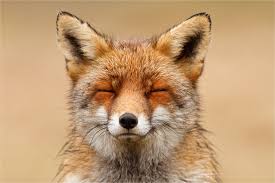 Can Zen practice, even if you’re really good at it, lead us to freedom from suffering within the wild fluxes and flows of this life (aka, cause and effect or karma)?
Remember that when the Buddha realized enlightenment, he thought that what he’d seen was too subtle for most. His post-enlightenment Plan A was to just sit under the bodhi tree and bliss out until his physical body’s karma was exhausted. But when he actually looked around at real people, he saw that he needed a Plan B, so up he stood and … here we are.
In our Zen tradition, the subtlety of this central issue of freedom is presented in the Wild Fox Kōan – a wild story from ancient China, involving a fox and a Zen master. In this post, I will be addressing only the subtlety of the first movement in the dreamlike story – the first question and response. You’ll find a new translation of the full story at the bottom of this post.
A quick summary of the first movement of the Wild Fox Kōan
A fox, who looks like an old man (who might also be an old man who looks like a fox), shows up after a dharma talk and questions Zen teacher Bǎizhàng (720–814). The fox/man, it turns out, is the former self of Bǎizhàng, so the story is about a confrontation of past and present. The fox/man’s wild tale is that long ago he had been the teacher at this very place and because a Zen teacher took the name of the mountain they lived on, both the former teacher and the latter teacher would have the same name – Bǎizhàng. The former Bǎizhàng was asked if a person of great practice could avoid causation. Because of his answer, he was reborn as a wild (or “feral”) fox for five hundred lives. The former Bǎizhàng then asks the present Bǎizhàng to say a turning word (we’re talking to ourselves here) and free him. The Zen master does. A key question in the kōan is if a person of great practice avoids the law of cause and effect.

“Not falling” or “not avoiding” – subtlety of freedom in the Wild Fox Kōan
The common translation of the kōan has the first question like this:
A monk asked, “Does an enlightened person fall into cause and effect or not?”
The fox/man, old Bǎizhàng, answered, “Such a person does not fall into of cause and effect.”
This provides for a clear “wrong” answer that leads to five-hundred years as a shape-shifting, occultish, fox and stands in juxtaposition with the “right” answer that leads to becoming a human being. That right answer comes next: “Such a one does not obscure cause and effect.”
The key character here is 落, commonly translated as “fall,” as in “Such a person does not fall into the law of cause and effect.” Here’s the kicker:落 also means “leave out” or “avoid.” So the response by the former Bǎizhàng can also be rendered like this: “Such a person does not avoid the law of cause and effect.”
Now, there’s quite a difference between “not fall into cause and effect” and “not avoid cause and effect.” The second reading adds an important layer of subtlety to the kōan. The former Bǎizhàng‘s answer is (almost) exactly the same as the present Bǎizhàng‘s – “not avoid” (slightly less definitive) vs. “not obscure”(slightly more definitive). For kōan introspection, rendering 落 “fall” might obscure the subtle difference/identity of the kōan and the conundrum of this life. Rendering 落 as “avoid” exposes this radical and subtle shift in meaning and (almost) collapses the distinction between the “wrong” answer that led to a ghoulish ground-hog’s-day rebirth in karma and the “right” answer that leads to freedom as a practicing human being.
The so-what of subtlety
Seung Sahn said, “If you open your mouth, it is a mistake. If you keep your mouth closed, then, that too, is a mistake.”
Answer A – wrong! Answer B – wrong ! Answer C – sometimes there is no answer C.
In real life, wrong and right are sometimes just so subtle. There’s light action, dark action and indeterminate action – the grey. You say what seems to be the right thing and get slammed – “Wrong!” “Go directly to five-hundred lives as a wild fox!” And sometimes in life, it seems that there are just two choices – both wrong.
Then, even a person of great practice falls down by, oh, so subtly avoiding, evading, obscuring the vital truth of this life right before us now – wrong and wrong. This points to the need for great practice because only such great practice turns the subtlety of suffering and hears and sees clearly.
And that’s the place – in the subtlety and changing faces of right and wrong – the kōan really becomes a kōan worthy of our attention, life after life. As Wúmén comments, “If in regards to this you can succeed in obtaining a single eye, you will learn how the former Bǎizhàng gained five-hundred rebirths of elegance.”
The key kōan points include the following: Say a word and free the wild fox now! If you can do that, meet your former self and say a word to free her/him from their wild fox body! And how is this person of great practice free here and now?
Dōgen, the wild fox
Reading the former Bǎizhàng‘s answer as “not avoid” also opens up the play in the Zen literature around this kōan. Not only will Wúmén’s comment (see below) come alive but Dogen’s comments too.
In Dōgen’s “Deep Belief in Cause and Effect (Jinshin inga),” he wrote, “More than thirty masters have written poems or commentaries on this story. Not one of them understands that saying ‘a person of great practice does not avoid cause and effect’ is a denial of cause and effect.”
Dōgen takes on some of the greats – Dahui, Yuanwu, and Hongzhi (who he often refers to as an “old buddha” so this is especially surprising).
I see Dōgen here as going into the swirl of thinking and hiding a wicked grin. He says that if you see the former Bǎizhàng’s statement, “not avoiding,” as affirming cause and effect, then you deny cause and effect, because there were karmic effects that followed from the former Bǎizhàng’s “not avoiding.” Therefore, it must have been a denial of cause and effect. Although it wasn’t.
In the swirl affirmation and negation, blame and shame, how can you free the wild fox?
Wild Fox Zen Translation Gateless Barrier, “Case 2: Baizhang’s Wild Fox”
Every time master Bǎizhàng spoke to the assembly, an old man was there listening. When they left, he would too. Then one day, he didn’t leave. Bǎizhàng asked, “Who is this, standing here before me?”
The old man said, “I am not human. In the past, in the time of Kashyapa Buddha, I lived on this mountain. Someone asked if a great practitioner even avoids the law of cause and effect or not. Answering that such a person does not avoid the law of cause and effect, I was born five hundred times as a wild fox. Please master, give a turning word and free me from the body of a fox. Does a great practitioner even avoid the law of cause and effect or not?”
Bǎizhàng said, “Such a one does not obscure cause and effect.”
At these words, the old man was greatly awakened. Making his bows he said, “I have shed the body of a fox. It can be found on the other side of the mountain. I would ask you master, please bury it as though a monk.”
Bǎizhàng ordered the mallet struck and the assembly informed, that after the meal there would be a funeral for a monk. In the assembly, there was much talk, as there was no one in the morgue and everyone was healthy. After they had eaten, Bǎizhàng appeared and led the assembly to the other side of the mountain. Under a rock using his staff he dug out the body of a dead fox. Then according to ritual, it was cremated. That evening Bǎizhàng came to the main hall and told the story.
Huángbò asked, “That old man only gave one wrong turning word and was born as a wild fox five hundred times. Would a correct turning word have made a great difference?”
Bǎizhàng said, “Come here and I’ll tell you.”
Huángbò went up and slapped him once.
Bǎizhàng clapped his hands and laughed, saying, “You got me! The Barbarian had a red beard, and here’s a red bearded barbarian.”
Wúmén’s Comment:
Not avoiding cause and effect – why did he turn into a wild fox? Not obscuring cause and effect – why did he shed the wild fox? If in regards to this you can succeed in obtaining a single eye, you will learn how the former Bǎizhàng gained five hundred rebirths of elegance.
Verse:
Not avoiding, not obscuring –
Two winners, one game.
Not obscuring, not avoiding-
A thousand mistakes, ten thousand mistakes!
——-
Previous Post

June 26, 2017
Illuminating with Grit and Ease: Gateless Barrier's Mu Kōan
Next Post

July 3, 2017 The Record of Going Easy: Who is Arising-Extinguishing?
Browse Our Archives
Select a Category Uncategorized
Select a Month August 2023 July 2023 June 2023 May 2023 April 2023 March 2023 February 2023 January 2023 December 2022 November 2022 October 2022 September 2022 August 2022 July 2022 June 2022 May 2022 April 2022 March 2022 February 2022 January 2022 December 2021 November 2021 August 2021 June 2021 April 2021 February 2021 January 2021 November 2020 September 2020 August 2020 July 2020 June 2020 May 2020 April 2020 January 2020 December 2019 November 2019 August 2019 June 2019 May 2019 April 2019 February 2019 January 2019 December 2018 November 2018 October 2018 September 2018 August 2018 July 2018 June 2018 May 2018 April 2018 March 2018 February 2018 January 2018 December 2017 November 2017 October 2017 September 2017 August 2017 July 2017 June 2017 December 2016 October 2016 June 2016 April 2016 February 2016 January 2016 December 2015 November 2015 October 2015 August 2015 June 2015 May 2015 April 2015 March 2015 February 2015 January 2015 December 2014 November 2014 October 2014 September 2014 August 2014 July 2014 June 2014 May 2014 April 2014 March 2014 February 2014 January 2014 December 2013 November 2013 October 2013 September 2013 August 2013 July 2013 June 2013 May 2013 April 2013 March 2013 February 2013 January 2013 December 2012 November 2012 October 2012 September 2012 August 2012 July 2012 June 2012 May 2012 April 2012 March 2012 February 2012 January 2012 December 2011 November 2011 October 2011 September 2011 August 2011 July 2011 June 2011 May 2011 April 2011 March 2011 February 2011 January 2011 December 2010 November 2010 October 2010 September 2010 August 2010 July 2010 June 2010 May 2010 April 2010 March 2010 February 2010 January 2010 December 2009 November 2009 October 2009 September 2009 August 2009 July 2009 June 2009 May 2009 April 2009 March 2009 February 2009 January 2009 December 2008 November 2008 October 2008 September 2008 August 2008 July 2008 June 2008 May 2008
Follow Us!
TAKE THE
Religious Wisdom Quiz
What does "Capernaum" mean?
Select your answer to see how you score.
Village of comfort City of trade Port of peace Place of water
Related posts from Wild Fox Zen

Throw Yourself Into the House of Buddha: The...

New Vine Ghost Site for Dosho's Creative Endeavors...

Gnawing Through Qiánfēng’s Three Illnesses and Two Lights

"Why, Oh Why, Is My Practice Not Progressing?"
TRENDING AT PATHEOS Buddhist

On Taking Refuge in the Dharma
(Here I continue the feature of sharing talks and essays by teachers...

(Continuing my intention to share talks and essays by other members of Empty...
The Subtle Art of Bowing: A Dharma Discourse
(This presentation was first offered by my dear friend Dharma Holder Tom...

Internal Family Systems Can Heal you Mentally &...
How IFS Helped Me Stop Fighting Myself Internal Family Systems (IFS) is...

The Bible No One Spoke About: A Family’s...
A mysterious family Bible, unspoken faith, and a journey from curiosity to...

How Uncertainty Can Transform Your Life in 2025
Embracing Uncertainty: A New Year’s Resolution for the Brave As 2025 approaches,...
view all Buddhist blogs
Ad-Free & Subscriber Log-In Subscription Support
- About Us
- 2026 Calendar
- Videos
- Podcasts
- Library of World Religions
- Faith In Media Tracker
- Advertise With Us
- Write for Us
- Privacy Policy
- Terms of Service
- Do Not Sell My Data
- Contact Us
- Radiant Digital
- Manage Newsletter Subscriptions
- Unsubscribe From Notifications
- Sitemap
Copyright 2008-2026, Patheos. All rights reserved.
Subscription Support Ad-Free & Subscriber Log-In
Follow Patheos