
BuddhistCatholicContemplativeEvangelicalGeneral ChristianHinduJewishLatter-day SaintMuslimNew VisionsProgressive Christian
Beliefs
- Buddhist
- Catholic
- Contemplative
- Evangelical
- General Christian
- Hindu
- Jewish
- Latter-day Saint
- More Voices
- Muslim
- New Visions
- Pagan
- Progressive Christian
Topics
- Religion News
- Food and Religion
- Sports and Religion
- Religious Art
- Religious Music and Entertainment
- Religious Events
- History and Religion
- Style and Religion
- Politics and Religion
- Women in Religion
- Recreation Outdoors and Religion
- Business Finance and Religion
- Careers Workplace and Religion
- Education and Religion
- Family Parenting and Religion
- Health Fitness and Religion
- Home and Religion
- Relationships and Religion
- Technology and Religion
- Travel and Religion
Columnists
- Buddhist Columnists
- Business Finance and Religion Columnists
- Careers Workplace and Religion Columnists
- Catholic Columnists
- Contemplative Columnists
- Education and Religion Columnists
- Evangelists Columnists
- Family Parenting and Religion Columnists
- General Christian Columnists
- Health Fitness and Religion Columnists
- Hindu Columnists
- History and Religion Columnists
- Home and Religion Columnists
- Jewish Columnists
- More Voices Columnists
- Latter Day Columnists
- Muslim Columnists
- New Visions Columnists
- Nonreligious Columnists
- Pagan Columnists
- Politics and Religion Columnists
- Progressive Columnists
- Recreation Outdoors and Religion Columnists
- Relationships and Religion Columnists
- Religion News Columnists
- Religious Art Columnists
- Religious Events Columnists
- Religious Music and Entertainment Columnists
- Sports and Religion Columnists
- Style and Religion Columnists
- Technology and Religion Columnists
- Travel and Religion Columnists
- Women in Religion Columnists
Resource Library
- 2026 Calendar
- Library of World Religions
- The 100 Most Holy Places on Earth
- Patheos Answers
- Podcasts
- Videos
- Faith Leaders Database
- Anglican Episcopalian
- Bahai
- Baptist
- Buddhism
- Christianity
- Confucianism
- Eastern Orthodoxy
- Hinduism
- Holiness and Pentecostal
- ISKCON
- Islam
- Judaism
- Lutheran
- Methodist
- The Church of Jesus Christ of Latter-day Saints
- New Age
- Paganism
- Presbytarian and Reformed
- Protestantism
- Religion Behind the Scenes
- Roman Catholic
- Scientology
- Shia Islam
- Sikhism
- Sufism
- Sunni Islam
- Taoism
- Zen
- See all religions
Research Tools
 Ad-Free & Subscriber Log-In Subscription Support
Ad-Free & Subscriber Log-In Subscription Support
Follow Patheos 

- Trending:
- Forgiveness
- |
- Marriage
- |
- Consciousness
- |
- Death Penalty
- |
- Election
- |
- Halloween
 Wild Fox Zen
- Home
- Buddhist
- Flipping Over and Decoding Chinese Characters for Zen Translations
Flipping Over and Decoding Chinese Characters for Zen Translations
Last updated on: June 22, 2017 at 2:03 pm by Dosho Port
Flipping Over and Decoding Chinese Characters for Zen Translations 2017-06-22T14:03:04-06:00 Dosho Port
Patheos Explore the world's faith through different perspectives on religion and spirituality! Patheos has the views of the prevalent religions and spiritualities of the world.
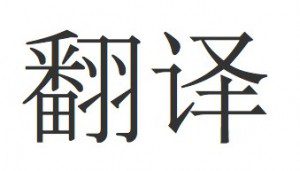 These two characters, read fānyì, say it well.
The first means to “flip over,” “upset,” or “capsize.” The second is to “decode.” Together, they’re usually translated as “translate.” In this post, I’ll offer some thoughts about this business of flipping over and decoding Chinese characters for Zen translations and give an example of the implications of this work.
In an email conversation with a well-known Buddhist scholar, the scholar mentioned that the person who has done the most to translate Buddhist texts that form the basis for our dharma literature, tends to get it about 85% correct.
That might not seem too bad, a solid “B,” but when a whole religion, peoples’ practices, and teachers’ teachings, are based (in part) on something that’s 85% correct, well, we have a problem here. Now, of course, there is zazen and direct experience – but here I’m just talking about the dharma literature that’s been translated into English and used for various purposes, including inspiring and guiding the practice and experience.
Touched by the suspicion that the aforementioned scholar is correct and having a long-time interest in the Chinese language, I’ve been working with a student at translating the original Chinese koans into a version of English that is explicitly directed for practitioners, and particularly for those engaged in studying or teaching koan.
And although I have concerns about various translations, I also want to acknowledge that we now have several sound English translations of many of the core teachings, including the various koan collections. In our translation work, we consult these and sometimes depend on them for aspects beyond our knowledge and skill. Seeing how others have solved various knotty translation problems is an important part of our process. For most issues there isn’t one right answer but a field of possibilities.
Another scholar that we sometimes consult, someone who is really trained in classical Chinese, often looks at what we’ve come up with and says, “Yes, it could be that way.”
So after being at it for a couple years, and more aware of the enormity of the task, I’d be delighted to find that we get 85% correct!
As is well known, the Chinese written language, and especially the ancient Ch’an texts, use words differently than does the English language. Relationships within sentences are often not spelled out in a definitive way and Chinese characters often have a wide range of meanings, wider than the usual English word. Both of these factors make translation a projective test – what you see in English is to a large extent based on the interaction between the Chinese and the translator (their cultural and personal backgrounds as well as their dharma understanding).
One passage that I’ve worked with, Rujing’s comment on the mu koan (coming soon to this blog), has about 65 characters in the original. One scholarly translation has over 100 words, mostly about specifying relationships and pinning down what is open to interpretation in the original. For our koan work, though, the possibility of thick and various interpretations is just the point, so narrowing the possibilities for play limits the utility of the text as awakening practice.
Therefore, in our translation work we try to stay as close to the original as possible (“bare-bones translation”), adding as few things into the text as we can get by with and still have a vague resemblance to the English language. And we remember, of course, that we’re working with a koan – so the koan point is vital – and that our readers are likely people with some fluency in the koan perspective.
For myself, I find that translating is a wonderfully rich activity, an art practice, that exercises a part of the brain reminiscent of Go (圍棋 or “encircling game”). The mind needs to rest in openness and let the solution (various meanings with unclear relationships) come together. In addition, working with a koan character-by-character opens up the koan in multiple directions.
I shared some of our work with the first above-mentioned scholar and he seemed to like what we’d done, at least, he didn’t insist that we give up the project immediately due to our hopeless ignorance. He did have some constructive feedback and thought that we were a bit course and literal – just what we were going for.
Now for a taste of what we’ve come up with. I’ve selected the verse from the first case of the Gateless Barrier for the mu koan. The first translation (lacking of a better way of putting it) is the Wild Fox rendition and the second is by Aitken Roshi, one of the standard translations.
Wumen’s Verse
(Wild Fox Version)
Dog! Buddha Nature!
The whole put forward, the exact imperative.
Only enter yes and no
lose self, lose life.
(Aitken Roshi Version)
Dog, Buddha nature—
the full presentation of the whole;
with a bit of “has” or “has not”
body is lost, life is lost.
The first line is the basically the same in both, so not much to bark about.
In the second line, it seems that Aitken Roshi left out a part or conflated it with the first phrase. “Full presentation of the whole” is there but nothing that seems to directly translate “exact imperative.” We’ve discovered that this is pretty common. Not only do translators often add elements, they also drop them. In this case, it doesn’t do much with the meaning, as the second phrase, “exact imperative,” mostly emphasizes the significance of “the whole put forward.”
The third line, though, is significantly different in these two versions: “With a bit of ‘has’ or ‘has not'” and “Only enter yes and no.” What we’re talking about here is the central issue in this koan – 有 “u” and 無 “mu” or “existence” and “absence.” “Has”/”yes” as well as “has not”/”no” are both legitimate ways of translating these characters.
Aitken Roshi’s “with a bit of” has added something to the verse that doesn’t show up in the characters and makes what follows – “losing self, losing life” – something that the verse seems to be suggesting we ought to avoid, as if there is some pure place or state of mind where there’s no yes and no! So these two lines in Aitken Roshi’s translation can be read as a moral injunction.
By the way, I don’t think that Aitken Roshi thought this (I have deep respect for the old teacher) – just that his translation is open to this (mis)interpretation of the mu koan.
Staying more closely to the characters, “Only enter yes and no/lose self, lose life” offers up a practice instruction – just one doing! Fully enter this one great life of yes and no, have and have not.
More to come on translations, so you’ve got that to look forward to, at least.
Previous Post

June 11, 2017
The Mu Koan and How Some Zennists Just Wanna Have Fun
Next Post

June 19, 2017 Communal or Private: Is Zen for Everybody or Just a Few?
Browse Our Archives
Select a Category Uncategorized
Select a Month August 2023 July 2023 June 2023 May 2023 April 2023 March 2023 February 2023 January 2023 December 2022 November 2022 October 2022 September 2022 August 2022 July 2022 June 2022 May 2022 April 2022 March 2022 February 2022 January 2022 December 2021 November 2021 August 2021 June 2021 April 2021 February 2021 January 2021 November 2020 September 2020 August 2020 July 2020 June 2020 May 2020 April 2020 January 2020 December 2019 November 2019 August 2019 June 2019 May 2019 April 2019 February 2019 January 2019 December 2018 November 2018 October 2018 September 2018 August 2018 July 2018 June 2018 May 2018 April 2018 March 2018 February 2018 January 2018 December 2017 November 2017 October 2017 September 2017 August 2017 July 2017 June 2017 December 2016 October 2016 June 2016 April 2016 February 2016 January 2016 December 2015 November 2015 October 2015 August 2015 June 2015 May 2015 April 2015 March 2015 February 2015 January 2015 December 2014 November 2014 October 2014 September 2014 August 2014 July 2014 June 2014 May 2014 April 2014 March 2014 February 2014 January 2014 December 2013 November 2013 October 2013 September 2013 August 2013 July 2013 June 2013 May 2013 April 2013 March 2013 February 2013 January 2013 December 2012 November 2012 October 2012 September 2012 August 2012 July 2012 June 2012 May 2012 April 2012 March 2012 February 2012 January 2012 December 2011 November 2011 October 2011 September 2011 August 2011 July 2011 June 2011 May 2011 April 2011 March 2011 February 2011 January 2011 December 2010 November 2010 October 2010 September 2010 August 2010 July 2010 June 2010 May 2010 April 2010 March 2010 February 2010 January 2010 December 2009 November 2009 October 2009 September 2009 August 2009 July 2009 June 2009 May 2009 April 2009 March 2009 February 2009 January 2009 December 2008 November 2008 October 2008 September 2008 August 2008 July 2008 June 2008 May 2008
Follow Us!
TAKE THE
Religious Wisdom Quiz
What does Revelation say about anyone who adds to the words of the prophecy?
Select your answer to see how you score.
They will lose their salvation They will be judged God will add to them the plagues described in this scroll They will be cursed
Related posts from Wild Fox Zen

Gnawing Through Qiánfēng’s Three Illnesses and Two Lights

"Why, Oh Why, Is My Practice Not Progressing?"
A Black Lacquer Person Runs Through the Night:...

Intimate Friendship: "When You Sing, I Respond; When...
TRENDING AT PATHEOS Buddhist

On Taking Refuge in the Dharma
(Here I continue the feature of sharing talks and essays by teachers...

(Continuing my intention to share talks and essays by other members of Empty...
The Subtle Art of Bowing: A Dharma Discourse
(This presentation was first offered by my dear friend Dharma Holder Tom...

Internal Family Systems Can Heal you Mentally &...
How IFS Helped Me Stop Fighting Myself Internal Family Systems (IFS) is...

The Bible No One Spoke About: A Family’s...
A mysterious family Bible, unspoken faith, and a journey from curiosity to...

How Uncertainty Can Transform Your Life in 2025
Embracing Uncertainty: A New Year’s Resolution for the Brave As 2025 approaches,...
view all Buddhist blogs
Ad-Free & Subscriber Log-In Subscription Support
- About Us
- 2026 Calendar
- Videos
- Podcasts
- Library of World Religions
- Faith In Media Tracker
- Advertise With Us
- Write for Us
- Privacy Policy
- Terms of Service
- Do Not Sell My Data
- Contact Us
- Radiant Digital
- Manage Newsletter Subscriptions
- Unsubscribe From Notifications
- Sitemap
Copyright 2008-2026, Patheos. All rights reserved.
Subscription Support Ad-Free & Subscriber Log-In
Follow Patheos