
BuddhistCatholicContemplativeEvangelicalGeneral ChristianHinduJewishLatter-day SaintMuslimNew VisionsProgressive Christian
Beliefs
- Buddhist
- Catholic
- Contemplative
- Evangelical
- General Christian
- Hindu
- Jewish
- Latter-day Saint
- More Voices
- Muslim
- New Visions
- Pagan
- Progressive Christian
Topics
- Religion News
- Food and Religion
- Sports and Religion
- Religious Art
- Religious Music and Entertainment
- Religious Events
- History and Religion
- Style and Religion
- Politics and Religion
- Women in Religion
- Recreation Outdoors and Religion
- Business Finance and Religion
- Careers Workplace and Religion
- Education and Religion
- Family Parenting and Religion
- Health Fitness and Religion
- Home and Religion
- Relationships and Religion
- Technology and Religion
- Travel and Religion
Columnists
- Buddhist Columnists
- Business Finance and Religion Columnists
- Careers Workplace and Religion Columnists
- Catholic Columnists
- Contemplative Columnists
- Education and Religion Columnists
- Evangelists Columnists
- Family Parenting and Religion Columnists
- General Christian Columnists
- Health Fitness and Religion Columnists
- Hindu Columnists
- History and Religion Columnists
- Home and Religion Columnists
- Jewish Columnists
- More Voices Columnists
- Latter Day Columnists
- Muslim Columnists
- New Visions Columnists
- Nonreligious Columnists
- Pagan Columnists
- Politics and Religion Columnists
- Progressive Columnists
- Recreation Outdoors and Religion Columnists
- Relationships and Religion Columnists
- Religion News Columnists
- Religious Art Columnists
- Religious Events Columnists
- Religious Music and Entertainment Columnists
- Sports and Religion Columnists
- Style and Religion Columnists
- Technology and Religion Columnists
- Travel and Religion Columnists
- Women in Religion Columnists
Resource Library
- 2026 Calendar
- Library of World Religions
- The 100 Most Holy Places on Earth
- Patheos Answers
- Podcasts
- Videos
- Faith Leaders Database
- Anglican Episcopalian
- Bahai
- Baptist
- Buddhism
- Christianity
- Confucianism
- Eastern Orthodoxy
- Hinduism
- Holiness and Pentecostal
- ISKCON
- Islam
- Judaism
- Lutheran
- Methodist
- The Church of Jesus Christ of Latter-day Saints
- New Age
- Paganism
- Presbytarian and Reformed
- Protestantism
- Religion Behind the Scenes
- Roman Catholic
- Scientology
- Shia Islam
- Sikhism
- Sufism
- Sunni Islam
- Taoism
- Zen
- See all religions
Research Tools
 Ad-Free & Subscriber Log-In Subscription Support
Ad-Free & Subscriber Log-In Subscription Support
Follow Patheos 

- Trending:
- Forgiveness
- |
- Marriage
- |
- Consciousness
- |
- Death Penalty
- |
- Election
- |
- Halloween
 Wild Fox Zen
- Home
- Buddhist
- Buddha’s Enlightenment: Yielding Assertively, Touching the Heart
Buddha’s Enlightenment: Yielding Assertively, Touching the Heart
Last updated on: December 17, 2015 at 12:30 pm by Dosho Port
Buddha’s Enlightenment: Yielding Assertively, Touching the Heart 2015-12-17T12:30:31-06:00 Dosho Port
Patheos Explore the world's faith through different perspectives on religion and spirituality! Patheos has the views of the prevalent religions and spiritualities of the world.
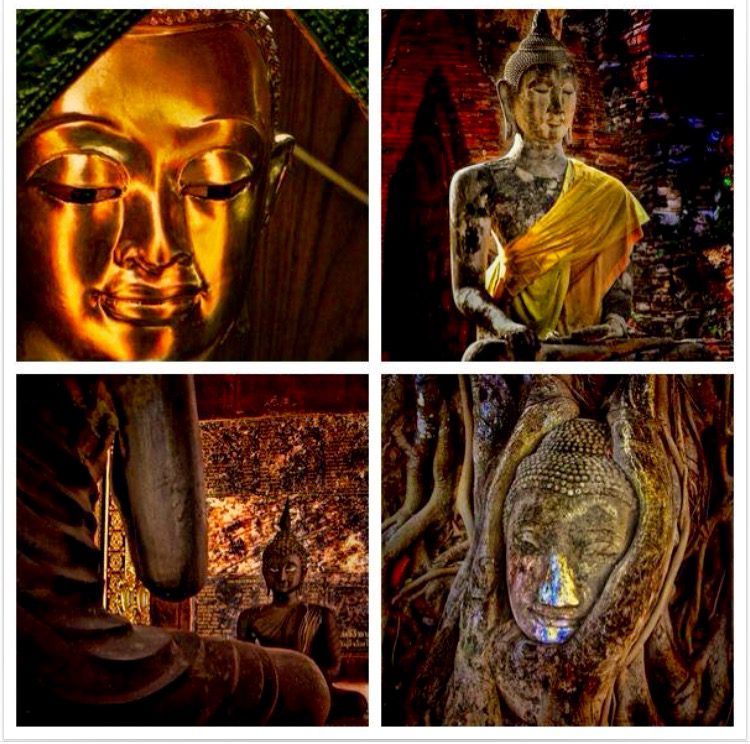 Note: This is the fifth of five post based on talks from Rohatsu 2014. Students (Brian, Ryan, Erik, and Vera-Ellen – thank you!) transcribed them and I edited. The final one will be posted here soon. Click here for the first part: “The Root of Zen.” Here for the second: “Sitting Through it All.” Here for the third: “Not Clear About the Self.” And here for the fourth: “Buddha’s Enlightenment: A Single Body is Revealed.”
———
First, a word about “sesshin,” the word we use for intensive Zen retreats. “Sesshin” is composed of two characters. The second character “shin” is a very common character and means “heart,” “mind,” “essence,” or “spirit.”
The first character is quite important. It is composed of the radical for “hand” and then the character for “a woman standing over,” suggesting “to connect” or “to join.” One translation of “sesshin,” then, is “to join or connect with the heart.”
Playing a bit with the characters, we might portray “sesshin” as a woman standing, touching her heart. And so with “sesshin,” we have the two foci of receptivity and activity. The feminine, yielding principle, is standing up and touching the heart. The movement of the hand involved in touching the heart is the presentation of the essential activity of practice, turning the light around. Given that these characters grew up in a Confucian culture where it would be unusual for a woman to speak standing, there may be a suggestion here that “sesshin” is a bold act, an act that challenges the status quo.
In the last post, I ended with Fayan’s important expression of this principle, “In the myriad forms, a single body is revealed.” One of the virtues of sesshin, the yielding principle standing assertively and touching the heart, is how the simplicity of the Soto forms are illuminated. Indeed, the myriad forms – sitting, standing, walking, lying down – are our life as if it were composed by just four brushstrokes.
“In the myriad forms, a single body is revealed.” Sitting, standing, walking, lying down.
Instead of “body,” Fayan could have used other things as well. In the myriad forms, the single mind is revealed. In the myriad forms, the single the single heart is revealed. In the myriad forms, the single eye, the single liver, the single finger, the single fist, the single hand, or the single liver.
Here, though, the single body is revealed. We learn this practice in the body, from one person to another. And although there are many forms of practice, we studying the forms in the body. In my case, studying with Katagiri Roshi, was studying his body – how he walked, sat, ate. How he vacuumed the stairs, how he shoveled the sidewalk. I did that by yielding, being with him and touching the heart together.
A little while before he died, right after he was diagnosed with lymphoma, I asked him if he’d stick around awhile, ”Well, whatever happens,” he said, “I will always be there with you.”
The single body is revealed.
Our Zen lineage is intimately passed from person to person to person. We learn this too through koan introspection. In koan after koan, body meets body. How did those in this lineage embody this koan? A guy called Dosho bowed together with a guy named Myoun and we examined case after case in this way.
Transmission, then, comes from long study together.
We remember that when we embody the lineage in the morning service. Most of the Soto chanting service is an expression of the heart and is characterized by beautiful flowing together. When we chant the lineage, however, the chant leader holds the large bell with thumb and two fingers, striking the bell with the tip of the handle of the striker, creating a disharmonious, dead-hit sound. BAM! This is repeated as we begin the names of each of the seven Buddhas. It is a sound that pierces the ears, touches the heart, and jolts the body.
Just in this context, Keizan said, “While the seasons come and go, the mountains, rivers, and great earth change with time. You should know that this is Buddha raising his eyebrows and blinking his eyes. So it is in the myriad forms, the single body is revealed.”
The reference to “raising the eyebrows…” is to the story of the Buddha’s transmission to Mahakasyapa. One day when Shakyamuni came to the assembly to give a dharma talk, he just held up a flower, raised his eye brow, and blinked. Mahakasyapa smiled. This is regarded as the first transmission of the Dharma.
Keizan brings it into the body even more definitively, saying “the seasons coming and going, the mountains, rivers, and great earth changing with time” – this is the transmission of the Dharma. It’s that embodied; it’s that intimate.
Keizan was influenced by Shingon or the “True Word” school, which emphasizes mandala and creating the sacred space. For Keizan, the mandala, the sacred space, is not only the physical space of mountains, rivers, the great earth, and the whole great universe, but also the coming and going of time, as he indicates with “the passing of the seasons.”
Our practice and transmission takes place in that, as that universal mandala.
However, when we’re caught up in the maintenance of our dear little buddy “you,” the “artifact of unfulfilled ambition,” we forget that this whole planetary system is the transmission of the buddhadharma and that practice and life occur as the expression of this huge, incomprehensible space.
Also, when we’re engaged in “you” reification, it’s very hard to pay attention to the body of practice, of how to do it. When we’re absorbed in the “you,” we can either be hyper vigilant about it and miss the point or just absorbed in our own world rather than seeing what needs to be done and doing it.
How does body practice relate to our koan work? We put our body into the truth-happening-place narrative, put our body in the Buddha story. The unique power of the koan narrative is in finding a nonrepresentational way to present the truth.
Sometimes just-sitting Zen friends point out that our practice is not having any “sweet cookies.” Katagiri Roshi also said that quite often, “Zen practice is no sweet cookies.”
The implication seems to be that koan is somehow a sweet cookie, something to stop the baby from crying. Those of you who have taken up the mu koan might experience it differently. “Mu” means “no,” “non,” or “negation.” And to see the koan, we must be the koan, in this case, we must be one with “no,” “non,” or “negation.” That’s not much of a sweet cookie! Indeed, in becoming mu, it seems that the “you” might be erased.
When Xuishan, one of the monks who had accompanied Fayan when they first encountered Dizhang, returned from his pilgrimage and entered Dizhang’s room. Dizhang said, “Well, hi! Where have you been?”
Xuishan said, “I’ve been in the south.”
Dizhang said, “Oh, how’s the buddhadharma doing in the south these days?”
Xuishan said, “There’s much discussion.”
Dizhang said, “What does that have to do with me, planting my garden and harvesting rice?”
Our practice, day by day, is just taking care of business. The work of carrying beings from the shore of samsara to nirvana is an embodied activity. It requires, first of all, being willing to get your hands dirty.
Thank you for your practice.
Previous Post

December 15, 2015
Buddha's Enlightenment: A Single Body is Revealed
Next Post
January 5, 2016 Just Sit or Wake Up? A Tale of Two Old Teachers
Browse Our Archives
Select a Category Uncategorized
Select a Month August 2023 July 2023 June 2023 May 2023 April 2023 March 2023 February 2023 January 2023 December 2022 November 2022 October 2022 September 2022 August 2022 July 2022 June 2022 May 2022 April 2022 March 2022 February 2022 January 2022 December 2021 November 2021 August 2021 June 2021 April 2021 February 2021 January 2021 November 2020 September 2020 August 2020 July 2020 June 2020 May 2020 April 2020 January 2020 December 2019 November 2019 August 2019 June 2019 May 2019 April 2019 February 2019 January 2019 December 2018 November 2018 October 2018 September 2018 August 2018 July 2018 June 2018 May 2018 April 2018 March 2018 February 2018 January 2018 December 2017 November 2017 October 2017 September 2017 August 2017 July 2017 June 2017 December 2016 October 2016 June 2016 April 2016 February 2016 January 2016 December 2015 November 2015 October 2015 August 2015 June 2015 May 2015 April 2015 March 2015 February 2015 January 2015 December 2014 November 2014 October 2014 September 2014 August 2014 July 2014 June 2014 May 2014 April 2014 March 2014 February 2014 January 2014 December 2013 November 2013 October 2013 September 2013 August 2013 July 2013 June 2013 May 2013 April 2013 March 2013 February 2013 January 2013 December 2012 November 2012 October 2012 September 2012 August 2012 July 2012 June 2012 May 2012 April 2012 March 2012 February 2012 January 2012 December 2011 November 2011 October 2011 September 2011 August 2011 July 2011 June 2011 May 2011 April 2011 March 2011 February 2011 January 2011 December 2010 November 2010 October 2010 September 2010 August 2010 July 2010 June 2010 May 2010 April 2010 March 2010 February 2010 January 2010 December 2009 November 2009 October 2009 September 2009 August 2009 July 2009 June 2009 May 2009 April 2009 March 2009 February 2009 January 2009 December 2008 November 2008 October 2008 September 2008 August 2008 July 2008 June 2008 May 2008
Follow Us!
TAKE THE
Religious Wisdom Quiz
What does the name "Samuel" mean?
Select your answer to see how you score.
Gifted by God Heard by God Saved by God Sent by God
Related posts from Wild Fox Zen

Throw Yourself Into the House of Buddha: The...

New Vine Ghost Site for Dosho's Creative Endeavors...

Gnawing Through Qiánfēng’s Three Illnesses and Two Lights

"Why, Oh Why, Is My Practice Not Progressing?"
TRENDING AT PATHEOS Buddhist

On Taking Refuge in the Dharma
(Here I continue the feature of sharing talks and essays by teachers...

(Continuing my intention to share talks and essays by other members of Empty...
The Subtle Art of Bowing: A Dharma Discourse
(This presentation was first offered by my dear friend Dharma Holder Tom...

Internal Family Systems Can Heal you Mentally &...
How IFS Helped Me Stop Fighting Myself Internal Family Systems (IFS) is...

The Bible No One Spoke About: A Family’s...
A mysterious family Bible, unspoken faith, and a journey from curiosity to...

How Uncertainty Can Transform Your Life in 2025
Embracing Uncertainty: A New Year’s Resolution for the Brave As 2025 approaches,...
view all Buddhist blogs
Ad-Free & Subscriber Log-In Subscription Support
- About Us
- 2026 Calendar
- Videos
- Podcasts
- Library of World Religions
- Faith In Media Tracker
- Advertise With Us
- Write for Us
- Privacy Policy
- Terms of Service
- Do Not Sell My Data
- Contact Us
- Radiant Digital
- Manage Newsletter Subscriptions
- Unsubscribe From Notifications
- Sitemap
Copyright 2008-2026, Patheos. All rights reserved.
Subscription Support Ad-Free & Subscriber Log-In
Follow Patheos