
BuddhistCatholicContemplativeEvangelicalGeneral ChristianHinduJewishLatter-day SaintMuslimNew VisionsProgressive Christian
Beliefs
- Buddhist
- Catholic
- Contemplative
- Evangelical
- General Christian
- Hindu
- Jewish
- Latter-day Saint
- More Voices
- Muslim
- New Visions
- Pagan
- Progressive Christian
Topics
- Religion News
- Food and Religion
- Sports and Religion
- Religious Art
- Religious Music and Entertainment
- Religious Events
- History and Religion
- Style and Religion
- Politics and Religion
- Women in Religion
- Recreation Outdoors and Religion
- Business Finance and Religion
- Careers Workplace and Religion
- Education and Religion
- Family Parenting and Religion
- Health Fitness and Religion
- Home and Religion
- Relationships and Religion
- Technology and Religion
- Travel and Religion
Columnists
- Buddhist Columnists
- Business Finance and Religion Columnists
- Careers Workplace and Religion Columnists
- Catholic Columnists
- Contemplative Columnists
- Education and Religion Columnists
- Evangelists Columnists
- Family Parenting and Religion Columnists
- General Christian Columnists
- Health Fitness and Religion Columnists
- Hindu Columnists
- History and Religion Columnists
- Home and Religion Columnists
- Jewish Columnists
- More Voices Columnists
- Latter Day Columnists
- Muslim Columnists
- New Visions Columnists
- Nonreligious Columnists
- Pagan Columnists
- Politics and Religion Columnists
- Progressive Columnists
- Recreation Outdoors and Religion Columnists
- Relationships and Religion Columnists
- Religion News Columnists
- Religious Art Columnists
- Religious Events Columnists
- Religious Music and Entertainment Columnists
- Sports and Religion Columnists
- Style and Religion Columnists
- Technology and Religion Columnists
- Travel and Religion Columnists
- Women in Religion Columnists
Resource Library
- 2026 Calendar
- Library of World Religions
- The 100 Most Holy Places on Earth
- Patheos Answers
- Podcasts
- Videos
- Faith Leaders Database
- Anglican Episcopalian
- Bahai
- Baptist
- Buddhism
- Christianity
- Confucianism
- Eastern Orthodoxy
- Hinduism
- Holiness and Pentecostal
- ISKCON
- Islam
- Judaism
- Lutheran
- Methodist
- The Church of Jesus Christ of Latter-day Saints
- New Age
- Paganism
- Presbytarian and Reformed
- Protestantism
- Religion Behind the Scenes
- Roman Catholic
- Scientology
- Shia Islam
- Sikhism
- Sufism
- Sunni Islam
- Taoism
- Zen
- See all religions
Research Tools
 Ad-Free & Subscriber Log-In Subscription Support
Ad-Free & Subscriber Log-In Subscription Support
Follow Patheos 

- Trending:
- Forgiveness
- |
- Marriage
- |
- Consciousness
- |
- Death Penalty
- |
- Election
- |
- Halloween
 Wild Fox Zen
- Home
- Buddhist
- Buddha’s Enlightenment: The Root of Zen
Buddha’s Enlightenment: The Root of Zen
Last updated on: December 2, 2015 at 11:23 am by Dosho Port
Buddha’s Enlightenment: The Root of Zen 2015-12-02T11:23:27-06:00 Dosho Port
Patheos Explore the world's faith through different perspectives on religion and spirituality! Patheos has the views of the prevalent religions and spiritualities of the world.
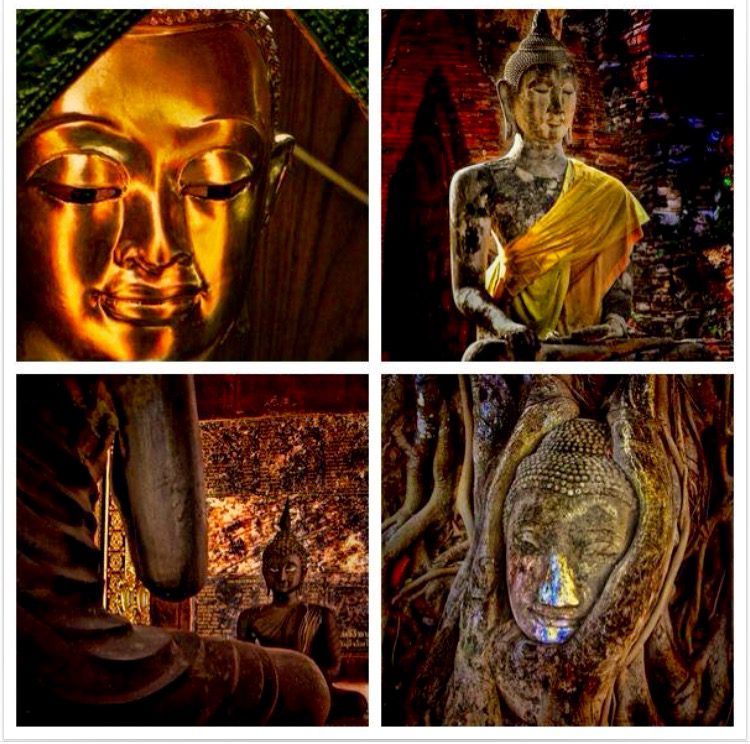 Note: This is the first part of five – talks from last year’s Rohatsu that students (Brian, Ryan, Erik, and Vera-Ellen – thank you!) transcribed and I edited. The others will be posted here over the next couple weeks.
“Shakyamuni Buddha saw the morning star, and realized enlightenment. He said, ‘I together with all beings and the great earth attain the way.’ At age nineteen Shakyamuni leapt over the palace walls in the dead of the night and shaved off his hair. After that he practiced austerities for six years. Subsequently he sat on the indestructible seat, so immobile that spiders spun webs in his eyebrows and magpies built nests on top of his head. Reeds grew up between his legs as he sat tranquilly and erect for six years. At the age of thirty, on the eighth day of the twelfth month, as the morning star appeared he was suddenly enlightened. ‘I together with all beings and the great earth attain the way’ is his first lion’s roar.'” – “Shakyamuni Buddha” from Keizan’s Record of Transmitting the Light,
This is an expression of the source, the essence, of Shakyamuni Buddha’s way, of the Zen way.
A real person, Shakyamuni, saw the morning star and then he acted – walking about, lying down, carrying his begging bowl, giving dharma talks.
We emulate the Buddha as we commemorate his enlightenment today and every day. We join with other practitioners sitting around the world this week. Doing what the Buddha did.
But what is it that the Buddha did? It’s very important to be crystal clear about this essential principle of the buddhadharma – the heart of the Great Matter.
In ancient times there was a certain form for the Buddha way. The Buddha was a renunciate, maintaining all the two-hundred and fifty precepts. Eating just one meal a day. Wandering around ancient India. And there are those today, our Theravadin brothers and sisters, who maintain that great way.
Also over the past two-and-a-half millennia, numerous streams of the buddha-dharma have sprung from this one source. What is the essential principle of the buddha-dharma, that we all maintain together?
One of our ancestors in the Soto family line of buddhadharma, Keizan Jokin, was a Japanese monk, born in 1264, twelve years after Dogen died. Keizan wrote the passage about Shakyamuni Buddha (quoted above) in what became his best known work. It continues to impact us today and in our Harada-Yasutani koan curriculum, it is the source of the last major koan collection taken up. In Record of Transmitting the Light, Keizan offers us enlightenment stories, commentaries, and verses on all of the buddha ancestors from Shakyamuni Buddha up to his teacher’s teacher, Koun Ejo.
Again, what is the essential principle?
A necessary condition to realizing this principle is demonstrated by Shakyamuni sitting on the “indestructible seat, so immobile that spiders spun webs in his eyebrows and magpies built a nest on top of his head. Reeds grew up between his legs as he sat tranquilly and erect for six years.”
This is our practice especially during sesshin, truly becoming zazen people together. Sitting through it all. As you know, in the fuller story of Shakyamuni Buddha as he sat down under the bodhi tree, all sorts of waves of delusions assailed him. Armies of Mara. Beautiful dancing women. All sorts of anger, greed, ignorance opportunities came at him wave after wave after wave. And he sat upright and relaxed, through it all.
One-pointedness like this requires not only strength but also softness in sitting. Keizan says that “reeds grew up between his legs.” Make your sitting like a reed. Reeds are very strong and also very flexible. These two qualities together, strength and softness, are the qualities of mind, heart, and body that we have the opportunity to open up to now.
If you just try to be strong and sit tough through it all, that sitting is like a twig that breaks easily when the strong winds of delusion blow. Find the way to be in zazen with body, heart, and mind, as if you are a reed.
Keizan was just such a person. His grandmother was one of Dogen’s benefactors and students. It is thought that she also was a benefactor of Myozen who was Dogen’s teacher that Dogen accompanied to China. Keizan’s mother became a nun at an early age, and it’s quite a mystery where Keizan came from – his mother was a celebate nun who appears to have given birth to little baby Keizan via immaculate conception.
After Keizan’s birth, his grandmother raised him. From his early years he was told that he was a very special child and had a great future. When he was just seven, his grandmother brought him to Eiheiji, and he became an attendant for Ejo, Dogen’s direct successor. After that, Keizan grew up at Eiheiji.
As Ejo became old, Keizan studied with several monks who had been around Dogen, including Jiun, who was a Chinese monk that had met Dogen in China and then came to Japan to train with Dogen and eventually succeeded to Ejo. Jiun was an early abbot of Eiheiji.
Keizan then went on pilgrimage and studied far and wide. He was especially interested in Shingon practice, the esoteric school of Buddhism. He also trained in several of the branches of the Rinzai Zen, branches that had come to Japan just shortly after Dogen founded the Soto line. Meanwhile, his mother remained a monastic and was committed to training women and devoted to Kannon. She was also much involved in Keizan’s life – a true helicopter parent, pushing Keizan this way and that. Guiding his training from afar.
Keizan eventually settled down with Tetsu Gikai, who had also received transmission from Ejo but had trained extensively with Dogen. One day Keizan went to Gikai for instruction and Gikai asked him about this principle of the buddhadharma – the essential principle.
“Show me ordinary mind!” demanded Gikai, inviting Keizan to show his true heart.
This is a fragment, a punch line, from the well-known koan, “Ordinary Mind is the Way.” Gikai wanted Keizan to do it, not talk about it – to do as the Buddha did. “Show ordinary mind, right now!”
Keizan started to open his mouth but Gikai hit him right in the kisser. That seemed to shut up the young prodigy.
But that wasn’t the end of it. Keizan shut up and had an explosion of bodhicitta, way seeking mind, yearning to open to openness.
“What is It? What is ordinary mind? What is the essential principle of the buddha-dharma?” we can imagine Keizan’s intense pursuit of the truth.
Keizan threw himself into zazen night and day. Sitting through it all. Sitting like the Buddha had done. Sitting like all the ancestors following the Buddha, including Dogen, Ejo, and Gikai. Sitting through it all in the manner that you too are invited to sit right now.
This is the necessary condition for realizing the essential point of the buddhadharma. It is necessary to become a zazen person, going against the grain of what is fashionable today in our “get-something-fast-and-easy” culture. Becoming a zazen person and sitting through it all isn’t fast and easy. It’s hard work in the trenches. The glamor wears off rapidly. Maybe it’s already worn off for you, or maybe that’ll happen some time later. Seven-day sesshin are great ways to wear through glamor.
We’re given the opportunity by the structure of sesshin to let go of the intention that we walked in the door with and find something deeper, something more essential. Dogen refers to this as working in the dark and subtle night. This is the practice of becoming a zazen person. Sitting until reeds grow up between your legs. Spiders spinning webs in your eyebrows. Magpies building nests on your head. What a process! What an incredible practice!
Keizan continued sitting, continued emulating the ancients in this way. Of course, part of emulating the ancients is also to walk, wear the robes, and fold our napkins just as our buddha ancestors have done. But when folding our napkin correctly, don’t lose sight of the heart of the matter. Sit the way the ancients sat. Allow yourself to be run through by the lineage of practitioners who sat like the Buddha sat.
In the Fukanzazengi, Dogen tells us, “We find that transcendence of both mundane and sacred, and dying while either sitting or standing, have all depended entirely on the power of zazen.”
As I said, our zazen must be strong and soft. Zazen becomes strong by sitting through it all – it’s not something that we’re necessarily born with. We exercise zazen and zazen becomes strong. When we let zazen just lay on the couch, zazen just gets flabby. Zazen must be strong. And then the transcendence of mundane and sacred can occur. Transcendence depends upon it.
Good and bad, right and wrong, success or failure, me and you, in or out, up or down. The transcendence of the whole works depends entirely on the power of zazen. Indeed, dying while either sitting or standing is to do each thing completely with no part left out. Doing as the Buddha did in each thing completely. Folding the napkin. Walking across the floor. Sweeping the deck. Carrying the firewood. Ringing the bell. Each thing doing as the Buddha did.
There was an important nun in twentieth century Japan, Nogami Senryu Roshi, who would always instruct her students, “Die sitting! Die standing!” When she became very old, in her nineties, one of her students came into the Buddha hall and saw Nogami Roshi walk into the Buddha hall and stand in front of the Buddha and shout, “Die sitting! Die standing!”
Then she collapsed, and died. Her disciple ran up to her, held her, and said, “You did it! You did it!” And in that they met completely. The student met Nagomi Roshi’s dying-standing by dying-holding. No whimpering in the mind.
Back to Keizan sitting through it all. Even though he was a golden child, he was just like us with lots of problems. His mother was always messing with him. All these old men that want him to do this and that. What’s a guy to do? What is the ordinary mind?
Then one night as he was sitting, he heard the wind blow around the corner of the temple and he had great realization of the essential principle of the buddha-dharma. He went to see Gikai and when Gikai saw him coming he said, “What is it that you’ve realized?”
Keizan said, “It’s like a black ball rolling through the dark night.”
Just one doing! Die sitting. Die standing.
Gikai didn’t accept his presentation, perhaps because it was too discursive. Gikai said, “That’s not clear, explain again.”
Keizan said, “When it’s time for tea I drink tea, when it’s time for gruel, I eat gruel.”
Gikai then accepted his realization.
This essential principle of the buddha-dharma for which we become zazen people. To realize this, sitting through it all is a necessary condition.
Don’t listen to the dharma sound bites and the advertisements, the birds and the crows and the magpies, calling and telling you there is an easy way. The easy ways available now are merely commodification of the buddhadharma and not the real deal.
The only way is leaping through. The only way through is to become a zazen person. Then realize the essential point of the buddhadharma, doing as the Buddha did.
Next Post

December 4, 2015 Buddha's Enlightenment: Sitting Through It All
Browse Our Archives
Select a Category Uncategorized
Select a Month August 2023 July 2023 June 2023 May 2023 April 2023 March 2023 February 2023 January 2023 December 2022 November 2022 October 2022 September 2022 August 2022 July 2022 June 2022 May 2022 April 2022 March 2022 February 2022 January 2022 December 2021 November 2021 August 2021 June 2021 April 2021 February 2021 January 2021 November 2020 September 2020 August 2020 July 2020 June 2020 May 2020 April 2020 January 2020 December 2019 November 2019 August 2019 June 2019 May 2019 April 2019 February 2019 January 2019 December 2018 November 2018 October 2018 September 2018 August 2018 July 2018 June 2018 May 2018 April 2018 March 2018 February 2018 January 2018 December 2017 November 2017 October 2017 September 2017 August 2017 July 2017 June 2017 December 2016 October 2016 June 2016 April 2016 February 2016 January 2016 December 2015 November 2015 October 2015 August 2015 June 2015 May 2015 April 2015 March 2015 February 2015 January 2015 December 2014 November 2014 October 2014 September 2014 August 2014 July 2014 June 2014 May 2014 April 2014 March 2014 February 2014 January 2014 December 2013 November 2013 October 2013 September 2013 August 2013 July 2013 June 2013 May 2013 April 2013 March 2013 February 2013 January 2013 December 2012 November 2012 October 2012 September 2012 August 2012 July 2012 June 2012 May 2012 April 2012 March 2012 February 2012 January 2012 December 2011 November 2011 October 2011 September 2011 August 2011 July 2011 June 2011 May 2011 April 2011 March 2011 February 2011 January 2011 December 2010 November 2010 October 2010 September 2010 August 2010 July 2010 June 2010 May 2010 April 2010 March 2010 February 2010 January 2010 December 2009 November 2009 October 2009 September 2009 August 2009 July 2009 June 2009 May 2009 April 2009 March 2009 February 2009 January 2009 December 2008 November 2008 October 2008 September 2008 August 2008 July 2008 June 2008 May 2008
Follow Us!
TAKE THE
Religious Wisdom Quiz
Who said, "Faith without works is dead"?
Select your answer to see how you score.
John Paul James Peter
Related posts from Wild Fox Zen

Throw Yourself Into the House of Buddha: The...

New Vine Ghost Site for Dosho's Creative Endeavors...

Gnawing Through Qiánfēng’s Three Illnesses and Two Lights

"Why, Oh Why, Is My Practice Not Progressing?"
TRENDING AT PATHEOS Buddhist

On Taking Refuge in the Dharma
(Here I continue the feature of sharing talks and essays by teachers...

(Continuing my intention to share talks and essays by other members of Empty...
The Subtle Art of Bowing: A Dharma Discourse
(This presentation was first offered by my dear friend Dharma Holder Tom...

Internal Family Systems Can Heal you Mentally &...
How IFS Helped Me Stop Fighting Myself Internal Family Systems (IFS) is...

The Bible No One Spoke About: A Family’s...
A mysterious family Bible, unspoken faith, and a journey from curiosity to...

How Uncertainty Can Transform Your Life in 2025
Embracing Uncertainty: A New Year’s Resolution for the Brave As 2025 approaches,...
view all Buddhist blogs
Ad-Free & Subscriber Log-In Subscription Support
- About Us
- 2026 Calendar
- Videos
- Podcasts
- Library of World Religions
- Faith In Media Tracker
- Advertise With Us
- Write for Us
- Privacy Policy
- Terms of Service
- Do Not Sell My Data
- Contact Us
- Radiant Digital
- Manage Newsletter Subscriptions
- Unsubscribe From Notifications
- Sitemap
Copyright 2008-2026, Patheos. All rights reserved.
Subscription Support Ad-Free & Subscriber Log-In
Follow Patheos