
BuddhistCatholicContemplativeEvangelicalGeneral ChristianHinduJewishLatter-day SaintMuslimNew VisionsProgressive Christian
Beliefs
- Buddhist
- Catholic
- Contemplative
- Evangelical
- General Christian
- Hindu
- Jewish
- Latter-day Saint
- More Voices
- Muslim
- New Visions
- Pagan
- Progressive Christian
Topics
- Religion News
- Food and Religion
- Sports and Religion
- Religious Art
- Religious Music and Entertainment
- Religious Events
- History and Religion
- Style and Religion
- Politics and Religion
- Women in Religion
- Recreation Outdoors and Religion
- Business Finance and Religion
- Careers Workplace and Religion
- Education and Religion
- Family Parenting and Religion
- Health Fitness and Religion
- Home and Religion
- Relationships and Religion
- Technology and Religion
- Travel and Religion
Columnists
- Buddhist Columnists
- Business Finance and Religion Columnists
- Careers Workplace and Religion Columnists
- Catholic Columnists
- Contemplative Columnists
- Education and Religion Columnists
- Evangelists Columnists
- Family Parenting and Religion Columnists
- General Christian Columnists
- Health Fitness and Religion Columnists
- Hindu Columnists
- History and Religion Columnists
- Home and Religion Columnists
- Jewish Columnists
- More Voices Columnists
- Latter Day Columnists
- Muslim Columnists
- New Visions Columnists
- Nonreligious Columnists
- Pagan Columnists
- Politics and Religion Columnists
- Progressive Columnists
- Recreation Outdoors and Religion Columnists
- Relationships and Religion Columnists
- Religion News Columnists
- Religious Art Columnists
- Religious Events Columnists
- Religious Music and Entertainment Columnists
- Sports and Religion Columnists
- Style and Religion Columnists
- Technology and Religion Columnists
- Travel and Religion Columnists
- Women in Religion Columnists
Resource Library
- 2026 Calendar
- Library of World Religions
- The 100 Most Holy Places on Earth
- Patheos Answers
- Podcasts
- Videos
- Faith Leaders Database
- Anglican Episcopalian
- Bahai
- Baptist
- Buddhism
- Christianity
- Confucianism
- Eastern Orthodoxy
- Hinduism
- Holiness and Pentecostal
- ISKCON
- Islam
- Judaism
- Lutheran
- Methodist
- The Church of Jesus Christ of Latter-day Saints
- New Age
- Paganism
- Presbytarian and Reformed
- Protestantism
- Religion Behind the Scenes
- Roman Catholic
- Scientology
- Shia Islam
- Sikhism
- Sufism
- Sunni Islam
- Taoism
- Zen
- See all religions
Research Tools
 Ad-Free & Subscriber Log-In Subscription Support
Ad-Free & Subscriber Log-In Subscription Support
Follow Patheos 

- Trending:
- Forgiveness
- |
- Marriage
- |
- Consciousness
- |
- Death Penalty
- |
- Election
- |
- Halloween
 Wild Fox Zen
- Home
- Buddhist
- Buddha’s Enlightenment: Sitting Through It All
Buddha’s Enlightenment: Sitting Through It All
Last updated on: December 4, 2015 at 2:54 pm by Dosho Port
Buddha’s Enlightenment: Sitting Through It All 2015-12-04T14:54:52-06:00 Dosho Port
Patheos Explore the world's faith through different perspectives on religion and spirituality! Patheos has the views of the prevalent religions and spiritualities of the world.
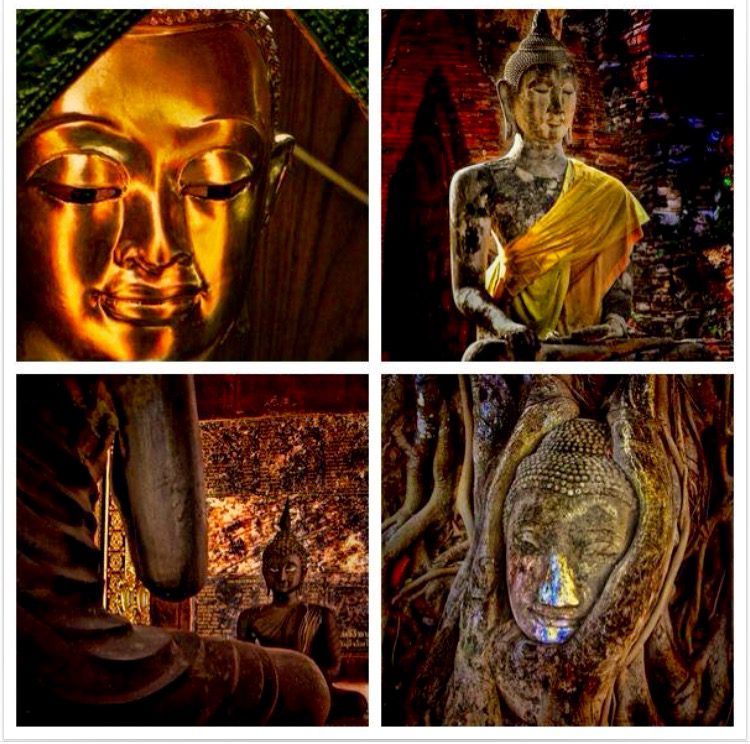 Note: This is the second part of five, based talks from last year’s Rohatsu that students (Brian, Ryan, Erik, and Vera-Ellen – thank you!) transcribed and I edited. The others will be posted here over the next couple weeks. Click here for the first part: “The Root of Zen.”
Sitting so that the reeds grow up around us, we sit upright and tranquil, becoming a zazen person as a necessary condition – but not a sufficient one.
A sufficient condition for what?
In the passage cited in the previous post, “The Root of Zen,” Dogen said, “We find that transcendence of both mundane and sacred … depends entirely on the power of zazen.”
This is the heart of the buddhadharma – transcending both mundane and sacred.
Most spiritual paths are about transcending the mundane, but not so much about transcending the sacred. This Zen way is about transcending both samsara and nirvana. And it depends on the power of zazen.
Yet, the power of zazen and transcending mundane and sacred are not the same thing. Indeed, it’s possible to sit upright so that when people come by they think you’re a dead tree stump without going beyond. In our tradition in China, for example, there was a teaching style know as the “dead tree stump hall” where practitioners sat upright developing the power of zazen, really sitting through it all, but some we’re told still did not open their hearts, transcending mundane and sacred. Revering samadhi is a trap that we can get into in this practice.
Now, whatever you’re working with on the Zen way, it is characterized by the simply becoming one-with. If you are working with the breath, become one with the breath. If you’re doing shikantaza, earnest vivid sitting, become one with each of the myriad things as it arises and passes away. If we’re working with mu koan, wholly becoming mu. No part left out.
However, it’s possible to miss the forest for the trees, to over identify with the minutiae of the technique and miss the spirit. The living, open-hearted spirit requires fearlessness – and fearlessness can be painfully scary. So instead, we can distract ourselves from the rawness of this practice by identifying with the technique.
The Buddha, our original great teacher, sat under the bodhi tree with rigorous authenticity. Before he became the Buddha, he had traveled around ancient India and worked with a number of teachers and quickly mastered their systems. He was a samādhi master. Yet he noticed that his heart’s innermost request was still yearning, because even in the wondrous states of mind that he realized, when the special state of mind passed, he was no closer to carrying all beings across, his one great vow, than he had been before whatever deep state of mind.
He had come to a corner where he could not move an inch, and so having exhausted all the options, he just sat under the bodhi tree without leaning. Just sitting through it all. Finally, sitting through the night, he must have been looked up from his just-sitting downward gaze and saw the morning star with open-hearted rawness, and the world turned around. He cried, “I together with all beings and the great earth attain the Way!”
He realized intimate self-knowledge – what is this “I”?
Keizan tells us,
“That is to say ‘I’ is not Shakyamuni Buddha. Even Shakyamuni Buddha comes from this ‘I.’ And it does not only give birth to Shakyamuni Buddha, all beings and the great earth also come from here. Just as when you lift a net, all the holes are raised, in the same way when Shakyamuni Buddha was enlightened, so too were all beings on earth enlightened. And it was not only all beings on earth that were enlightened, all the buddhas of the past, present, and future also attained enlightenment.”
The Buddha transcended mundane and sacred by fully entering who he was from the beginning of time. It’s completely beyond discussion – an eighty thousand foot precipice in each of us. The Buddha’s insight was that all beings – that includes us! – and the great earth attain the way. This is not offered as something you might understand and believe but something that must be personally verified so that it is has power in our lives.
Out of compassion for us, concerned about our clearly seeing the morning star, Keizan asks us, tests us, “Let me ask you, practitioners, is the Buddha enlightened with you? Or, do you become enlightened with the Buddha?”
Now you might say that you’ll take enlightenment either way.
But Keizan is raising an important and subtle point here.
What is your relationship with the Buddha? Really, what is it? Which comes first – you or Buddha? Is the practice of enlightenment a passive process, where the Buddha does the work? Or is it a process of activity, of assertiveness, where you make it happen, doing the Buddha’s work? Is the Buddha enlightened with you, or do you become enlightened with the Buddha?
Which is it?
Keizan then pulls the sitting mat out from underneath us: “If you say that you are enlightened with the Buddha, that you become enlightened with the Buddha, or that the Buddha becomes enlightened with you, this is not the Buddha’s enlightenment.”
If you chose the Buddha doing the work – Wrong! If you chose you doing the work – Wrong! Passive won’t do, active won’t do. What is the self?
In our thorough wrongness, our passive or active stance is illuminated. Illuminating our stance, we sit through it all in a corner where we cannot move an inch. In this same corner, we find the Buddha sitting through it all. No going back. No going forward. No one to do the work for us. No work to do for ourself.
Looking up, you might suddenly roar like a lion, “Ahhh! I together with the great earth and all living beings attain the Way!”
Like the lion’s roar, the Buddha’s roar comes from the primordial depths, rattling and shaking the great earth. “I together with the great earth and all living beings attain the Way.” Keizan’s voice resonates through the ages, entwined with the Buddha’s voice, inviting us to realize this for ourselves.
Let’s take a look at another story that might at first seem like a non sequitur.
One day Keizan met with the nun Sonin and asked her, “The winter is coming to an end and spring is arriving. Certainly seasons come and go. There’s an order to this. What is your understanding?”
Can you hear the child-like innocence here? Keizan is like a little kid asking, “How come winter changes to spring?”
Sonin said, “In the branches of a tree without shade, how could there be any season?”
For a tree not to have shade it would have to transcend light and dark, mundane and sacred, profane and holy. The tree would have to be the tree under which the Buddha is sitting with nothing outside.
Keizan said, “Well, what about right now?!”
How can you make it real?
Sonin just bowed.
Right now! Oh my goodness! “I together with the great earth and all living beings attain the way.”
Right now. Not twenty-five hundred years ago in India or seven-hundred years ago in Japan – right now.
When we become the breath, shikantaza, or mu with no remainder and look up – “Oh my god! Oh my god, right now!”
Sonin just bowed. She leveled herself, put herself horizontal with everything, and brought forth the great earth and all living beings. Sonin just bowed.
Keizan confirmed her awakening and gave her dharma transmission. With her body and heart, Sonin became perhaps the first woman in Japan to receive dharma transmission. Later, Keizan said that Sonin and he were closer than “iron and magnet.”
So this story has a happy ending.
How about your story? Will you have the end of your story written for you or will you write it yourself?
If you allow your story to be written or write it yourself, it is not the ending of a Buddha’s story. So what will you do? It’s very important. The Buddhas of the past, present, and future, depend on what you do now.
Previous Post

December 2, 2015
Buddha's Enlightenment: The Root of Zen
Next Post
December 11, 2015 Buddha's Enlightenment: Not Clear About the Self
Browse Our Archives
Select a Category Uncategorized
Select a Month August 2023 July 2023 June 2023 May 2023 April 2023 March 2023 February 2023 January 2023 December 2022 November 2022 October 2022 September 2022 August 2022 July 2022 June 2022 May 2022 April 2022 March 2022 February 2022 January 2022 December 2021 November 2021 August 2021 June 2021 April 2021 February 2021 January 2021 November 2020 September 2020 August 2020 July 2020 June 2020 May 2020 April 2020 January 2020 December 2019 November 2019 August 2019 June 2019 May 2019 April 2019 February 2019 January 2019 December 2018 November 2018 October 2018 September 2018 August 2018 July 2018 June 2018 May 2018 April 2018 March 2018 February 2018 January 2018 December 2017 November 2017 October 2017 September 2017 August 2017 July 2017 June 2017 December 2016 October 2016 June 2016 April 2016 February 2016 January 2016 December 2015 November 2015 October 2015 August 2015 June 2015 May 2015 April 2015 March 2015 February 2015 January 2015 December 2014 November 2014 October 2014 September 2014 August 2014 July 2014 June 2014 May 2014 April 2014 March 2014 February 2014 January 2014 December 2013 November 2013 October 2013 September 2013 August 2013 July 2013 June 2013 May 2013 April 2013 March 2013 February 2013 January 2013 December 2012 November 2012 October 2012 September 2012 August 2012 July 2012 June 2012 May 2012 April 2012 March 2012 February 2012 January 2012 December 2011 November 2011 October 2011 September 2011 August 2011 July 2011 June 2011 May 2011 April 2011 March 2011 February 2011 January 2011 December 2010 November 2010 October 2010 September 2010 August 2010 July 2010 June 2010 May 2010 April 2010 March 2010 February 2010 January 2010 December 2009 November 2009 October 2009 September 2009 August 2009 July 2009 June 2009 May 2009 April 2009 March 2009 February 2009 January 2009 December 2008 November 2008 October 2008 September 2008 August 2008 July 2008 June 2008 May 2008
Follow Us!
TAKE THE
Religious Wisdom Quiz
What does Revelation say about anyone who adds to the words of the prophecy?
Select your answer to see how you score.
They will lose their salvation They will be judged God will add to them the plagues described in this scroll They will be cursed
Related posts from Wild Fox Zen

Throw Yourself Into the House of Buddha: The...

New Vine Ghost Site for Dosho's Creative Endeavors...

Gnawing Through Qiánfēng’s Three Illnesses and Two Lights

"Why, Oh Why, Is My Practice Not Progressing?"
TRENDING AT PATHEOS Buddhist

On Taking Refuge in the Dharma
(Here I continue the feature of sharing talks and essays by teachers...

(Continuing my intention to share talks and essays by other members of Empty...
The Subtle Art of Bowing: A Dharma Discourse
(This presentation was first offered by my dear friend Dharma Holder Tom...

Internal Family Systems Can Heal you Mentally &...
How IFS Helped Me Stop Fighting Myself Internal Family Systems (IFS) is...

The Bible No One Spoke About: A Family’s...
A mysterious family Bible, unspoken faith, and a journey from curiosity to...

How Uncertainty Can Transform Your Life in 2025
Embracing Uncertainty: A New Year’s Resolution for the Brave As 2025 approaches,...
view all Buddhist blogs
Ad-Free & Subscriber Log-In Subscription Support
- About Us
- 2026 Calendar
- Videos
- Podcasts
- Library of World Religions
- Faith In Media Tracker
- Advertise With Us
- Write for Us
- Privacy Policy
- Terms of Service
- Do Not Sell My Data
- Contact Us
- Radiant Digital
- Manage Newsletter Subscriptions
- Unsubscribe From Notifications
- Sitemap
Copyright 2008-2026, Patheos. All rights reserved.
Subscription Support Ad-Free & Subscriber Log-In
Follow Patheos