
BuddhistCatholicContemplativeEvangelicalGeneral ChristianHinduJewishLatter-day SaintMuslimNew VisionsProgressive Christian
Beliefs
- Buddhist
- Catholic
- Contemplative
- Evangelical
- General Christian
- Hindu
- Jewish
- Latter-day Saint
- More Voices
- Muslim
- New Visions
- Pagan
- Progressive Christian
Topics
- Religion News
- Food and Religion
- Sports and Religion
- Religious Art
- Religious Music and Entertainment
- Religious Events
- History and Religion
- Style and Religion
- Politics and Religion
- Women in Religion
- Recreation Outdoors and Religion
- Business Finance and Religion
- Careers Workplace and Religion
- Education and Religion
- Family Parenting and Religion
- Health Fitness and Religion
- Home and Religion
- Relationships and Religion
- Technology and Religion
- Travel and Religion
Columnists
- Buddhist Columnists
- Business Finance and Religion Columnists
- Careers Workplace and Religion Columnists
- Catholic Columnists
- Contemplative Columnists
- Education and Religion Columnists
- Evangelists Columnists
- Family Parenting and Religion Columnists
- General Christian Columnists
- Health Fitness and Religion Columnists
- Hindu Columnists
- History and Religion Columnists
- Home and Religion Columnists
- Jewish Columnists
- More Voices Columnists
- Latter Day Columnists
- Muslim Columnists
- New Visions Columnists
- Nonreligious Columnists
- Pagan Columnists
- Politics and Religion Columnists
- Progressive Columnists
- Recreation Outdoors and Religion Columnists
- Relationships and Religion Columnists
- Religion News Columnists
- Religious Art Columnists
- Religious Events Columnists
- Religious Music and Entertainment Columnists
- Sports and Religion Columnists
- Style and Religion Columnists
- Technology and Religion Columnists
- Travel and Religion Columnists
- Women in Religion Columnists
Resource Library
- 2026 Calendar
- Library of World Religions
- The 100 Most Holy Places on Earth
- Patheos Answers
- Podcasts
- Videos
- Faith Leaders Database
- Anglican Episcopalian
- Bahai
- Baptist
- Buddhism
- Christianity
- Confucianism
- Eastern Orthodoxy
- Hinduism
- Holiness and Pentecostal
- ISKCON
- Islam
- Judaism
- Lutheran
- Methodist
- The Church of Jesus Christ of Latter-day Saints
- New Age
- Paganism
- Presbytarian and Reformed
- Protestantism
- Religion Behind the Scenes
- Roman Catholic
- Scientology
- Shia Islam
- Sikhism
- Sufism
- Sunni Islam
- Taoism
- Zen
- See all religions
Research Tools
 Ad-Free & Subscriber Log-In Subscription Support
Ad-Free & Subscriber Log-In Subscription Support
Follow Patheos 

- Trending:
- Forgiveness
- |
- Marriage
- |
- Consciousness
- |
- Death Penalty
- |
- Election
- |
- Halloween
 Wild Fox Zen
- Home
- Buddhist
- Buddha’s Enlightenment: A Single Body is Revealed
Buddha’s Enlightenment: A Single Body is Revealed
Last updated on: December 15, 2015 at 1:06 pm by Dosho Port
Buddha’s Enlightenment: A Single Body is Revealed 2015-12-15T13:06:32-06:00 Dosho Port
Patheos Explore the world's faith through different perspectives on religion and spirituality! Patheos has the views of the prevalent religions and spiritualities of the world.
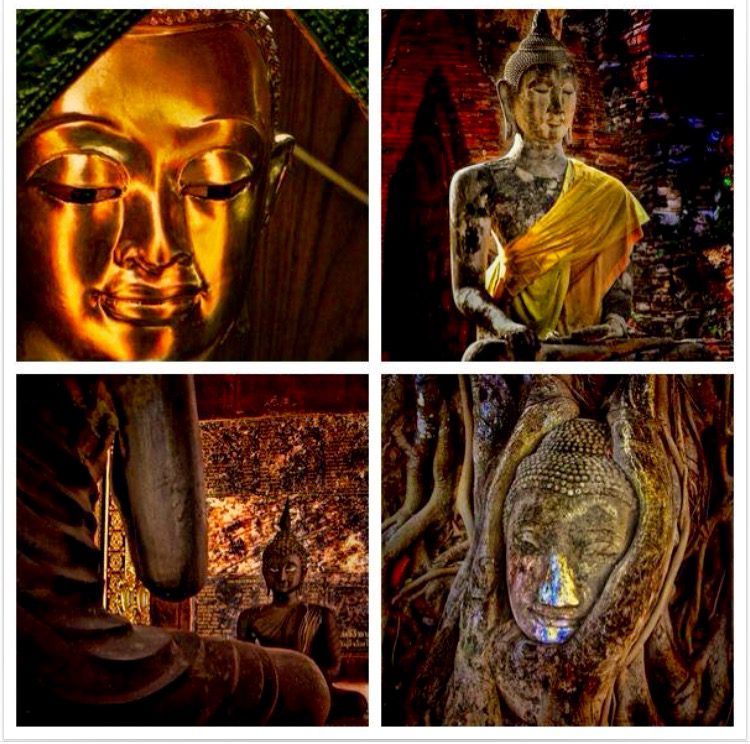 Note: This is the fourth of five post based on talks from Rohatsu 2014. Students (Brian, Ryan, Erik, and Vera-Ellen – thank you!) transcribed them and I edited. The final one will be posted here soon. Click here for the first part: “The Root of Zen.” Here for the second: “Sitting Through it All.” And here for the third: “Not Clear About the Self.”
———
For Zen practice, it is vital to become a zazen person and establish your seat firmly, just as the Buddha did. As Keizan says, “…sitting on the indestructible seat, so immobile that spiders spun webs in his eyebrows and magpies built a nest on top of his head.”
Every time we sit like that, we commemorate the Buddha’s enlightenment. And yet this is only a necessary condition to realizing the same mind as Buddha. “I together with all beings in the great earth attain the way.”
This realization, “the transcendence of both sacred and profane,” as Dogen says, depends on the power of zazen. The realization “I together with all living beings in the great earth attain the way” arises from this stable seat and is available to you, whoever you are. That’s the good news of the Zen tradition.
We don’t need to cultivate perfections for eons, but can sit down in this very life.
That’s the first step. If you accomplish this, then, as Keizan admonishes us, “… get rid of ‘you’ and ‘Buddha,’ and quickly, intimately understand this matter of ‘I.’”
This “you” as an object, “Stone drills from the Chin period (see previous post),” is an artifact of unfulfilled ambition. The awareness of the fact that “you” is an artifact of our unfulfilled ambitions, though, doesn’t stop us from still engaging in supportive delusions for that “you” artifact. As we sit, we can see much of our thinking going into supporting the “you.”
However, as we settle into sesshin, thinking becomes soft and subtle. In that subtle thinking we can see the “you” functioning more clearly, supporting the sense of separation between the self and world.
“This is who I am. These are my credentials. These are my badges of shame and honor.”
This is the “you” that Keizan encourages us to get rid of. But how to get rid of it? It’s like a piece of bubble gum stuck to the finger, the more you shake the finger the more the bubble gum sticks. Certainly thinking about getting rid of the “you” is just more activity of the “you,” the artifact of unfulfilled ambition, churning out some more discursiveness. We can see it most clearly when the storyline gets threatened, when the “you” we’ve invested so much energy into, is threatened by an alternative storyline. “Oh, no, that’s not me! No! No!”
That won’t do it.
Katagiri Roshi used to liken our rehearsing our stories to a yak licking its tail. Apparently a yak will lick its tail until its tongue bleeds. This is our support of the “you,” support of the self as an object through our discursive processes. So how about just shutting up completely? Yes, we can stop rehearsing all those old stale-bread stories.
Fortunately or unfortunately, when we really shut up and cut off the sources for the continued support of this artifact of unfulfilled ambition, the “you” is still there. The “you” lingers, even as a subtle scent. Although shutting up does provide a little relief, which is nice – the yak can stop licking its tail – ten minutes later or Sunday afternoon when the sesshin ends, someone might say something we don’t like, and there we go again.
If more discursiveness won’t do it, and shutting up won’t do, clearly, something else is called for. That something else depends on stable sitting. To really see what it is, to really see what the “you” is, “…quickly, intimately, understanding this matter of ‘I’ as ‘the great earth and all living beings’ as ‘and.’”
This is the mysterious pivot that we can come to in our practice. We enter the pivot and sit as if “gazing at tree for ten eons.” The mysterious pivot is like knocking on heaven’s door. Knock, knock, knock with wholeheartedness without expectation of reward. And then suddenly the mysterious pivot will turn.
We might enter the mysterious pivot, though, particularly late into the sesshin and lull into a hazy glare. We might get to heaven’s door but then we tap timidly, afraid to knock on heaven’s door wholeheartedly, thinking that when the door opens, when the mysterious pivot turns, the self will be erased and we will be obliterated. So it’s important to have some sense of this matter so that when you enter the mysterious pivot, come to full stop at heaven’s door, you can knock on the door wholeheartedly.
Here’s a case in point.
Fayan practiced for quite some time at one of the large state monasteries in China with one of the great teachers of the age, a monk named Ch’ang Ch’ing. In China in those days they had a state-run monastic system and an independent system where all sorts of offbeat and rogue elements could thrive and probably kept the state system rejuvenated through its innovations.
Just as the old monk Gutei raised one finger when asked about the buddhadharma, Ch’ang Ch’ing would raise his whisk. After some years of training in whisk-raising, Fayan and a couple of his companions decided to go on pilgrimage, so they left the large, comfortable state monastery. All three of them had probably been upper class kids leading pampered lives, even as monks. To their credit they left home and went wandering about. They were deep in the mountains, on their way to another state-sponsored monastery, when a big snow storm came up. Fortunately, they happened to see a temple up ahead and some lanterns burning.
Inside the temple, they found a disheveled old country monk, Dizhang. He greeted them and offered them a place close to the fire. Dizhang’s temple was in the independent, rogue system. As the three young monks from the Ivy League monastery were standing around in the country temple warming themselves by the fire, they were chatting about the buddhadharma. Dizhang came up behind them and said, “Hey, I hear you’re talking about mountains, rivers and the great earth. So I was wondering, are the mountains, rivers and great earth the same as you guys or are the mountains and rivers and great earth different than you guys?”
One of the monks said, “Different.”
Dizhang held up his two fingers, chuckled, and went off.
By holding up two fingers, Dizhang indicated to the monk, “You’re seeing the world dualistically.” And, perhaps, “You haven’t passed through the mysterious pivot.”
So you might think that the right answer was to say, “Same.” Let’s see how that plays out.
Fayan was impressed by this old monk and wanted to stick around check him out further. One of his companions, though, said, “I think you are mistaking elephant tusks for a rat’s mouth.”
Nevertheless, Fayan stayed and the other two continued on their pilgrimage, although both would eventually circle back and wake up through Dizhang’s guidance. Our immediate hero, Fayan, went to dokusan every day with Dizhang, repeatedly presenting his understanding of the buddhadharma, but Dizhang would just shake his head and say, “The buddhadharma is not like this.”
Finally, Fayan was cornered so that he could not move and inch. He had found the mysterious pivot. He said, “My words are exhausted, my reason come to an end.”
Dizhang said, “If one were to discuss the buddhadharma, all things would appear in full.” And Fayan was greatly enlightened.
Years later, Fayan began teaching as a successor to Dizhang, not Ch’ang Ch’ing. When the word spread, and his old dharma brother Zizhao (not one of those who had accompanied Fayan to visit Dizang originally) heard the news. That Fayan claimed dharma ancestry with a country bumpkin rathern than their shared teacher, Ch’ang Ch’ing, offended Zizhou. His sense of “you” was under attack.
Zizhao was the head monk at Ch’ang Ch’ing’s old monastery at that time. He gathered up some of his fellow monks, the true successors of Ch’ang Ch’ing and off they went to confront Fayan.
Fayan heard that they were coming and went out to greet them. And, of course, Fayan’s students thought, “Hmmm, this is going to be interesting” so they all followed Fayan, expecting a shootout at the OK Corral.
When Zizhao and Fayan met, Fayan greeted Zizhao as a teacher, bowing to him respectfully. Zizhao said, “I hear you’ve set yourself up here as a teacher. To whom do you succeed?”
Fayan said “I am a successor of Dizhang.”
Zizhao said, “Well, you certainly have turned your back on our late master, Ch’ang Ch’ing.” You certainly betray all the kindness that he showed you through all those years of training with him.
Fayan said, “Yeah, well, you know, I didn’t understand a single thing Ch’ang Ch’ing said.”
Zizhao said, “Well, why don’t you raise something up, and I’ll explain it for you.”
Fayan said, “Our late teacher said, ‘in the myriad forms a single body is revealed,’ how do you understand that?”
It’s much to the point about the concern about being obliterated by oneness. If the “you” is gotten rid of, is there just annihilation then?
Zizhao raised his whisk, just like Ch’ang Ch’ing would do. Zizhao was not alone in imitating his teacher. Gutei’s student is said to have raised his finger and had it cut off by Gutei. In the key stories of the Zen tradition, there is frequently a play of imitation and authenticity, underscoring for us the importance of both aspects as we find our way in establishing the seat and realizing the truth of the buddhadharma.
It’s unclear at this point, despite his getting ornery with Fayan, whether Zizhao was a master of the dharma or imitating the forms.
When Zizhao held up his whisk, Fayan said, “You learned that at Ch’ang Ch’ing’s place. How about on your part?”
Zizhao just sat silently, stuck, loyal to his teacher to a fault. It’s very human for us to get stuck, so we can have compassion for Zizhao, too, even though he isn’t the Zen hero du jour.
Fayan then turned and addressed the assembled monks, his students and Zizhao’s students, and asked them, “In the myriad things a single body is revealed. Does this erase myriad things or not erase myriad things?”
One group of monks said, “Erased”
Fayan just held up two fingers (which is what he learned from Dizhang).
The other group of monks said, “Not erased.”
Fayan again held up two fingers.
One of the monks asked, “How about for you, teacher?”
Fayan said, “In the myriad things a single body is revealed.”
Previous Post

December 11, 2015
Buddha's Enlightenment: Not Clear About the Self
Next Post
December 17, 2015 Buddha's Enlightenment: Yielding Assertively, Touching the Heart
Browse Our Archives
Select a Category Uncategorized
Select a Month August 2023 July 2023 June 2023 May 2023 April 2023 March 2023 February 2023 January 2023 December 2022 November 2022 October 2022 September 2022 August 2022 July 2022 June 2022 May 2022 April 2022 March 2022 February 2022 January 2022 December 2021 November 2021 August 2021 June 2021 April 2021 February 2021 January 2021 November 2020 September 2020 August 2020 July 2020 June 2020 May 2020 April 2020 January 2020 December 2019 November 2019 August 2019 June 2019 May 2019 April 2019 February 2019 January 2019 December 2018 November 2018 October 2018 September 2018 August 2018 July 2018 June 2018 May 2018 April 2018 March 2018 February 2018 January 2018 December 2017 November 2017 October 2017 September 2017 August 2017 July 2017 June 2017 December 2016 October 2016 June 2016 April 2016 February 2016 January 2016 December 2015 November 2015 October 2015 August 2015 June 2015 May 2015 April 2015 March 2015 February 2015 January 2015 December 2014 November 2014 October 2014 September 2014 August 2014 July 2014 June 2014 May 2014 April 2014 March 2014 February 2014 January 2014 December 2013 November 2013 October 2013 September 2013 August 2013 July 2013 June 2013 May 2013 April 2013 March 2013 February 2013 January 2013 December 2012 November 2012 October 2012 September 2012 August 2012 July 2012 June 2012 May 2012 April 2012 March 2012 February 2012 January 2012 December 2011 November 2011 October 2011 September 2011 August 2011 July 2011 June 2011 May 2011 April 2011 March 2011 February 2011 January 2011 December 2010 November 2010 October 2010 September 2010 August 2010 July 2010 June 2010 May 2010 April 2010 March 2010 February 2010 January 2010 December 2009 November 2009 October 2009 September 2009 August 2009 July 2009 June 2009 May 2009 April 2009 March 2009 February 2009 January 2009 December 2008 November 2008 October 2008 September 2008 August 2008 July 2008 June 2008 May 2008
Follow Us!
TAKE THE
Religious Wisdom Quiz
What disaster did Joseph predict would happen to Egypt?
Select your answer to see how you score.
Seven-year famine Flood Plague of locusts Great fire
Related posts from Wild Fox Zen

What is the Heart of Zen? Reflections on...
A Black Lacquer Person Runs Through the Night:...

Not Looking Toward The Peace Of The Innermost...

Intimate Knowing: How To Work With Thinking In...
TRENDING AT PATHEOS Buddhist

On Taking Refuge in the Dharma
(Here I continue the feature of sharing talks and essays by teachers...

(Continuing my intention to share talks and essays by other members of Empty...
The Subtle Art of Bowing: A Dharma Discourse
(This presentation was first offered by my dear friend Dharma Holder Tom...

Internal Family Systems Can Heal you Mentally &...
How IFS Helped Me Stop Fighting Myself Internal Family Systems (IFS) is...

The Bible No One Spoke About: A Family’s...
A mysterious family Bible, unspoken faith, and a journey from curiosity to...

How Uncertainty Can Transform Your Life in 2025
Embracing Uncertainty: A New Year’s Resolution for the Brave As 2025 approaches,...
view all Buddhist blogs
Ad-Free & Subscriber Log-In Subscription Support
- About Us
- 2026 Calendar
- Videos
- Podcasts
- Library of World Religions
- Faith In Media Tracker
- Advertise With Us
- Write for Us
- Privacy Policy
- Terms of Service
- Do Not Sell My Data
- Contact Us
- Radiant Digital
- Manage Newsletter Subscriptions
- Unsubscribe From Notifications
- Sitemap
Copyright 2008-2026, Patheos. All rights reserved.
Subscription Support Ad-Free & Subscriber Log-In
Follow Patheos