
BuddhistCatholicContemplativeEvangelicalGeneral ChristianHinduJewishLatter-day SaintMuslimNew VisionsProgressive Christian
Beliefs
- Buddhist
- Catholic
- Contemplative
- Evangelical
- General Christian
- Hindu
- Jewish
- Latter-day Saint
- More Voices
- Muslim
- New Visions
- Pagan
- Progressive Christian
Topics
- Religion News
- Food and Religion
- Sports and Religion
- Religious Art
- Religious Music and Entertainment
- Religious Events
- History and Religion
- Style and Religion
- Politics and Religion
- Women in Religion
- Recreation Outdoors and Religion
- Business Finance and Religion
- Careers Workplace and Religion
- Education and Religion
- Family Parenting and Religion
- Health Fitness and Religion
- Home and Religion
- Relationships and Religion
- Technology and Religion
- Travel and Religion
Columnists
- Buddhist Columnists
- Business Finance and Religion Columnists
- Careers Workplace and Religion Columnists
- Catholic Columnists
- Contemplative Columnists
- Education and Religion Columnists
- Evangelists Columnists
- Family Parenting and Religion Columnists
- General Christian Columnists
- Health Fitness and Religion Columnists
- Hindu Columnists
- History and Religion Columnists
- Home and Religion Columnists
- Jewish Columnists
- More Voices Columnists
- Latter Day Columnists
- Muslim Columnists
- New Visions Columnists
- Nonreligious Columnists
- Pagan Columnists
- Politics and Religion Columnists
- Progressive Columnists
- Recreation Outdoors and Religion Columnists
- Relationships and Religion Columnists
- Religion News Columnists
- Religious Art Columnists
- Religious Events Columnists
- Religious Music and Entertainment Columnists
- Sports and Religion Columnists
- Style and Religion Columnists
- Technology and Religion Columnists
- Travel and Religion Columnists
- Women in Religion Columnists
Resource Library
- 2026 Calendar
- Library of World Religions
- The 100 Most Holy Places on Earth
- Patheos Answers
- Podcasts
- Videos
- Faith Leaders Database
- Anglican Episcopalian
- Bahai
- Baptist
- Buddhism
- Christianity
- Confucianism
- Eastern Orthodoxy
- Hinduism
- Holiness and Pentecostal
- ISKCON
- Islam
- Judaism
- Lutheran
- Methodist
- The Church of Jesus Christ of Latter-day Saints
- New Age
- Paganism
- Presbytarian and Reformed
- Protestantism
- Religion Behind the Scenes
- Roman Catholic
- Scientology
- Shia Islam
- Sikhism
- Sufism
- Sunni Islam
- Taoism
- Zen
- See all religions
Research Tools
 Ad-Free & Subscriber Log-In Subscription Support
Ad-Free & Subscriber Log-In Subscription Support
Follow Patheos 

- Trending:
- Forgiveness
- |
- Marriage
- |
- Consciousness
- |
- Death Penalty
- |
- Election
- |
- Halloween
 Wild Fox Zen
- Home
- Buddhist
- Buddha’s Enlightenment: Not Clear About the Self
Buddha’s Enlightenment: Not Clear About the Self
Last updated on: December 11, 2015 at 12:30 pm by Dosho Port
Buddha’s Enlightenment: Not Clear About the Self 2015-12-11T12:30:02-06:00 Dosho Port
Patheos Explore the world's faith through different perspectives on religion and spirituality! Patheos has the views of the prevalent religions and spiritualities of the world.
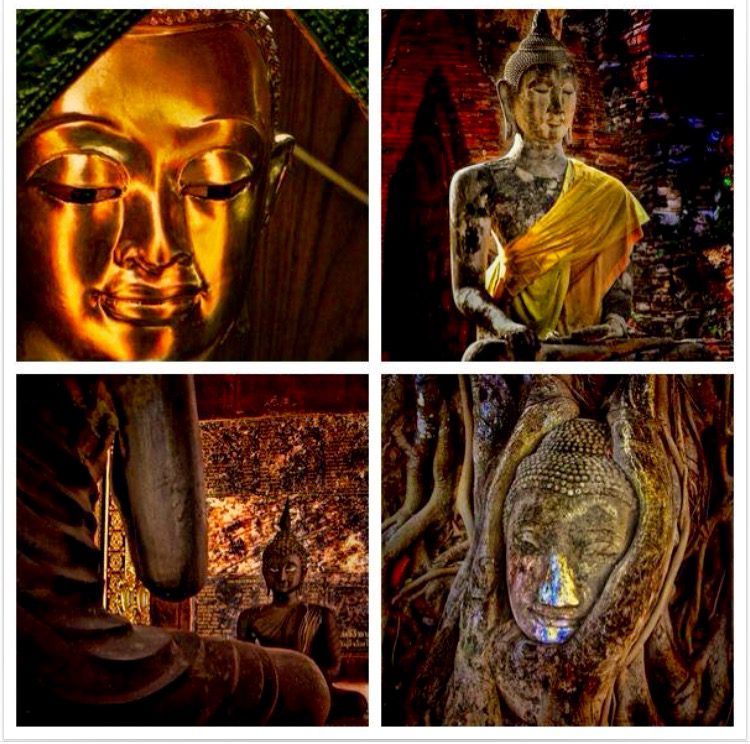 Note: This is the third part of five, based talks from last year’s Rohatsu that students (Brian, Ryan, Erik, and Vera-Ellen – thank you!) transcribed and I edited. The others will be posted here over the next couple weeks. Click here for the first part: “The Root of Zen.” And here for the second: “Sitting Through it All.”
“If you want to understand, if you want an intimate understanding of enlightenment, you should get rid of ‘you’ and ‘Buddha’ and quickly understand this matter of ‘I’. ‘I’ is the great earth and all things, all beings as ‘and’. ‘And’ is not ‘I’ as the old fellow Shakyamuni Buddha. Examine carefully. Deliberate carefully. And clarify this ‘I’ and ‘and.’ If you clarify the meaning of ‘I,’ but fail to clarify ‘and’ you lose the discerning eye.” – Keizan, Record of Transmitting the Light
In the teaching on the six realms of existence (hell, hungry ghost, animial, human fighting god, and god realms), each realm is depicted with a bodhisattva in it. For the human realm the bodhisattva appears as Shakyamuni carrying a pilgrim’s staff.
In ancient times, in China in the 9th and 10th Centuries, the good ol’ days of Zen, tens of thousands of people were out on pilgrimage, on the road, seeking for the truth. These pilgrims commemorated Shakyamuni Buddha’s enlightenment with body and mind, really putting it on the line, really sticking their necks out.
“Commemorate,” etymologically, means to all together relate. So to all together let’s relate to what the Buddha did, sitting under the bodhi tree. It’s really necessary that we, too, put our bodies there. And stick our necks out.
One such pilgrim in the 9th Century was a monk named Yunmen. He later became known as a living Buddha, starting one of the branching streams of the Zen school in China. While he was on pilgrimage, he visited a monk named Muzhou. Muzhou had been a student of the great master Huangbo. When Muzhou was serving Huangbo, he grabbed the shave-pate Linchi and dragged him into the dokusan line. Linchi had been lingering in Huangbo’s community for three years without raising a question. Muzhou had the eye to see that Linchi was somebody with possibility, and he also had the eye to see somebody who was holding back. Muzhou encouraged Linchi to go and meet Huangbo.
When Linchi come forward and ask, “What is the essence of the buddhadharma?” Huangbo hit and chased him out of the room, setting up Linchi’s great enlightenment and spawning another of the main streams of Zen, this one flowing on until today.
Later on this monk, Muzhou, left the religious life to support his aging mother by making sandals, some of which he would kindly leave by the road for pilgrims. Because his tutelage under Huangbo was well known among truth seeking pilgrims, many monks and nuns sought him out. They’d go and knock at his door Muzhou would answer by just cracking the door a little bit, and say “Who is it!?”
Due to his clear eye, he could see through a practitioner immediately. Usually he would slam the door shut, ending the meeting, often before the truth seekers, who had walked in straw sandals for hundreds of miles, had even said a word. And yet they kept coming.
Yunmen was one of these seekers who had Muzhou’s door slammed in his face. But that didn’t stop him. Yunmen returned again and again. One day when Muzhou asked, “Who is it!?” Yunmen said, “It’s me,” and stuck his leg into the doorway. Muzhou slammed the door anyway, reportedly breaking Yunmen’s leg.
Muzhou then said, “Why do you keep coming back?”
Yunmen said, “I’m not clear about the self.”
Muzhou said, “Stone drills from the Qin period.”
It seems that the Qin emperor, an ancient emperor in China, conceived a megalomaniac plan to build a huge palace for which they would need huge granite pillars. They were on their way to completing the drills to dig out the granite for the palace, when the regime fell.
“Stone drills from the Qin period” is usually translated something to the effect of “Utterly useless stuff,” but it’s not just utterly worthless stuff. It refers to an artifact of a megalomaniac scheme. That’s what this self is.
In Keizan’s text, Record of Transmitting the Light, he invites us to have an intimate, immediate understanding of enlightenment, getting rid of this self and Buddha.
Buddha Shakyamuni was known for many things, including being the great renunciate – getting rid of many things. He left home, leapt over the palace walls in the dead of the night and shaved off his hair, practiced austerities for six years. He left his beautiful wife and young son, as well as his father the king. He abandoned a career trajectory as a prince and king himself.
And we too, as we sit, tranquil and upright – there may well be something we have to let go of, something we have to renounce. We could start with renouncing stone drills from the Qin period. The artifacts, the ways of relating that we carry around with us, dragging them on our backs. They’re just yesterday’s dream. To really merge with what is, to become one with mu, for example, get clear about what is it that you have to let go of. What stance, what identity? What stone drill from the Qin period has to be renounced?
Keizan exhorts us to get rid of you and even Buddha and quickly understand this matter of “I.”
What? He tells us to get rid of “you” but understand the matter of I?
This “you” is where we separate ourselves from the environment, from each other and even separate ourself from ourself. Let go of “you” as a subject, or you as an object, the you that you contemplate. Quickly, immediately, intimately, become this matter of “I.” There can’t be procrastinating. It’s done immediately, intimately.
And what about this matter of “I?” Keizan says, “‘I’ is the great earth and all beings as ‘and’.”
This refers back to “I together with all beings and the great earth attain the way.” This “I,” as in “I together,” what is this “I?”
It’s the key to our practice. “I together with all beings.” This little word “and” is the great connector.
Quickly, without separation, understand this matter of “I.” “I is the great earth and all living beings as ‘and.’”
Nothing apart. Instead of chasing after the ten thousand things, the world turns around and the ten thousand things advance.
Then just to make sure we get the point, Keizan says again, “’And’ is not ‘I’ as the old fellow Shakyamuni Buddha.”
In a sense, it is impersonal. The “you” that is the object of awareness seems so personal. Any kind of separation whatsoever – drop them! “Carefully examine, deliberate carefully and clarify this ‘I’ and ‘and’.”
I suspect here that the translation might lead us into thinking that the practice is in the head, swirling. No, it’s just upright sitting and looking very intimately with and through the whole body.
“Even if you clarify the meaning of ‘I,’ but fail to clarify ‘and,’ you lose the discerning ‘I.’”
There’s a suggestion here that this first opening, the first opening of clarity about ‘I,’ isn’t enough. The insight doesn’t yet have legs. There can be clarity about the self, but that clarity is not yet functional in daily life. That doesn’t mean that the insight isn’t important, even vital, in this practice. It just means that these kinds of provisional insights are just the beginning, not the end. And the insight itself can become a stone drill from the Qin period. And so, ongoing training after realization, is essential.
On our pilgrimage together, we’re entering this wonderful middle period of sesshin. This is a really important time to throw ourselves completely into it without any expectation of gain or result. Just doing like the Buddha did. Our energy is changing constantly. We are just change and we are all going through changes. When you become familiar with sesshin, you can see some patterns. There’s no guarantee, but there are some patterns.
Often in this middle period of sesshin, we can really let go and be who we are. The “I,” the host, can sit calmly inside the house and we can just be “and.” We can just be the connection. The heart opens and we hear the raindrops reverberating all around the house, together with the soft hum of the traffic. Just be the sound of the raindrops, the hum of the refrigerator.
One of the dangers of this period, is that we can become complacent, and lull our time away. Dropping a question into the quiet is very important. With muji, “What is mu?” With earnest vivid sitting, the question is just the naked, raw question mark. With the breath, the question is “What is the breath?”
Don’t go to sleep. You’ve come too far in the pilgrimage of your life. You’ve come too far to go to sleep now and lull out with some little realization, some little sense of comfort and ease. Renounce the stone drills from the Qin period and continue practicing timelessly.
Previous Post

December 4, 2015
Buddha's Enlightenment: Sitting Through It All
Next Post
December 15, 2015 Buddha's Enlightenment: A Single Body is Revealed
Browse Our Archives
Select a Category Uncategorized
Select a Month August 2023 July 2023 June 2023 May 2023 April 2023 March 2023 February 2023 January 2023 December 2022 November 2022 October 2022 September 2022 August 2022 July 2022 June 2022 May 2022 April 2022 March 2022 February 2022 January 2022 December 2021 November 2021 August 2021 June 2021 April 2021 February 2021 January 2021 November 2020 September 2020 August 2020 July 2020 June 2020 May 2020 April 2020 January 2020 December 2019 November 2019 August 2019 June 2019 May 2019 April 2019 February 2019 January 2019 December 2018 November 2018 October 2018 September 2018 August 2018 July 2018 June 2018 May 2018 April 2018 March 2018 February 2018 January 2018 December 2017 November 2017 October 2017 September 2017 August 2017 July 2017 June 2017 December 2016 October 2016 June 2016 April 2016 February 2016 January 2016 December 2015 November 2015 October 2015 August 2015 June 2015 May 2015 April 2015 March 2015 February 2015 January 2015 December 2014 November 2014 October 2014 September 2014 August 2014 July 2014 June 2014 May 2014 April 2014 March 2014 February 2014 January 2014 December 2013 November 2013 October 2013 September 2013 August 2013 July 2013 June 2013 May 2013 April 2013 March 2013 February 2013 January 2013 December 2012 November 2012 October 2012 September 2012 August 2012 July 2012 June 2012 May 2012 April 2012 March 2012 February 2012 January 2012 December 2011 November 2011 October 2011 September 2011 August 2011 July 2011 June 2011 May 2011 April 2011 March 2011 February 2011 January 2011 December 2010 November 2010 October 2010 September 2010 August 2010 July 2010 June 2010 May 2010 April 2010 March 2010 February 2010 January 2010 December 2009 November 2009 October 2009 September 2009 August 2009 July 2009 June 2009 May 2009 April 2009 March 2009 February 2009 January 2009 December 2008 November 2008 October 2008 September 2008 August 2008 July 2008 June 2008 May 2008
Follow Us!
TAKE THE
Religious Wisdom Quiz
Which Christian group primarily uses icons in worship?
Select your answer to see how you score.
Quaker Anglican Baptist Eastern Orthodox
Related posts from Wild Fox Zen

Throw Yourself Into the House of Buddha: The...

New Vine Ghost Site for Dosho's Creative Endeavors...

Gnawing Through Qiánfēng’s Three Illnesses and Two Lights

"Why, Oh Why, Is My Practice Not Progressing?"
TRENDING AT PATHEOS Buddhist

On Taking Refuge in the Dharma
(Here I continue the feature of sharing talks and essays by teachers...

(Continuing my intention to share talks and essays by other members of Empty...
The Subtle Art of Bowing: A Dharma Discourse
(This presentation was first offered by my dear friend Dharma Holder Tom...

Internal Family Systems Can Heal you Mentally &...
How IFS Helped Me Stop Fighting Myself Internal Family Systems (IFS) is...

The Bible No One Spoke About: A Family’s...
A mysterious family Bible, unspoken faith, and a journey from curiosity to...

How Uncertainty Can Transform Your Life in 2025
Embracing Uncertainty: A New Year’s Resolution for the Brave As 2025 approaches,...
view all Buddhist blogs
Ad-Free & Subscriber Log-In Subscription Support
- About Us
- 2026 Calendar
- Videos
- Podcasts
- Library of World Religions
- Faith In Media Tracker
- Advertise With Us
- Write for Us
- Privacy Policy
- Terms of Service
- Do Not Sell My Data
- Contact Us
- Radiant Digital
- Manage Newsletter Subscriptions
- Unsubscribe From Notifications
- Sitemap
Copyright 2008-2026, Patheos. All rights reserved.
Subscription Support Ad-Free & Subscriber Log-In
Follow Patheos