
BuddhistCatholicContemplativeEvangelicalGeneral ChristianHinduJewishLatter-day SaintMuslimNew VisionsProgressive Christian
Beliefs
- Buddhist
- Catholic
- Contemplative
- Evangelical
- General Christian
- Hindu
- Jewish
- Latter-day Saint
- More Voices
- Muslim
- New Visions
- Pagan
- Progressive Christian
Topics
- Religion News
- Food and Religion
- Sports and Religion
- Religious Art
- Religious Music and Entertainment
- Religious Events
- History and Religion
- Style and Religion
- Politics and Religion
- Women in Religion
- Recreation Outdoors and Religion
- Business Finance and Religion
- Careers Workplace and Religion
- Education and Religion
- Family Parenting and Religion
- Health Fitness and Religion
- Home and Religion
- Relationships and Religion
- Technology and Religion
- Travel and Religion
Columnists
- Buddhist Columnists
- Business Finance and Religion Columnists
- Careers Workplace and Religion Columnists
- Catholic Columnists
- Contemplative Columnists
- Education and Religion Columnists
- Evangelists Columnists
- Family Parenting and Religion Columnists
- General Christian Columnists
- Health Fitness and Religion Columnists
- Hindu Columnists
- History and Religion Columnists
- Home and Religion Columnists
- Jewish Columnists
- More Voices Columnists
- Latter Day Columnists
- Muslim Columnists
- New Visions Columnists
- Nonreligious Columnists
- Pagan Columnists
- Politics and Religion Columnists
- Progressive Columnists
- Recreation Outdoors and Religion Columnists
- Relationships and Religion Columnists
- Religion News Columnists
- Religious Art Columnists
- Religious Events Columnists
- Religious Music and Entertainment Columnists
- Sports and Religion Columnists
- Style and Religion Columnists
- Technology and Religion Columnists
- Travel and Religion Columnists
- Women in Religion Columnists
Resource Library
- 2026 Calendar
- Library of World Religions
- The 100 Most Holy Places on Earth
- Patheos Answers
- Podcasts
- Videos
- Faith Leaders Database
- Anglican Episcopalian
- Bahai
- Baptist
- Buddhism
- Christianity
- Confucianism
- Eastern Orthodoxy
- Hinduism
- Holiness and Pentecostal
- ISKCON
- Islam
- Judaism
- Lutheran
- Methodist
- The Church of Jesus Christ of Latter-day Saints
- New Age
- Paganism
- Presbytarian and Reformed
- Protestantism
- Religion Behind the Scenes
- Roman Catholic
- Scientology
- Shia Islam
- Sikhism
- Sufism
- Sunni Islam
- Taoism
- Zen
- See all religions
Research Tools
 Ad-Free & Subscriber Log-In Subscription Support
Ad-Free & Subscriber Log-In Subscription Support
Follow Patheos 

- Trending:
- Forgiveness
- |
- Marriage
- |
- Consciousness
- |
- Death Penalty
- |
- Election
- |
- Halloween
 Wild Fox Zen
- Home
- Buddhist
- Review of “Waking Up: A Guide to Spirituality Without Religion”
Review of “Waking Up: A Guide to Spirituality Without Religion”
Last updated on: October 13, 2014 at 8:05 am by Dosho Port
Review of “Waking Up: A Guide to Spirituality Without Religion” 2014-10-13T08:05:06-06:00 Dosho Port
Patheos Explore the world's faith through different perspectives on religion and spirituality! Patheos has the views of the prevalent religions and spiritualities of the world.
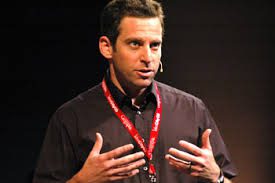 That’s by Sam Harris and it’s on the “New York Times Bestseller List” which I think is really interesting and cool – lots of people buying a book on waking up is wonderful.
If only I’d gotten my act together here and alerted you earlier, you might have seen Sam in person in LA, New York, or San Francisco in September for $219 (about as much as a friend is spending to see Bob Dylan in concert next month). Sam’s “…lecture and Q&A will be followed by a catered cocktail reception.”
You don’t get that with Bob.
All the events were apparently sold out.
Sam’s mostly known for giving the Christians, Jews, and Muslims hell and advocating atheism. Indeed, Ben Affleck recently called Sam and Bill Maher Islamophobes and they all had an argument about that last week – Click.
In Waking Up, Sam’s argument isn’t about Islam Fundamentalists like ISIS but about how different religious doctrine can either encourage waking up or discourage it. He doesn’t discriminate against Islam in the book (nor do I think his argument against Islamic extremism is discriminatory) but chides it equally with Christianity and Judaism as religions that discourage waking up.
The main thrust of the early part of the book, though, is to make a case for nonself based on current research about the nature of consciousness. One of my favorite parts is about the research with people who’ve had their corpus callosums cut to prevent seizures. Turns out that they likely have two different consciousnesses and senses of self – in the same body.
This section is a great read as he shows how science supports nonself perspective and yet how it must be personally verified to make a difference in one’s life. He also acknowledges this this is not so easy to do. Here’s Sam:
“Look closely enough at your own mind in the present moment, and you will discover that the self is an illusion. The problem with a claim of this kind, however, is that one can’t borrow another person’s contemplative tools to test it. To see how the feeling of “I” is a product of thought—indeed, to even appreciate how distracted by thought you tend to be in the first place—you have to build your own contemplative tools. Unfortunately, this leads many people to dismiss the project out of hand: They look inside, notice nothing of interest, and conclude that introspection is a dead end. But just imagine where astronomy would be if, centuries after Galileo, a person were still obliged to build his own telescope before he could even judge whether astronomy was a legitimate field of inquiry. It wouldn’t make the sky any less worthy of investigation, but astronomy’s development as a science would become immensely more difficult.”
Nice point, don’t you think?
Sam likens the realization of nonself with the optic blind spot:
“The direct perception of the optic blind spot again provides a useful analogy: Imagine that perceiving the blind spot will completely transform a person’s life. Next, imagine that whole religions such as Judaism, Christianity, and Islam are predicated on the denial of the blind spot’s existence—let us say that their central doctrines assert the perfect uniformity of the visual field. Perhaps other traditions acknowledge the blind spot but in purely poetical terms, without giving any clear indication of how to recognize it. A few lineages may actually teach techniques whereby one can see the blind spot for oneself, but only gradually, after months and years of effort, and even then one’s glimpses of it will seem more a matter of luck than anything else. In a more esoteric tradition still, a “blind spot master” gives the “pointing-out instruction” but without much precision: Perhaps he tells you to close one eye, for reasons that are never made explicit, and then says that the spot you seek is right on the surface of your vision. No doubt some people will succeed in discovering the blind spot under these conditions, but the teacher could certainly be clearer than this.”
Some Dzogchen teachers, according to Sam, are world class blind spot masters, especially the late Tulku Urgyen. “Dzogchen,” he writes, “is not vague or paradoxical. It is not like Zen, wherein a person can spend years being uncertain whether he is meditating correctly.”
Hey, now! Zen isn’t essentially vague. Paradoxical, okay, yes. We do have some world class paradoxes. For example, Zen is something you can’t do alone or get better at. Want to try it?
Still, I think Sam calling Zen vague is a nice healthy tweak. Zen can sometimes be presented in a really vague, meandering way and yet, it really doesn’t need to be. I’ve seen how giving people precise directions for practice can make a big positive difference. So I share this criticism of Zen and am determined do my best to make a difference on this count.
And speaking of paradox, try spirituality without religion – the faith of 12% of Americans, according to Sam. My concern with that approach is simple – more “my way” and less letting go does not lead to well being or the ground of being. Granted, that’s just arm-chair quarterbacking. My path has been to find spirituality within religion and that’s worked out just fine. Well, with numerous bumps in the road as you might expect.
My main concern with the book, though, is about what Sam calls “waking up.”
“It is considered bad form” says Sam, “in most spiritual circles, especially among Buddhists, to make claims about one’s own realization . However, I think this taboo comes at a high price, because it allows people to remain confused about how to practice. So I will describe my experience plainly.”
Well, bravo! Good for him. Good for you, Sam. I think that takes guts. Here’s his story:
“Before meeting Tulku Urgyen, I had spent at least a year practicing vipassana on silent retreats. The experience of self-transcendence was not entirely unknown to me. I could remember moments when the distance between the observer and the observed had seemed to vanish, but I viewed these experiences as being dependent on conditions of extreme mental concentration. Consequently, I thought they were unavailable in more ordinary moments, outside intensive retreat. But after a few minutes, Tulku Urgyen simply handed me the ability to cut through the illusion of the self directly, even in ordinary states of consciousness. This instruction was, without question, the most important thing I have ever been explicitly taught by another human being. It has given me a way to escape the usual tides of psychological suffering—fear, anger, shame—in an instant. At my level of practice, this freedom lasts only a few moments. But these moments can be repeated, and they can grow in duration. Punctuating ordinary experience in this way makes all the difference. In fact, when I pay attention, it is impossible for me to feel like a self at all: The implied center of cognition and emotion simply falls away, and it is obvious that consciousness is never truly confined by what it knows. That which is aware of sadness is not sad. That which is aware of fear is not fearful. The moment I am lost in thought, however, I’m as confused as anyone else.”
Sam certainly echoes Dogen’s pithy summary of the path, at least in part: “To study the buddha way is to study the self. To study the self is to forget the self. To forget the self is to be actualized by myriad things. When actualized by myriad things, your body and mind as well as the bodies and minds of others drop away. No trace of enlightenment remains, and this no-trace continues endlessly.”
And there may be something else. Sam seems to be suggesting a consciousness that is separate from sense experience. “That which is aware of sadness is not sad.”
If Sam wandered into my dokusan room, I’d ask, “Who is sad?” “Who hears?” “Who sees?”
It isn’t clear that waking up for Sam is waking up, at least in the context of the Zen tradition. And because a waking up experience provides the basis for practicing enlightenment, this is an important point. Maybe it’s just a difference of school and waking up in Dzogchen is different – although a friend who has studied Dzogchen intensively for thirty-some years confirmed my suspicions about Sam’s presentation on this point.
Still, the first part of the book on consciousness and self is strong. I found the section on waking up intriguing. And that made up for the last chapter, “Gurus, Death, Drugs, and Other Puzzles,” where the book loses focus with some miscellaneous filler.
"Waking Up: A Guide to Spirituality Without Religion"
Previous Post

September 30, 2014
Twelve Points for Zen Practice
Next Post
November 1, 2014 On Putting Unitive Awareness to Work in an Online Community
Browse Our Archives
Select a Category Uncategorized
Select a Month August 2023 July 2023 June 2023 May 2023 April 2023 March 2023 February 2023 January 2023 December 2022 November 2022 October 2022 September 2022 August 2022 July 2022 June 2022 May 2022 April 2022 March 2022 February 2022 January 2022 December 2021 November 2021 August 2021 June 2021 April 2021 February 2021 January 2021 November 2020 September 2020 August 2020 July 2020 June 2020 May 2020 April 2020 January 2020 December 2019 November 2019 August 2019 June 2019 May 2019 April 2019 February 2019 January 2019 December 2018 November 2018 October 2018 September 2018 August 2018 July 2018 June 2018 May 2018 April 2018 March 2018 February 2018 January 2018 December 2017 November 2017 October 2017 September 2017 August 2017 July 2017 June 2017 December 2016 October 2016 June 2016 April 2016 February 2016 January 2016 December 2015 November 2015 October 2015 August 2015 June 2015 May 2015 April 2015 March 2015 February 2015 January 2015 December 2014 November 2014 October 2014 September 2014 August 2014 July 2014 June 2014 May 2014 April 2014 March 2014 February 2014 January 2014 December 2013 November 2013 October 2013 September 2013 August 2013 July 2013 June 2013 May 2013 April 2013 March 2013 February 2013 January 2013 December 2012 November 2012 October 2012 September 2012 August 2012 July 2012 June 2012 May 2012 April 2012 March 2012 February 2012 January 2012 December 2011 November 2011 October 2011 September 2011 August 2011 July 2011 June 2011 May 2011 April 2011 March 2011 February 2011 January 2011 December 2010 November 2010 October 2010 September 2010 August 2010 July 2010 June 2010 May 2010 April 2010 March 2010 February 2010 January 2010 December 2009 November 2009 October 2009 September 2009 August 2009 July 2009 June 2009 May 2009 April 2009 March 2009 February 2009 January 2009 December 2008 November 2008 October 2008 September 2008 August 2008 July 2008 June 2008 May 2008
Follow Us!
TAKE THE
Religious Wisdom Quiz
Who was Rahab's great-great-grandson?
Select your answer to see how you score.
King David Solomon Boaz Jesse
Related posts from Wild Fox Zen

Throw Yourself Into the House of Buddha: The...

New Vine Ghost Site for Dosho's Creative Endeavors...

Gnawing Through Qiánfēng’s Three Illnesses and Two Lights

"Why, Oh Why, Is My Practice Not Progressing?"
TRENDING AT PATHEOS Buddhist

On Taking Refuge in the Dharma
(Here I continue the feature of sharing talks and essays by teachers...

(Continuing my intention to share talks and essays by other members of Empty...
The Subtle Art of Bowing: A Dharma Discourse
(This presentation was first offered by my dear friend Dharma Holder Tom...

Internal Family Systems Can Heal you Mentally &...
How IFS Helped Me Stop Fighting Myself Internal Family Systems (IFS) is...

The Bible No One Spoke About: A Family’s...
A mysterious family Bible, unspoken faith, and a journey from curiosity to...

How Uncertainty Can Transform Your Life in 2025
Embracing Uncertainty: A New Year’s Resolution for the Brave As 2025 approaches,...
view all Buddhist blogs
Ad-Free & Subscriber Log-In Subscription Support
- About Us
- 2026 Calendar
- Videos
- Podcasts
- Library of World Religions
- Faith In Media Tracker
- Advertise With Us
- Write for Us
- Privacy Policy
- Terms of Service
- Do Not Sell My Data
- Contact Us
- Radiant Digital
- Manage Newsletter Subscriptions
- Unsubscribe From Notifications
- Sitemap
Copyright 2008-2026, Patheos. All rights reserved.
Subscription Support Ad-Free & Subscriber Log-In
Follow Patheos