
BuddhistCatholicContemplativeEvangelicalGeneral ChristianHinduJewishLatter-day SaintMuslimNew VisionsProgressive Christian
Beliefs
- Buddhist
- Catholic
- Contemplative
- Evangelical
- General Christian
- Hindu
- Jewish
- Latter-day Saint
- More Voices
- Muslim
- New Visions
- Pagan
- Progressive Christian
Topics
- Religion News
- Food and Religion
- Sports and Religion
- Religious Art
- Religious Music and Entertainment
- Religious Events
- History and Religion
- Style and Religion
- Politics and Religion
- Women in Religion
- Recreation Outdoors and Religion
- Business Finance and Religion
- Careers Workplace and Religion
- Education and Religion
- Family Parenting and Religion
- Health Fitness and Religion
- Home and Religion
- Relationships and Religion
- Technology and Religion
- Travel and Religion
Columnists
- Buddhist Columnists
- Business Finance and Religion Columnists
- Careers Workplace and Religion Columnists
- Catholic Columnists
- Contemplative Columnists
- Education and Religion Columnists
- Evangelists Columnists
- Family Parenting and Religion Columnists
- General Christian Columnists
- Health Fitness and Religion Columnists
- Hindu Columnists
- History and Religion Columnists
- Home and Religion Columnists
- Jewish Columnists
- More Voices Columnists
- Latter Day Columnists
- Muslim Columnists
- New Visions Columnists
- Nonreligious Columnists
- Pagan Columnists
- Politics and Religion Columnists
- Progressive Columnists
- Recreation Outdoors and Religion Columnists
- Relationships and Religion Columnists
- Religion News Columnists
- Religious Art Columnists
- Religious Events Columnists
- Religious Music and Entertainment Columnists
- Sports and Religion Columnists
- Style and Religion Columnists
- Technology and Religion Columnists
- Travel and Religion Columnists
- Women in Religion Columnists
Resource Library
- 2026 Calendar
- Library of World Religions
- The 100 Most Holy Places on Earth
- Patheos Answers
- Podcasts
- Videos
- Faith Leaders Database
- Anglican Episcopalian
- Bahai
- Baptist
- Buddhism
- Christianity
- Confucianism
- Eastern Orthodoxy
- Hinduism
- Holiness and Pentecostal
- ISKCON
- Islam
- Judaism
- Lutheran
- Methodist
- The Church of Jesus Christ of Latter-day Saints
- New Age
- Paganism
- Presbytarian and Reformed
- Protestantism
- Religion Behind the Scenes
- Roman Catholic
- Scientology
- Shia Islam
- Sikhism
- Sufism
- Sunni Islam
- Taoism
- Zen
- See all religions
Research Tools
 Ad-Free & Subscriber Log-In Subscription Support
Ad-Free & Subscriber Log-In Subscription Support
Follow Patheos 

- Trending:
- Forgiveness
- |
- Marriage
- |
- Consciousness
- |
- Death Penalty
- |
- Election
- |
- Halloween
 Wild Fox Zen
- Home
- Buddhist
- Compassionate with Others, Strict with the Self
Compassionate with Others, Strict with the Self
Last updated on: September 2, 2014 at 1:15 pm by Dosho Port
Compassionate with Others, Strict with the Self 2014-09-02T13:15:27-06:00 Dosho Port
Patheos Explore the world's faith through different perspectives on religion and spirituality! Patheos has the views of the prevalent religions and spiritualities of the world.
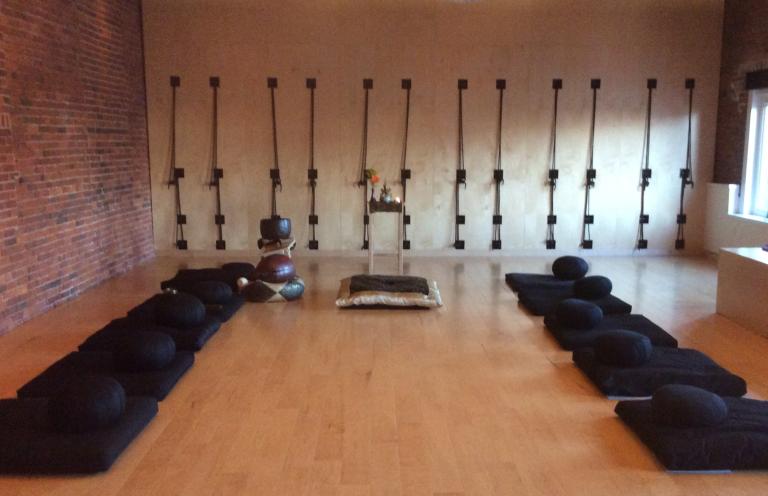 Today was the first day for morning zazen (aka, “Wake the Heck Up! Morning Zazen”) for Great Tides Zen here in Portland, ME. We walked down the wharf and into the Pierce Atwood Building with the lobster fishermen and seagulls.
Seven people showed up and it was a lovely session.
Getting up early enough to be at zazen and in our seats at 5:25am might sound rather severe. A phrase that Katagiri Roshi used often in guiding our practice comes to mind – “Be compassionate with others and strict with the self.”
Katagiri Roshi modelled this phrase in how he lived (especially in terms of “strict with the self”), as have other teachers in my life, like James Myoun Ford Roshi (especially in terms of “compassionate with others”).
This phrase has also come up in our Vine of Obstacles: Online Support for Zen Training practice meetings as we move toward our second home-based practice period and the cohort version of our primer, “Guidelines for Studying the Way.”
Some of Katagiri Roshi’s students, especially the therapists, would argue with him about this dictum, suggesting that instead we need to be compassionate with others and compassionate with ourselves.
And there certainly is something important there too. Many of us come to Zen practice with self-hatred issues and (mis)use the strictness of 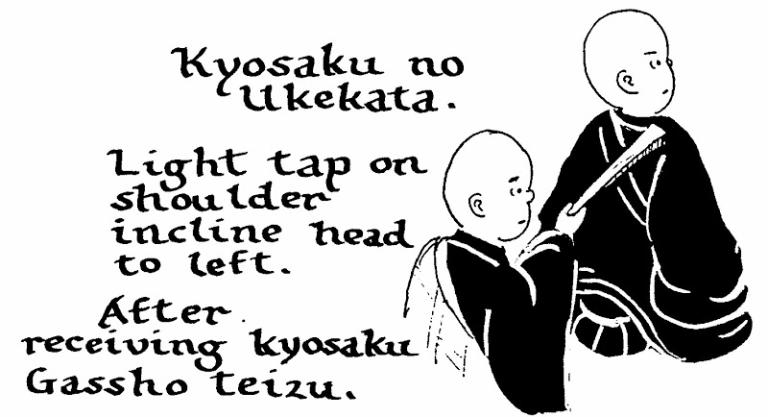 practice as support for practicing this painful pathology.
“Strictness though, may not be quite the right word – “demanding that rules concerning behavior are obeyed and observed” or else you’ll be whacked (in the traditional Japanese model, not at Great Tides Zen) in not always such a “light tap” way. Perhaps “firmness” fits better as one of the foci. As such it is an aspect of the Śīla paramita – the perfection of precepts – and it’s about living in vow, actualizing our innermost request.
“Compassion” also might be tuned a bit. I see it here as “accepting” as in accepting of others and firm with oneself. As such it is the Kṣānti paramita – the perfection of patience, and it’s about the not-two nature of self and other.
Certainly there are times when it is important to be firm with others and accepting with ourselves – like in parenting.
There are also those moments when firm with others and firm with the self is fitting. Take the situation of the two cute monks in the drawing. They look a lot like each other and that seems like a clue. In their respective positions, the one who taps and the one who is about to be tapped, firmness is vital. As is acceptance.
In zazen we see how our propensities to pander to our projected distortions are profound and pernicious. All of this we radically accept. Yet if we are to turn around, swim upstream through these karmic predispositions and realize ourselves, a considerable degree of firmness with our intention for this one great life is necessary.
In our practice, we learn acceptance in firmness and firmness in acceptance.
So each of the four combinations for accepting and being firm, applied to self and other, has it’s place. Should I get up and go to zazen this morning or stay in bed? Should I go to sesshin or take care of family or career responsibilities. Acceptance and firmness are one set of foci in practice that work in dynamic, intimate conversation.
There is no one right answer and so we learn by experimenting, tuning the violin of practice with the accepting/firm tuning peg, increasing or decreasing the tension on string so as to control the pitch.
Previous Post

August 25, 2014
Guidelines for Studying the Way: Online Course Begins September 15th
Next Post
September 23, 2014 A Letter from Low Tide
Browse Our Archives
Select a Category Uncategorized
Select a Month August 2023 July 2023 June 2023 May 2023 April 2023 March 2023 February 2023 January 2023 December 2022 November 2022 October 2022 September 2022 August 2022 July 2022 June 2022 May 2022 April 2022 March 2022 February 2022 January 2022 December 2021 November 2021 August 2021 June 2021 April 2021 February 2021 January 2021 November 2020 September 2020 August 2020 July 2020 June 2020 May 2020 April 2020 January 2020 December 2019 November 2019 August 2019 June 2019 May 2019 April 2019 February 2019 January 2019 December 2018 November 2018 October 2018 September 2018 August 2018 July 2018 June 2018 May 2018 April 2018 March 2018 February 2018 January 2018 December 2017 November 2017 October 2017 September 2017 August 2017 July 2017 June 2017 December 2016 October 2016 June 2016 April 2016 February 2016 January 2016 December 2015 November 2015 October 2015 August 2015 June 2015 May 2015 April 2015 March 2015 February 2015 January 2015 December 2014 November 2014 October 2014 September 2014 August 2014 July 2014 June 2014 May 2014 April 2014 March 2014 February 2014 January 2014 December 2013 November 2013 October 2013 September 2013 August 2013 July 2013 June 2013 May 2013 April 2013 March 2013 February 2013 January 2013 December 2012 November 2012 October 2012 September 2012 August 2012 July 2012 June 2012 May 2012 April 2012 March 2012 February 2012 January 2012 December 2011 November 2011 October 2011 September 2011 August 2011 July 2011 June 2011 May 2011 April 2011 March 2011 February 2011 January 2011 December 2010 November 2010 October 2010 September 2010 August 2010 July 2010 June 2010 May 2010 April 2010 March 2010 February 2010 January 2010 December 2009 November 2009 October 2009 September 2009 August 2009 July 2009 June 2009 May 2009 April 2009 March 2009 February 2009 January 2009 December 2008 November 2008 October 2008 September 2008 August 2008 July 2008 June 2008 May 2008
Follow Us!
TAKE THE
Religious Wisdom Quiz
Buy a field while the enemy besieges the city? I did this to demonstrate that houses and fields would again be bought in this land. Where was this property?
Select your answer to see how you score.
Anathoth Jerusalem Bethlehem Shiloh
Related posts from Wild Fox Zen

Throw Yourself Into the House of Buddha: The...

New Vine Ghost Site for Dosho's Creative Endeavors...

Gnawing Through Qiánfēng’s Three Illnesses and Two Lights

"Why, Oh Why, Is My Practice Not Progressing?"
TRENDING AT PATHEOS Buddhist

On Taking Refuge in the Dharma
(Here I continue the feature of sharing talks and essays by teachers...

(Continuing my intention to share talks and essays by other members of Empty...
The Subtle Art of Bowing: A Dharma Discourse
(This presentation was first offered by my dear friend Dharma Holder Tom...

Internal Family Systems Can Heal you Mentally &...
How IFS Helped Me Stop Fighting Myself Internal Family Systems (IFS) is...

The Bible No One Spoke About: A Family’s...
A mysterious family Bible, unspoken faith, and a journey from curiosity to...

How Uncertainty Can Transform Your Life in 2025
Embracing Uncertainty: A New Year’s Resolution for the Brave As 2025 approaches,...
view all Buddhist blogs
Ad-Free & Subscriber Log-In Subscription Support
- About Us
- 2026 Calendar
- Videos
- Podcasts
- Library of World Religions
- Faith In Media Tracker
- Advertise With Us
- Write for Us
- Privacy Policy
- Terms of Service
- Do Not Sell My Data
- Contact Us
- Radiant Digital
- Manage Newsletter Subscriptions
- Unsubscribe From Notifications
- Sitemap
Copyright 2008-2026, Patheos. All rights reserved.
Subscription Support Ad-Free & Subscriber Log-In
Follow Patheos