
BuddhistCatholicContemplativeEvangelicalGeneral ChristianHinduJewishLatter-day SaintMuslimNew VisionsProgressive Christian
Beliefs
- Buddhist
- Catholic
- Contemplative
- Evangelical
- General Christian
- Hindu
- Jewish
- Latter-day Saint
- More Voices
- Muslim
- New Visions
- Pagan
- Progressive Christian
Topics
- Religion News
- Food and Religion
- Sports and Religion
- Religious Art
- Religious Music and Entertainment
- Religious Events
- History and Religion
- Style and Religion
- Politics and Religion
- Women in Religion
- Recreation Outdoors and Religion
- Business Finance and Religion
- Careers Workplace and Religion
- Education and Religion
- Family Parenting and Religion
- Health Fitness and Religion
- Home and Religion
- Relationships and Religion
- Technology and Religion
- Travel and Religion
Columnists
- Buddhist Columnists
- Business Finance and Religion Columnists
- Careers Workplace and Religion Columnists
- Catholic Columnists
- Contemplative Columnists
- Education and Religion Columnists
- Evangelists Columnists
- Family Parenting and Religion Columnists
- General Christian Columnists
- Health Fitness and Religion Columnists
- Hindu Columnists
- History and Religion Columnists
- Home and Religion Columnists
- Jewish Columnists
- More Voices Columnists
- Latter Day Columnists
- Muslim Columnists
- New Visions Columnists
- Nonreligious Columnists
- Pagan Columnists
- Politics and Religion Columnists
- Progressive Columnists
- Recreation Outdoors and Religion Columnists
- Relationships and Religion Columnists
- Religion News Columnists
- Religious Art Columnists
- Religious Events Columnists
- Religious Music and Entertainment Columnists
- Sports and Religion Columnists
- Style and Religion Columnists
- Technology and Religion Columnists
- Travel and Religion Columnists
- Women in Religion Columnists
Resource Library
- 2026 Calendar
- Library of World Religions
- The 100 Most Holy Places on Earth
- Patheos Answers
- Podcasts
- Videos
- Faith Leaders Database
- Anglican Episcopalian
- Bahai
- Baptist
- Buddhism
- Christianity
- Confucianism
- Eastern Orthodoxy
- Hinduism
- Holiness and Pentecostal
- ISKCON
- Islam
- Judaism
- Lutheran
- Methodist
- The Church of Jesus Christ of Latter-day Saints
- New Age
- Paganism
- Presbytarian and Reformed
- Protestantism
- Religion Behind the Scenes
- Roman Catholic
- Scientology
- Shia Islam
- Sikhism
- Sufism
- Sunni Islam
- Taoism
- Zen
- See all religions
Research Tools
 Ad-Free & Subscriber Log-In Subscription Support
Ad-Free & Subscriber Log-In Subscription Support
Follow Patheos 

- Trending:
- Forgiveness
- |
- Marriage
- |
- Consciousness
- |
- Death Penalty
- |
- Election
- |
- Halloween
 Wild Fox Zen
- Home
- Buddhist
- Five Fat Ranks for What Ails Us
Five Fat Ranks for What Ails Us
Last updated on: May 24, 2014 at 12:06 pm by Dosho Port
Five Fat Ranks for What Ails Us 2014-05-24T12:06:36-06:00 Dosho Port
Patheos Explore the world's faith through different perspectives on religion and spirituality! Patheos has the views of the prevalent religions and spiritualities of the world.
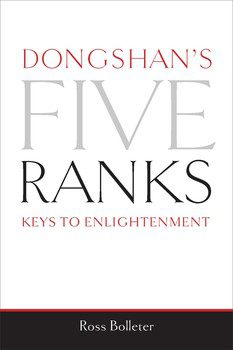 Ross Bolleter, a Zen teacher in the Aitken-Tarrant line who teaches mainly in Australia, has a fine new book on Dongshan’s Five Ranks.
This book will be the constant companion of students who take up the Five Ranks (or Five Modes if you prefer the less hierarchical language) deep in koan introspection or really anyone interested in the system.
Most importantly, Bolleter speaks from inside the ranks – not from the scholarly chair of idle speculation.
Now some apologists for contemporary Soto Zen like to get their kesas tied in a knot about how Dogen was against the Five Ranks and therefore so should we.
Well, that’s a rather thin view that I’d like to challenge.
First, I think we’ll agree that just because Dogen wiped his butt with clay balls doesn’t mean that it is the only way to wipe one’s bottom. He probably had good reason to use clay balls, after all, just like he had good reason to say occasional things about the Five Ranks.
For example, in Shobogenzo Spring and Autumn, he says, “Do not mistakenly say that Dongshan’s buddha dharma is the Five Ranks of oneness and differentiation.”
Fair enough. Let’s hope that Dongshan’s buddhadharma – and all of ours – is not limited to one way of seeing. An old friend, for example, saw all of life in terms of the Myers-Briggs Types Inventory. Of course, there is more to life than fits in that box … and yet it’s interesting to bring up from time to time and reflect on self and other in the Myers-Briggs light. Just not in every conversation about anything. Get’s tiresome.
Just so, there is more to the buddhadharma than the Dongshan’s Five Ranks.
And yet, when the Five Ranks are brought into the koan curriculum (in the Harada-Yasutani system, after the first koan and dozens of checking questions, dozens more miscellaneous koans, and then several classic collections), it seems like time to look at it all again from the Five Ranks’ perspective. At this point, the ranks are not about armchair buddhadharma but cure an ailment of koan introspection – the ailment of over koaning.
But, goodness, what a digression! Back to Bolleter. Let me give you a couple passages that I think are among the most lovely in the lovely book. The first is about the beginning of the process, working with our first koan, cracking open the first rank. The second passage is Bolleter’s summary of the whole process:
1. When we work with the first koan, we find that our most deeply embedded concepts of self and other, and of existence and nonexistence—vital for making sense of, and for making sense in, the world—are exposed as insubstantial. After a time, we are no longer aware of the soft avalanche of notions we once held dear. Eventually we reach a place where we are blocked, and can neither advance nor retreat. In that place, we just renew our questioning. It’s like being in a dark ravine, a mysterious valley. It’s as if we are pregnant, but we can’t give birth. Everything waits, in a dark pause, aching to be breathed out into life. We feel edgeless, looking into a mirror that reflects only darkness. The night moves on little feet, or big feet, depending.
Over time, waiting wears itself out. We come to expect nothing. It is like walking out on a long jetty at night without being able to see hand in front of face, and hearing the sound of water lapping in the darkness. The deeper into a koan we go, the more we leave behind; the more we leave behind, the deeper in we go. This goes on beyond reason. The Way gathers in darkness; it gathers as we struggle to return to our koan, with sleep closing in. For the most part, we don’t notice it gathering. Most of the time we feel a bit desperate, and we may even wonder why we’ve undertaken such an unreasonable, impossible practice. If we’re questioned concerning our koan, we don’t know. When we aren’t being questioned, we still don’t know. It’s important to settle into that not knowing, which should not be confused with the dumb blankness of ignorance. Rather, it is a profound mystery that has not found its tongue. In its own good time, the moon rises and reflects in the water. Meanwhile, we come up to the gate a thousand times. When our time is ripe, under cover of darkness, we go through.
2. Through the five modes of essential and contingent we have discovered that, although we awaken in very individual ways, we can broadly discern staging posts on the path. As we have explored these matters up to this point, we can say that, initially, we experience emptiness, and begin a lifetime’s work of embodying it. We awaken to our intimate connection to all that is, realize the subtlety of words, and then letting go of any preoccupation with hidden understandings, we awaken ourselves, and others, in the thick of the world and its suffering. Finally, we emerge transformed, but find it difficult to say where we have been, or how we have traveled. We live our life—with its give and take, joy and sorrow, increase and decline—as the Way.
Happy Trails!
Previous Post

May 3, 2014
We Invite You to Join the Fun
Next Post
June 1, 2014 Great Tides Zen Fundraiser Wrap Up
Browse Our Archives
Select a Category Uncategorized
Select a Month August 2023 July 2023 June 2023 May 2023 April 2023 March 2023 February 2023 January 2023 December 2022 November 2022 October 2022 September 2022 August 2022 July 2022 June 2022 May 2022 April 2022 March 2022 February 2022 January 2022 December 2021 November 2021 August 2021 June 2021 April 2021 February 2021 January 2021 November 2020 September 2020 August 2020 July 2020 June 2020 May 2020 April 2020 January 2020 December 2019 November 2019 August 2019 June 2019 May 2019 April 2019 February 2019 January 2019 December 2018 November 2018 October 2018 September 2018 August 2018 July 2018 June 2018 May 2018 April 2018 March 2018 February 2018 January 2018 December 2017 November 2017 October 2017 September 2017 August 2017 July 2017 June 2017 December 2016 October 2016 June 2016 April 2016 February 2016 January 2016 December 2015 November 2015 October 2015 August 2015 June 2015 May 2015 April 2015 March 2015 February 2015 January 2015 December 2014 November 2014 October 2014 September 2014 August 2014 July 2014 June 2014 May 2014 April 2014 March 2014 February 2014 January 2014 December 2013 November 2013 October 2013 September 2013 August 2013 July 2013 June 2013 May 2013 April 2013 March 2013 February 2013 January 2013 December 2012 November 2012 October 2012 September 2012 August 2012 July 2012 June 2012 May 2012 April 2012 March 2012 February 2012 January 2012 December 2011 November 2011 October 2011 September 2011 August 2011 July 2011 June 2011 May 2011 April 2011 March 2011 February 2011 January 2011 December 2010 November 2010 October 2010 September 2010 August 2010 July 2010 June 2010 May 2010 April 2010 March 2010 February 2010 January 2010 December 2009 November 2009 October 2009 September 2009 August 2009 July 2009 June 2009 May 2009 April 2009 March 2009 February 2009 January 2009 December 2008 November 2008 October 2008 September 2008 August 2008 July 2008 June 2008 May 2008
Follow Us!
TAKE THE
Religious Wisdom Quiz
What does "Abaddon" mean in Hebrew?
Select your answer to see how you score.
Destruction The Evil One The Deceiver The Lord’s Wrath
Related posts from Wild Fox Zen

Throw Yourself Into the House of Buddha: The...

New Vine Ghost Site for Dosho's Creative Endeavors...

Gnawing Through Qiánfēng’s Three Illnesses and Two Lights

"Why, Oh Why, Is My Practice Not Progressing?"
TRENDING AT PATHEOS Buddhist

On Taking Refuge in the Dharma
(Here I continue the feature of sharing talks and essays by teachers...

(Continuing my intention to share talks and essays by other members of Empty...
The Subtle Art of Bowing: A Dharma Discourse
(This presentation was first offered by my dear friend Dharma Holder Tom...

Internal Family Systems Can Heal you Mentally &...
How IFS Helped Me Stop Fighting Myself Internal Family Systems (IFS) is...

The Bible No One Spoke About: A Family’s...
A mysterious family Bible, unspoken faith, and a journey from curiosity to...

How Uncertainty Can Transform Your Life in 2025
Embracing Uncertainty: A New Year’s Resolution for the Brave As 2025 approaches,...
view all Buddhist blogs
Ad-Free & Subscriber Log-In Subscription Support
- About Us
- 2026 Calendar
- Videos
- Podcasts
- Library of World Religions
- Faith In Media Tracker
- Advertise With Us
- Write for Us
- Privacy Policy
- Terms of Service
- Do Not Sell My Data
- Contact Us
- Radiant Digital
- Manage Newsletter Subscriptions
- Unsubscribe From Notifications
- Sitemap
Copyright 2008-2026, Patheos. All rights reserved.
Subscription Support Ad-Free & Subscriber Log-In
Follow Patheos