
BuddhistCatholicContemplativeEvangelicalGeneral ChristianHinduJewishLatter-day SaintMuslimNew VisionsProgressive Christian
Beliefs
- Buddhist
- Catholic
- Contemplative
- Evangelical
- General Christian
- Hindu
- Jewish
- Latter-day Saint
- More Voices
- Muslim
- New Visions
- Pagan
- Progressive Christian
Topics
- Religion News
- Food and Religion
- Sports and Religion
- Religious Art
- Religious Music and Entertainment
- Religious Events
- History and Religion
- Style and Religion
- Politics and Religion
- Women in Religion
- Recreation Outdoors and Religion
- Business Finance and Religion
- Careers Workplace and Religion
- Education and Religion
- Family Parenting and Religion
- Health Fitness and Religion
- Home and Religion
- Relationships and Religion
- Technology and Religion
- Travel and Religion
Columnists
- Buddhist Columnists
- Business Finance and Religion Columnists
- Careers Workplace and Religion Columnists
- Catholic Columnists
- Contemplative Columnists
- Education and Religion Columnists
- Evangelists Columnists
- Family Parenting and Religion Columnists
- General Christian Columnists
- Health Fitness and Religion Columnists
- Hindu Columnists
- History and Religion Columnists
- Home and Religion Columnists
- Jewish Columnists
- More Voices Columnists
- Latter Day Columnists
- Muslim Columnists
- New Visions Columnists
- Nonreligious Columnists
- Pagan Columnists
- Politics and Religion Columnists
- Progressive Columnists
- Recreation Outdoors and Religion Columnists
- Relationships and Religion Columnists
- Religion News Columnists
- Religious Art Columnists
- Religious Events Columnists
- Religious Music and Entertainment Columnists
- Sports and Religion Columnists
- Style and Religion Columnists
- Technology and Religion Columnists
- Travel and Religion Columnists
- Women in Religion Columnists
Resource Library
- 2026 Calendar
- Library of World Religions
- The 100 Most Holy Places on Earth
- Patheos Answers
- Podcasts
- Videos
- Faith Leaders Database
- Anglican Episcopalian
- Bahai
- Baptist
- Buddhism
- Christianity
- Confucianism
- Eastern Orthodoxy
- Hinduism
- Holiness and Pentecostal
- ISKCON
- Islam
- Judaism
- Lutheran
- Methodist
- The Church of Jesus Christ of Latter-day Saints
- New Age
- Paganism
- Presbytarian and Reformed
- Protestantism
- Religion Behind the Scenes
- Roman Catholic
- Scientology
- Shia Islam
- Sikhism
- Sufism
- Sunni Islam
- Taoism
- Zen
- See all religions
Research Tools
 Ad-Free & Subscriber Log-In Subscription Support
Ad-Free & Subscriber Log-In Subscription Support
Follow Patheos 

- Trending:
- Forgiveness
- |
- Marriage
- |
- Consciousness
- |
- Death Penalty
- |
- Election
- |
- Halloween
 Wild Fox Zen
- Home
- Buddhist
- Gassho Like Falling Snow
Gassho Like Falling Snow
Last updated on: December 20, 2013 at 7:34 pm by Dosho Port
Gassho Like Falling Snow 2013-12-20T19:34:56-06:00 Dosho Port
Patheos Explore the world's faith through different perspectives on religion and spirituality! Patheos has the views of the prevalent religions and spiritualities of the world.
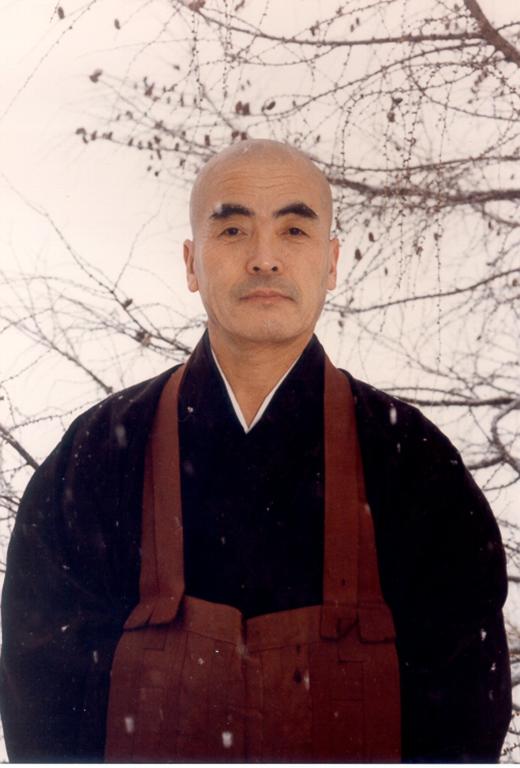 Here is a solstice talk by my old teacher, Katagiri Roshi, about Dogen’s “Plum Blossoms.” It is the second installment. Click here for the first.
I’m grateful to David Casacuberta for carefully transcribing these talks. David’s first language is Spanish and Roshi’s was Japanese. Dogen spoke Dogenese.
And I was left to edit all this. Together, I’m afraid we’ve created a bent and gnarled rendering into English.
When editing Roshi’s talks, I’m often struck by how difficult it is to cut away the extraneous so as to more clearly reveal his meaning and preserve his voice.
Despite my bumbling along, I hope you can taste the old plum blossom that is right under your nose in what follows.
Tiantong’s first phrase of midwinter:
Old plum tree bent and gnarled
All at once opens one blossom, two blossoms,
three, four, five blossoms, uncountable blossoms,
Not proud of purity,
Not proud of fragrance;
Spreading, becoming spring,
Blowing over grass and trees,<
Balding the head of a patch-robed monk.<
Whirling, quickly changing into wild wind, stormy rain,
Falling, snow all over the earth.
The old plum tree is boundless,
A hard cold rubs the nostrils.
This poem is by Rujing (also known as Tiantong), quoted by Dogen at the beginning of the fascicle “Plum Blossom.” From “Plum Blossoms” you will understand the heart of flowers, trees, and nature.
What is the heart of the tree? What is the heart of the flowers? What is the heart of nature?
I would like to examine these questions through this old poem.
Tiantong recited the above poem on winter solstice when Dogen was studying with him. In the Chinese Ch’an monastery they had a custom of giving a dharma talk on the winter solstice, because it is the time and location in which yin is completed and turns into yang.
Yin and yang are never separated. The beginning of the yang is completion of the yin. For example, when white becomes completely white, it becomes bluish.
On the important occasion of winter solstice, Tiantong uttered the first phrase, a single word, actualizeing the strength of his whole lifetime, the total manifestation of his personality, connecting present life, past life and future life, connected with myriad conditions and causes.
Tiantong begins, “Old plum tree bent and gnarled.”
Have you ever seen an old plum tree? They are very old, bending and winding. In Japan you can see them in many places.
“Old” means Buddha, your face before our parents birth.
We also use “old” in the title “Roshi,” literally, “old teacher.” In Rinzai Zen, if you are enlightenment you are given the official title of Roshi.
In Soto Zen the title comes from all sentient beings. When we respect somebody, even if we don’t know who s/he is, we treat them with respect. At that time we can bow naturally. In Soto Zen, “Roshi” is like that – a title given by all sentient beings. That is real old teacher.
What is the old plum tree?
Here is a cushion, here is a vase, here is a bell, here is a tape recorder, here is a you. If you sit zazen, here it is! Trees, birds, all sentient beings. All the plum trees, exactly the same.
Bodhidharma said: “One flower blooms with five petals. It ripens of its own accord.”
One flower blooms with five petals simultaneously. Five petals are blooming, not one flower blooming. One flower blooming is the individual presence opening. The presence of one flower is connected very closely with five petals blooming simultaneously. It means that all the world holds, all phenomenal things, myriad conditions, past, present and future, visibly, invisibly. One flower exists, right now, and around this one flower many things exist.
For instance, for many years we tried to set up a fire escape from the third floor of Zen Center where my children sleep. We discussed about it many times, we made a blueprint, we made a budget, but nothing happened. Finally, Scott bought an aluminum extension ladder and we got a ready-made, simple fire escape all of a sudden. Setting up the fire escape is connected to many conditions – money, human effort, all things connected to individual character.
And then one thing happens – Scott buys an extension ladder. No more discussion.
Likewise, today you are sitting sesshin. The fact that you can attend to this sesshin is very important. Don’t use this important opportunity carelessly. In order to make this opportunity perfect, realize that there are many beings to support this, to make it complete.
“One flower blooms with five petals” means the whole world blooms.
Usually in Buddhism we use the term kuge, “flowers in the sky,” to describe delusion. Particularly during sesshin, when you are sitting in zazen facing the wall, your eyes may become tired and you see lights – white, blue and red. Sometimes you can see faces or animals or your lover’s face. That is “flowers in the sky.”
Consciousness always sees something but not as it is. According to the Buddhist system of cognition, if you see the tape recorder, the tape recorder is immediately assimilated with a sense organ. Then consciousness participates in this assimilation between of the tape recorder, it judges it and calls it a tape recorder. Consciousness understands the image, reflected in the mirror of sense organ.
In Buddhist psychology this is called doku-ei-sho. Doku means “alone, by itself.” Ei means a shadow. Jo means object and circumstances. Consciousness creates a shadow and it projects its own shadow to the tape recorder.
This is our life which we cannot see as it is.
But Dogen says that this understanding is not Buddha’s teaching. When he awakened, Buddha said, “I together with the great earth and all living beings attain the way.”
If so, then we are Buddha, all sentient beings are simultaneously Buddha including the image of the tape recorder and the image reflected in sense organs.
Delusions are also Buddha.
In “Bendowa,” Dogen, mentions that all myriad beings exist in realization. He makes all phenomenal existence a being in the realm of the Buddha world.
Usually we don’t do it. We usually make this table in the realm of individual understanding.
When the flower of Katagiri blooms, at that time, many beings exist around this one flower. They are exactly the same as the flower of Katagiri blooming. In order to accept my existence, therefore, I must accept other’s existence.
If you try to understand the human world deeply you should see the world in terms of time particles. If you chop time constantly, sooner or later, time disappears. While you are chopping, time seems to exists. And you can’t stop chopping. But time finally disappears. When you arrive at the shortest period of time, that time is no longer time. It is space. It is just being “what is just is.”
What’s this? When you arrive at the shortest period of time, time passes to freedom, so it is no longer time. The shortest period of time is never connected to other periods of time. It is completely independent, so-called space.
This life is completely independent and we can communicate very smoothly without interruption. That is the function of independent co-origination, according to Buddhist teaching. Like Casper the ghost, who can pass through walls, just like that. This is our original nature of existence.
That’s why everything exists in peace and harmony. Finally if you want to be peaceful and harmonious in this world, you have to arrive at the shortest period of time, which is called silence. Perfect silence. Silence is an incipient moment, coming back to the source.
In order to live peacefully and harmoniously you have to be independent, perfect, occupying the whole world. And then you’ll understand the so-called other’s life. You can communicate very peacefuly. This is our practice.
That’s why Tiantong says,
All at once opens one blossom, two blossoms,
three, four, five blossoms, uncountable blossoms….
Everything is open, blooming. The tape recorder, table, cushions, open simultaneously when Katagiri’s flower blooms. Right now the whole world is “Old plum tree bent and gnarled.”
Simultaneously, all are one. All flowers open. Then all things come together, interconnected, interpenetrated, very smoothly.
At that time, we are
Not proud of purity,
Not proud of fragrance.
Spreading, becoming spring,
Blowing over grass and trees.
This fragrance is spreading all over, creating wonderful scenery of spring, becoming the spring wind and helping the grasses and trees grow.
You can experience this when you sit down in zazen in proper posture, paying attention to breathing. Sometimes even people who don’t know what zazen is are very moved when they suddenly see someone sitting.
In zazen we can realize how mental factors arise and perish without leaving any presence behind, just arising and perishing. Original nature of existence is constant arising and perishing without leaving anything behind.
That’s why we say when it is time to die, please die. When you meet an earthquake, just be earthquake. In other words, please accept with kindness.
At that time, the wind just
Balds the heads of patch-robed monks.
Nothing to grasp, nothing to keep, just like Bodhidharma when he was introduced to the Emperor Wu. Emperor Wu asked, “What is the merit of building temples and educating Buddhist nuns and monks?”
Bodhidharma replied, “No merit.”
Then the Emperor Wu asked “What is the essence of the highest, holy truths?”
Because if there is no merit, practicing Buddhism was nonsense for him.
Bodhidharma said, “Vast emptiness, nothing holy.”
That is the shaved head of the patched robe of the monks. For Zen Buddhist monks, shaving the head has this meaning – vast emptiness, nothing holy. That’s why Dogen Zenji insists on constantly shaving the head lifetime after lifetime.
Next Tiantong says,
Whirling, quickly changing into wild wind, stormy rain,
Falling, snow all over the earth.
All of a sudden the world changes. Sometimes there is a snowstorm. Sometimes there are sunny days, sometimes there are rainy days, sometimes melancholic, sometimes pensive, sometimes people get sickness all of a sudden.
You can see in the Buddha Hall a picture of Mr. Ishi. He is still a young gentleman who used to come here and practice with us. He was afflicted with esophagus cancer. He can’t eat food through the mouth and so he has to use a tube.
All of a sudden.
I am older than he is but there is no guarantee. We don’t know.
Whirling, quickly changing into wild wind, stormy rain,
Falling, snow all over the earth.
Our life, gassho, kinhin, zazen is just like snow all over. So when you do gassho, just gassho like falling snow, returning to the source, and then you can become silence. When you do gassho, just gassho is independent. Next kinhin is independent. It becomes just standing and walking, like the snow. This is our practice.
Finally, Tiantong says,
The old plum tree is boundless,
A hard cold rubs the nostrils.
The old plum tree is pure energy, a state of existence prior to our parents’ birth. Because you are there, you can’t touch it with your consciousness. But we are always supported by it, breathing it. Always originating and perishing in Buddha’s world.
Even if you don’t like death, when death comes you have to die. Even if you don’t like tomorrow, when tomorrow comes you have to be tomorrow.
If you think with your head about dying, it is not real dying. When you are dying, dying is perfectly silent. Nothing to say. Just be one with the dying. All we have to do is just to be right in the middle of dying, which is perfectly silent. All sentient being possess this momentum of the pure sense of time and energy.
Yet,
A hard cold rubs the nostrils.
While you walking through the streets in winter you say to yourself “How cold it is!” and you rub your nose. Then you can see nasal secretions in our hands. These nasal secretions become the plum tree’s fragrance (laughs) as they penetrate everything in the world. If you rub it, you can taste it. A sour taste like the plums.
In the Book of Equanimity, Case 99, there is a simple koan:
A monk asked Yumen, “What is every atom samadhi?”
Every aspect of human life appears from moment to moment, like a single dust, a single snowflake. At that time you must dwell in samadhi, receive every single dust with wholeheartedness.
Yumen replied, “Rice in the bowl, water in the bucket.”
Then you realize the boundless plum tree, the pure momentum of time and energy.
How do you get it?
Bodhidharma sat during nine years in Shaolin temple. That is the boundless plum tree, so-called zazen, so-called falling snow, so-called human effort, so-called sleep.
Previous Post

December 7, 2013
Is Buddhism Best?
Next Post
December 23, 2013 How I Almost Drowned in the Swamp Out Back
Browse Our Archives
Select a Category Uncategorized
Select a Month August 2023 July 2023 June 2023 May 2023 April 2023 March 2023 February 2023 January 2023 December 2022 November 2022 October 2022 September 2022 August 2022 July 2022 June 2022 May 2022 April 2022 March 2022 February 2022 January 2022 December 2021 November 2021 August 2021 June 2021 April 2021 February 2021 January 2021 November 2020 September 2020 August 2020 July 2020 June 2020 May 2020 April 2020 January 2020 December 2019 November 2019 August 2019 June 2019 May 2019 April 2019 February 2019 January 2019 December 2018 November 2018 October 2018 September 2018 August 2018 July 2018 June 2018 May 2018 April 2018 March 2018 February 2018 January 2018 December 2017 November 2017 October 2017 September 2017 August 2017 July 2017 June 2017 December 2016 October 2016 June 2016 April 2016 February 2016 January 2016 December 2015 November 2015 October 2015 August 2015 June 2015 May 2015 April 2015 March 2015 February 2015 January 2015 December 2014 November 2014 October 2014 September 2014 August 2014 July 2014 June 2014 May 2014 April 2014 March 2014 February 2014 January 2014 December 2013 November 2013 October 2013 September 2013 August 2013 July 2013 June 2013 May 2013 April 2013 March 2013 February 2013 January 2013 December 2012 November 2012 October 2012 September 2012 August 2012 July 2012 June 2012 May 2012 April 2012 March 2012 February 2012 January 2012 December 2011 November 2011 October 2011 September 2011 August 2011 July 2011 June 2011 May 2011 April 2011 March 2011 February 2011 January 2011 December 2010 November 2010 October 2010 September 2010 August 2010 July 2010 June 2010 May 2010 April 2010 March 2010 February 2010 January 2010 December 2009 November 2009 October 2009 September 2009 August 2009 July 2009 June 2009 May 2009 April 2009 March 2009 February 2009 January 2009 December 2008 November 2008 October 2008 September 2008 August 2008 July 2008 June 2008 May 2008
Follow Us!
TAKE THE
Religious Wisdom Quiz
True or False: The Sermon on the Mount includes the Lord's Prayer.
Select your answer to see how you score.
FALSE TRUE
Related posts from Wild Fox Zen

Throw Yourself Into the House of Buddha: The...

New Vine Ghost Site for Dosho's Creative Endeavors...

Gnawing Through Qiánfēng’s Three Illnesses and Two Lights

"Why, Oh Why, Is My Practice Not Progressing?"
TRENDING AT PATHEOS Buddhist

On Taking Refuge in the Dharma
(Here I continue the feature of sharing talks and essays by teachers...

(Continuing my intention to share talks and essays by other members of Empty...
The Subtle Art of Bowing: A Dharma Discourse
(This presentation was first offered by my dear friend Dharma Holder Tom...

Internal Family Systems Can Heal you Mentally &...
How IFS Helped Me Stop Fighting Myself Internal Family Systems (IFS) is...

The Bible No One Spoke About: A Family’s...
A mysterious family Bible, unspoken faith, and a journey from curiosity to...

How Uncertainty Can Transform Your Life in 2025
Embracing Uncertainty: A New Year’s Resolution for the Brave As 2025 approaches,...
view all Buddhist blogs
Ad-Free & Subscriber Log-In Subscription Support
- About Us
- 2026 Calendar
- Videos
- Podcasts
- Library of World Religions
- Faith In Media Tracker
- Advertise With Us
- Write for Us
- Privacy Policy
- Terms of Service
- Do Not Sell My Data
- Contact Us
- Radiant Digital
- Manage Newsletter Subscriptions
- Unsubscribe From Notifications
- Sitemap
Copyright 2008-2026, Patheos. All rights reserved.
Subscription Support Ad-Free & Subscriber Log-In
Follow Patheos