
BuddhistCatholicContemplativeEvangelicalGeneral ChristianHinduJewishLatter-day SaintMuslimNew VisionsProgressive Christian
Beliefs
- Buddhist
- Catholic
- Contemplative
- Evangelical
- General Christian
- Hindu
- Jewish
- Latter-day Saint
- More Voices
- Muslim
- New Visions
- Pagan
- Progressive Christian
Topics
- Religion News
- Food and Religion
- Sports and Religion
- Religious Art
- Religious Music and Entertainment
- Religious Events
- History and Religion
- Style and Religion
- Politics and Religion
- Women in Religion
- Recreation Outdoors and Religion
- Business Finance and Religion
- Careers Workplace and Religion
- Education and Religion
- Family Parenting and Religion
- Health Fitness and Religion
- Home and Religion
- Relationships and Religion
- Technology and Religion
- Travel and Religion
Columnists
- Buddhist Columnists
- Business Finance and Religion Columnists
- Careers Workplace and Religion Columnists
- Catholic Columnists
- Contemplative Columnists
- Education and Religion Columnists
- Evangelists Columnists
- Family Parenting and Religion Columnists
- General Christian Columnists
- Health Fitness and Religion Columnists
- Hindu Columnists
- History and Religion Columnists
- Home and Religion Columnists
- Jewish Columnists
- More Voices Columnists
- Latter Day Columnists
- Muslim Columnists
- New Visions Columnists
- Nonreligious Columnists
- Pagan Columnists
- Politics and Religion Columnists
- Progressive Columnists
- Recreation Outdoors and Religion Columnists
- Relationships and Religion Columnists
- Religion News Columnists
- Religious Art Columnists
- Religious Events Columnists
- Religious Music and Entertainment Columnists
- Sports and Religion Columnists
- Style and Religion Columnists
- Technology and Religion Columnists
- Travel and Religion Columnists
- Women in Religion Columnists
Resource Library
- 2026 Calendar
- Library of World Religions
- The 100 Most Holy Places on Earth
- Patheos Answers
- Podcasts
- Videos
- Faith Leaders Database
- Anglican Episcopalian
- Bahai
- Baptist
- Buddhism
- Christianity
- Confucianism
- Eastern Orthodoxy
- Hinduism
- Holiness and Pentecostal
- ISKCON
- Islam
- Judaism
- Lutheran
- Methodist
- The Church of Jesus Christ of Latter-day Saints
- New Age
- Paganism
- Presbytarian and Reformed
- Protestantism
- Religion Behind the Scenes
- Roman Catholic
- Scientology
- Shia Islam
- Sikhism
- Sufism
- Sunni Islam
- Taoism
- Zen
- See all religions
Research Tools
 Ad-Free & Subscriber Log-In Subscription Support
Ad-Free & Subscriber Log-In Subscription Support
Follow Patheos 

- Trending:
- Forgiveness
- |
- Marriage
- |
- Consciousness
- |
- Death Penalty
- |
- Election
- |
- Halloween
 Wild Fox Zen
- Home
- Buddhist
- A Gentle, Caring Way of Life: Dreaming of Dharma Transmission Plum Blossoms
A Gentle, Caring Way of Life: Dreaming of Dharma Transmission Plum Blossoms
Last updated on: July 24, 2013 at 8:04 pm by Dosho Port
A Gentle, Caring Way of Life: Dreaming of Dharma Transmission Plum Blossoms 2013-07-24T20:04:52-06:00 Dosho Port
Patheos Explore the world's faith through different perspectives on religion and spirituality! Patheos has the views of the prevalent religions and spiritualities of the world.
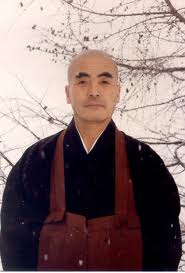 One of the many sweet things about teaching through the Vine of Obstacles: Online Support for Zen Training (click here for the latest update – another due out soon) is sharing some of my old teacher, Katagiri Roshi, with the students through his recorded talks that are connected with the sections of the first course, Guidelines for Studying the Way. A couple practitioners have asked for transcription projects to work more closely with Roshi’s teaching. Here’s one that was transcribed by David Casacuberta (thank you, David!) and edited by yours truly.
***********
In the dharma transmission ceremony there are three kinds of documents. One is the “kechimyaku,” or “blood vein,” the Buddhist family lineage. The second is called “daiji” or literally, “great matter.” It is an expression of the philosophical background for dharma transmission manifested through a diagram.
Third one is ”shisho” (“letter of succession”) and what I want to address today. The shisho document also presents the lineage and your name added with the buddhas and ancestors who are all buddha. Shisho is proof of the truth that you are buddha and that you have joined the buddhas and ancestors.
The shisho paper we use has a design of plum blossoms. In Japan we have two kind of plum blossoms: white and scarlet. They bloom in winter, from the end of December to January. In my temple, we had scarlet plum blossoms blooming between the end of the year and the beginning of January. There was snow all over, the ground was covered with snow and nothing could be seen. Completely white.
When you see nothing, only white, still there is something – the pure sense of life itself. In that situation scarlet flowers bloom. Those flowers blooming is like a huge shock given to you as a pure sense of life, energy. New life is ongoing but you can’t see it.
Just like here [Minneapolis]. Lake Calhoun freezes completely, all covered with snow, completely white, blue-white. You can feel a pure sense of life energy there, always moving. Right there in the snow. Right in the middle of the ground, covered with snow, the scarlet flower blooms.
In Japan, during New Year’s Day we offer three kind of flowers to buddhas at shrines in front of the gate of the house: bamboo, pine, and plum flowers. Bamboo represents patience, never broken by snow. Bamboo also represent differentiation and segmentation, differentiation in equality. Also we offer pine branch, green all year around, never changing.
Plum flowers are offered because they represent the pure sense of life energy, blooming in cold weather, very strong, rooted in the earth, always watching with the whole universe.
Dogen Zenji talks about shisho and plum bloosoms in the Shobogenzo Document of Heritage. Dogen went to China to study Buddhism when he was 24 and visited several Zen monasteries, trying to see an authentic document of heritage, shisho. Dogen writes,
“When I visited Mount Tiantai and Mount Yadang in the later Bao-qing Era [1225-1228], I went to Wannian monastery of Pingtian [on Mount Tiantai]. The abbot there was Priest Yuanzi of Fu Region, under whom the monastery had prospered. Upon my first greeting him, Abbot Yuanzi talked about the teaching of the buddha ancestors. When he mentioned Yangshan’s dharma succession from Great Guishan, he said ‘You haven’t seen the document of heritage here in my quarters, have you?’”
Guishan and Yangshan were related as teacher and disciple. When Yangshan got dharma transmission from his teacher, Guishan, his teacher asked him, “What do you think about dharma transmissions, lately.”
Yangshan said, “There is a great man [Guishan] who has been seriously besmirching dharma transmission.”
Then the teacher said, “How about you?”
Yangshan said: “Lately I forgot about dharma transmission. I don’t know what it is. All I can do is to sleep when I feel sleepy, and eat when I feel hungry. So I have nothing to say about dharma transmission.”
Guishan said, “It is pretty hard to reach that spiritual state.”
Yangshan knew well about dharma transmission but he didn’t attach to the meaning of dharma transmission. Dharma transmission sounds as if we have to get something from the teacher, from the universe. Yes, you have to get it. Then dharma transmission comes to being but there is no explanation for dharma transmission.
“When I feel sleepy I just sleep” means that dharma, buddhas, god or whatever you say, all are working in this life. Nothing to say about something special, like “my body is buddha” or “my body is dharma” because this body is already dharma.
This is a typical characteristic of Zen Buddhism. Body is alive and that’s it. That’s why the teacher said it is pretty hard to reach that spiritual state.
When Abbot Yuanzi mentioned Yangshan’s heritage from Great Guishan, he said “You [Dogen] haven’t seen the document of heritage here in my quarters, have you?”
Dogen replied, “No, unfortunately I haven’t.”
“Abbot Yuanzi got up, took out the document of heritage and holding it up he said, ‘Following the dharma admonition of Buddha ancestors, I haven’t show this to even a close disciple or an old attendant monk. But when I went to the city to see the governor and stay there as I do occasionally, I had a dream. In this dream, a distinguished priest who seemed to be Zen Master Damei (literally, “Great Plum”) appeared, holding a branch of plum blossoms he said, “If a true man comes who has disembarked from a boat do not withhold these flowers.” And he handed me the plum blossoms. Still in the dream I exclaimed, “Why shouldn’t I give him thirty blows before he leaves the boat?” Then before five days had passed, you came to meet me, elder [Dogen]. Of course, you have disembarked from a boat, and this document of heritage is written on brocade that has a design of a plum blossom. Since you must be the one Damei was referring to, in accordance to the dream, I have taken this document out. Do you wish to inherit dharma from me? I would not withhold it if so.'”
Dogen didn’t accept Dharma transmission from him but he was very moved because this abbot was very kind and ready to give dharma transmission to Dogen.
“I [Dogen] could not help being moved. Although I should have requested to receive a document of heritage from him, I only offered incense, bowed, and paid him homage with deep respect. At that time an attendant named Faning was present. He said that it was the first time he had ever seen the document of heritage….
[Dogen continued] “[Later I ] stayed at the entry hall of the Husheng Monastery on Mount Damei. At that time I had an auspicious dream that ancestor Damei came up to me and gave me a branch of plum blossoms in full bloom. This image of the ancestor was worthy of great respect. The branch was one foot tall and one foot wide. Aren’t these plum blossoms as rare as an udumbara blossom? This dream was as real as being awake. I have never before told this story to anyone in China or Japan.”
In other words, Dogen had the same dream that the abbot had. Even though he was very moved by this dream, Dogen said that “I’ve never before told this story to anyone in China or even in Japan.”
Normally after having such a dream you want to talk about it, and if you have inspiration from that dream to attain such a spiritual state. You become over-proud of yourself while talking about these spiritual experiences. But Dogen didn’t tell it to anybody. Very quietly he kept it in his heart.
This is a gentle, caring way of life.
Vine of Obstacles: Support for Online Zen Training
Previous Post

July 20, 2013
Shikantaza: Busy, Busy Karmic Consciousness - When Will it Rest?
Browse Our Archives
Select a Category Uncategorized
Select a Month August 2023 July 2023 June 2023 May 2023 April 2023 March 2023 February 2023 January 2023 December 2022 November 2022 October 2022 September 2022 August 2022 July 2022 June 2022 May 2022 April 2022 March 2022 February 2022 January 2022 December 2021 November 2021 August 2021 June 2021 April 2021 February 2021 January 2021 November 2020 September 2020 August 2020 July 2020 June 2020 May 2020 April 2020 January 2020 December 2019 November 2019 August 2019 June 2019 May 2019 April 2019 February 2019 January 2019 December 2018 November 2018 October 2018 September 2018 August 2018 July 2018 June 2018 May 2018 April 2018 March 2018 February 2018 January 2018 December 2017 November 2017 October 2017 September 2017 August 2017 July 2017 June 2017 December 2016 October 2016 June 2016 April 2016 February 2016 January 2016 December 2015 November 2015 October 2015 August 2015 June 2015 May 2015 April 2015 March 2015 February 2015 January 2015 December 2014 November 2014 October 2014 September 2014 August 2014 July 2014 June 2014 May 2014 April 2014 March 2014 February 2014 January 2014 December 2013 November 2013 October 2013 September 2013 August 2013 July 2013 June 2013 May 2013 April 2013 March 2013 February 2013 January 2013 December 2012 November 2012 October 2012 September 2012 August 2012 July 2012 June 2012 May 2012 April 2012 March 2012 February 2012 January 2012 December 2011 November 2011 October 2011 September 2011 August 2011 July 2011 June 2011 May 2011 April 2011 March 2011 February 2011 January 2011 December 2010 November 2010 October 2010 September 2010 August 2010 July 2010 June 2010 May 2010 April 2010 March 2010 February 2010 January 2010 December 2009 November 2009 October 2009 September 2009 August 2009 July 2009 June 2009 May 2009 April 2009 March 2009 February 2009 January 2009 December 2008 November 2008 October 2008 September 2008 August 2008 July 2008 June 2008 May 2008
Follow Us!
TAKE THE
Religious Wisdom Quiz
Who said, "Lord, to whom shall we go? You have the words of eternal life"?
Select your answer to see how you score.
Peter James Judas John
Related posts from Wild Fox Zen

New Vine Ghost Site for Dosho's Creative Endeavors...
On the Adverse Effects of Meditation
Outer and Inner Layer Utterly Dropped Off: The...
The Vital Importance of Studying Buddhadharma: Why and...
TRENDING AT PATHEOS Buddhist

On Taking Refuge in the Dharma
(Here I continue the feature of sharing talks and essays by teachers...

(Continuing my intention to share talks and essays by other members of Empty...
The Subtle Art of Bowing: A Dharma Discourse
(This presentation was first offered by my dear friend Dharma Holder Tom...

Internal Family Systems Can Heal you Mentally &...
How IFS Helped Me Stop Fighting Myself Internal Family Systems (IFS) is...

The Bible No One Spoke About: A Family’s...
A mysterious family Bible, unspoken faith, and a journey from curiosity to...

How Uncertainty Can Transform Your Life in 2025
Embracing Uncertainty: A New Year’s Resolution for the Brave As 2025 approaches,...
view all Buddhist blogs
Ad-Free & Subscriber Log-In Subscription Support
- About Us
- 2026 Calendar
- Videos
- Podcasts
- Library of World Religions
- Faith In Media Tracker
- Advertise With Us
- Write for Us
- Privacy Policy
- Terms of Service
- Do Not Sell My Data
- Contact Us
- Radiant Digital
- Manage Newsletter Subscriptions
- Unsubscribe From Notifications
- Sitemap
Copyright 2008-2026, Patheos. All rights reserved.
Subscription Support Ad-Free & Subscriber Log-In
Follow Patheos