
BuddhistCatholicContemplativeEvangelicalGeneral ChristianHinduJewishLatter-day SaintMuslimNew VisionsProgressive Christian
Beliefs
- Buddhist
- Catholic
- Contemplative
- Evangelical
- General Christian
- Hindu
- Jewish
- Latter-day Saint
- More Voices
- Muslim
- New Visions
- Pagan
- Progressive Christian
Topics
- Religion News
- Food and Religion
- Sports and Religion
- Religious Art
- Religious Music and Entertainment
- Religious Events
- History and Religion
- Style and Religion
- Politics and Religion
- Women in Religion
- Recreation Outdoors and Religion
- Business Finance and Religion
- Careers Workplace and Religion
- Education and Religion
- Family Parenting and Religion
- Health Fitness and Religion
- Home and Religion
- Relationships and Religion
- Technology and Religion
- Travel and Religion
Columnists
- Buddhist Columnists
- Business Finance and Religion Columnists
- Careers Workplace and Religion Columnists
- Catholic Columnists
- Contemplative Columnists
- Education and Religion Columnists
- Evangelists Columnists
- Family Parenting and Religion Columnists
- General Christian Columnists
- Health Fitness and Religion Columnists
- Hindu Columnists
- History and Religion Columnists
- Home and Religion Columnists
- Jewish Columnists
- More Voices Columnists
- Latter Day Columnists
- Muslim Columnists
- New Visions Columnists
- Nonreligious Columnists
- Pagan Columnists
- Politics and Religion Columnists
- Progressive Columnists
- Recreation Outdoors and Religion Columnists
- Relationships and Religion Columnists
- Religion News Columnists
- Religious Art Columnists
- Religious Events Columnists
- Religious Music and Entertainment Columnists
- Sports and Religion Columnists
- Style and Religion Columnists
- Technology and Religion Columnists
- Travel and Religion Columnists
- Women in Religion Columnists
Resource Library
- 2026 Calendar
- Library of World Religions
- The 100 Most Holy Places on Earth
- Patheos Answers
- Podcasts
- Videos
- Faith Leaders Database
- Anglican Episcopalian
- Bahai
- Baptist
- Buddhism
- Christianity
- Confucianism
- Eastern Orthodoxy
- Hinduism
- Holiness and Pentecostal
- ISKCON
- Islam
- Judaism
- Lutheran
- Methodist
- The Church of Jesus Christ of Latter-day Saints
- New Age
- Paganism
- Presbytarian and Reformed
- Protestantism
- Religion Behind the Scenes
- Roman Catholic
- Scientology
- Shia Islam
- Sikhism
- Sufism
- Sunni Islam
- Taoism
- Zen
- See all religions
Research Tools
 Ad-Free & Subscriber Log-In Subscription Support
Ad-Free & Subscriber Log-In Subscription Support
Follow Patheos 

- Trending:
- Forgiveness
- |
- Marriage
- |
- Consciousness
- |
- Death Penalty
- |
- Election
- |
- Halloween
 Wild Fox Zen
- Home
- Buddhist
- Zen in America and Exclusive Humanism
Zen in America and Exclusive Humanism
Last updated on: June 27, 2013 at 2:53 pm by Dosho Port
Zen in America and Exclusive Humanism 2013-06-27T14:53:47-06:00 Dosho Port
Patheos Explore the world's faith through different perspectives on religion and spirituality! Patheos has the views of the prevalent religions and spiritualities of the world.
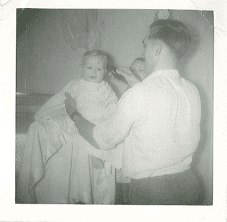 Here’s the first buzz of my square head, administered by my dad with big sister peaking in.
Oh, my, how many more head buzzes I’ve had. Oh, my, how far we’ve come.
That applies to American Zen too.
This comes up for me today as I prepare for the Zen Priest Home-Leaving: Spirit, Principles, and Possibilities workshop at the Boundless Way Temple, coming up in a couple weeks.
What are some of the differences between American Zen and it’s predecessors in Asia, particularly Soto Zen?
There’s an emphasis here on mindfulness and moral precepts, of course, but I’m not going there today.
Where I will go, ever so briefly, is to the exclusive humanism dimension to our practice that may be unique in human history (that’s from Hondo – see below).
What is “exclusive humanism?”
I recently watched a presentation of Zen form on YouTube, where the presenter says that the forms of our practice – clothing, sitting, bowing, bells, and chanting – are there to support our practice. That’s exclusive humanism.
Practice is all about us?
If the forms are seen as being there to support me, then they appear rather arbitrary. I might not feel all that supported about bowing or sitting in accord with the traditional instructions. If it’s all about me, why don’t I just do it my way?
Maybe it depends on who or what the support is coming from. If the support is coming from me doing something and going to me … well, again, it’s all about me. Exclusive humanism.
Another view is that we are here to preserve the buddhadharma for the helpless ones of the future and part of how we do that is to let go of our incessant self obsession and just wear the robe, just sit, just bow, just become the koan. Just for a moment or two now and then.
Another related view is that through receiving and embodying the form from our teachers, we bring the buddhas and ancestors to life now. Support is coming from buddhas and ancestors and going to buddhas and ancestors, flavorlessly and holochronically.
For another aspect of this see this excellent post by Hondo Dave over at No Zen in the West. Here’s a taste:
“If the best human life is one marked by exclusively human flourishing, then bodhisattva practice is about improving human lives with reference only to human lives–making sure people are fed and clothed, that our illnesses are treated, that we have shelter and community and so on. That we’re happy, as happiness is generally understood. On the other hand, there’s something very deep and very basic in the Dharma that points to the unsatisfactoriness of precisely all those things. The First Noble Truth is a pretty serious attack on the “good” things in a human life–family, friends, work. All of that, a piece of our tradition whispers, is in some way not-enough. Even in Zen, we call a priest ordination a home-leaving, right? To mark precisely the fact that even a home, even a happy, stable, loving home, is somehow not the entirety of a life. That there is a source of meaning which is in reference to something else.”
Previous Post

June 24, 2013
Peaceful Sitting: Sitting for Peace
Next Post
June 30, 2013 Repaying Our Debt of Gratitude to Those Who've Gone Before Us
Browse Our Archives
Select a Category Uncategorized
Select a Month August 2023 July 2023 June 2023 May 2023 April 2023 March 2023 February 2023 January 2023 December 2022 November 2022 October 2022 September 2022 August 2022 July 2022 June 2022 May 2022 April 2022 March 2022 February 2022 January 2022 December 2021 November 2021 August 2021 June 2021 April 2021 February 2021 January 2021 November 2020 September 2020 August 2020 July 2020 June 2020 May 2020 April 2020 January 2020 December 2019 November 2019 August 2019 June 2019 May 2019 April 2019 February 2019 January 2019 December 2018 November 2018 October 2018 September 2018 August 2018 July 2018 June 2018 May 2018 April 2018 March 2018 February 2018 January 2018 December 2017 November 2017 October 2017 September 2017 August 2017 July 2017 June 2017 December 2016 October 2016 June 2016 April 2016 February 2016 January 2016 December 2015 November 2015 October 2015 August 2015 June 2015 May 2015 April 2015 March 2015 February 2015 January 2015 December 2014 November 2014 October 2014 September 2014 August 2014 July 2014 June 2014 May 2014 April 2014 March 2014 February 2014 January 2014 December 2013 November 2013 October 2013 September 2013 August 2013 July 2013 June 2013 May 2013 April 2013 March 2013 February 2013 January 2013 December 2012 November 2012 October 2012 September 2012 August 2012 July 2012 June 2012 May 2012 April 2012 March 2012 February 2012 January 2012 December 2011 November 2011 October 2011 September 2011 August 2011 July 2011 June 2011 May 2011 April 2011 March 2011 February 2011 January 2011 December 2010 November 2010 October 2010 September 2010 August 2010 July 2010 June 2010 May 2010 April 2010 March 2010 February 2010 January 2010 December 2009 November 2009 October 2009 September 2009 August 2009 July 2009 June 2009 May 2009 April 2009 March 2009 February 2009 January 2009 December 2008 November 2008 October 2008 September 2008 August 2008 July 2008 June 2008 May 2008
Follow Us!
TAKE THE
Religious Wisdom Quiz
Which principle is behind "Turn the other cheek"?
Select your answer to see how you score.
Ignore injustice Hit back harder Do not retaliate Start a fight
Related posts from Wild Fox Zen

Throw Yourself Into the House of Buddha: The...

New Vine Ghost Site for Dosho's Creative Endeavors...

Gnawing Through Qiánfēng’s Three Illnesses and Two Lights

"Why, Oh Why, Is My Practice Not Progressing?"
TRENDING AT PATHEOS Buddhist

On Taking Refuge in the Dharma
(Here I continue the feature of sharing talks and essays by teachers...

(Continuing my intention to share talks and essays by other members of Empty...
The Subtle Art of Bowing: A Dharma Discourse
(This presentation was first offered by my dear friend Dharma Holder Tom...

Internal Family Systems Can Heal you Mentally &...
How IFS Helped Me Stop Fighting Myself Internal Family Systems (IFS) is...

The Bible No One Spoke About: A Family’s...
A mysterious family Bible, unspoken faith, and a journey from curiosity to...

How Uncertainty Can Transform Your Life in 2025
Embracing Uncertainty: A New Year’s Resolution for the Brave As 2025 approaches,...
view all Buddhist blogs
Ad-Free & Subscriber Log-In Subscription Support
- About Us
- 2026 Calendar
- Videos
- Podcasts
- Library of World Religions
- Faith In Media Tracker
- Advertise With Us
- Write for Us
- Privacy Policy
- Terms of Service
- Do Not Sell My Data
- Contact Us
- Radiant Digital
- Manage Newsletter Subscriptions
- Unsubscribe From Notifications
- Sitemap
Copyright 2008-2026, Patheos. All rights reserved.
Subscription Support Ad-Free & Subscriber Log-In
Follow Patheos