
BuddhistCatholicContemplativeEvangelicalGeneral ChristianHinduJewishLatter-day SaintMuslimNew VisionsProgressive Christian
Beliefs
- Buddhist
- Catholic
- Contemplative
- Evangelical
- General Christian
- Hindu
- Jewish
- Latter-day Saint
- More Voices
- Muslim
- New Visions
- Pagan
- Progressive Christian
Topics
- Religion News
- Food and Religion
- Sports and Religion
- Religious Art
- Religious Music and Entertainment
- Religious Events
- History and Religion
- Style and Religion
- Politics and Religion
- Women in Religion
- Recreation Outdoors and Religion
- Business Finance and Religion
- Careers Workplace and Religion
- Education and Religion
- Family Parenting and Religion
- Health Fitness and Religion
- Home and Religion
- Relationships and Religion
- Technology and Religion
- Travel and Religion
Columnists
- Buddhist Columnists
- Business Finance and Religion Columnists
- Careers Workplace and Religion Columnists
- Catholic Columnists
- Contemplative Columnists
- Education and Religion Columnists
- Evangelists Columnists
- Family Parenting and Religion Columnists
- General Christian Columnists
- Health Fitness and Religion Columnists
- Hindu Columnists
- History and Religion Columnists
- Home and Religion Columnists
- Jewish Columnists
- More Voices Columnists
- Latter Day Columnists
- Muslim Columnists
- New Visions Columnists
- Nonreligious Columnists
- Pagan Columnists
- Politics and Religion Columnists
- Progressive Columnists
- Recreation Outdoors and Religion Columnists
- Relationships and Religion Columnists
- Religion News Columnists
- Religious Art Columnists
- Religious Events Columnists
- Religious Music and Entertainment Columnists
- Sports and Religion Columnists
- Style and Religion Columnists
- Technology and Religion Columnists
- Travel and Religion Columnists
- Women in Religion Columnists
Resource Library
- 2026 Calendar
- Library of World Religions
- The 100 Most Holy Places on Earth
- Patheos Answers
- Podcasts
- Videos
- Faith Leaders Database
- Anglican Episcopalian
- Bahai
- Baptist
- Buddhism
- Christianity
- Confucianism
- Eastern Orthodoxy
- Hinduism
- Holiness and Pentecostal
- ISKCON
- Islam
- Judaism
- Lutheran
- Methodist
- The Church of Jesus Christ of Latter-day Saints
- New Age
- Paganism
- Presbytarian and Reformed
- Protestantism
- Religion Behind the Scenes
- Roman Catholic
- Scientology
- Shia Islam
- Sikhism
- Sufism
- Sunni Islam
- Taoism
- Zen
- See all religions
Research Tools
 Ad-Free & Subscriber Log-In Subscription Support
Ad-Free & Subscriber Log-In Subscription Support
Follow Patheos 

- Trending:
- Forgiveness
- |
- Marriage
- |
- Consciousness
- |
- Death Penalty
- |
- Election
- |
- Halloween
 Wild Fox Zen
- Home
- Buddhist
- Beyond the Ocean Great Tides Memorial Day
Beyond the Ocean Great Tides Memorial Day
Last updated on: May 30, 2013 at 6:05 am by Dosho Port
Beyond the Ocean Great Tides Memorial Day 2013-05-30T06:05:19-06:00 Dosho Port
Patheos Explore the world's faith through different perspectives on religion and spirituality! Patheos has the views of the prevalent religions and spiritualities of the world.
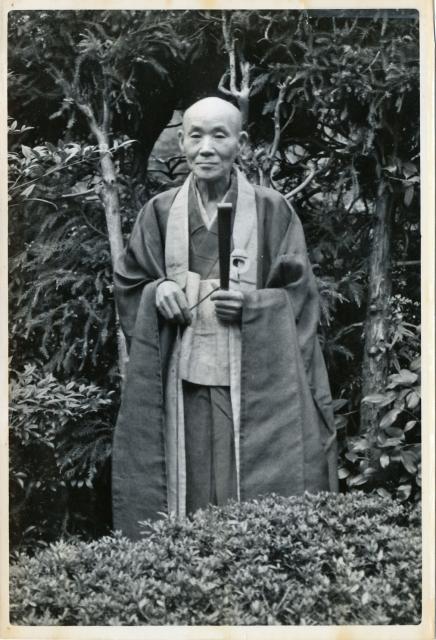 This morning after zazen, we offered incense and the recitation of the Heart Sutra to Daicho Hayashi-roshi (or Kaigai Daicho Zenji) the teacher of Katagiri-roshi and so my dharma grandfather. It is his memorial day today. Hayashi-roshi died not knowing the impact that his life and teaching would have through Katagiri-roshi and those many that he impacted indirectly.
Here’s a post from 2008 where I give some of the detail of his life.
Hayashi Roshi’s dharma name was Kaigai Daicho, meaning “Beyond the Ocean, Great Tides.” His name is strangely prescient given that his disciple, Katagiri-roshi, would come to America. I am interested in his story in part because it shows the huge changes that we’ve gone through in just a few generations. What follows is information about him that I’ve gleaned from conversations with Tomoe Katagiri and others.
I don’t have Hayashi-roshi’s exact dates yet but he lived from late in the nineteenth century until the mid 1970s. His father was very wealthy and high in the government and served both as a prefecture governor and as the first education minister of Japan during the the Meiji reformation.
Hayashi-roshi’s father had a “second wife,” a geisha, for whom he dumped his first wife. For some time while Hayashi-roshi was young he had thought that the second wife was his mother. Then one day when he was six years old he did something wrong and the second wife tied him to a persimmon tree and left him there. Apparently, this wasn’t unusual in Japan in those days. His nanny eventually found him and sobbing said, “She wouldn’t have done this if she was your real mother.”
The next morning Hayashi-roshi said he was going to go to school but instead went to a Zen temple and asked to become a monk. The master (my dharma great grandfather, Yozan Genki) said he had to get permission from Hayashi-roshi’s father because he was so young. Hayashi-roshi’s father came to the temple and said, “This boy lied and went to the temple when he said he was going to school. Therefore, he is not my son and not my business.” He never came to even visit after that and Hayashi-roshi never saw him again. “Hayashi” was Genki-roshi’s family name, not his biological father’s.
Hayashi-roshi went to Eiheiji for many years. While at Eiheiji he became the jisha (ceremonial attendant) for Kumazawa-roshi when the latter had some important position there but before he was abbot. Kumazawa-roshi later became abbot Eiheiji and was abbot for a long time, including when Katagiri-roshi was a monk there, explaining how Katagiri got to be the anja (daily-life attendant) of the monk in charge of training, Hashimoto-roshi.
Hayashi-roshi’s master, Genki-roshi, had a big temple in Nara and was raising money to rebuild some part of it when the old teacher lost most of the money gambling. This made the relationship between him and the community rather cold. Hayashi-roshi was offered the opportunity to become the abbot of the big Nara temple but hesitated because of the cold relationships with the community.
About that time he was traveling on a train and his real mother and he recognized each other and were reunited. Hayashi-roshi had searched for her for many years. She was eking out a living taking care of a small shrine for a famous samuria near Tsuruga on the Japan Sea. Hayashi-roshi somehow was offered the chance to rebuild a small temple at that site. He felt very torn between being the abbot of the big temple in Nara or taking this very small temple in Tsuruga. Eventually, he decided to rebuild the shrine and it became Taizoin, the temple where Katagiri-roshi lived and trained with him. Hayashi-roshi took care of his mother there until she died and also Chozan Genki when he was old.
Before and after he found his mother and settled at Taizoin, Hayashi-roshi traveled widely as a lecturer, not only on Kyushu but going way up into Komosomul’ska-amure (big island north of Hokkaido that before the war was part Soviet Union and part Japan). Hayashi-roshi loved to travel, just like Katagiri-roshi.
Hayashi-roshi liked that Katagiri-roshi came to America as he hadn’t gotten the chance. He had stopped traveling when he got older. Hayashi-roshi rebuilt the hondo (ceremonial hall) at Taizoin but not the keisando (living area) so that the ceiling was almost nonexistent when Tomoe stayed there – snow fell in all over and you could lay on your futon on look at the stars. Eventually it was rebuilt.
Hayashi-roshi lived very straightly, always wearing robes, etc. He thought that he was very unlucky when it came to disciples, except for Katagiri-roshi. Hayashi-roshi had ordained about twelve priests but they had run away, gone crazy, were in jail, etc.
Hayashi-roshi ate all his meals with oryoki and kept the practice schedule even when no one was there. He didn’t go into the village and hang out with people or talk much at all. He didn’t drink and was allergic to alcohol but that wasn’t the reason that he didn’t drink. He was allergic to many things and was often sick. Mostly he quietly followed the schedule and then sat in the room with the hibachi (even in summer) and loved to smoke a pipe with a long bamboo stem and metal bowl. Sometimes he listened to the radio but because Taizoin is surrounded by mountains in the direction of cities, the reception was bad.
Tomoe-san brought a small TV with her when she stayed there for four months in the early 1960′s and they put the antenna on the top of the hondo roof. Hayashi-roshi loved to watch sumo even though the reception was awful. I saw a picture of Hayashi-roshi from about this time and was impressed with his happy, relaxed demeanor. He had a big smile in the picture (traditionally Japanese people don’t smile in photographs).
Hayashi-roshi had broad and deep learning although Tomoe-san said she never saw him read a sutra – that was already inside him, she said. Hayashi-roshi had studied medicine for a long time and like to read books about healing. When he was growing up and young, he had been the helper of a doctor who came to his temple once a week and would treat people. His interest in healing came from there. He also helped people at Taizoin. He also was very interested in I Ching and kept the sticks for throwing the I Ching in a special box that was kept in the altar. Village people would come to him for advice about all sorts of things. In those days the temple was the center of the village life and people came to the temple for everything.
The woman that Katagiri-roshi had first gone to and requested ordination was a Pure Land priest. She knew of Hayashi-roshi and took Katagiri-roshi to him and introduced them. Katagiri-roshi was accepted and stayed three months practicing as a novice before ordination. Then shortly after he was sent to Eiheiji. After Eiheiji he wanted to go to Hashimoto-roshi’s temple for more training. Hayashi-roshi told him, “You can go but a teacher will not change you. You must change you.” Katagiri-roshi was deeply impacted by that and so stayed with Hayashi-roshi.
Katagiri-roshi told me that Hayashi-roshi called for him before he died. I believe Katagiri-roshi felt quite badly that he hadn’t been present for his master’s death.
Previous Post

May 24, 2013
Full Moon, One Peace
Next Post
June 1, 2013 Why Won't the Idol Deliver?
Browse Our Archives
Select a Category Uncategorized
Select a Month August 2023 July 2023 June 2023 May 2023 April 2023 March 2023 February 2023 January 2023 December 2022 November 2022 October 2022 September 2022 August 2022 July 2022 June 2022 May 2022 April 2022 March 2022 February 2022 January 2022 December 2021 November 2021 August 2021 June 2021 April 2021 February 2021 January 2021 November 2020 September 2020 August 2020 July 2020 June 2020 May 2020 April 2020 January 2020 December 2019 November 2019 August 2019 June 2019 May 2019 April 2019 February 2019 January 2019 December 2018 November 2018 October 2018 September 2018 August 2018 July 2018 June 2018 May 2018 April 2018 March 2018 February 2018 January 2018 December 2017 November 2017 October 2017 September 2017 August 2017 July 2017 June 2017 December 2016 October 2016 June 2016 April 2016 February 2016 January 2016 December 2015 November 2015 October 2015 August 2015 June 2015 May 2015 April 2015 March 2015 February 2015 January 2015 December 2014 November 2014 October 2014 September 2014 August 2014 July 2014 June 2014 May 2014 April 2014 March 2014 February 2014 January 2014 December 2013 November 2013 October 2013 September 2013 August 2013 July 2013 June 2013 May 2013 April 2013 March 2013 February 2013 January 2013 December 2012 November 2012 October 2012 September 2012 August 2012 July 2012 June 2012 May 2012 April 2012 March 2012 February 2012 January 2012 December 2011 November 2011 October 2011 September 2011 August 2011 July 2011 June 2011 May 2011 April 2011 March 2011 February 2011 January 2011 December 2010 November 2010 October 2010 September 2010 August 2010 July 2010 June 2010 May 2010 April 2010 March 2010 February 2010 January 2010 December 2009 November 2009 October 2009 September 2009 August 2009 July 2009 June 2009 May 2009 April 2009 March 2009 February 2009 January 2009 December 2008 November 2008 October 2008 September 2008 August 2008 July 2008 June 2008 May 2008
Follow Us!
TAKE THE
Religious Wisdom Quiz
What does Siloam mean?
Select your answer to see how you score.
Gift Love Received Sent
Related posts from Wild Fox Zen

Throw Yourself Into the House of Buddha: The...

New Vine Ghost Site for Dosho's Creative Endeavors...

Gnawing Through Qiánfēng’s Three Illnesses and Two Lights

"Why, Oh Why, Is My Practice Not Progressing?"
TRENDING AT PATHEOS Buddhist

On Taking Refuge in the Dharma
(Here I continue the feature of sharing talks and essays by teachers...

(Continuing my intention to share talks and essays by other members of Empty...
The Subtle Art of Bowing: A Dharma Discourse
(This presentation was first offered by my dear friend Dharma Holder Tom...

Internal Family Systems Can Heal you Mentally &...
How IFS Helped Me Stop Fighting Myself Internal Family Systems (IFS) is...

The Bible No One Spoke About: A Family’s...
A mysterious family Bible, unspoken faith, and a journey from curiosity to...

How Uncertainty Can Transform Your Life in 2025
Embracing Uncertainty: A New Year’s Resolution for the Brave As 2025 approaches,...
view all Buddhist blogs
Ad-Free & Subscriber Log-In Subscription Support
- About Us
- 2026 Calendar
- Videos
- Podcasts
- Library of World Religions
- Faith In Media Tracker
- Advertise With Us
- Write for Us
- Privacy Policy
- Terms of Service
- Do Not Sell My Data
- Contact Us
- Radiant Digital
- Manage Newsletter Subscriptions
- Unsubscribe From Notifications
- Sitemap
Copyright 2008-2026, Patheos. All rights reserved.
Subscription Support Ad-Free & Subscriber Log-In
Follow Patheos