
BuddhistCatholicContemplativeEvangelicalGeneral ChristianHinduJewishLatter-day SaintMuslimNew VisionsProgressive Christian
Beliefs
- Buddhist
- Catholic
- Contemplative
- Evangelical
- General Christian
- Hindu
- Jewish
- Latter-day Saint
- More Voices
- Muslim
- New Visions
- Pagan
- Progressive Christian
Topics
- Religion News
- Food and Religion
- Sports and Religion
- Religious Art
- Religious Music and Entertainment
- Religious Events
- History and Religion
- Style and Religion
- Politics and Religion
- Women in Religion
- Recreation Outdoors and Religion
- Business Finance and Religion
- Careers Workplace and Religion
- Education and Religion
- Family Parenting and Religion
- Health Fitness and Religion
- Home and Religion
- Relationships and Religion
- Technology and Religion
- Travel and Religion
Columnists
- Buddhist Columnists
- Business Finance and Religion Columnists
- Careers Workplace and Religion Columnists
- Catholic Columnists
- Contemplative Columnists
- Education and Religion Columnists
- Evangelists Columnists
- Family Parenting and Religion Columnists
- General Christian Columnists
- Health Fitness and Religion Columnists
- Hindu Columnists
- History and Religion Columnists
- Home and Religion Columnists
- Jewish Columnists
- More Voices Columnists
- Latter Day Columnists
- Muslim Columnists
- New Visions Columnists
- Nonreligious Columnists
- Pagan Columnists
- Politics and Religion Columnists
- Progressive Columnists
- Recreation Outdoors and Religion Columnists
- Relationships and Religion Columnists
- Religion News Columnists
- Religious Art Columnists
- Religious Events Columnists
- Religious Music and Entertainment Columnists
- Sports and Religion Columnists
- Style and Religion Columnists
- Technology and Religion Columnists
- Travel and Religion Columnists
- Women in Religion Columnists
Resource Library
- 2026 Calendar
- Library of World Religions
- The 100 Most Holy Places on Earth
- Patheos Answers
- Podcasts
- Videos
- Faith Leaders Database
- Anglican Episcopalian
- Bahai
- Baptist
- Buddhism
- Christianity
- Confucianism
- Eastern Orthodoxy
- Hinduism
- Holiness and Pentecostal
- ISKCON
- Islam
- Judaism
- Lutheran
- Methodist
- The Church of Jesus Christ of Latter-day Saints
- New Age
- Paganism
- Presbytarian and Reformed
- Protestantism
- Religion Behind the Scenes
- Roman Catholic
- Scientology
- Shia Islam
- Sikhism
- Sufism
- Sunni Islam
- Taoism
- Zen
- See all religions
Research Tools
 Ad-Free & Subscriber Log-In Subscription Support
Ad-Free & Subscriber Log-In Subscription Support
Follow Patheos 

- Trending:
- Forgiveness
- |
- Marriage
- |
- Consciousness
- |
- Death Penalty
- |
- Election
- |
- Halloween
 Wild Fox Zen
- Home
- Buddhist
- What is Refuge?
What is Refuge?
Last updated on: March 21, 2013 at 7:55 am by Dosho Port
What is Refuge? 2013-03-21T07:55:41-06:00 Dosho Port
Patheos Explore the world's faith through different perspectives on religion and spirituality! Patheos has the views of the prevalent religions and spiritualities of the world.
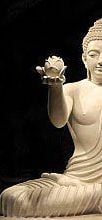 “Taking Refuge in Evil Buddhas?”
What you say?
In my last post, I discussed this odd practice based on a talk that Jiryu gave a Green Gulch last month. Talking about refuge in evil Buddhas online and here at Wild Fox, sounds like one of the catches is about “refuge” – what is it?
Very nice question, worthy of sitting calmly and contemplating so I won’t get all preachy here. This is just a little post with a bit about the meaning of the word “refuge,” a place of safety.
The phrase in Japanese that is translated “refuge” is “namu kie.”
According to my unreliable memory, Katagiri Roshi used to say that “kie” was more active than “refuge” – more like throwing ourself into Buddha’s house.
But I wanted to check that memory so I Googled and came up with a piece by “An Appropriate Response: Coaching and Consultation” (how about that!?). Here’s what they have:
In Japanese, “I take refuge in Buddha,” is “Namu kie butsu”. “Namu” means honoring and acknowledging what and who inspire us, and expressing our dedication and appreciation to that. “Kie” means to wholeheartedly throw oneself into and to depend on. So “Namu kie butsu” is sometimes translated as “I wholeheartedly throw myself into the house of Buddha.” That’s the heart of taking refuge: returning to and throwing ourselves into now and now and now.
Given that I tend to be a suspicious person, I pushed the inquiry a bit further and asked Koun Franz (a real Soto priest who’s got some serious language skills but has been neglecting his excellent blog recently) what he thought. Here’s what he said,
I think the [An Appropriate Response] article covers “kie” fairly well. A quick search shows that by itself, it usually refers to religious conversion, which is interesting (also “devotion”). It’s always danger to dissect compounds, but the “ki” means “coming home,” and the “e” means something like “depend on,” so together, that actually covers a lot of ground. “Namu,” by the way, doesn’t mean much of anything–it’s a transliteration of Sanskrit (?), so the characters themselves only represent sound, not meaning (literally they mean “south nothing”). The dictionary lists praise, amen, hail, etc., but combined with “kie butsu,” that makes for some awkward translation, no matter how you do it.
I think it’s probably a very modern notion, but I, too, have always liked the “refugee” version of taking refuge. Very Zen-y to take refuge in such a way that you have no safe place to stand. I’m not sure that the idea of “throw yourself into,” as a translation, has legs, but as an interpretation, I’d say it’s right on.
Amen to coming home to, and relying on, Buddha!
Buddha immersion! Amen!
I hope that doesn’t help explain “refuge” but adds some grist for the practice mill.
Previous Post

March 17, 2013
On Taking Refuge in Evil Buddhas
Next Post
March 24, 2013 Taking Refuge in a Coffin: Is This Life One or Two? And Who Knows?
Browse Our Archives
Select a Category Uncategorized
Select a Month August 2023 July 2023 June 2023 May 2023 April 2023 March 2023 February 2023 January 2023 December 2022 November 2022 October 2022 September 2022 August 2022 July 2022 June 2022 May 2022 April 2022 March 2022 February 2022 January 2022 December 2021 November 2021 August 2021 June 2021 April 2021 February 2021 January 2021 November 2020 September 2020 August 2020 July 2020 June 2020 May 2020 April 2020 January 2020 December 2019 November 2019 August 2019 June 2019 May 2019 April 2019 February 2019 January 2019 December 2018 November 2018 October 2018 September 2018 August 2018 July 2018 June 2018 May 2018 April 2018 March 2018 February 2018 January 2018 December 2017 November 2017 October 2017 September 2017 August 2017 July 2017 June 2017 December 2016 October 2016 June 2016 April 2016 February 2016 January 2016 December 2015 November 2015 October 2015 August 2015 June 2015 May 2015 April 2015 March 2015 February 2015 January 2015 December 2014 November 2014 October 2014 September 2014 August 2014 July 2014 June 2014 May 2014 April 2014 March 2014 February 2014 January 2014 December 2013 November 2013 October 2013 September 2013 August 2013 July 2013 June 2013 May 2013 April 2013 March 2013 February 2013 January 2013 December 2012 November 2012 October 2012 September 2012 August 2012 July 2012 June 2012 May 2012 April 2012 March 2012 February 2012 January 2012 December 2011 November 2011 October 2011 September 2011 August 2011 July 2011 June 2011 May 2011 April 2011 March 2011 February 2011 January 2011 December 2010 November 2010 October 2010 September 2010 August 2010 July 2010 June 2010 May 2010 April 2010 March 2010 February 2010 January 2010 December 2009 November 2009 October 2009 September 2009 August 2009 July 2009 June 2009 May 2009 April 2009 March 2009 February 2009 January 2009 December 2008 November 2008 October 2008 September 2008 August 2008 July 2008 June 2008 May 2008
Follow Us!
TAKE THE
Religious Wisdom Quiz
A woman who had suffered bleeding for twelve years was healed by touching Jesus' what?
Select your answer to see how you score.
The hairs of his head His hand His cloak His feet
Related posts from Wild Fox Zen
The Vigorous Nature of Zen Work
The Pivotal Linji Master Xutang and his Profuse...
Cultivating Verification in One School Zen: A New...
The "Soto Zen" of the PMSO: A New...
TRENDING AT PATHEOS Buddhist

On Taking Refuge in the Dharma
(Here I continue the feature of sharing talks and essays by teachers...

(Continuing my intention to share talks and essays by other members of Empty...
The Subtle Art of Bowing: A Dharma Discourse
(This presentation was first offered by my dear friend Dharma Holder Tom...

Internal Family Systems Can Heal you Mentally &...
How IFS Helped Me Stop Fighting Myself Internal Family Systems (IFS) is...

The Bible No One Spoke About: A Family’s...
A mysterious family Bible, unspoken faith, and a journey from curiosity to...

How Uncertainty Can Transform Your Life in 2025
Embracing Uncertainty: A New Year’s Resolution for the Brave As 2025 approaches,...
view all Buddhist blogs
Ad-Free & Subscriber Log-In Subscription Support
- About Us
- 2026 Calendar
- Videos
- Podcasts
- Library of World Religions
- Faith In Media Tracker
- Advertise With Us
- Write for Us
- Privacy Policy
- Terms of Service
- Do Not Sell My Data
- Contact Us
- Radiant Digital
- Manage Newsletter Subscriptions
- Unsubscribe From Notifications
- Sitemap
Copyright 2008-2026, Patheos. All rights reserved.
Subscription Support Ad-Free & Subscriber Log-In
Follow Patheos