
BuddhistCatholicContemplativeEvangelicalGeneral ChristianHinduJewishLatter-day SaintMuslimNew VisionsProgressive Christian
Beliefs
- Buddhist
- Catholic
- Contemplative
- Evangelical
- General Christian
- Hindu
- Jewish
- Latter-day Saint
- More Voices
- Muslim
- New Visions
- Pagan
- Progressive Christian
Topics
- Religion News
- Food and Religion
- Sports and Religion
- Religious Art
- Religious Music and Entertainment
- Religious Events
- History and Religion
- Style and Religion
- Politics and Religion
- Women in Religion
- Recreation Outdoors and Religion
- Business Finance and Religion
- Careers Workplace and Religion
- Education and Religion
- Family Parenting and Religion
- Health Fitness and Religion
- Home and Religion
- Relationships and Religion
- Technology and Religion
- Travel and Religion
Columnists
- Buddhist Columnists
- Business Finance and Religion Columnists
- Careers Workplace and Religion Columnists
- Catholic Columnists
- Contemplative Columnists
- Education and Religion Columnists
- Evangelists Columnists
- Family Parenting and Religion Columnists
- General Christian Columnists
- Health Fitness and Religion Columnists
- Hindu Columnists
- History and Religion Columnists
- Home and Religion Columnists
- Jewish Columnists
- More Voices Columnists
- Latter Day Columnists
- Muslim Columnists
- New Visions Columnists
- Nonreligious Columnists
- Pagan Columnists
- Politics and Religion Columnists
- Progressive Columnists
- Recreation Outdoors and Religion Columnists
- Relationships and Religion Columnists
- Religion News Columnists
- Religious Art Columnists
- Religious Events Columnists
- Religious Music and Entertainment Columnists
- Sports and Religion Columnists
- Style and Religion Columnists
- Technology and Religion Columnists
- Travel and Religion Columnists
- Women in Religion Columnists
Resource Library
- 2026 Calendar
- Library of World Religions
- The 100 Most Holy Places on Earth
- Patheos Answers
- Podcasts
- Videos
- Faith Leaders Database
- Anglican Episcopalian
- Bahai
- Baptist
- Buddhism
- Christianity
- Confucianism
- Eastern Orthodoxy
- Hinduism
- Holiness and Pentecostal
- ISKCON
- Islam
- Judaism
- Lutheran
- Methodist
- The Church of Jesus Christ of Latter-day Saints
- New Age
- Paganism
- Presbytarian and Reformed
- Protestantism
- Religion Behind the Scenes
- Roman Catholic
- Scientology
- Shia Islam
- Sikhism
- Sufism
- Sunni Islam
- Taoism
- Zen
- See all religions
Research Tools
 Ad-Free & Subscriber Log-In Subscription Support
Ad-Free & Subscriber Log-In Subscription Support
Follow Patheos 

- Trending:
- Forgiveness
- |
- Marriage
- |
- Consciousness
- |
- Death Penalty
- |
- Election
- |
- Halloween
 Wild Fox Zen
- Home
- Buddhist
- It’s Not So Easy: The Apprenticeship Model for Zen Training
It’s Not So Easy: The Apprenticeship Model for Zen Training
Last updated on: October 28, 2012 at 11:03 am by Dosho Port
It’s Not So Easy: The Apprenticeship Model for Zen Training 2012-10-28T11:03:52-06:00 Dosho Port
Patheos Explore the world's faith through different perspectives on religion and spirituality! Patheos has the views of the prevalent religions and spiritualities of the world.
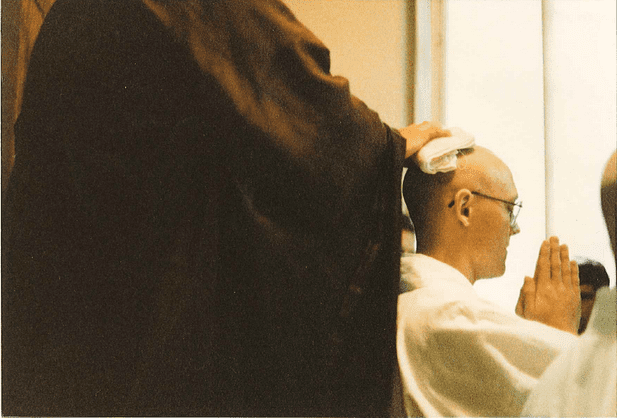 During a sesshin dokusan in 1981, after practicing with Katagiri Roshi for three or four years, I asked him if he’d ordain me.
During this period, I’d been living a few blocks from the Minnesota Zen Center and like my fellow committed students, I attended most morning zazen sessions, 5am – 7am (including a short service) and evening zazen, 7:30pm – 9pm.
Roshi gave a talk every Wednesday night on a sutra or a koan, usually as part of a long series, so I didn’t miss many of them. We also had an extended day on Saturdays, beginning as usual at 5am but then including a general talk to the larger community, work, lunch and more work, usually ending about 4pm.
Once a month we had sesshin, usually just the weekend but four times a year we sat for seven days. Twice a year we had 100-day training periods that included a student talk that bumped back the start time to 4:30am, Monday – Saturdays and added a training talk by Roshi on Monday evenings. Sesshin talks and Monday evening practice period talks were almost always about Dogen’s Shobogenzo.
We lived a quasi-monastic life, probably sitting as much or more than many monastics, an extreme sport version of Zen training.
We also got a country monastery going during this period and had practice periods there, starting in 1983, that ranged from six to eight weeks, usually twice a year.
Except for those practice periods and a few trips here and there to train, I worked most of this time as a teacher in a juvenile detention center, forty hours a week. I did this for thirteen years until Roshi’s death in 1990. Some of my peers had trained like this with Roshi for eighteen years.
The spirit of this training is expressed by Katagiri Roshi in this way:
“The experience of enlightenment is important for us, but it is not enough. Again and again that enlightenment must become more profound, until it penetrates our skin, muscle, and bone.”
I mention this not so much to pat myself on the back – my arm got sore a while ago and I mostly quit that – but as an alternate training model to what’s being kicked around in Soto circles these days, let alone in some mindfulness circles where walking in the park, breathing and smiling, is regarded as the be-all and end-all of the buddhadharma.
At best, it looks to me like most Zen training models are directed at producing ministers to lead communities (tertiary in my training). At worst, much of what is offered as mindfulness is an utter trivialization of the subtle truth of the buddhadharma.
The “Why?” for Katagiri Roshi was something like this: “The subtle truth of the buddhadharma is so important for future generations that we’re practicing with our hair on fire to pass it on.”
That’s the mission that I signed on for when Roshi chose me as one of his successors.
Roshi trained us to sit through it all by sitting through it all with us. Sitting with someone who was deeply settled in zazen is really different from sitting on one’s own.
Roshi offered dharma inquiry with Shobogenzo, koan, and sutra as the inspiration and it continues to strike me as really quite extraordinary. Studying the dharma with someone with an eye for dharma is quite a different activity from reading Buddhist books on one’s own.
We used the traditional Soto forms of practice and yet Roshi stressed that the point was not to adopt esoteric mystical stuff, but through our dharma practice to embody birth-and-death deep reflection so that we could offer a path of deep reflection for others, making a contribution to humans in the rough times ahead.
Now, I’m not saying that he succeeded, because that remains to be seen. And I’m not saying he was perfect, because he wasn’t. We’ve all got our issues and he sure had his share – as do I. Years of intensive training left him a flawed human being. Sometimes radiantly so. Sometimes painfully so.
What I am saying is that my study with Katagiri Roshi was an apprenticeship, learned mostly through the body. Body time – sitting, working, living, practicing and studying together – was the single most important factor. Intimacy is the life-blood of this process, whether the teacher is into shikantaza or koan, both or neither. It is an intimacy that begins with the teacher-student relationship and opens to receive the 10,000 things.
I believe that apprenticeship Zen is the best way to learn Zen so it is the apprenticeship model that I offer. This training relies much more on intuitive processes than on a professional check-off system.
A word of caution: there are vulnerabilities for all parties in this way of training. To name just a few, it is difficult for a student to find a teacher with whom they sense affinity. It is difficult for a teacher also to find students who are compatible and capable. A student can put themselves down (or up). A teacher can put themselves up (or down). The whole thing can sometimes get carried way off track into a personality cult. An enormous investment of oneself is necessary and it isn’t a safe thing to do.
But then life isn’t safe either as it usually ends in a surprisingly untimely death.
Apprenticeships are also not convenient in our contemporary world, given the amount of body time that seems necessary for authentic training. The physical plant that is optimal for this kind of training is hard to come by and the compromises made to support the apprenticeship model may sabotage the heart of it.
Moreover, I’ve learned since then from others who’ve had this kind of training that apprenticeships in general often don’t feel good. Certainly, apprenticing with Roshi often didn’t feel good. A lot of the time, apprenticing with Roshi was boring. He rarely said a kind word to me and I often felt like there was something important that I wasn’t getting or that I should be doing. Sometimes he was bitingly critical of me. Some of that was very helpful.
This is a challenge particularly in our culture that stresses feeling good as the most important thing. I’m with Leonard Cohen on this one: “I don’t trust my inner feelings, inner feelings come and go.”
When I asked Roshi to ordain me, the words I chose were, “I want to be your disciple.”
I didn’t really know what I was saying. I meant that I wanted to be a Zen priest, because that seemed like the best way to study with him, but he probably heard that I wanted to be his successor. In any case, I didn’t know what being a Zen priest would mean. Nothing was spelled out in advance and there were no guarantees. Look, put your body in it and learn was the training method.
Roshi sat silently – and this guy could really really shut up – for what seemed like at least several minutes. Then he gruffly blurted, “It’s not so easy, anyway.”
He said a lot there. I’ve found that “not so easy” is unavoidably important.
Previous Post

October 20, 2012
Dogen: the Patron Saint of Passive Zen?
Next Post
November 10, 2012 Take a Straight Dose: Review of "Fearless at Work"
Browse Our Archives
Select a Category Uncategorized
Select a Month August 2023 July 2023 June 2023 May 2023 April 2023 March 2023 February 2023 January 2023 December 2022 November 2022 October 2022 September 2022 August 2022 July 2022 June 2022 May 2022 April 2022 March 2022 February 2022 January 2022 December 2021 November 2021 August 2021 June 2021 April 2021 February 2021 January 2021 November 2020 September 2020 August 2020 July 2020 June 2020 May 2020 April 2020 January 2020 December 2019 November 2019 August 2019 June 2019 May 2019 April 2019 February 2019 January 2019 December 2018 November 2018 October 2018 September 2018 August 2018 July 2018 June 2018 May 2018 April 2018 March 2018 February 2018 January 2018 December 2017 November 2017 October 2017 September 2017 August 2017 July 2017 June 2017 December 2016 October 2016 June 2016 April 2016 February 2016 January 2016 December 2015 November 2015 October 2015 August 2015 June 2015 May 2015 April 2015 March 2015 February 2015 January 2015 December 2014 November 2014 October 2014 September 2014 August 2014 July 2014 June 2014 May 2014 April 2014 March 2014 February 2014 January 2014 December 2013 November 2013 October 2013 September 2013 August 2013 July 2013 June 2013 May 2013 April 2013 March 2013 February 2013 January 2013 December 2012 November 2012 October 2012 September 2012 August 2012 July 2012 June 2012 May 2012 April 2012 March 2012 February 2012 January 2012 December 2011 November 2011 October 2011 September 2011 August 2011 July 2011 June 2011 May 2011 April 2011 March 2011 February 2011 January 2011 December 2010 November 2010 October 2010 September 2010 August 2010 July 2010 June 2010 May 2010 April 2010 March 2010 February 2010 January 2010 December 2009 November 2009 October 2009 September 2009 August 2009 July 2009 June 2009 May 2009 April 2009 March 2009 February 2009 January 2009 December 2008 November 2008 October 2008 September 2008 August 2008 July 2008 June 2008 May 2008
Follow Us!
TAKE THE
Religious Wisdom Quiz
What does the name "Samuel" mean?
Select your answer to see how you score.
Gifted by God Heard by God Saved by God Sent by God
Related posts from Wild Fox Zen

New Vine Ghost Site for Dosho's Creative Endeavors...

The Vigorous Nature of Zen Work
The Pivotal Linji Master Xutang and his Profuse...
Cultivating Verification in One School Zen: A New...
TRENDING AT PATHEOS Buddhist

On Taking Refuge in the Dharma
(Here I continue the feature of sharing talks and essays by teachers...

(Continuing my intention to share talks and essays by other members of Empty...
The Subtle Art of Bowing: A Dharma Discourse
(This presentation was first offered by my dear friend Dharma Holder Tom...

Internal Family Systems Can Heal you Mentally &...
How IFS Helped Me Stop Fighting Myself Internal Family Systems (IFS) is...

The Bible No One Spoke About: A Family’s...
A mysterious family Bible, unspoken faith, and a journey from curiosity to...

How Uncertainty Can Transform Your Life in 2025
Embracing Uncertainty: A New Year’s Resolution for the Brave As 2025 approaches,...
view all Buddhist blogs
Ad-Free & Subscriber Log-In Subscription Support
- About Us
- 2026 Calendar
- Videos
- Podcasts
- Library of World Religions
- Faith In Media Tracker
- Advertise With Us
- Write for Us
- Privacy Policy
- Terms of Service
- Do Not Sell My Data
- Contact Us
- Radiant Digital
- Manage Newsletter Subscriptions
- Unsubscribe From Notifications
- Sitemap
Copyright 2008-2026, Patheos. All rights reserved.
Subscription Support Ad-Free & Subscriber Log-In
Follow Patheos