
BuddhistCatholicContemplativeEvangelicalGeneral ChristianHinduJewishLatter-day SaintMuslimNew VisionsProgressive Christian
Beliefs
- Buddhist
- Catholic
- Contemplative
- Evangelical
- General Christian
- Hindu
- Jewish
- Latter-day Saint
- More Voices
- Muslim
- New Visions
- Pagan
- Progressive Christian
Topics
- Religion News
- Food and Religion
- Sports and Religion
- Religious Art
- Religious Music and Entertainment
- Religious Events
- History and Religion
- Style and Religion
- Politics and Religion
- Women in Religion
- Recreation Outdoors and Religion
- Business Finance and Religion
- Careers Workplace and Religion
- Education and Religion
- Family Parenting and Religion
- Health Fitness and Religion
- Home and Religion
- Relationships and Religion
- Technology and Religion
- Travel and Religion
Columnists
- Buddhist Columnists
- Business Finance and Religion Columnists
- Careers Workplace and Religion Columnists
- Catholic Columnists
- Contemplative Columnists
- Education and Religion Columnists
- Evangelists Columnists
- Family Parenting and Religion Columnists
- General Christian Columnists
- Health Fitness and Religion Columnists
- Hindu Columnists
- History and Religion Columnists
- Home and Religion Columnists
- Jewish Columnists
- More Voices Columnists
- Latter Day Columnists
- Muslim Columnists
- New Visions Columnists
- Nonreligious Columnists
- Pagan Columnists
- Politics and Religion Columnists
- Progressive Columnists
- Recreation Outdoors and Religion Columnists
- Relationships and Religion Columnists
- Religion News Columnists
- Religious Art Columnists
- Religious Events Columnists
- Religious Music and Entertainment Columnists
- Sports and Religion Columnists
- Style and Religion Columnists
- Technology and Religion Columnists
- Travel and Religion Columnists
- Women in Religion Columnists
Resource Library
- 2026 Calendar
- Library of World Religions
- The 100 Most Holy Places on Earth
- Patheos Answers
- Podcasts
- Videos
- Faith Leaders Database
- Anglican Episcopalian
- Bahai
- Baptist
- Buddhism
- Christianity
- Confucianism
- Eastern Orthodoxy
- Hinduism
- Holiness and Pentecostal
- ISKCON
- Islam
- Judaism
- Lutheran
- Methodist
- The Church of Jesus Christ of Latter-day Saints
- New Age
- Paganism
- Presbytarian and Reformed
- Protestantism
- Religion Behind the Scenes
- Roman Catholic
- Scientology
- Shia Islam
- Sikhism
- Sufism
- Sunni Islam
- Taoism
- Zen
- See all religions
Research Tools
 Ad-Free & Subscriber Log-In Subscription Support
Follow Patheos 

- Trending:
- Advent
- |
- Forgiveness
- |
- Thanksgiving
- |
- Election
- |
- Seasonal Holidays
- |
- Marriage
 Wild Fox Zen
- Home
- Buddhist
- What is the Withered Tree Way?
What is the Withered Tree Way?
Last updated on: August 26, 2012 at 2:06 pm by Dosho Port
What is the Withered Tree Way? 2012-08-26T14:06:12-06:00 Dosho Port
Patheos Explore the world's faith through different perspectives on religion and spirituality! Patheos has the views of the prevalent religions and spiritualities of the world.
 This reflection is a follow up to James Ford’s post a little while back, Jiufeng Does Not Approve: A Brief Meditation.
I’ve been chewing on this old case for twenty years or so – an important pointer in my ongoing search for what Dogen calls the wondrous method of practice-enlightenment (aka, shikantaza).
Katagiri Roshi would often say that there are only a few people who really know this wondrous method. I took that to heart and launched a pilgrimage that has been dragging on for thirty-five years.
The koan work that I’ve been doing, fyi, is also in service of this inquiry – what is the heart of shikantaza?
Here’s the koan.
Book of Serenity, Case 96:
Jiufeng Daoqian served Shishuang Qingzhu as his attendant. When the master died, the assembly elected the head monk as the new abbot. Jiufeng was unsure of the new master’s realization. He declared “I will test him, and if he understands what our late master understood, then I will continue as his attendant.”
The two men met. Jiufeng said, “our late teacher said, ‘You should extinguish all delusive thoughts. You should let consciousness expire. You should let your one awareness continue for ten thousand years. You should let your awareness become like winter ashes, or a withered tree. You should let your consciousness become like one strip of pure white silk.’ So, tell me, what matter was he intending to clarify with these words?”
The head monk said “Our late master intended to clarify the matter of absolute emptiness.”
Jiufeng replied, “If that is your understanding, you have failed to achieve the insight of our late master.”
The head monk was taken aback. He said, “Pass me that incense.” When Jiufeng did, the head monk lit it, saying “If I didn’t understand him, I would not be able to die as the incense smoke rises.” And with these words, he assumed the zazen posture and died.
Jiufeng reached over and gently caressed the late head monk’s shoulder, saying, “Even though you can die sitting or standing, you have not dreamt our late master’s teaching.”
Shishuang (807-88) was a successor to Daowu – the guy who wouldn’t say alive or dead, the guy who asked his brother Yunyan about the activity of great compassion, the guy who asked the sweeping Yunyan what he was doing. Daowu was a successor to Yaoshan in the Shitou branch of Zen, the branch that eventually became associated with “silent illumination” and then radicalized by Dogen as “shikantaza” (or earnest, vivid sitting).
Shishuang was a contemporary of Linchi, Yangshan, Dongshan and Xuefeng – living and teaching right in the thick of the dream time for Zen teachings.
There’s a number of significant and hinky context bits in this old story. Succession to the abbacy appears to be by group consensus and so the Shishuang line may not be thriving in an imperially controlled monastery but at the fringes. Perhaps this allowed for the fringe practice of monks dying while sitting or standing. A practice experiment that one might say “died out” (I hear you groaning!).
Thus Shishuang’s zendo was reputed to be a dead-tree hall, so named for the emphasis on long hours of still sitting and fore-shadows the silent illumination school (although these old guys were dead for a hundred years or so before the silent illumination brand arose) as well of this drop-dead trick – a considerable meditation feat and quite beside the point.
James, of course, does a nice job of laying out the issue and making the koan point that the realization of emptiness is alive:
“How do you extinguish all delusive thoughts? Show me. How do you let consciousness expire? What word expresses that? And what about the ten thousand years? Ten thousand moments? Ten thousand breaths? Ten thousand pauses? I can tell you just presenting zazen will not cut it.” [emphasis added]
Nor will dying in body or in spirit while sitting necessarily do it.
And this goes to the heart of shikantaza. Demonstrably not simply a silent illumination death camp (aka”just sitting”) – a passive practice in the chorus of the do-me-dharma school.
“Dropping body and mind,” Dogen’s mantra for shikantaza, echoes the withered tree way but is certainly not merely pure receptivity or panoramic awareness as some contemporary skin bags portray it.
Another framing for this conversation is about the two wings of Buddhist meditation, samadhi and insight, that has been in play at least since the Buddha’s time. We tend to emphasize one over the other, subtly missing the heart of the wondrous method.
Soto Zen at it’s best leans toward samadhi. Koan Zen toward insight.
Case in point, a close student of Suzuki Roshi once told me that he told her, “Zazen is samadhi.”
Yes and no.
I once asked Katagiri Roshi if zazen was about samadhi or insight. He held up his hand and turned it back and forth and said, “Like a leaf showing one side then the other. Go into one side deeply and the other appears.”
And this is Dogen’s great practice. Shikantaza as the “show me,” “tell me” resolution of the samadhi/insight issue where samadhi and insight are two foci and the seeming conflict is dynamically resolved through ongoing intimate interaction.
It is this very churning that ripens the sweet cream of the long river.
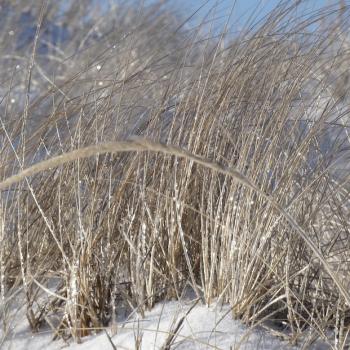
(Photo above of withered tree is from recent canoeing trip to BWCA)
Previous Post

August 18, 2012
If You're Lucky, Your Heart Will Break: Sparklingly Refreshing
Next Post
September 1, 2012 Angling for the Great Function
Browse Our Archives
Select a Category Uncategorized
Select a Month August 2023 July 2023 June 2023 May 2023 April 2023 March 2023 February 2023 January 2023 December 2022 November 2022 October 2022 September 2022 August 2022 July 2022 June 2022 May 2022 April 2022 March 2022 February 2022 January 2022 December 2021 November 2021 August 2021 June 2021 April 2021 February 2021 January 2021 November 2020 September 2020 August 2020 July 2020 June 2020 May 2020 April 2020 January 2020 December 2019 November 2019 August 2019 June 2019 May 2019 April 2019 February 2019 January 2019 December 2018 November 2018 October 2018 September 2018 August 2018 July 2018 June 2018 May 2018 April 2018 March 2018 February 2018 January 2018 December 2017 November 2017 October 2017 September 2017 August 2017 July 2017 June 2017 December 2016 October 2016 June 2016 April 2016 February 2016 January 2016 December 2015 November 2015 October 2015 August 2015 June 2015 May 2015 April 2015 March 2015 February 2015 January 2015 December 2014 November 2014 October 2014 September 2014 August 2014 July 2014 June 2014 May 2014 April 2014 March 2014 February 2014 January 2014 December 2013 November 2013 October 2013 September 2013 August 2013 July 2013 June 2013 May 2013 April 2013 March 2013 February 2013 January 2013 December 2012 November 2012 October 2012 September 2012 August 2012 July 2012 June 2012 May 2012 April 2012 March 2012 February 2012 January 2012 December 2011 November 2011 October 2011 September 2011 August 2011 July 2011 June 2011 May 2011 April 2011 March 2011 February 2011 January 2011 December 2010 November 2010 October 2010 September 2010 August 2010 July 2010 June 2010 May 2010 April 2010 March 2010 February 2010 January 2010 December 2009 November 2009 October 2009 September 2009 August 2009 July 2009 June 2009 May 2009 April 2009 March 2009 February 2009 January 2009 December 2008 November 2008 October 2008 September 2008 August 2008 July 2008 June 2008 May 2008
Follow Us!
TAKE THE
Religious Wisdom Quiz
Who was struck dead for lying about money in the early church?
Select your answer to see how you score.
Simon the Sorcerer Nicodemus Ananias and Sapphira Demas
Related posts from Wild Fox Zen

Gnawing Through Qiánfēng’s Three Illnesses and Two Lights
Plucking a Blade of Grass: The Wondrous Dharma...
Dōgen’s Instruction for Householder Zen Training

Wandering Destitute into a Demon Pit
TRENDING AT PATHEOS Buddhist
On Taking Refuge in the Dharma
(Here I continue the feature of sharing talks and essays by teachers...
(Continuing my intention to share talks and essays by other members of Empty...
The Subtle Art of Bowing: A Dharma Discourse
(This presentation was first offered by my dear friend Dharma Holder Tom...

Internal Family Systems Can Heal you Mentally &...
How IFS Helped Me Stop Fighting Myself Internal Family Systems (IFS) is...
The Bible No One Spoke About: A Family’s...
A mysterious family Bible, unspoken faith, and a journey from curiosity to...

How Uncertainty Can Transform Your Life in 2025
Embracing Uncertainty: A New Year’s Resolution for the Brave As 2025 approaches,...
view all Buddhist blogs
Ad-Free & Subscriber Log-In Subscription Support
- About Us
- 2026 Calendar
- Videos
- Podcasts
- Library of World Religions
- Faith In Media Tracker
- Advertise With Us
- Write for Us
- Privacy Policy
- Terms of Service
- Do Not Sell My Data
- Contact Us
- Radiant Digital
- Manage Newsletter Subscriptions
- Unsubscribe From Notifications
- Sitemap
Copyright 2008-2026, Patheos, part of the Radiant Digital network of media brands. All rights reserved.
Subscription Support Ad-Free & Subscriber Log-In
Follow Patheos