
BuddhistCatholicContemplativeEvangelicalGeneral ChristianHinduJewishLatter-day SaintMuslimNew VisionsProgressive Christian
Beliefs
- Buddhist
- Catholic
- Contemplative
- Evangelical
- General Christian
- Hindu
- Jewish
- Latter-day Saint
- More Voices
- Muslim
- New Visions
- Pagan
- Progressive Christian
Topics
- Religion News
- Food and Religion
- Sports and Religion
- Religious Art
- Religious Music and Entertainment
- Religious Events
- History and Religion
- Style and Religion
- Politics and Religion
- Women in Religion
- Recreation Outdoors and Religion
- Business Finance and Religion
- Careers Workplace and Religion
- Education and Religion
- Family Parenting and Religion
- Health Fitness and Religion
- Home and Religion
- Relationships and Religion
- Technology and Religion
- Travel and Religion
Columnists
- Buddhist Columnists
- Business Finance and Religion Columnists
- Careers Workplace and Religion Columnists
- Catholic Columnists
- Contemplative Columnists
- Education and Religion Columnists
- Evangelists Columnists
- Family Parenting and Religion Columnists
- General Christian Columnists
- Health Fitness and Religion Columnists
- Hindu Columnists
- History and Religion Columnists
- Home and Religion Columnists
- Jewish Columnists
- More Voices Columnists
- Latter Day Columnists
- Muslim Columnists
- New Visions Columnists
- Nonreligious Columnists
- Pagan Columnists
- Politics and Religion Columnists
- Progressive Columnists
- Recreation Outdoors and Religion Columnists
- Relationships and Religion Columnists
- Religion News Columnists
- Religious Art Columnists
- Religious Events Columnists
- Religious Music and Entertainment Columnists
- Sports and Religion Columnists
- Style and Religion Columnists
- Technology and Religion Columnists
- Travel and Religion Columnists
- Women in Religion Columnists
Resource Library
- 2026 Calendar
- Library of World Religions
- The 100 Most Holy Places on Earth
- Patheos Answers
- Podcasts
- Videos
- Faith Leaders Database
- Anglican Episcopalian
- Bahai
- Baptist
- Buddhism
- Christianity
- Confucianism
- Eastern Orthodoxy
- Hinduism
- Holiness and Pentecostal
- ISKCON
- Islam
- Judaism
- Lutheran
- Methodist
- The Church of Jesus Christ of Latter-day Saints
- New Age
- Paganism
- Presbytarian and Reformed
- Protestantism
- Religion Behind the Scenes
- Roman Catholic
- Scientology
- Shia Islam
- Sikhism
- Sufism
- Sunni Islam
- Taoism
- Zen
- See all religions
Research Tools
 Ad-Free & Subscriber Log-In Subscription Support
Follow Patheos 

- Trending:
- Advent
- |
- Forgiveness
- |
- Thanksgiving
- |
- Election
- |
- Seasonal Holidays
- |
- Marriage
 The White Hindu
-
Hinduism Basics
-
More
- Home
- Hindu
- Mental Health in the Hindu Community
Mental Health in the Hindu Community
Last updated on: November 8, 2018 at 8:01 am by Ambaa Choate
Mental Health in the Hindu Community 2018-11-08T08:01:41-05:00 Ambaa Choate
Patheos Explore the world's faith through different perspectives on religion and spirituality! Patheos has the views of the prevalent religions and spiritualities of the world.
The Sri Shiva Vishnu Temple has been putting on some wonderful programs (Like our panel about being a non-Indian Hindu, which I’m still trying to figure out if there is a video of). This week they had a panel about mental health and Hinduism. As a Hindu with clinical depression, I knew I had to be there.
I was a little late and missed the introductions but the panelists seemed to all be mental health professionals and dedicated Hindus. It was a great program.
It started out along the lines I’ve already been thinking, which is that Hinduism puts a very large emphasis on learning to control your mind and your thoughts. The mind is a sheath going over our divinity, as one panelist put it, and it is a tool to help us reach moksha but it also ultimately holds us back from moksha. So any challenges of the mind are illusion.
While all this is true, it does make it difficult to address problems with the mind. There is a fear that if we seek help for mental problems it makes us weak, not strong enough to control our minds.
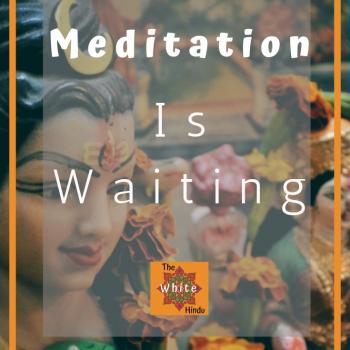
But really there are so many aspects of Hinduism that can help heal mental problems if we are willing to talk about it. “There is power in the healing branches of Hinduism.” One of the things the panelists discussed was when to seek help from western medicine and when from eastern. One woman made a really great point that you have to be somewhat better in order to really utilize Hinduism’s tools. If you are way out of control then you need to think in terms of a short term strategy and a long term strategy to heal. “Meditation is impossible when you are in the midst of depression and anxiety.” But there are methods that are very effective at raising you to a level where you can utilize the tools of Hinduism.
I’m so glad that she said that because the advice is so often to “just meditate.” But meditation is difficult work and can be very scary too. You need guidance with it and you need to be ready to plumb the depths of your soul. Many things like meditation and yoga are meant for preventative long term practice.

Photo by Jared Rice on Unsplash
Western medicine might give you a short term boost to get you to the brain space that you need in order to use yoga, meditation, or ayurveda. And in fact, one panelist pointed out that the longer the field of psychology develops, the closer and closer it gets to Eastern medicine. Mindfulness is all the rage in psychology right now!
Neither system is superior, they can work together. And why not take advantage of every resource we’ve got to help the mind? Find the balance that works for you, but you need to be in control of your own treatment. It can be very challenging to figure out what is working and what isn’t because you may be so used to the feelings of depression or anxiety that you don’t know how it feels to be healthy.
One of the challenges in the Hindu community is that therapy in India is more communal than it is here and often the whole family will go together. This has advantages but it can also make it hard for the person struggling with mental illness to be fully open about what is going on. Their parents might feel “What have I done wrong?” Or “What can a therapist give you that you can’t get from turning within to the Self?”
One very sweet woman talked about seeing mental illness in the folklore. There are so many stories of wrestling with the mind, though mental health language isn’t used. She said that she appreciates the epics and all they have to teach us, but if she were there she would want to talk to Yudhisthira about his compulsive gambling and take Duryodhana aside to talk about his insecurities. People might get offended by that, she said, but they should think about why. Why would it bother you to put these labels on the great men of history? It is not something that’s wrong or broken–It is the human condition.
And in the scriptures there are gurus and holy men everywhere. People in the stories have help to battle their minds. Perhaps that is what we get from therapists in modern times.
There was also mention of some issues that are unique to immigrant families. For example a second generation Hindu struggling with mental health might feel guilt that they are struggling when their immigrant parents had to go through things that seem much tougher. And mental health issues are not just affecting the young. there’s a lot of loneliness in older people. Especially grandparents who have been brought to the U.S. to be with their families but are in a new and very different environment and loosing a lot of their independence.
At the end they mentioned some resources such as community day centers where grandparents can go to get a taste of home and celebrate festivals and cultural events, a website where people can share their stories, “Chai” pro bono counseling project, and that you can search on Psychology Today’s website for a therapist. Rather than searching for “Hindu”, the panelist recommended searching for “Hindi.” People are more likely to put the languages they speak on the database than their religion.
I’m so glad that I went. It feels validating in a way to hear the advice that we can take a holistic approach to our mental health and use the tools of both western and eastern medicine.
Previous Post

October 30, 2018
Karwa Chauth for Nursing Mothers
Next Post

December 10, 2018 By the Book: Meditation for Fidgity Skeptics
Browse Our Archives
Select a Category Book Club Hindu Holiday How Am I Being a Hindu This Week? Inside the Life Meet a God Meet a Guru Movie Club Philosophy Corner Resources Scripture Uncategorized Wild Card
Select a Month February 2020 September 2019 May 2019 January 2019 December 2018 November 2018 October 2018 September 2018 August 2018 June 2018 May 2018 April 2018 March 2018 February 2018 January 2018 December 2017 November 2017 October 2017 September 2017 August 2017 July 2017 June 2017 May 2017 April 2017 March 2017 February 2017 January 2017 December 2016 November 2016 October 2016 September 2016 August 2016 July 2016 June 2016 May 2016 April 2016 March 2016 February 2016 January 2016 December 2015 November 2015 October 2015 September 2015 August 2015 July 2015 June 2015 May 2015 April 2015 March 2015 February 2015 January 2015 December 2014 November 2014 October 2014 September 2014 August 2014 July 2014 June 2014 May 2014 April 2014 March 2014 February 2014 January 2014 December 2013 November 2013 October 2013 September 2013 August 2013 July 2013 June 2013 May 2013 April 2013 March 2013 February 2013 January 2013 December 2012
Follow Us!
TAKE THE
Religious Wisdom Quiz
According to James, if you show favoritism, what have you become?
Select your answer to see how you score.
False teachers Lawbreakers Judges with evil thoughts Hypocrites
Related posts from The White Hindu



Show Your Hindu Pride in New Gear!
TRENDING AT PATHEOS Hindu

‘Ramayana’ Gives India’s Epic a Hollywood-Scale Makeover
For centuries, the Ramayana has been far more than an ancient...

Does One of Us Have to Change Religions...
Twenty Years of Listening to Interfaith Couples A couple can spend years...

10% or 38%? Counting Hindu - American Interfaith...
Are 10% or 38% of American Hindus Marrying Outside Faith? What two...

Indian Hindu pilot’s valor in line of duty...
There is a hoary maritime tradition that the captain of the...

Movie on Neem Karoli Baba’s life is a...
Neem Karoli Baba’s life (1900-1973) is associated with miracles he made in...

20 Questions to Ask Before an Interfaith Marriage,...
Four questions every interfaith couple should discuss before marriage: Conversion. Will either...
view all Hindu blogs
Ad-Free & Subscriber Log-In Subscription Support
- About Us
- 2026 Calendar
- Videos
- Podcasts
- Library of World Religions
- Faith In Media Tracker
- Advertise With Us
- Write for Us
- Privacy Policy
- Terms of Service
- Do Not Sell My Data
- Contact Us
- Radiant Digital
- Manage Newsletter Subscriptions
- Unsubscribe From Notifications
- Sitemap
Copyright 2008-2026, Patheos. All rights reserved.
Subscription Support Ad-Free & Subscriber Log-In
Follow Patheos