
BuddhistCatholicContemplativeEvangelicalGeneral ChristianHinduJewishLatter-day SaintMuslimNew VisionsProgressive Christian
Beliefs
- Buddhist
- Catholic
- Contemplative
- Evangelical
- General Christian
- Hindu
- Jewish
- Latter-day Saint
- More Voices
- Muslim
- New Visions
- Pagan
- Progressive Christian
Topics
- Religion News
- Food and Religion
- Sports and Religion
- Religious Art
- Religious Music and Entertainment
- Religious Events
- History and Religion
- Style and Religion
- Politics and Religion
- Women in Religion
- Recreation Outdoors and Religion
- Business Finance and Religion
- Careers Workplace and Religion
- Education and Religion
- Family Parenting and Religion
- Health Fitness and Religion
- Home and Religion
- Relationships and Religion
- Technology and Religion
- Travel and Religion
Columnists
- Buddhist Columnists
- Business Finance and Religion Columnists
- Careers Workplace and Religion Columnists
- Catholic Columnists
- Contemplative Columnists
- Education and Religion Columnists
- Evangelists Columnists
- Family Parenting and Religion Columnists
- General Christian Columnists
- Health Fitness and Religion Columnists
- Hindu Columnists
- History and Religion Columnists
- Home and Religion Columnists
- Jewish Columnists
- More Voices Columnists
- Latter Day Columnists
- Muslim Columnists
- New Visions Columnists
- Nonreligious Columnists
- Pagan Columnists
- Politics and Religion Columnists
- Progressive Columnists
- Recreation Outdoors and Religion Columnists
- Relationships and Religion Columnists
- Religion News Columnists
- Religious Art Columnists
- Religious Events Columnists
- Religious Music and Entertainment Columnists
- Sports and Religion Columnists
- Style and Religion Columnists
- Technology and Religion Columnists
- Travel and Religion Columnists
- Women in Religion Columnists
Resource Library
- 2026 Calendar
- Library of World Religions
- The 100 Most Holy Places on Earth
- Patheos Answers
- Podcasts
- Videos
- Faith Leaders Database
- Anglican Episcopalian
- Bahai
- Baptist
- Buddhism
- Christianity
- Confucianism
- Eastern Orthodoxy
- Hinduism
- Holiness and Pentecostal
- ISKCON
- Islam
- Judaism
- Lutheran
- Methodist
- The Church of Jesus Christ of Latter-day Saints
- New Age
- Paganism
- Presbytarian and Reformed
- Protestantism
- Religion Behind the Scenes
- Roman Catholic
- Scientology
- Shia Islam
- Sikhism
- Sufism
- Sunni Islam
- Taoism
- Zen
- See all religions
Research Tools
 Ad-Free & Subscriber Log-In Subscription Support
Ad-Free & Subscriber Log-In Subscription Support
Follow Patheos 

- Trending:
- Forgiveness
- |
- Marriage
- |
- Consciousness
- |
- Death Penalty
- |
- Election
- |
- Halloween
 The White Hindu
-
Hinduism Basics
-
More
- Home
- Hindu
- The Disadvantage of Being Born Hindu
The Disadvantage of Being Born Hindu
Last updated on: May 19, 2017 at 2:38 pm by Ambaa Choate
The Disadvantage of Being Born Hindu 2017-05-19T14:38:31-04:00 Ambaa Choate
Patheos Explore the world's faith through different perspectives on religion and spirituality! Patheos has the views of the prevalent religions and spiritualities of the world.
I’ve spent too long being frustrated about not being born Hindu.
I admit I’ve wasted energy and time wondering why I wasn’t born Indian. Why do I have to stand out? Why do I live in a state of always having something to prove? Rachel Dolezal’s story fascinates me because I have felt a temptation, a desire that I fight to do what she has done, to fit in, to make myself pass for something I’m not. I suspect it’s because I get so tired at times. Tired of always being noticed, always being questioned, always being wondered about.
But lately I’ve been realizing that there are advantages to not being born Indian, not being born Hindu.
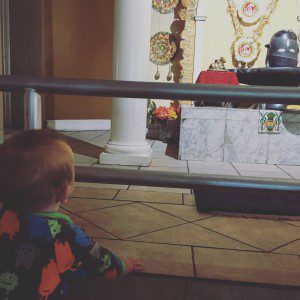
We who were not born Hindu almost always discover and learn about the philosophy at the core of Hinduism first.
Granted, I’ve had Hindu philosophy in my life for longer than many other non-native Hindus, but still it was exactly that: philosophy. People who were not born Hindu find it through things like yoga, books, college courses. We understand the reasons behind things first. We start with the grand philosophy.
There are so many people born Hindu who never get to have that at all. Some come from generations of family who never learned the philosophy of Hinduism and only do things because they were told “This is what we do because this is what we have always done.” It isn’t always that way, but non-native Hindus skip that pitfall completely.
Following onto that, we get to choose the meaning that ritual has in our lives.
For people who are born Hindu, rituals have a lot of family history behind them. With that can come difficult connotations, family politics, and drama. A ritual’s potential meaning might be clouded by the weight of the history it has for someone. For us, we can learn about a ritual and incorporate it into our practice with no baggage.
Here’s another advantage: there is more meaning in a faith that has been chosen, that has been fought for.
People born into a religion, any religion, can make it their own, learn about it, deepen their knowledge and understanding, find its meaning in their life separate from the meaning it has for their parents. But too often people coast with the faith given to them by their family. Too often they don’t take the time to question, explore, and wonder about it.
Us non-native Hindus had to do a lot of learning, exploring, questioning, and soul searching to get here. We had to learn whether the eternal path of dharma was the right one for this lifetime. It’s not easy to break free from the shadow of the faith that is handed to you at birth.
So it turns out that those of us who were not born Hindus actually have a lot to be thankful for!
—-
Thank you to my wonderful Patreon supporters…
Brian Hanechak
Amit Agarwal
(views expressed here are mine alone and do not reflect opinions of my supporters. Links within the text may be affiliate links, meaning that if you purchase something I get a small commission for recommending it. I only recommend things I truly believe in)

Previous Post

May 13, 2017
Capsule Wardrobe Challenge WEEK TWO #BindiFashion #Moms30For30
Next Post

May 18, 2017 Scripture Study: Bhagavad Gita, book four, verses 12-15
Browse Our Archives
Select a Category Book Club Hindu Holiday How Am I Being a Hindu This Week? Inside the Life Meet a God Meet a Guru Movie Club Philosophy Corner Resources Scripture Uncategorized Wild Card
Select a Month February 2020 September 2019 May 2019 January 2019 December 2018 November 2018 October 2018 September 2018 August 2018 June 2018 May 2018 April 2018 March 2018 February 2018 January 2018 December 2017 November 2017 October 2017 September 2017 August 2017 July 2017 June 2017 May 2017 April 2017 March 2017 February 2017 January 2017 December 2016 November 2016 October 2016 September 2016 August 2016 July 2016 June 2016 May 2016 April 2016 March 2016 February 2016 January 2016 December 2015 November 2015 October 2015 September 2015 August 2015 July 2015 June 2015 May 2015 April 2015 March 2015 February 2015 January 2015 December 2014 November 2014 October 2014 September 2014 August 2014 July 2014 June 2014 May 2014 April 2014 March 2014 February 2014 January 2014 December 2013 November 2013 October 2013 September 2013 August 2013 July 2013 June 2013 May 2013 April 2013 March 2013 February 2013 January 2013 December 2012
Follow Us!
TAKE THE
Religious Wisdom Quiz
True or False: Hebrews states that it is appointed for men to die once, and after this comes judgment.
Select your answer to see how you score.
FALSE TRUE
Related posts from The White Hindu


Show Your Hindu Pride in New Gear!

Mental Health in the Hindu Community
TRENDING AT PATHEOS Hindu

Indian Hindu pilot’s valor in line of duty...
There is a hoary maritime tradition that the captain of the...

Movie on Neem Karoli Baba’s life is a...
Neem Karoli Baba’s life (1900-1973) is associated with miracles he made in...

20 Questions to Ask Before an Interfaith Marriage,...
Four questions every interfaith couple should discuss before marriage: Conversion. Will either...

Avadhānam: The Art of Concentration and Intellectual Mastery
What is Avadhānam? In the summer of 2015, during a three-day Sanskrit...

Jesus in the Dharma: Where Christ Fits in...
Where Does Jesus Fit in Hinduism? That’s a question I get often...

Hormuz: A Shared Hindu and Zoroastrian Heritage
Every evening, somewhere in the world, a newsreader utters the words: "The...
view all Hindu blogs
Ad-Free & Subscriber Log-In Subscription Support
- About Us
- 2026 Calendar
- Videos
- Podcasts
- Library of World Religions
- Faith In Media Tracker
- Advertise With Us
- Write for Us
- Privacy Policy
- Terms of Service
- Do Not Sell My Data
- Contact Us
- Radiant Digital
- Manage Newsletter Subscriptions
- Unsubscribe From Notifications
- Sitemap
Copyright 2008-2026, Patheos. All rights reserved.
Subscription Support Ad-Free & Subscriber Log-In
Follow Patheos