
BuddhistCatholicContemplativeEvangelicalGeneral ChristianHinduJewishLatter-day SaintMuslimNew VisionsProgressive Christian
Beliefs
- Buddhist
- Catholic
- Contemplative
- Evangelical
- General Christian
- Hindu
- Jewish
- Latter-day Saint
- More Voices
- Muslim
- New Visions
- Pagan
- Progressive Christian
Topics
- Religion News
- Food and Religion
- Sports and Religion
- Religious Art
- Religious Music and Entertainment
- Religious Events
- History and Religion
- Style and Religion
- Politics and Religion
- Women in Religion
- Recreation Outdoors and Religion
- Business Finance and Religion
- Careers Workplace and Religion
- Education and Religion
- Family Parenting and Religion
- Health Fitness and Religion
- Home and Religion
- Relationships and Religion
- Technology and Religion
- Travel and Religion
Columnists
- Buddhist Columnists
- Business Finance and Religion Columnists
- Careers Workplace and Religion Columnists
- Catholic Columnists
- Contemplative Columnists
- Education and Religion Columnists
- Evangelists Columnists
- Family Parenting and Religion Columnists
- General Christian Columnists
- Health Fitness and Religion Columnists
- Hindu Columnists
- History and Religion Columnists
- Home and Religion Columnists
- Jewish Columnists
- More Voices Columnists
- Latter Day Columnists
- Muslim Columnists
- New Visions Columnists
- Nonreligious Columnists
- Pagan Columnists
- Politics and Religion Columnists
- Progressive Columnists
- Recreation Outdoors and Religion Columnists
- Relationships and Religion Columnists
- Religion News Columnists
- Religious Art Columnists
- Religious Events Columnists
- Religious Music and Entertainment Columnists
- Sports and Religion Columnists
- Style and Religion Columnists
- Technology and Religion Columnists
- Travel and Religion Columnists
- Women in Religion Columnists
Resource Library
- 2026 Calendar
- Library of World Religions
- The 100 Most Holy Places on Earth
- Patheos Answers
- Podcasts
- Videos
- Faith Leaders Database
- Anglican Episcopalian
- Bahai
- Baptist
- Buddhism
- Christianity
- Confucianism
- Eastern Orthodoxy
- Hinduism
- Holiness and Pentecostal
- ISKCON
- Islam
- Judaism
- Lutheran
- Methodist
- The Church of Jesus Christ of Latter-day Saints
- New Age
- Paganism
- Presbytarian and Reformed
- Protestantism
- Religion Behind the Scenes
- Roman Catholic
- Scientology
- Shia Islam
- Sikhism
- Sufism
- Sunni Islam
- Taoism
- Zen
- See all religions
Research Tools
 Ad-Free & Subscriber Log-In Subscription Support
Ad-Free & Subscriber Log-In Subscription Support
Follow Patheos 

- Trending:
- Forgiveness
- |
- Marriage
- |
- Consciousness
- |
- Death Penalty
- |
- Election
- |
- Halloween
 The White Hindu
-
Hinduism Basics
-
More
- Home
- Hindu
- Scripture Study: Bhagavad Gita verses 1-3
Scripture Study: Bhagavad Gita verses 1-3
Last updated on: March 13, 2015 at 10:30 pm by Ambaa Choate
Scripture Study: Bhagavad Gita verses 1-3 2015-03-13T22:30:22-04:00 Ambaa Choate
Patheos Explore the world's faith through different perspectives on religion and spirituality! Patheos has the views of the prevalent religions and spiritualities of the world.
We are doing a scripture study together: reading along through some scriptures and discussing the passages. This is the first post on The Bhagavad Gita. I selected this particular translation because it includes the original Sanskrit, a transliteration into English characters, a literal translation into English, and a poetic translation into English for every verse along with footnotes.

From the Winthrop Sargeant translation of The Gita 
Verse 1)
Dhiritarashtra spoke:
When they were in the field of virtue, in the field of the Kurus,
Assembled together, desiring to fight,
What did my army and that of the sons of Pandu do, Sanjaya?
Verse 2)
Sanjaya spoke:
Seeing indeed the army if the sons of Pandu arrayed,
King Duryodhana, approaching Master (Drona) spoke these words:
Verse 3)
Behold O Master, this great army
Of the sons of Pandu
Arrayed by the son of Drupada,
Wise by your instruction.
Probably the first thing we need to do is address some of the back story to this moment. The Gita is a portion out of a much (much) larger work called The Mahabharata. It is to this day the longest story ever written in the world.
The battle that is about to take place is the start of a war that ushers the world into the final age, the dark end times, The Kali Yuga, which we are in now.
The characters:
Dhiritarashtra – He is in this story the current king of the Kurus (this battlefield of kurukshetra is a real place in India). He was born blind and in the rules of that time a blind man could not become king. So his younger brother, Pandu, was installed as the king originally. But Pandu got a curse put on him that he would die if he ever made love to either of his two wives. Thinking he could never have children and pass on the kingdom, he retreated to the mountains to live as an ascetic and gave the kingdom to Dhiritarashtra.
Sons of Pandu– However, while in the wilderness, Pandu found out that one of his wives, Kunti, knew a magic word by which she could call upon a God and have a child by Him. (She does not explain to him how she knows that it works, but the truth is that she tried it as a teenager and abandoned her child, Karna, son of the Sun God Surya).
Pandu has her use this magic to give him sons. Between she and Madri they bare five sons who are known as the Pandava. They are the heroes of the story.
Yudhisthira is the son of Dharma, God of justice and truth
Bhima is the son of Wayu, the God of the wind (which make Bima extremely strong)
Arjuna is the son of Indra, King of the Gods and a warrior. Arjuna is the best archer in the world (unless you ask his unknowing-half-brother Karna)
Nakula and Sahadeva are twins born from the twin Gods and their beauty is legendary.
During this time Dhiritarashtra and his wife Gandhari also have sons. They have 100 sons, lead by Duryodhana, who is spiteful, arrogant, and greedy. Gandhari is told that he brings destruction to the human race but she won’t hear of killing her first born. According to Sargeant, the translation of Duryodhana’s name means “dirty fighter.”
When the Pandavas return to the kingdom, it begins a domino effect of problems as the succession is in complete confusion. Everyone knows that Yudishtira should inherit the kingdom, is the rightful heir, and is just and good. But Duryodhana cannot accept this and manipulates his parents into keeping him in power.
Now a war has finally come between the Pandava brothers and their 100 cousins, the Kaurava.
Sanjaya – An adviser and guide to the blind king, he tells Dhiritarashtra what is happening during the battle as they watch from afar.
Drona – Drona is a great warrier who has suffered karmically because he was born to be a brahmin. He taught all the cousins, both the Kauravas and the Pandavas, together and tried to raise them to work together, but they never stopped fighting even as children. Though he believes the Pandavas are in the right, he is trapped by loyalty and obligation to Duryodhana and the Kauravas. Though he is an old man, he is fighting in this war and is a formidable enemy for the Pandavas to overcome.
Son of Draupada– Draupada is a nearby king who is loyal to the Pandavas. His daughter, Draupadi, is married to all five Pandava brothers. His son, Dhrishtadyumna was born to kill Drona. Draupada and Drona have a long standing feud and Draupada’s son has been brought up all his life to kill Drona. He is now one of the generals helping to lead the Pandava army.
***
It’s interesting that we start this story from the perspective of the “bad guys.” Or at least the side that is in the wrong in this war. Duryodhana is pointing out to his own teacher that Drona’s other students are arrayed in an army against him. Is he rubbing it in Drona’s face? I guess we’ll have to keep reading.
The “field of virtue” is actually the “field of dharma” in the Sanskrit. “Dharma” is a very complex word that we have no equivalent for in English. It is virtue, rightness, balance, order, honor, duty, law.
One of the themes in this story is the breakdown of honorable war. In this world there were strict protocols for how wars were fought. There were rules and an emphasis on honor. Throughout the Mahabharata these rules are broken one by one, symbolizing the loss of dharma/righteousness that occurs in the Kali Yuga.
***
Kurukshetra, where this war was fought, is a real place that you can visit in India. I haven’t gotten to go there yet, but that’s my number one place I want to visit!

Click image for more info
Previous Post

November 10, 2014
Which Is It?
Next Post

November 12, 2014 This Explains A Lot
Browse Our Archives
Select a Category Book Club Hindu Holiday How Am I Being a Hindu This Week? Inside the Life Meet a God Meet a Guru Movie Club Philosophy Corner Resources Scripture Uncategorized Wild Card
Select a Month February 2020 September 2019 May 2019 January 2019 December 2018 November 2018 October 2018 September 2018 August 2018 June 2018 May 2018 April 2018 March 2018 February 2018 January 2018 December 2017 November 2017 October 2017 September 2017 August 2017 July 2017 June 2017 May 2017 April 2017 March 2017 February 2017 January 2017 December 2016 November 2016 October 2016 September 2016 August 2016 July 2016 June 2016 May 2016 April 2016 March 2016 February 2016 January 2016 December 2015 November 2015 October 2015 September 2015 August 2015 July 2015 June 2015 May 2015 April 2015 March 2015 February 2015 January 2015 December 2014 November 2014 October 2014 September 2014 August 2014 July 2014 June 2014 May 2014 April 2014 March 2014 February 2014 January 2014 December 2013 November 2013 October 2013 September 2013 August 2013 July 2013 June 2013 May 2013 April 2013 March 2013 February 2013 January 2013 December 2012
Follow Us!
TAKE THE
Religious Wisdom Quiz
What Christian group traces its origins to the Azusa Street Revival?
Select your answer to see how you score.
Pentecostals Anglicans Methodists Lutherans
Related posts from The White Hindu

Scripture Study: Bhagavad Gita, book four, verses 16-18
Scripture Study: Bhagavad Gita, book four, verses 12-15

Scripture Study: Bhagavad Gita, book four, verses 8-11
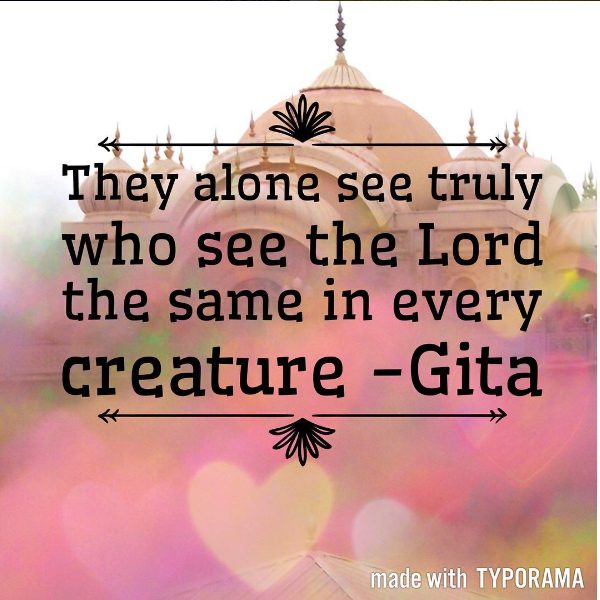
Best Bhagavad Gita Quotes #Krishna
TRENDING AT PATHEOS Hindu

Indian Hindu pilot’s valor in line of duty...
There is a hoary maritime tradition that the captain of the...

Movie on Neem Karoli Baba’s life is a...
Neem Karoli Baba’s life (1900-1973) is associated with miracles he made in...

20 Questions to Ask Before an Interfaith Marriage,...
Four questions every interfaith couple should discuss before marriage: Conversion. Will either...

Avadhānam: The Art of Concentration and Intellectual Mastery
What is Avadhānam? In the summer of 2015, during a three-day Sanskrit...

Jesus in the Dharma: Where Christ Fits in...
Where Does Jesus Fit in Hinduism? That’s a question I get often...

Hormuz: A Shared Hindu and Zoroastrian Heritage
Every evening, somewhere in the world, a newsreader utters the words: "The...
view all Hindu blogs
Ad-Free & Subscriber Log-In Subscription Support
- About Us
- 2026 Calendar
- Videos
- Podcasts
- Library of World Religions
- Faith In Media Tracker
- Advertise With Us
- Write for Us
- Privacy Policy
- Terms of Service
- Do Not Sell My Data
- Contact Us
- Radiant Digital
- Manage Newsletter Subscriptions
- Unsubscribe From Notifications
- Sitemap
Copyright 2008-2026, Patheos. All rights reserved.
Subscription Support Ad-Free & Subscriber Log-In
Follow Patheos