
BuddhistCatholicContemplativeEvangelicalGeneral ChristianHinduJewishLatter-day SaintMuslimNew VisionsProgressive Christian
Beliefs
- Buddhist
- Catholic
- Contemplative
- Evangelical
- General Christian
- Hindu
- Jewish
- Latter-day Saint
- More Voices
- Muslim
- New Visions
- Pagan
- Progressive Christian
Topics
- Religion News
- Food and Religion
- Sports and Religion
- Religious Art
- Religious Music and Entertainment
- Religious Events
- History and Religion
- Style and Religion
- Politics and Religion
- Women in Religion
- Recreation Outdoors and Religion
- Business Finance and Religion
- Careers Workplace and Religion
- Education and Religion
- Family Parenting and Religion
- Health Fitness and Religion
- Home and Religion
- Relationships and Religion
- Technology and Religion
- Travel and Religion
Columnists
- Buddhist Columnists
- Business Finance and Religion Columnists
- Careers Workplace and Religion Columnists
- Catholic Columnists
- Contemplative Columnists
- Education and Religion Columnists
- Evangelists Columnists
- Family Parenting and Religion Columnists
- General Christian Columnists
- Health Fitness and Religion Columnists
- Hindu Columnists
- History and Religion Columnists
- Home and Religion Columnists
- Jewish Columnists
- More Voices Columnists
- Latter Day Columnists
- Muslim Columnists
- New Visions Columnists
- Nonreligious Columnists
- Pagan Columnists
- Politics and Religion Columnists
- Progressive Columnists
- Recreation Outdoors and Religion Columnists
- Relationships and Religion Columnists
- Religion News Columnists
- Religious Art Columnists
- Religious Events Columnists
- Religious Music and Entertainment Columnists
- Sports and Religion Columnists
- Style and Religion Columnists
- Technology and Religion Columnists
- Travel and Religion Columnists
- Women in Religion Columnists
Resource Library
- 2026 Calendar
- Library of World Religions
- The 100 Most Holy Places on Earth
- Patheos Answers
- Podcasts
- Videos
- Faith Leaders Database
- Anglican Episcopalian
- Bahai
- Baptist
- Buddhism
- Christianity
- Confucianism
- Eastern Orthodoxy
- Hinduism
- Holiness and Pentecostal
- ISKCON
- Islam
- Judaism
- Lutheran
- Methodist
- The Church of Jesus Christ of Latter-day Saints
- New Age
- Paganism
- Presbytarian and Reformed
- Protestantism
- Religion Behind the Scenes
- Roman Catholic
- Scientology
- Shia Islam
- Sikhism
- Sufism
- Sunni Islam
- Taoism
- Zen
- See all religions
Research Tools
 Ad-Free & Subscriber Log-In Subscription Support
Ad-Free & Subscriber Log-In Subscription Support
Follow Patheos 

- Trending:
- Forgiveness
- |
- Marriage
- |
- Consciousness
- |
- Death Penalty
- |
- Election
- |
- Halloween
 The White Hindu
-
Hinduism Basics
-
More
- Home
- Hindu
- Vasant Panchami: Happy Birthday, Saraswati! [Hindu Holiday]
Vasant Panchami: Happy Birthday, Saraswati! [Hindu Holiday]
Last updated on: March 13, 2015 at 10:32 pm by Ambaa Choate
Vasant Panchami: Happy Birthday, Saraswati! [Hindu Holiday] 2015-03-13T22:32:42-04:00 Ambaa Choate
Patheos Explore the world's faith through different perspectives on religion and spirituality! Patheos has the views of the prevalent religions and spiritualities of the world.

Vasant Panchami, sometimes also called Basant Panchami, is a festival that welcomes the spring and it is also Saraswati’s birthday, so it is a time to celebrate learning and study plus an auspicious time to begin any academic pursuit. This year it falls on February 4th. The name means the fifth day of Spring.
Long ago this festival was more focused on Kamadeva, the Hindu cupid. It still has a sense of love and is kind of like a Valentine’s day.
Ways to Celebrate
*Place books near your Saraswati murti and do not read or touch books during this day, since Ma Saraswati is busy blessing them
*Dress Saraswati in yellow or in white
*Use yellow flowers on your altar.
*Wear yellow yourself
* Perform Saraswati puja. Some believe that it should be performed during a very particular astrological moment, when Panchami Tithi is prevailing. I don’t know how that is calculated and figured out! Others believe it can be performed at any time during this day.
Saraswati Puja
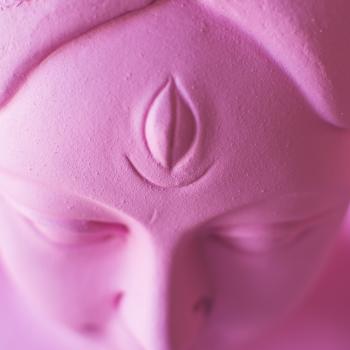
You will need a Ma Saraswati murti or at least a picture of her


You Will Need:
- Image or idol of Goddess Saraswati
- A white or yellow cloth (vastram)
- Flowers – lotus, lilies or jasmine.
- Mango leaves or other decorations
- Turmeric
- Kumkum
- Uncooked rice mixed with turmeric (akshata)
- Fruits
- Books or tools to be blessed
Decorate the Goddess image with flowers, garlands, and cover with the white or yellow cloth (if you are using a picture, place the cloth on a tray near the image)
Pray to Sri Ganesha first with a quick and simple prayer
Light a lamp
Offer flowers, light incense, and chant mantras to the Goddess
Om Saraswati Mahabhagey, Vidye Kamala Lochaney |
Viswarupey Vishalakshmi, Vidyam Dehi Namohastutey ||
Jaya Jaya Devi, Charachara Sharey, Kuchayuga Shobhita, Mukta Haarey |
Vina Ranjita, Pustaka Hastey, Bhagavati Bharati Devi Namohastutey ||
Put the books, tools, or other objects out before the idol
Sprinkle some flowers on the objects and you can apply a small dot of turmeric and kumkum, but it does stain
Offer flowers and akshata to the deity
Offer any food that you have for prasadam (fruits, etc.)
Meditate or chant for a few moments.
-Modified from http://www.hindu-blog.com/2008/09/how-to-do-or-perform-saraswati-puja.html
Vasant Puja Traditions
- The idol is in white, symbolizing purity. The sari of the Deity is white or yellow dyed in the natural dye made from “Shiuli” flowers.
- The place where Saraswati is seated is all decorated with fresh flowers and rangoli and the design of a fish is considered auspicious.
- A flat low stool made of wood is covered with yellow cloth and the idol is placed on it, facing towards the east.
- The face of the idol remains covered till the priest begins chanting of mantras at the commencement of puja.
- A green coconut is placed in an earthen pot with a red checked cotton cloth called “Gamocha”.
- Besides the actual puja flowers there are also the most significant flower called Palash that is used in the ceremony.
- Students place their books and pen in front of the goddess to seek blessings on this auspicious day.
- The offerings made to the goddess consist of fruits- most significant are berries from the wild plum tree. Other fruits include tapioca. Sweets must include puffed rice, jaggery and yogurt.
- Family members bathe early and dress in yellow attire before assembling in front of the Goddess.
- The earthen pot is tied with a string which is untied on the next day by the priest before visarjan or the immersion ceremony.
- A havan is done by the priest using special wood, ghee, joss sticks and incense. A diya or lamp is lit beside the prasad.
- Aarti is performed by the priest twice in day, in the morning and then again in the evening.
- Nobody touches books on that day as it is believed that the goddess is blessing the books.
– See more at: http://www.festivalsofindia.in/vasantpanchami/Puja.aspx
It is auspicious to offer honey to Saraswati, as it represents the purity of learning and the sweetness of perfect knowledge.
Food
Yellow food and sweets are made, such as kesar halwa and saffron rice.
Kesar Halwa Recipe
From Gujjuweb.com

Main Ingredients :
Sugar (Cheeni) , Saffron (Kesar) , Flour (Atta), Clarified Butter (Ghee)
Ingredients :
1 cup Sugar
1 1/2 cup Water
1 tsp Cardamom powder
Saffron colour or saffron threads
2 cups Plain Flour
1 1/2 cups Ghee.
Nuts for decorating
Method :
1. Bring water and sugar to boil. Remove from heat, add essence, colour. Mix well and set aside.
2. Roast the flour over medium heat for 10 mins. (till you get aroma). Add ghee and fry for further 5-7 mins till golden brown.
3. Slowly add the sugar syrup to the flour mixture. Quickly and constantly keep stirring till it forms a smooth paste.
4. Grease a plate. Pour the paste to the plate. Decorate with nuts of your choice.
5. Cover the thali and set it in the refigerator for atleast 1/2 an hour.
6. Cut into desired shape and serve
Saffron Rice Recipe
From Manjula’s Kitchen, one of my favorite recipe sites…
Serves 4 to 6.

Ingredients:
- 1 cup basmati or long grain rice
- 2 tablespoons ghee or butter
- 1 3/4 cup water
- 2 tablespoons milk
- 1/2 cup sugar
- 1″ piece of cinnamon stick (dalchini)
- 1/4 teaspoon of saffron threads (kaser)
- 4 whole cloves (laung)
- 1/2 teaspoon coarsely crushed cardamom seeds (ilachi)
- Pinch of salt
- 3 tablespoons sliced or crushed pistachios and almonds (pista, badam)
- 1 tablespoon raisins (kishmish)
Method:
- Dry roast the almonds, pistachios and raisins in a pan on medium heat until the raisins puff and the nuts slightly change color. Set aside.
- Put the rice, water, cinnamom stick, and salt in a sauce pan over medium high heat.
- When the rice comes to boil, reduce the heat to low and cover.
- Let the rice cook for about 15 minutes, or until the water has evaporated.
- While rice is cooking, in a separate saucepan combine milk, butter, sugar, saffron, cloves and cardamom and bring to boil on medium heat, stir until the sugar has dissolved. Remove from the heat and set aside.
- Add the nuts mixture and sugar syrup over the rice. Fold gently into the rice with a spoon gently to avoid mashing the rice.
- Put the cover back over the rice and turn the heat on to very low. Let the rice simmer for 3 to 4 minutes. Turn the heat off a
Traditions
In some places there is a tradition of ancestor worship called Pitri Tarpan, which is offering water and prayers of peace to the departed.
This is a day when children can begin to learn the alphabet. They might be initiated into it by tracing the first letter into a shallow pan of uncooked rice.
In some areas it is called Kite Day and the sky is filled with kites.
Yellow is an important color because it represents prosperity and fully grown crops
Pitri Tarpan How To
“Bodhayan has mentioned that Tarpan should be performed at the riverside. While performing Tarpan at the riverside, one should stand in the river so that the water level touches the belly button or one should perform tarpan by sitting on the banks of the river.
Tarpan for God and Sages should be performed by facing East and that for deceased ancestors souls it should be performed by facing South.As per science, tarpan for God should be performed after doing Savya, that for Sages should be performed after doing Nivit and for deceased ancestors souls after doing Apasavya.
A dried grass twig (darbha) is necessary for performing tarpan. Tarpan for God is performed from the tip of the darbha, tarpan for Sages should be performed by folding the darbha in the middle, and tarpan for deceased ancestors souls should be performed from the tip and root of the two darbhas.Offering of water (tarpan) to deities should be done using the finger tips, while offering of water to Sages should be done from the base of the little finger and the third finger and that to the deceased ancestors souls should be done through the mid of the thumb and the first finger of the hand.
Tarpan should be performed taking one handful (anjali) of water for each deity, two handful of water for Sages and three handful of water for deceased ancestors souls. In case of matrutrayi (mother-grandmother and great grandmother) three handful of water should be used and for other females ancestors souls one handful of water should be used for tarpan.
Pitru tarpan: Offering of water to deceased ancestors souls (pitar) is called as Pitru tarpan. A Jivatpitruk is not allowed to perform Pitrutarpan [Note: I don’t know what this is]. Apart from expectation of Pinda and offering of food to priests (Brahmins) from its descendants, the deceased ancestors souls also expect offering of water (udak) from them.
By performing tarpan, the deceased ancestors souls not only get satisfied and leave us, but they also bestow long life, radiance, superior intellect (brahmavarchaswa), wealth, success and foodstuff (ability to digest the food consumed) on the host performing the tarpan and satisfies him too.”
From: inquisitive, 18 Aug ’09 01:46 am http://qna.rediff.com/questions-and-answers/what-is-the-method-of-performing-tarpan-and-pitru-tarpan/15365804/answers
Gift Ideas
- Bouquets or garlands of yellow flowers.
- A Saraswati coin (said to bring good luck and blessings)
- Fruit and nut baskets or sweets hampers
What Comes Next
There are 40 days between Vasant Panchami and Holi. That time is spent preparing for Holi. For example, branches and twigs and logs might be gathered and slowly added to a pile during the wait, to be burned as a bonfire on Holi (celebrating the destruction of the demon Holika).
There is, however, another holiday in between: Shiva’s night, which this year is February 28th.
how to celebrate vasant panchami
Previous Post

January 24, 2014
White Hindu Conversations: Part Three
Next Post
January 28, 2014 Giveaway Winners!
Browse Our Archives
Select a Category Book Club Hindu Holiday How Am I Being a Hindu This Week? Inside the Life Meet a God Meet a Guru Movie Club Philosophy Corner Resources Scripture Uncategorized Wild Card
Select a Month February 2020 September 2019 May 2019 January 2019 December 2018 November 2018 October 2018 September 2018 August 2018 June 2018 May 2018 April 2018 March 2018 February 2018 January 2018 December 2017 November 2017 October 2017 September 2017 August 2017 July 2017 June 2017 May 2017 April 2017 March 2017 February 2017 January 2017 December 2016 November 2016 October 2016 September 2016 August 2016 July 2016 June 2016 May 2016 April 2016 March 2016 February 2016 January 2016 December 2015 November 2015 October 2015 September 2015 August 2015 July 2015 June 2015 May 2015 April 2015 March 2015 February 2015 January 2015 December 2014 November 2014 October 2014 September 2014 August 2014 July 2014 June 2014 May 2014 April 2014 March 2014 February 2014 January 2014 December 2013 November 2013 October 2013 September 2013 August 2013 July 2013 June 2013 May 2013 April 2013 March 2013 February 2013 January 2013 December 2012
Follow Us!
TAKE THE
Religious Wisdom Quiz
True or False: According to Hebrews, faith is the substance of things hoped for and the evidence of things not seen.
Select your answer to see how you score.
FALSE TRUE
Related posts from The White Hindu


Show Your Hindu Pride in New Gear!

Mental Health in the Hindu Community
Karwa Chauth for Nursing Mothers
TRENDING AT PATHEOS Hindu

Indian Hindu pilot’s valor in line of duty...
There is a hoary maritime tradition that the captain of the...

Movie on Neem Karoli Baba’s life is a...
Neem Karoli Baba’s life (1900-1973) is associated with miracles he made in...

20 Questions to Ask Before an Interfaith Marriage,...
Four questions every interfaith couple should discuss before marriage: Conversion. Will either...

Avadhānam: The Art of Concentration and Intellectual Mastery
What is Avadhānam? In the summer of 2015, during a three-day Sanskrit...

Jesus in the Dharma: Where Christ Fits in...
Where Does Jesus Fit in Hinduism? That’s a question I get often...

Hormuz: A Shared Hindu and Zoroastrian Heritage
Every evening, somewhere in the world, a newsreader utters the words: "The...
view all Hindu blogs
Ad-Free & Subscriber Log-In Subscription Support
- About Us
- 2026 Calendar
- Videos
- Podcasts
- Library of World Religions
- Faith In Media Tracker
- Advertise With Us
- Write for Us
- Privacy Policy
- Terms of Service
- Do Not Sell My Data
- Contact Us
- Radiant Digital
- Manage Newsletter Subscriptions
- Unsubscribe From Notifications
- Sitemap
Copyright 2008-2026, Patheos. All rights reserved.
Subscription Support Ad-Free & Subscriber Log-In
Follow Patheos