
BuddhistCatholicContemplativeEvangelicalGeneral ChristianHinduJewishLatter-day SaintMuslimNew VisionsProgressive Christian
Beliefs
- Buddhist
- Catholic
- Contemplative
- Evangelical
- General Christian
- Hindu
- Jewish
- Latter-day Saint
- More Voices
- Muslim
- New Visions
- Pagan
- Progressive Christian
Topics
- Religion News
- Food and Religion
- Sports and Religion
- Religious Art
- Religious Music and Entertainment
- Religious Events
- History and Religion
- Style and Religion
- Politics and Religion
- Women in Religion
- Recreation Outdoors and Religion
- Business Finance and Religion
- Careers Workplace and Religion
- Education and Religion
- Family Parenting and Religion
- Health Fitness and Religion
- Home and Religion
- Relationships and Religion
- Technology and Religion
- Travel and Religion
Columnists
- Buddhist Columnists
- Business Finance and Religion Columnists
- Careers Workplace and Religion Columnists
- Catholic Columnists
- Contemplative Columnists
- Education and Religion Columnists
- Evangelists Columnists
- Family Parenting and Religion Columnists
- General Christian Columnists
- Health Fitness and Religion Columnists
- Hindu Columnists
- History and Religion Columnists
- Home and Religion Columnists
- Jewish Columnists
- More Voices Columnists
- Latter Day Columnists
- Muslim Columnists
- New Visions Columnists
- Nonreligious Columnists
- Pagan Columnists
- Politics and Religion Columnists
- Progressive Columnists
- Recreation Outdoors and Religion Columnists
- Relationships and Religion Columnists
- Religion News Columnists
- Religious Art Columnists
- Religious Events Columnists
- Religious Music and Entertainment Columnists
- Sports and Religion Columnists
- Style and Religion Columnists
- Technology and Religion Columnists
- Travel and Religion Columnists
- Women in Religion Columnists
Resource Library
- 2026 Calendar
- Library of World Religions
- The 100 Most Holy Places on Earth
- Patheos Answers
- Podcasts
- Videos
- Faith Leaders Database
- Anglican Episcopalian
- Bahai
- Baptist
- Buddhism
- Christianity
- Confucianism
- Eastern Orthodoxy
- Hinduism
- Holiness and Pentecostal
- ISKCON
- Islam
- Judaism
- Lutheran
- Methodist
- The Church of Jesus Christ of Latter-day Saints
- New Age
- Paganism
- Presbytarian and Reformed
- Protestantism
- Religion Behind the Scenes
- Roman Catholic
- Scientology
- Shia Islam
- Sikhism
- Sufism
- Sunni Islam
- Taoism
- Zen
- See all religions
Research Tools
 Ad-Free & Subscriber Log-In Subscription Support
Ad-Free & Subscriber Log-In Subscription Support
Follow Patheos 

- Trending:
- Forgiveness
- |
- Marriage
- |
- Consciousness
- |
- Death Penalty
- |
- Election
- |
- Halloween
 What She Said
- Home
- Family, Parenting and Religion
- What White Parents Can Tell Their Children About The Trayvon Martin Case
What White Parents Can Tell Their Children About The Trayvon Martin Case
Last updated on: April 14, 2012 at 12:08 am by Tara Edelschick
What White Parents Can Tell Their Children About The Trayvon Martin Case 2012-04-14T00:08:49-05:00 Tara Edelschick
Patheos Explore the world's faith through different perspectives on religion and spirituality! Patheos has the views of the prevalent religions and spiritualities of the world.
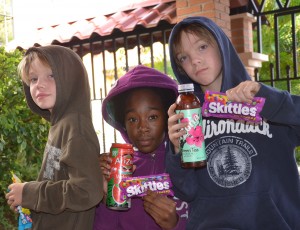
On Monday, I told you about how our kids responded to Trayvon Martin’s death, choosing to take a picture in their hoodies. Today, I’ll share seven points we made with our kids as we talked about the case. As a head’s up, this is a long piece. But as I tell my kids when we are talking about something important, “Sorry, guys, but Mommy’s got a lot to say on this topic.”
1. We all have negative prejudices based on things that aren’t true. We may think that girls cannot be good at math. Or that foreigners are weird. Most people of all races tend to think negative things about people from other races. This is part of our broken nature. We need to ask God to help us identify those prejudices, and replace them with the truth.
We can’t know what was going on in George Zimmerman’s mind, but it seems likely that he had prejudices about black teenage boys. He called the police to report Trayvon as being suspicious, even when it seems as though Trayvon was doing absolutely nothing wrong.
2. Racism still exists. It did not end with slavery. It did not end with Martin Luther King. Racism is not over just because there is a black president or because Oprah and Lebron James make a boatload of money. This is because white people in our country still have more money and more political power than non-white people, and so our prejudices have bigger negative consequences than the prejudices of non-white people. Racism still exists in hiring practices, educational discipline practices, voting practices, entertainment industry practices, and everywhere that white people have more control. The institutions that govern and influence our country – police departments, judges, legislatures, banks, etc – are predominantly controlled by white people, so their prejudices can have a much more damaging effect than those of non-whites.
While it is likely that George Zimmerman’s prejudices led him to follow Trayvon in a neighborhood where he assumed Trayvon did not belong, it is the racism of the justice system that is most angering to most people about this case.
3. In our country, the justice system works differently for people based on race. We can’t say for certain why the police chief didn’t initially arrest George Zimmerman, but there is a long and continuing history in our country of black people being prosecuted at higher rates and getting harsher sentences for the same crimes as whites, and for people who commit crimes against black people being prosecuted at lower rates and receiving lighter sentences than people who commit crimes against whites.
(If you as a parent are unconvinced of this, you can read anything by the politically conservative, Evangelical Christian, Bill Stuntz. Until his death last year, he was perhaps the country’s best criminal procedure expert. Read an excerpt of his last book here, and a review here.)
When white people say things like, “Well, we don’t know what really happened,” it is a slap in the face to many of our black neighbors. Of course, we don’t know all the facts or the motives in any one person’s heart. Black people know this as well. But whites all too regularly say things like this about claims of racism by non-whites, and it hurts. And it’s not right. White people need to admit that the justice system, as a whole, does not work as well for black victims and black defendants as it does for whites.
4. It is harder for White people to see racism and injustice toward non-White people than it is for non-White people to see it. We don’t see it because we don’t have to, because it doesn’t effect our lives and the lives of our families in the same ways. Black people are far more likely to know the appalling statistics related to race and justice than whites are. This is part of why nearly all of the people you see at rallies and protests and prayer meetings for Trayvon are black. But just because it’s harder for us to see it, doesn’t mean that we are excused from seeing it. It’s our job to keep trying to listen to our black friends and black neighbors and black leaders. It’s our job to learn from people like Bill Stuntz, so that we are not ignorant of the truth about how racism and injustice effect our black neighbors’ lives today.
5. We live a great country. Our country, like every country on Earth, is broken, and sinful. When we see the glory of heaven, we will look back on our earthly home and see just how far astray our country was from God’s ideal. Racism and injustice are part of what is broken in our country.
Still, there is much that is right and wonderful here. You can be proud of being an American. One of the great things about America is that we have the ideal, if not always the practice, that all people are created equal, and that it’s important to work toward a fair society, where all people have a chance to pursue happiness. So when you fight for justice, for one person or a group of people, you are doing so on the shoulders of many who have come before you: people who fought against slavery; fought for women to be able to vote; fought for migrant farm workers to have decent working conditions; fought to allow students to proclaim their faith in public settings; fought to keep Japanese people out of the internment camps; and fought to give disabled people access to public buildings. Without courageous, primarily black, Americans fighting for Trayvon, I don’t think that George Zimmerman would be facing a trial right now.
Sometimes courageous Americans have lost those fights, but it is a noble tradition, nonetheless.
6. We serve an amazing God. Although people sometimes lose a righteous fight, and although our country will never be heaven, God never loses. In the darkness, his light never goes out. One day, he will redeem and restore all that is lost and broken. In the meantime, we do our best to hear his voice and follow his way. Often that means doing dangerous and unpopular things. We can do them, though, because God is our strength and our comfort.
He is with the oppressed, the weak, the brokenhearted. When we join hands with them, we join hands with God. We can walk arm in arm with our black brothers and sisters, knowing that God is there before us.
7. As a white child in a country still plagued by racism, you can do things to end racism and glorify God in the process. For example, you can read more history books about our country. You can work hard to make friends with people who are not like you in some way. You can write letters to our politicians. You can pray and ask God to help our country change.
You can’t bring Trayvon back to life, but in his honor, you can ask God to help you become someone he can use to help his will be done on Earth as it is in heaven.
talking about racism with children
talking to children about trayvon martin
Previous Post

April 12, 2012
Beyond the Mommy-Wars Bumpersticker: The Many Shades of Mommies
Next Post

April 17, 2012 Godspeed Discovery, and Thank You
Browse Our Archives
Select a Category Uncategorized
Select a Month November 2012 October 2012 September 2012 August 2012 July 2012 June 2012 May 2012 April 2012 March 2012 February 2012 January 2012 December 2011 November 2011
Follow Us!
TAKE THE
Religious Wisdom Quiz
In the Sermon on the Mount, who did Jesus say would "inherit the earth"?
Select your answer to see how you score.
The meek The strong The wise The just
Related posts from What She Said
Trayvon Martin Could Not Be My Son

Some Reflections on Raising Hapa-Haole kids

Why White Parents Don't Talk About Race

TRENDING AT PATHEOS Family, Parenting and Religion

Looking at the Largest Orthodox Cathedral on Earth
There is often a considerable amount of anger and, shall we...

The Problem with False Prophets
Miller’s Station UMC| 10/18/26| Anchor Verse: Jeremiah 23: 1, 9-23 I...

Emotion in Early Christianity by Andrew Crislip
Andrew Crislip’s Emotion in Early Christianity examines an often overlooked dimension of...

16 Spiritual Touchstones for a More Grounded Life
After decades of spiritual study, here are 16 principles I try...

Catholic Evangelization: Sharing Your Faith Every Day
Welcome back to the Graceful Awakening mini-series called, “From Faith to Mission.” ...

The Pillar of the Boatmen: the Ancient Monument...
The Pillar of the Boatmen is a Romano-Gaulish sculpture that dates from...
view all Family, Parenting and Religion blogs
Ad-Free & Subscriber Log-In Subscription Support
- About Us
- 2026 Calendar
- Videos
- Podcasts
- Library of World Religions
- Faith In Media Tracker
- Advertise With Us
- Write for Us
- Privacy Policy
- Terms of Service
- Do Not Sell My Data
- Contact Us
- Radiant Digital
- Manage Newsletter Subscriptions
- Unsubscribe From Notifications
- Sitemap
Copyright 2008-2026, Patheos. All rights reserved.
Subscription Support Ad-Free & Subscriber Log-In
Follow Patheos