
BuddhistCatholicContemplativeEvangelicalGeneral ChristianHinduJewishLatter-day SaintMuslimNew VisionsProgressive Christian
Beliefs
- Buddhist
- Catholic
- Contemplative
- Evangelical
- General Christian
- Hindu
- Jewish
- Latter-day Saint
- More Voices
- Muslim
- New Visions
- Pagan
- Progressive Christian
Topics
- Religion News
- Food and Religion
- Sports and Religion
- Religious Art
- Religious Music and Entertainment
- Religious Events
- History and Religion
- Style and Religion
- Politics and Religion
- Women in Religion
- Recreation Outdoors and Religion
- Business Finance and Religion
- Careers Workplace and Religion
- Education and Religion
- Family Parenting and Religion
- Health Fitness and Religion
- Home and Religion
- Relationships and Religion
- Technology and Religion
- Travel and Religion
Columnists
- Buddhist Columnists
- Business Finance and Religion Columnists
- Careers Workplace and Religion Columnists
- Catholic Columnists
- Contemplative Columnists
- Education and Religion Columnists
- Evangelists Columnists
- Family Parenting and Religion Columnists
- General Christian Columnists
- Health Fitness and Religion Columnists
- Hindu Columnists
- History and Religion Columnists
- Home and Religion Columnists
- Jewish Columnists
- More Voices Columnists
- Latter Day Columnists
- Muslim Columnists
- New Visions Columnists
- Nonreligious Columnists
- Pagan Columnists
- Politics and Religion Columnists
- Progressive Columnists
- Recreation Outdoors and Religion Columnists
- Relationships and Religion Columnists
- Religion News Columnists
- Religious Art Columnists
- Religious Events Columnists
- Religious Music and Entertainment Columnists
- Sports and Religion Columnists
- Style and Religion Columnists
- Technology and Religion Columnists
- Travel and Religion Columnists
- Women in Religion Columnists
Resource Library
- 2026 Calendar
- Library of World Religions
- The 100 Most Holy Places on Earth
- Patheos Answers
- Podcasts
- Videos
- Faith Leaders Database
- Anglican Episcopalian
- Bahai
- Baptist
- Buddhism
- Christianity
- Confucianism
- Eastern Orthodoxy
- Hinduism
- Holiness and Pentecostal
- ISKCON
- Islam
- Judaism
- Lutheran
- Methodist
- The Church of Jesus Christ of Latter-day Saints
- New Age
- Paganism
- Presbytarian and Reformed
- Protestantism
- Religion Behind the Scenes
- Roman Catholic
- Scientology
- Shia Islam
- Sikhism
- Sufism
- Sunni Islam
- Taoism
- Zen
- See all religions
Research Tools
 Ad-Free & Subscriber Log-In Subscription Support
Ad-Free & Subscriber Log-In Subscription Support
Follow Patheos 

- Trending:
- Forgiveness
- |
- Marriage
- |
- Consciousness
- |
- Death Penalty
- |
- Election
- |
- Halloween

- Home
- About
- Contact
- Archives
- Permission & Disclaimers
- Publications
- Upcoming Events
- Video & Audio
- FREE NEWSLETTER
- Home
- Progressive Christian
- Chapter 7: Why do we suffer?
Chapter 7: Why do we suffer?
Last updated on: August 13, 2024 at 10:10 am by Frederick Schmidt
Chapter 7: Why do we suffer? 2024-08-13T10:10:57-06:00 Frederick Schmidt
Patheos Explore the world's faith through different perspectives on religion and spirituality! Patheos has the views of the prevalent religions and spiritualities of the world.
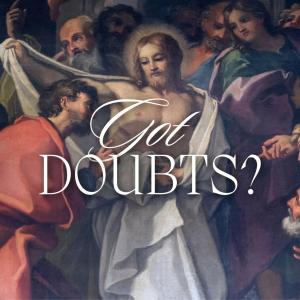
Throughout the summer, my wife — The Reverend Canon Natalie Van Kirk — and I have been preaching a series on the subject of doubt. We have been addressing both the subject of doubt itself and the questions that are often the source of trying questions for Christians, as well as others. Obviously, none of these articles are exhaustive but we hope that they will be a helpful stimulus to your own thinking.
Frederick writes:
Like many of us, I didn’t grow up thinking much about the question of suffering. I had a relatively happy childhood. I grew up in a safe, suburban community – except for Eddie Fulkerson, the class bully – but everyone had to deal with Eddie.
But late in junior high school, suffering and sadness lurked around the edges of life. Our family car was rear-ended by a drunk driver and I spent 2, almost 3 years in a back brace. And in the middle of my senior year, my debate team was in a head-on collision with a two-and-a-half-ton truck. Our coach and teacher died shortly after the accident and the rest of us were hospitalized. I spent 28 days in the hospital and several months rehabilitating in a wheelchair. Since that time, I have lost both of my parents and my younger brother. And, by definition, the life of a priest is about walking alongside those who suffer.
All of this had a way of eroding any chance that I had of holding onto the sense of invulnerability that is so common in childhood and adolescence. But, of course, my experiences were trivial by comparison with what others encounter. One only needs to think of the children who deal with cancer or handicaps from an early age; the places in our own country and around the world were poverty prevails; or where war and abuse are the basic furniture of childhood to recognize how much people suffer.
I mention my own experience only to underline the fact that the question, “Why do we suffer?” is not an abstract concern but one of life’s greatest dilemmas and a question that none of us can escape.
So, although I suppose that no one can provide a final, completely satisfying answer to the question, I want to offer what I believe is a faithful, Christian answer to that question in the most direct fashion that I can.
The first thing that needs to be said is that it is not God’s will that we suffer, and God does not cause us to suffer.
It is common – even among Christians – to argue that suffering is God’s will for us and that God orchestrates our suffering. Having worked with people for years, I completely understand why people gravitate to this explanation.
When I first wrote about this subject, I was asked to give a presentation to a church near where we lived. When I argued that God does not cause us to suffer, I noticed that one couple visibly stiffened, and I could see from the look on their faces that they were angry. From that point on, I could tell that nothing I said changed their minds.
Later, I got the back story from one of their friends: The couple had struggled for years with infertility, and they had concluded that God had made them infertile in order make them foster parent children who did not have families.
So, when I suggested that God did not make them infertile, they felt that I was not just offering a different view of the relationship between God and their suffering. I was challenging a series of assumptions that lay at the heart of their own journey as a couple: The conviction that God had made them infertile, that their suffering had a purpose, that there was good imbedded in their loss.
These assumptions had made their grief easier to manage. And it provided a counterpoint to their sorrow. It also made life seem less unpredictable. But if they had the space to think about their own suffering in the context of everyone else’s, they would have realized that not everyone has the time or the opportunity to turn their suffering into a gift. And a God who dumps his children into the vortex of suffering to accomplish some other purpose cannot possibly be good.
Instead, Scripture describes suffering as givens of our existence. This includes both suffering caused by willful disobedience AND the chaos in our world that is caused by impersonal forces.
Neither the Bible nor the Christian tradition shies away from the fact that much – if not most – of human suffering is caused by our own choices or by the choices that others make. Greed, a propensity to violence, the desire for control over others, elemental cruelty — these and other behaviors cause harm and cost people their lives. Often the question we should ask is not, “Why does God allow suffering?” We ought to ask “Why do we cause so much suffering?”
And, both the Old and New Testament suggest that the natural order is disordered in wider ways by our alienation from God. Paul goes so far as to say that creation groans, waiting for the human race to be reconciled to God. Some things don’t have a direct, causal explantion. They just happen. Storms and earthquakes claim lives. Our genetic make-up predisposes us to certain kinds of disease; a momentary misjudgment can lead to a tragic accident; and our choices can have unintended consequences.
Does this mean, then, that God is not in control?
I don’t think so. But what I do believe is that God is not in control of our lives in the simple ways we imagine. Understandably, we equate God’s power or “sovereignty” with absolute control over everything. If we were God, no one would think, do, or say anything that we did want them to think, do. or say.
But from the very beginning of the biblical account of God’s relationship with us, God’s power or sovereignty is worked out in response to our choices. In fact, the story begins with Adam and Eve – who are the quintessential human beings – doing exactly what God doesn’t want them to do.
And the rest of the Old Testament is arguably a story of God’s determination to find us, care for us and deliver us, despite of our choices. Even those that the Bible describes as exemplars of faith, are fallible people who not only mistakes, but clearly ignore God, from time to time, including Abraham, Issac, Jacob, and David.
But Scripture does not expend any effort offering a philosophy of suffering. Instead it offers a picture of a God who – in the person of Jesus Christ – enters into our world, shoulders our suffering, and leads us through that suffering into his life.
Beyond the gospels themselves perhaps no one has ever captured that message in more vivid terms than the Russian novelist, Fyodor Dostoevsky. In his book, The Brothers Karamazov, Dostoevsky tells the story of “The Grand Inquisitor.
The basic plot is simple: Jesus returns to earth, in sixteenth-century Seville during the Spanish Inquisition. [He] is on the streets ministering to the poor and needy, and healing the sick. An old cardinal known as the Grand Inquisitor orders his guards to seize the Savior, intent on having him burnt the next day in the public square as “the vilest of heretics.”
The old man visits Jesus’ prison cell to accuse him of placing the intolerable burden of absolute freedom on poor, feeble, depraved humanity. It is better to offer people what they want most—the bread of the earth—rather than what they need most, bread from heaven. The terrible truth is that human beings cannot bear the burden of freedom. “There is nothing more seductive for man than the freedom of his conscience,” the Inquisitor explains to Jesus, “but there is nothing more tormenting either. And so, instead of a firm foundation for appeasing human conscience once and for all, you chose everything that was unusual, enigmatic, and indefinite, you chose everything that was beyond men’s strength.” … the nature of humanity [the Inquisitor argues] to surrender liberty to gain security….
[It is] “Better that you enslave us, [and] feed us,” [is the people’s cry, says the Inquisitor and that is why I am having you executed…. When the old man finishes his diatribe, Jesus says nothing but leans forward and kisses the old man…
[It is that]… kiss changes everything. The Inquisitor releases Jesus demanding he never return.
As with any great story, it is impossible to completely exhaust the story of the Grand Inquisitor, any more than one can exhaust the meaning of the Gospel.
But the core truth of the story is this: God does not answer our suffering with a theory or a philosophical explanation. God does not use our suffering or explain it away. God, in Jesus Christ, enters our suffering, struggles with us, grieves with us, is wounded alongside of us. And because the suffering Son of God conquers the power of death, we live in hope.
This means that the church’s calling is to share this message. It means that we ought to be careful to remind people that the Gospel is a word of hope offered in the middle of suffering. And – where we can – we are called to and we are obligated to oppose those forces that lead to human suffering.
But above all, it means that our lives as members of the Body of Christ should make the kiss of Christ — God’s love for us, God’s presence with us — a reality to others. This means coming alongside those who suffer. It means being willing to hear their pain and do what we can to ease their pain.
I have often wished that I could have conveyed that truth to the young couple in the classroom. Their infertility was not God’s doing. But the fact that they put themselves back into God’s hands, the fact that they opened their home to children without a home, the fact that they drew on their pain to ease the pain of others – that was the kiss of Christ. And they did not need the logic that God forced suffering on them, to arrive at that place.
May we all look for those opportunities in our own lives and share the good news of that opportunity with others.
Gracious Lord, God of the incarnation and the cross, the companion of the suffering, the embodiment of love – broken for us at both the cross and at your altar – make us willing participants in your reconciling work in the world. In every moment of peril, prompt us to put our lives back in your hands. Make us available to those who suffer and struggle. Enable us to listen, to be instruments of your compassion, to be defenders of the helpless. We know that it is your life, your path, your sacrifice alone is equal to the world’s pain. Lead us into lives that conform to your example and offer that hope and healing that can only be found in you. Amen.
General Christian
Previous Post
August 7, 2024
Chapter 6: Does God love only Christians?
Next Post
August 26, 2024 Chapter 8: "Why should we pray?"
Recent Comments
"https://uploads.disquscdn.c..."
""... when ACNA was established, the question of women's ordination was left to the individual ..."
Breaking up the Anglican Communion
"In addition to the poor grammar in this article, I see two points which require ..."
Breaking up the Anglican Communion
"I'm sure my comment comes out of left field for you, Frederick. It questions the ..."
On a “Fearless Moral Inventory”
Browse Our Archives
Select a Category "cultured despisers" "Knife: Meditations after an Attempted Murder" "Mountaintop" Experiences "The Second Coming" 1 Corinthians 15:19-26 1 Thessalonians 5:4-6 1 Timothy 1:12-17 1 Timothy 1:14 1776 21st Century 24-Hour News Cycle 250 Anniversary 9/11 Abide abortion Abraham Abraham Cycle Absolution Abuse ACNA Acts Acts 2 Advent Advent 3 Advent One Afghanistan Aging Agnosticism Agnostics Akedah Al Mohler Albert Mohler Albert Outler All Saints All Saints Day Allies Ally ALS Alzheimer's America AMIA Amy Coney Barrett Anarchists Anarchy Anger Anglican Anglican Church Anglican Communion Animals Anniversaries of Loss anorexia Anxiety Apocalypse Apocalyptic Apocalyptic Dread apocalyptic literature Apologetic Theology Apologize Apology Apostle Apostle Paul Archbishop Desmond Tutu Archbishop of Canterbury Art Acevedo Asbury University Ascension Ash Wednesday Ashes to Go Ashes with glitter Atheism Atheists Atonement Augustine Authority Authors Awake Awareness Baptism Baptism and Eucharist Baptism by fire Baptism by Spirit and by Fire Baptism of Christ Baptism of the Holy Spirit Baptismal Covenant baptismal vows Baptizing Jesus Baton Rouge BBC BCP Beatitudes Belief Believing Benedict Benedict's Rule Benedictine Benefactor Beneficiary Benton Johnson Beth Dutton Bexley Bi-vocational Ministry Bible biblical creation Biblical Interpretation Biblical Narrative Big Bang Bill Brosend Bill of Rights Bioethics Bishops Black Lives Matter Blessed Board of Examining Chaplains Body Image Body of Christ Book of Common Prayer Book of Discipline Book of Revelation Book subtitles Book titles Books Boomers Boundaries Bret Weinstien Brian Thompson Buddy Christ Buffalo Buildings bulemia C. S. Lewis C.S. Lewis Call Call of God Calling Camp Mystic Cancel Culture Cancer Capitulation Care for the Poor Care giving Catechesis Cathedrals Catholic Catholicism Celebratory Theology Celtic Spirituality Celts CES Chaplains Charlie Gard Charlie Hebdo Charlie Hedbo Charlie Kirk ChatGPT Children Children's Grief Awareness Day Christ Christ as Judge Christ our Passover Christ the King Christian Christian Conscience Christian education Christian formation Christian leadership Christian life Christian response to violence Christian Spiritual Journey Christian Spirituality Christianity Christmas Christmas Eve Christmastide Christy Thomas Church Church and State Church growth Church of England Church planting Church revitalization Church vitality church weddings Civic discourse Clergy Clergy Spouses climate change Clinton Cognicide Collect Common Prayer Communication Communicative Theology Communion Community Comparative religious studies Compassion Conciliar Christianity Confession Confirmation Conflict congregational life Congregational Vitality congregations Conscience Consciousness conspiracy theories Constitution Consumers Context Conventions Conversion Coptic Christians Coptic Church Coronavirus Councils Counselors Covenant School Covid Covid-19 Crackers and Grape Juice creation creation debate Creationism Creator Critical Theology Cross Crucifixion Cultural Christianity Culture Cure of Souls Dallas Damon Linker David Harbour Deacons Dead Poets Society Dean R. Hoge Death Death and Dying Death of Innocents death of the young Decline Deconstruct Deconstructionism Deconstructionists Definition of Woman Dementia Democracy Democrats Denominational decline Denominational Leaders Denominations Derision Desmond Tutu Diane Feinstein Difference difference of opinion dignity of all human beings Disability Disagreement Disaster Discernment Discipleship Discrimination Disillusionment Dispensationalism Dispute Resolution Diversity Divine love Divine Mercy Divorce Doctrine of the Trinity Dogma Dogs Donal Trump Donald A. Luidens Donald Trump Dones Dorothy Sayers Doubt Doubting Thomas Dreams Dreams and Dreamwork dunamis Easter Eastertide Ecclesiology Economic Shutdown Ecumenism Education Egeria election Election Day Election Night Elizabeth Jeannette Taylor Moulin Elizabeth Lesser Ellie Wiesel Emilio Gentile Epiphany Episcopacy Episcopal Church Episcopal Church Building Fund Episcopal Divinity School Episcopal Elections Epistle to the Hebrews Equity Esau Esau and Israel Esau and Jacob eschatological expectation Eschatology Eternal Life Eternity ethics Eucharist Eucharistic Spirituality Evangelicalism Evangelicals Evangelism Evangelist Evil evolution Examen Exploitation Faith Faith and politics Faith Formation Family Fatherhood Fathers Feeding of the Multitude Feminism First Responders Flag Flood Foot washing Footwashing Forgiveness Formation Fortitude Founder Fourth of July Frederick Douglass Freedom Freedom of Speech Friedrich Nietzsche Friedrich Schleiermacher Friend Friends Friendship Fruit of the Spirit fundagelicals Fundamentalism Fundamentalism and Politics Fundamentalist Christianity Fundamentalist vs. Progressive Christianity fundamentists Funeral Directors Funeral Industry Funerals Future Futuring GAFCON Galatians 5:22-23 Galileo Gen X General Conference General Convention General Ordination Examination General Theological Seminary Generation Generation X Generational Differences Generations Genesis Genesis 22 Genesis 32:3-32; 33:1-11 Genesis 40-41 George Floyd George W. Truett Theological Seminary Giving Global Church Global North Global South Globalization God God of the gaps God with us Good Fridauy Good Friday Good Samaritan Google Gordon-Conwell Gospel Gospel of Mark Gospel of Matthew Gospels Grace Gratitude Greatness Grief Grief Awareness Month Grit Guilt Gun control Gun Violence Guns Habakkuk Hal Lindsey Hamas Harmonial Religion Harry Potter Healing and Restoration Health care professionals Heaven and hell Helping Professions Henri Nouwen Higher Education Hillary Clinton history Hobby Lobby Hold my mule Holidays Holocaust Holy Family Holy Spirit Holy Thursday Holy Week Homeless Homiletics Hope Hospitality Hotel California House of Bishops Hugh Hefner human dignity Humility Hypocrisy I Corinthians Identity if your pastor doesn't Ignatius of Loyola II Corinthians illness image of God Immanuel Immigration Immortality Incarnation Inclusion Independence Day Independents Infant baptism Inheritor Inspiration Instagram Intergenerational relationships Internet Intimacy Irenaeus of Lyons ISIS Islam Islamic Fundamentalism Israel Israelis Jacob James Pike James Stewart Jascha Mounk Jeff Hardin Jeffrey Epstein Jesus Jesus as Judge Jesus Christ Jesus followers Joan Chittester Job's Comforters Job's Friends jobs Joe Biden John 13 John 15 John 18:33-37 John 1:1-18 John Lewis John McWhorter John Shelby Spong John the Baptist John Wesley John's Gospel Johnb 1:1-18 Johns Hopkins University Jonah Jonah 1:11-16 Jonah 2 Jordan Peterson Joseph Journalism Journey Jr. Judging Jesus Judgment July 4 Justice Justin Welby Karl Menninger Karl Rahner Kate Spelman Ken Burns Kenosis Kentucky Kevin Ho Kingdom of God Kings Kings of Israel Knowledge KY Labor Lament Lance Armstrong Language Larry Ellison Lawyers Lazarus Leadership Leadership and Fear Left Behind Lent Leon Kass Lex Credendi Liberal Protestantism Liberalism Life poured out Limitation Litigation Liturgical Revision Liturgy Living in the moment Lk 6:17-26 Loneliness Long-Term Care Lord of the Rings Los Angeles Loss Louise Perry Love Love Command luches toward Bethlehem Luke 10 Luke 12:49-56 Luke 14:13-14 Luke 14:28-30 Luke 18:1-8 Luke 19:1-10 Luke 21 Luke 21:25-36 Luke 21:27-28 Luke 24:36-48 Luke 3:15-17 Luke 3:7-14 Luke 4:1-13 Luke 6:27-38 Luke 9:1-13 lvation Madonna Magic Mainline Protestantism Manchester Mandalorians Marcus Borg Marilyn Monroe Mark 13 Mark Driscoll Mark Sandlin marriage Mars Hill Martin Luther King Martin Scorcese martyr Marxists Mary Mass Murder Mass Shootings Masters of Divinity Materialism Materialist Matthew 13 Matthew 20:1-16 Maundy Thursday Medical Ethics Meditatio Meetings MegaChurch Meister Eckhart Memes Memorialist Men Mentoring Menu Mercy Mere Christianity Messiah Complex Metaphor Methodism Methodist Church Micah 6:8 Micah Jackson Michael Curry Michael Tobin Millennials Minds ministers Ministry Ministry of Reconciliation Minneapolis Minya Miracles Miracles and the Kingdom of God Mission Monastic spirituality Money Montana Moral Inventory Moral Theologies (aka Ethics) Moral Theology Moral Therapeutic Deism morality Mortality Mother of Jesus Mother Teresa of Calcutta Mothers Mt 11:2-3 Mt 13:54-58 Mt 24:36-44 Mt 3:13-15 murder Murder of Brian Thompson Music Musicians Name-calling Nashville National Children's Grief Awareness Month NATO Natural Disaster Neo-Nazis Neurological Diseases Never Again New Atheists New Testament Studies New Year New Year's Resolutions News cycle NFL Nicene Creed Non-denom Non-Man Nones Normal Norman Perrin Notre Dame Nurses Nursing Homes NYC October 7 Online Services Online worship Open Communion opinion Oprah Winfrey Oracle Ordained life Order of St. Benedict Ordination Orthodox Palestinians Palm Sunday Palm Sunday Liturgy Pandemic Parable of the Generous Landowner Parable of the Tares Parable of the Weeds Parable of the Workers in the Vineyard Parenting Parents Paris Parish Growth Parish Revitalization Parkinson's Part-time Ministry Partisanship Passover Pastoral Care Pastoral Leadership pastors Patheos Patriotism Paul PayPal Peace Penal Substitution Penal Substitutionary Atonement Pentecost People of Ukraine Perkins School of Theology Peter Peter Thiel Pets Pew Foundation Pharisees Pharoah Philippians 2:5-8 Physical violence Physicians Pit Playboy Plot Politics Politics and Spirituality Politics and the Pulpit Poor Possession Post-Christian Post-Christianity Post-modernism Poverty power Pray Prayer Prayer Book Revisiton Prayer in public Prayerbook revision pre-marital counseling Preaching Prejudice President President of the United States Presidential Candidates presidential election Presidential Primaries Presiding Bishop Priesthood priests Priests and Politics Prima Scriptura Primitive Christianity Prince Andrew Prison Problem of Suffering Professional boundaries Program Progressive Christianity Progressive Protestantism Progressives Prophet Prophetic Speech Protest Protestant Reformation Protestantism PRRI Public Discourse Public Office Public Policy Public Prayer Publishers punching down punching up Putin Racism Radical Feminism Razib Kahn real presence Reconciliation Regret Relationship Relationship with Jesus Relationships Religion Religion and Politics Religious News Service Repentance Republicans Resilience Resurrection Retirement homes Revelation Reversal Revival Richard Dawkins Righteous Indignation Rights Robert W. Lyon Robin DiAngelo Robin Williams Rock Concert Roman Catholic Church Romans 13:1-7 Ronald A. Binzley Ronald L. Numbers Rosh Hashanah Rough beast Rowan Williams Royal Wedding Rueben P. Job Rule of Life running Russia Ruth Bader Ginsburg sacrament Sacramental Sacraments Sacred Space Sacrifice of Isaac SAG Awards Saints Salman Rushdie Salvation Sanctification Sarah Mullally Sarah Olson Saving Work of God SBNR SBNRs Schism School safety School shootings Science Science and Christianity Science and Religion Scientific rationalism Scot McKnight Scripture Seabury Seabury-Bexley Second Corinthians Seeing Seekers Self-Care Self-examination Self-Governance semeia Seminarians Seminaries Seminary Seminary education Seneca Sentimentality Sequel Sergey Brin Sermon Preparation Sermons Servant Service SETs Sex Sexism Sexual Harrassment Sexual Revolution Shame Shanghai Shenandoah Shutdown signs Silence Sin Sin and Guilt Skepticism Slavery Snake Pit Snakes Sobriety Social agenda Social Media Sola Scriptura Solidarity Son of Man Soren Kierkegaard Sorrow Soteriology Soul Care South Africa Southern Baptist Church Southern Baptist Theological Seminary Sovereignty speaking truth to power Speech Spin Spiritual Spiritual but not religious Spiritual Community Spiritual Direction Spiritual Directors International Spiritual Disciplines Spiritual Formation Spiritual Formaton Spiritual growth Spiritual Guidance Spiritual journey Spiritual Leadership Spiritual maturity Spiritual Perspectives Spiritual practice Spiritual Receptivity Spirituality Spiritually awake Squirrel Hill St. Francis of Assisi St. Ignatius St. Ignatius of Loyola St. John Chrysostom St. Matthew St. Paul Star Wars Stephen Hawking Steven Charleston Stewardship Stoicism Story Stranger Things Stuck Student Evaluations Suffering Suffering Messiah Suicide supernatural Supreme Court Syria Søren Kierkegaard Teaching of Jesus TEC TED Talk Television Temple Temptation Temptation of Jesus teras Termination of Care Terrorism Test Pattern testimony Texas Texas Hill Country Thanksgiving The 12 Disciples The Ascension The Avengers The Body of Christ The Book of Job The centre cannot hold The Church and Covid-19 The Church and Online Communities The Dave Test The Dual Commandment The Episcopal Church The Episcopal Diocese of Jerusalem The Feast of St. Matthew The future The Good The Gospel of John The Grave The Great Pastor Resignation The Kingdom of God The Language of Derision The Last Seven Words of Jesus The Last Temptation The Law The Lord's Prayer The Mandalorian the means of salvation The New American Spirituality The New Normal The Parable of the Good Samaritan The Parable of the Sower The Peace The Problem of Pain The Saints Go Marching In The Thursday of Holy Mysteries The Trinity The United Methodist Church The War on Poverty The Week The Weight of Glory The White Helmets the wrong side of history Theodicy Theodore Dalrymple Theological Education Theology theories of communion Theosis Therapy Thomas Aquinas Thomas Attig Thomas Merton Thomas O'Loughlin Thought and prayers Tiger Woods Tim Keller Tim LaHaye Tithing Tolerance Torah Tornado Totalitarianism Trade Towers Tradition Tragedy Transfiguration transubstantiation Travel Trinity Trinity Episcopal Church Trump Trust Truth Turmoil TX Ukraine Uncategorized Unemployment Union Theological Seminary United Methodist Church United States United States and the Holocaust United States Armed Forces United States Congress United States of America Unity Universal Communion Until We Have Faces violence Virginia Virtual Church Virtue Virtues Vision Vladimir Putin Vocation Volodymyr Zelensky Voting Vow of Stability W. B. Yeatts War Washington National Cathedral Way Wealth wedding weddings Wesleyan Western Civilization Whataboutism When Suffering Persists White Supremacists Will of God William D. Davidson William J. Abraham witness Woman Women Women's bodies wonder Woody Allen Words Work World War II world weariness Worship Writers Yellowstone Youth Ministry Zacchaeus Zealots
Select a Month September 2026 August 2026 July 2026 January 2026 December 2025 November 2025 October 2025 September 2025 August 2025 July 2025 April 2025 March 2025 February 2025 January 2025 December 2024 November 2024 October 2024 September 2024 August 2024 July 2024 June 2024 May 2024 April 2024 March 2024 February 2024 January 2024 December 2023 October 2023 September 2023 August 2023 July 2023 June 2023 May 2023 April 2023 March 2023 February 2023 January 2023 December 2022 November 2022 October 2022 September 2022 August 2022 July 2022 June 2022 May 2022 April 2022 March 2022 February 2022 January 2022 December 2021 November 2021 October 2021 September 2021 August 2021 July 2021 June 2021 May 2021 April 2021 March 2021 February 2021 January 2021 December 2020 November 2020 October 2020 September 2020 August 2020 July 2020 June 2020 May 2020 April 2020 March 2020 February 2020 January 2020 November 2019 October 2019 September 2019 August 2019 July 2019 June 2019 May 2019 April 2019 March 2019 February 2019 January 2019 November 2018 October 2018 August 2018 July 2018 June 2018 May 2018 March 2018 February 2018 January 2018 December 2017 November 2017 October 2017 September 2017 August 2017 July 2017 June 2017 May 2017 April 2017 March 2017 February 2017 January 2017 December 2016 November 2016 October 2016 September 2016 August 2016 July 2016 June 2016 May 2016 April 2016 March 2016 February 2016 January 2016 December 2015 November 2015 October 2015 September 2015 August 2015 July 2015 June 2015 May 2015 April 2015 March 2015 February 2015 January 2015 December 2014 November 2014 October 2014 August 2014 June 2014 May 2014 April 2014 March 2014 February 2014 January 2014 December 2013 November 2013 October 2013 June 2013 May 2013 April 2013 March 2013 February 2013 December 2012 November 2012 October 2012 September 2012 August 2012 July 2012 June 2012 May 2012 April 2012 March 2012 February 2012 January 2012 November 2011 October 2011 September 2011 August 2011 July 2011 June 2011 May 2011 April 2011 March 2011 February 2011 January 2011 December 2010 November 2010 October 2010 September 2010
TAKE THE
Religious Wisdom Quiz
Who was Isaac's wife?
Select your answer to see how you score.
Rachel Rebekah Sarah Leah
Related posts from What God Wants for Your Life

No Cause for Celebration: “Can I say life...

When caring for those who suffer: Never start...
TRENDING AT PATHEOS Progressive Christian

The First Eucharistic Controversy: Christ’s Real Presence
For Catholics, the Eucharist is the source and summit of the Christian...

What a Stop Sign Can Teach Us About...
How to Make a Decision When You Can't Hear God Main point:...

Archdiocese Hosts Military Marriage Retreat in Germany
RASTATT, Germany — The transient military lifestyle, with its frequent deployments and...

Nearly every morning, I make the drive to Detroit with my high-school-age...

The Real AI Story Is Adoption Without Trust
Artificial intelligence has crossed a political threshold. It is no longer a...

A new article, written by Jeff Lindsay and Gale L. Pooley,...
view all Progressive Christian blogs
What Are Your Thoughts?leave a comment
Ad-Free & Subscriber Log-In Subscription Support
- About Us
- 2026 Calendar
- Videos
- Podcasts
- Library of World Religions
- Faith In Media Tracker
- Advertise With Us
- Write for Us
- Privacy Policy
- Terms of Service
- Do Not Sell My Data
- Contact Us
- Radiant Digital
- Manage Newsletter Subscriptions
- Unsubscribe From Notifications
- Sitemap
Copyright 2008-2026, Patheos. All rights reserved.
Subscription Support Ad-Free & Subscriber Log-In
Follow Patheos